
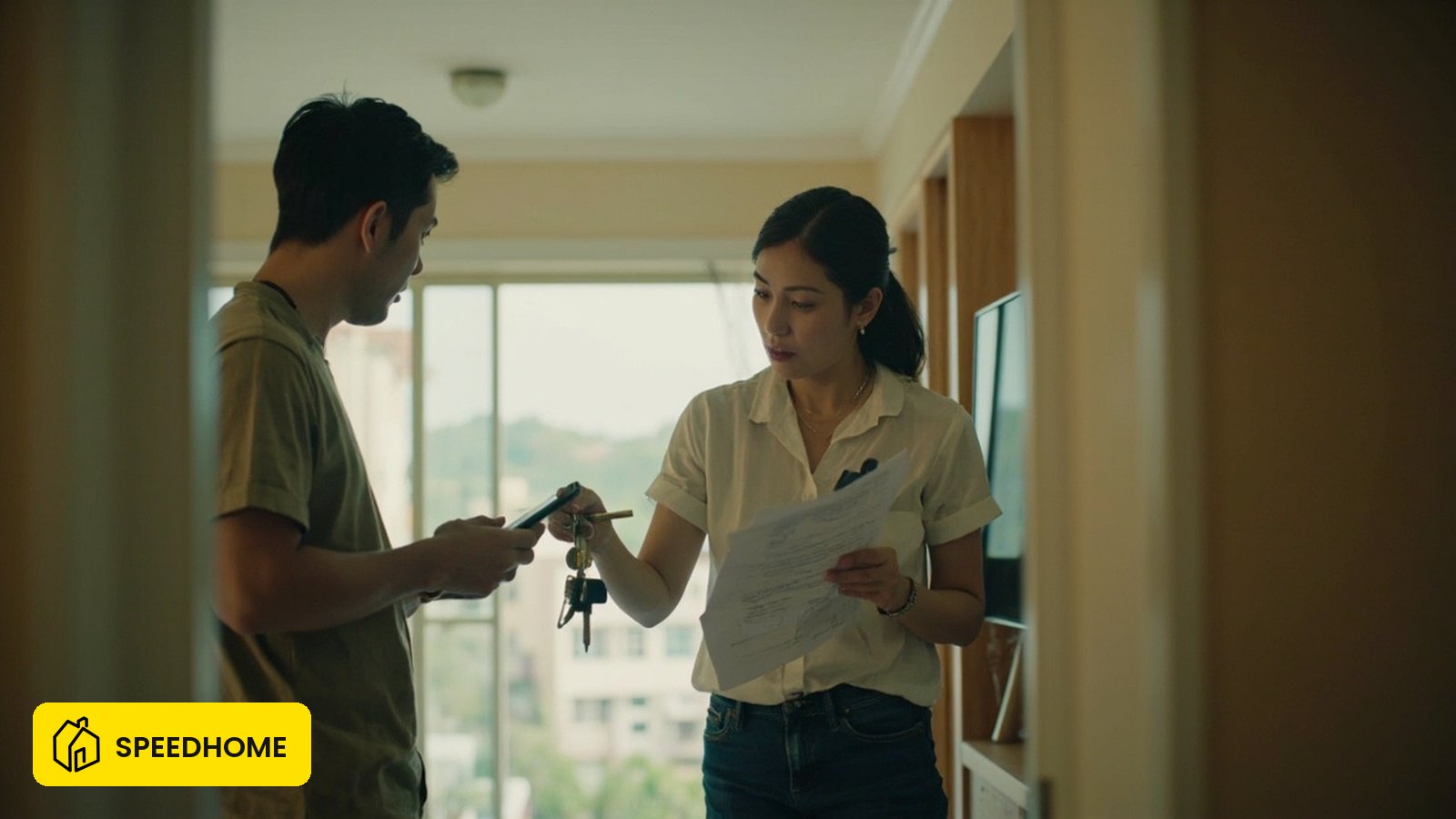
Most Malaysian rental disputes come down to one root cause: the landlord expected one thing and the tenant understood another. The seven things landlords wish tenants knew are almost all written-record habits, not law — report maintenance issues in writing, know what counts as fair wear and tear, photo-record the unit on move-in day, and get written permission before any permanent change. Skim them once before signing, then keep them open through move-in and move-out.
Most Malaysian rental disputes come down to one root cause: the landlord expected one thing and the tenant understood another. The seven points below are what landlords consistently wish tenants knew from day one — and almost every one is about written-record habits, not the law. Skim them once before signing, then keep them open through move-in and move-out.
1. Why report maintenance issues in writing, not just by phone call?
Report every maintenance issue in writing — WhatsApp is fine — with a photo, a date, and a clear description of the problem. A verbal call alone leaves no proof of what was reported or when.
A phone call may solve the immediate tension, but it rarely protects either side if the problem recurs or the landlord later claims they were never told. After any call, send a short follow-up message: what happened, where it is, when it started, and whether it affects normal use of the unit. Attach a photo. This two-minute habit is the single most effective thing a tenant can do to protect the deposit.
SPEEDHOME platform data shows that the single most common cause of rent disputes escalating into non-payment is a condition the tenant reported once but never wrote down — so when the landlord disputes the timeline, the tenant has no contemporaneous evidence to point to. A dated message thread changes that.
If the issue involves water, electricity, mould, pests, or anything that affects safety, say clearly in the message whether it is urgent and needs same-day attention.
2. Understand what counts as fair wear and tear
Fair wear and tear is the gradual deterioration of a unit through normal, reasonable use over time — faded paintwork, minor scuff marks on walls, worn carpet edges. Damage caused by carelessness, negligence, or unauthorised changes is deductible.
The practical test is: would a reasonable person living normally in the unit have caused this? A painted wall that has slightly faded after two years is wear. A wall with a large hole or deep scratches from a bracket that was ripped out is damage. Understanding this distinction before move-in prevents arguments at move-out.
| Condition type | Who is responsible | Deposit deductible? |
|---|---|---|
| Faded paint after 2+ years of normal use | Landlord (fair wear and tear) | No |
| Scuff marks on skirting boards at chair height | Landlord (fair wear and tear) | No |
| Crayon, paint, or stain on walls from tenant use | Tenant | Yes, with evidence |
| Broken door handle from normal use (old unit) | Landlord (old age / structural wear) | No |
| Cracked tile from a dropped object | Tenant | Yes, with a repair quote |
| Missing furniture, appliance, or fitting | Tenant | Yes, itemised against inventory |
| Mould caused by poor ventilation that tenant controls | Shared — depends on whether reported | Partial, with evidence |
For a complete breakdown of what landlords can and cannot deduct, see what tenants can deduct from a security deposit in Malaysia.
3. What move-in photo record should you take the day you collect keys?
Take dated photos of every room, every appliance, and every visible defect at move-in — before you unpack a single box. This record is your primary defence if the landlord tries to charge for pre-existing damage at move-out.
Photograph every room from the doorway (to establish position) and then close-ups of any marks, scratches, stains, broken fittings, or worn surfaces. Include the air conditioning unit, kitchen appliances, bathroom fittings, window tracks, and all furniture surfaces. If anything is already damaged, note it in writing to the landlord on the same day and ask for a short acknowledgement.
Keep these photos backed up. Courts and the small-claims procedure have consistently looked at who held contemporaneous evidence when assessing deposit disputes.
4. When is written permission required before permanent changes?
Never drill, repaint, install brackets, replace fittings, alter locks, or bring in major items — extra furniture, appliances, air conditioning units — without written permission from the landlord. Verbal agreement is difficult to prove and may be denied later.
The tenancy agreement almost always contains a clause requiring landlord consent for alterations. A simple WhatsApp message to the landlord asking permission, and their reply confirming it, takes thirty seconds and protects both sides.
This applies even to small changes that seem harmless. If you want to hang curtain rods, install a water filter, or add a showerhead, ask first. Keep the message thread. If the landlord says yes verbally, follow up with a written summary of what was agreed.
For repairs that the tenancy places on the tenant, understand who pays for aircond servicing in Malaysian rentals and the typical responsibility split before calling a contractor.
5. How well do you know your tenancy agreement before a problem appears?
Read the tenancy agreement before signing, not after an argument starts. Pay attention to the repair responsibility clause, the subletting clause, the notice period, and how deposit deductions must be itemised.
Common clauses tenants miss:
- Repair threshold clause: many agreements set a repair cost limit — for example, repairs under RM150 are the tenant's responsibility. Know your threshold.
- Subletting prohibition: most standard agreements prohibit subletting, including short-stay arrangements, without the landlord's written consent. Violations are grounds for early termination.
- Notice period: the standard is one or two calendar months. Check whether your agreement requires notice to be given by a specific date in the month, not just a calendar month ahead.
- Inventory list: if an inventory is attached, it is part of the agreement. Disputes about missing items at move-out are resolved against this list.
If any clause is unclear, ask before signing. For the full guide on what should be in a Malaysian tenancy agreement, see must-knows about tenancy agreements.
6. Why prepare a clean move-out record — and not just hand back the keys?
At move-out, photograph every room in the same sequence as your move-in record, remove all your belongings, clean wet areas, and ask for written acknowledgement of the handover. Handing back keys without a record leaves the deposit timeline open.
Many deposit disputes happen not because of actual damage but because the tenant left without a documented handover. The landlord then takes weeks to respond, and by the time any deduction is disputed, the evidence is unclear.
A clean handover checklist:
- Remove all personal belongings, including food, toiletries, and small items.
- Clean the kitchen (hob, hood, oven), bathrooms, and air conditioning filters.
- Return all keys, access cards, remotes, and parking stickers included at move-in.
- Photograph every room, appliance, and fitting using the same angles as move-in.
- Send photos to the landlord on the handover day and ask for a written acknowledgement.
- Confirm the meter readings and request a receipt for utilities if relevant.
For the complete landlord-and-tenant move-out sequence, see the move-in and move-out checklist for Malaysian rentals.
7. Why communicate maintenance issues early instead of waiting for move-out?
Tell the landlord in writing the moment something stops working, not the day before you hand back the keys. Small issues reported early are cheap to fix; small issues reported at move-out become deposit deductions and disputes.
The pattern landlords see over and over: a tap drips for three months, the tenant doesn't report it because it still works, water reaches the cabinet below, and at move-out the landlord deducts for cabinet damage that a RM80 washer could have prevented. The repair cost on day one is rarely the issue — the unresolved damage is.
A short message is enough: "The kitchen tap drips continuously. Photo attached. Please advise." Most tenancy agreements place small repairs on the tenant; reporting early gives you time to organise the fix yourself rather than paying for compounded damage later. It also creates a written record that you flagged the issue, which matters if the dispute moves to small claims.
For larger items the landlord is responsible for — air conditioning not cooling, water heater failure, door locks — repeated written reports also build a paper trail if you ever need to claim rent reduction or terminate early under the agreement's repair clause. One message rarely changes a landlord's behaviour; three dated messages in a week usually do.
What to do if a landlord acts unlawfully
If a landlord forces entry without notice, disconnects water or electricity, removes your belongings, or otherwise pressures you to leave before the tenancy ends, do not retaliate — document everything, lodge a police report, and apply to the courts for recovery.
Malaysian law does not permit a landlord to take possession of a property through self-help methods. Recovery of possession after a tenancy has ended must go through the courts under the Specific Relief Act 1950 section 7(2) — by application to the Magistrates' Court (or Sessions Court, depending on the property and rent). A landlord who disconnects utilities, changes the locks, removes your belongings, or pressures you to sign a new agreement under threat is acting outside the law regardless of what the tenancy says about arrears.
Steps to take on the day of the incident:
- Photograph and video the disconnection, the changed lock, or the entry — with timestamps if your phone supports it.
- Send a written message to the landlord the same day recording what happened and asking for an explanation. Keep the message factual.
- Lodge a police report (laporan polis) at the nearest PDRM station the same day or the next working day. The report creates an official record the courts will consider later; take the receipt.
- Do not abandon the unit or hand back keys under pressure. Each day you stay with a police report strengthens a later claim for illegal eviction.
- For claims up to RM5,000, the Magistrates' Court small-claims procedure is the proportionate next step. For claims above RM5,000 — including claims for compensation under the Contracts Act 1950 section 74 if the landlord's conduct amounts to a breach — file a civil suit at the Magistrates' or Sessions Court, depending on amount.
Malaysia has no dedicated tenancy tribunal, so housing-related civil claims run through the ordinary court system. If you can afford one, a short consultation with a lawyer familiar with tenancy disputes will tell you whether your evidence supports a section 7(2) counter-application, a damages claim, or both.
SPEEDHOME next step
If you want a tenancy where the agreement, deposit, and repair-reporting workflow are built in rather than improvised, browse verified rentals on SPEEDHOME. Listings tagged Zero Deposit let you verify eligibility on the unit before you arrange a viewing; the rest of the move-in stack (digital tenancy agreement, utility transfer checklist, written repair log) is part of the standard process.
Frequently asked questions
Can a landlord deduct the full deposit for a single item of damage?
No. Deductions must be itemised and proportionate to the actual loss. A landlord who deducts the entire deposit for one repair without quotes or receipts has weak grounds to defend in a dispute. Ask for an itemised deduction list and the supporting receipts before accepting any deduction.
What should I do if the landlord refuses to return the deposit after 30 days?
First, check the tenancy agreement's deposit-return clause. Many Malaysian agreements specify a return window — commonly 7, 14, 21, or 30 days after handover — and the contractual timeline overrides any default rule. If the agreement is silent, the law treats the return as due within a reasonable time, which the courts have read as roughly 30 days in most tenancy disputes. Send a written demand by WhatsApp or email referencing the handover date, attaching your move-out photos, and stating the contractual timeline. If there is no response within the contractual window plus a reasonable further period, file a claim — up to RM5,000 through the Magistrates' Court small-claims procedure, above that through the ordinary civil courts. Keep every message, photo, and receipt as evidence from day one; courts decide deposit disputes on contemporaneous evidence, not on what either side remembers months later.
Is it legal for a landlord to increase rent during a tenancy?
No. Once a fixed-term tenancy agreement is signed, the rent is fixed for that term — a landlord cannot unilaterally increase rent mid-tenancy. Rent can only change at renewal or if you agree to a variation in writing. If a landlord demands a mid-tenancy increase, you are entitled to decline and hold to the signed rate.
Do I need to be present for maintenance visits?
You do not need to be present, but most standard Malaysian tenancy agreements require the landlord to give at least 24 hours' written notice before any non-emergency access — except in a genuine emergency (burst pipe, gas leak, electrical fire risk). Confirm the visit in writing, agree a time window, and ask the landlord or contractor to message you once the work is done. If you cannot be present, ask for a brief photo report of what was done so your repair log stays complete and there is no later argument about what was accessed or moved.
What counts as an emergency repair that I can authorise without waiting for the landlord?
A genuine emergency is one that threatens safety, causes active water damage, or makes the unit uninhabitable — a burst pipe, a total electrical failure, a gas leak, or a structural collapse risk. In these cases, you may engage a contractor, keep the receipt, and notify the landlord in writing the same day; reimbursement is typically negotiated against the next rent or against the deposit at move-out. Document the problem before and after the repair. For non-urgent issues, always wait for landlord approval.