
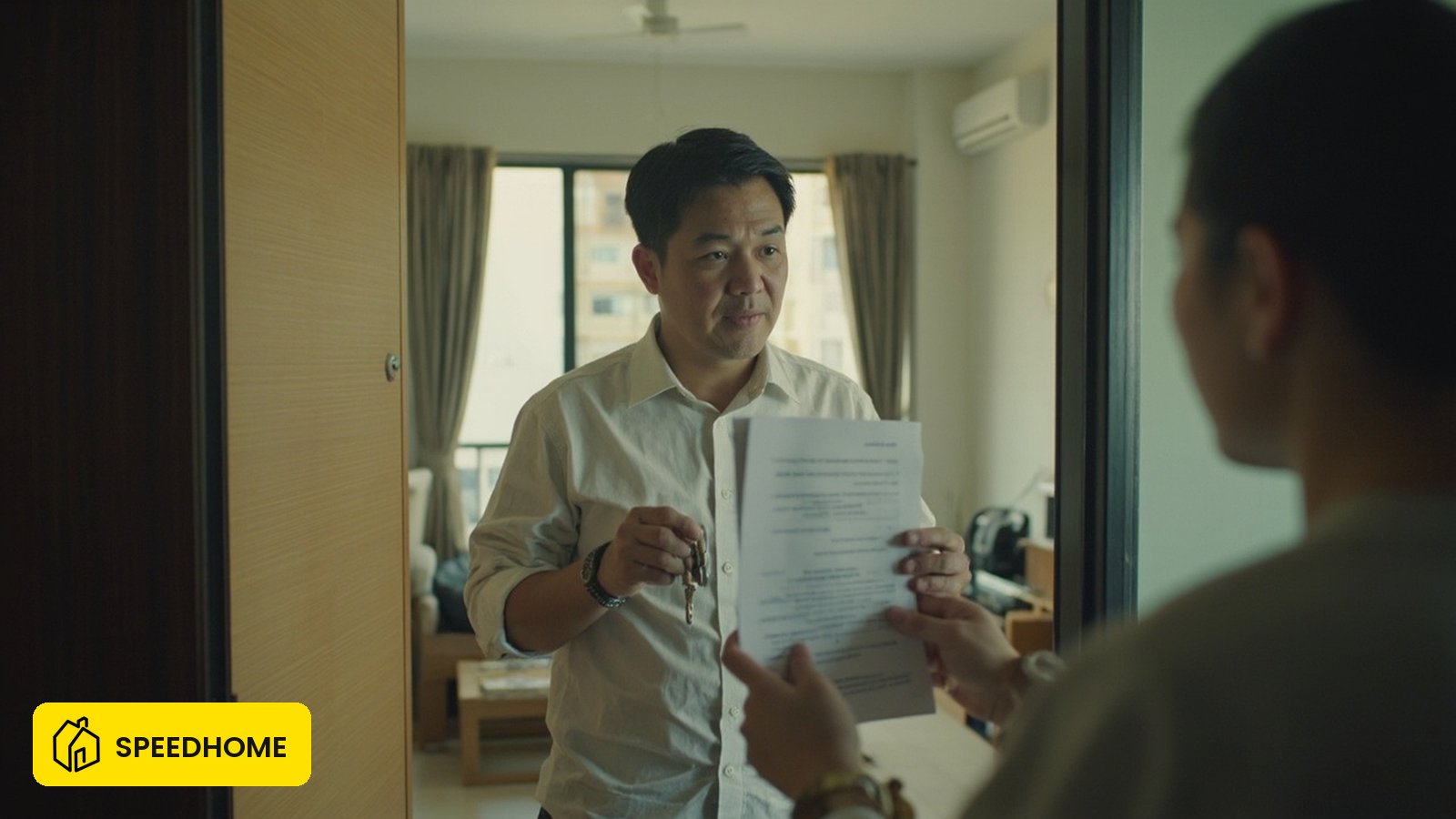
What every new landlord in Malaysia needs to know before renting out
To rent out property in Malaysia, you need five things in place before a tenant moves in: a lawful tenancy agreement stamped within 30 days, a screened tenant, utility handover documentation, rental income declared to LHDN, and a clear plan for what happens if the tenancy goes wrong. Getting these right from day one is faster and cheaper than fixing them later.
For the section on “What every new landlord in Malaysia needs to know before renting out”, Landlord Guide Malaysia: How to Rent Out Your Property (2026) sets the sequence for pricing, screening, documentation and handover.
SPEEDHOME's landlord operations data shows that most first-time landlords who face arrears or tenancy disputes skipped one of two steps: they did not screen the tenant thoroughly, or their tenancy agreement lacked the clauses needed to take lawful action. Both problems are preventable before the keys are handed over.
How do I evaluate whether my property is worth renting out?
Before listing, calculate net yield: annual rent minus mortgage payments, quit rent, assessment tax, insurance, maintenance reserve, and agent or platform fees. A Malaysian residential yield of 4–6% gross is typical; below 3% net signals the numbers need attention.
Check comparable rents on live listing platforms for your area, unit type, and furnishing level. If your target rent is higher than comparable units on the market, you will sit vacant. If it is too low, you leave income on the table and attract applications from tenants who were rejected elsewhere.
Key costs to model before you list:
| Item | Frequency | Rough range |
|---|---|---|
| Quit rent (cukai tanah) | Annual | RM50–RM500+ depending on land size and state |
| Assessment tax (cukai pintu) | Twice yearly | 0.1%–0.4% of annual value, varies by local authority |
| Fire / houseowner insurance | Annual | RM300–RM1,500+ depending on coverage and property value |
| Maintenance reserve | Ongoing | Set aside 5–10% of annual rent for repairs |
| Stamp duty on TA | Once per tenancy | RM1 / RM3 / RM5 / RM7 per RM250 of annual rent by lease duration (Finance Act 2024); file via e-Duti Setem (mytax.hasil.gov.my) |
Do not model 12 months of rent collected against zero vacancy. Budget for one to two months' vacancy per year, especially on longer-term re-lists. Use the SPEEDHOME stamp duty calculator to get the exact figure for your lease duration before you budget.
How do I prepare my property and set a competitive rent?
Prepare the unit to the standard a tenant at your target rent expects. A well-maintained unit at market rate rents faster and attracts tenants who treat the property carefully. Rent above the comparable market rate and the unit sits vacant; rent below it and you attract avoidable risk.
Walk through the unit and fix anything that would give a tenant grounds for early termination or a deposit dispute: leaking taps, faulty locks, inoperative air-conditioning, mould on walls, and broken fittings. Take timestamped photos of every room before the tenant moves in and attach the set to the tenancy agreement as an inventory schedule.
Set your rent by checking live listings — not your target return. Search the same area, same unit type, and similar furnishing level. Your mortgage obligations are invisible to the tenant and to the market.
What goes into a proper tenancy agreement and when must it be stamped?
A tenancy agreement in Malaysia must cover the tenancy period, monthly rent, deposit amounts, maintenance responsibilities, termination notice, and the landlord's right to take lawful action on non-payment. It must be stamped at LHDN within 30 days of signing or a penalty applies.
If this issue moves to the next stage, What Is a Tenancy Agreement in Malaysia? (2026 Plain-Language Guide) explains what to verify and what to do next.
The tenancy period for most residential tenancies in Malaysia is 12 months (minimum) or 24 months, with a renewal or handover clause. The agreement should name the deposit amounts clearly: a security deposit (typically one or two months' rent) and a utility deposit (typically half a month's rent).
Include a clause confirming the tenant's written consent to have a verified default reported to a licensed credit reporting agency (per the Credit Reporting Agencies Act 2010) — obtained at signing, not after the fact. The clause must be in the TA before the tenant signs; consent collected later is not a lawful basis to furnish.
Work with a registered legal professional or use an accredited tenancy agreement template. A properly drafted TA is your evidence base for any future dispute; a generic downloaded template often omits the clauses you will need most. You can start with the SPEEDHOME tenancy agreement resources if you want a structured starting point.
How do I screen tenants thoroughly before signing?
Effective screening checks employment, income, and payment history — not just gut feeling. Ask for payslips, an employer letter, and a reference from a prior landlord. A tenant who refuses reasonable documentation is giving you information worth acting on.
Minimum screening checklist:
| Check | What to ask for | Why it matters |
|---|---|---|
| Employment / income | Last 3 months' payslips or EPF statement | Confirms ability to pay rent |
| Employment stability | Letter from employer or business registration (self-employed) | Confirms active employment |
| Prior rental reference | Contact of previous landlord | Tests payment behaviour and property care |
| Identity | NRIC (Malaysian) or passport + Visa (non-Malaysian) | Required for TA and for any enforcement action |
| Credit history | Consent to check via registered CRA (if available) | Surfaces previous rental or credit defaults |
Never accept a tenant who insists on skipping reference checks. The time cost of a thorough screen is measured in hours. The time cost of a bad tenancy is measured in months.
How is rent collected and what happens if a tenant pays late?
Set a clear payment date in the TA (typically the first of the month), specify acceptable payment methods (bank transfer, e-wallet), and state the late-payment consequence — usually a daily late fee after a grace period of three to five days, as written in the agreement.
Before deciding how to handle “How is rent collected and what happens if a tenant pays late?”, use Tenant screening made easy: a landlord evidence checklist; it adds the identity, payment and screening checks that reduce fraud risk.
Set up automatic payment where possible — many Malaysian banks support standing-order transfers for rental. Keep every payment record. If a tenant is late, send a written notice (WhatsApp message or email is acceptable as evidence) on the first day after the grace period. Do not let arrears accumulate silently; two months of unpaid rent is the legal threshold at which most tenancy agreements allow the landlord to begin recovery action.
What maintenance and repairs am I responsible for as a landlord?
Under Malaysian common law, landlords are responsible for structural repairs and major system failures (roof, walls, plumbing, electrical). Tenants are responsible for minor day-to-day maintenance and for damage they cause. The TA should state this explicitly.
Set aside a maintenance reserve — 5–10% of annual rent is a practical rule of thumb. Respond to legitimate repair requests in writing and document the repair with photos and receipts. Evidence of timely repairs protects you in a deposit dispute or a tribunal hearing.
When a tenancy ends, compare the check-out condition against your move-in inventory schedule. Claim deductions from the security deposit only for damage beyond fair wear and tear. A clear, signed inventory schedule at move-in is the single most important document for a clean move-out.
What is the lawful way to end a tenancy if a tenant refuses to leave or stops paying?
Self-help eviction — physically removing a tenant's belongings, changing door locks without a court order, or disconnecting water or electricity to force departure — is unlawful in Malaysia regardless of how serious the arrears or breach are. The lawful route is a written notice, then the civil courts if the tenant does not comply.
This is one of the most common and costly mistakes landlords make. The unlawful removal of a tenant's access to the property exposes the landlord to a civil claim that can erase months of rent recovery. The lawful eviction process in Malaysia follows these steps under the Specific Relief Act 1950 s.7(2):
| Step | Action | Typical timeline |
|---|---|---|
| 1 | Written demand for possession or remedy of breach (as specified in TA) | Day 1 |
| 2 | 14-day or 30-day notice to remedy (per TA clause) | Day 1–30 |
| 3 | File Writ of Possession (and/or Writ of Distress for arrears) in the Magistrate's Court or Sessions Court | After notice period |
| 4 | Hearing, court order for possession | Weeks to months depending on docket |
| 5 | Court bailiff executes the possession order | After court order |
The timeline from demand to possession varies widely. SPEEDHOME's operating records show that tenancies where the landlord had a well-drafted TA with a clear default clause resolved significantly faster — because the court order application was straightforward and the tenant had less room to contest the notice.
SPEEDHOME internal operator data (Q1 2026) shows the average time from a tenant's first rental default to a recovery action being initiated on the managed platform is about 31 days — well inside the window that separates a recoverable arrears case from a multi-month legal fight. The same data shows the #1 trigger is a condition dispute, not a refusal to pay. Landlords who document the move-in condition and serve a written demand the first day a payment is missed resolve the case faster and avoid self-help exposure.
Once you have vacant possession, you may report the tenant's verified default to a licensed credit reporting agency under the Credit Reporting Agencies Act 2010 — but only with the tenant's written consent obtained at the time of signing the TA, or through another lawful consent mechanism. Reporting without consent is itself a legal exposure.
For landlords using SPEEDHOME, the SPEEDHOME landlord protection service provides a TA template with the default and consent clauses pre-built, plus managed support through the recovery process — so the paperwork is right before a problem arises, not after.
What records should I keep as a landlord?
Keep every rent payment record, maintenance request, and written communication with your tenant for the full tenancy period plus at least two years after the tenancy ends. These records are your evidence in any deposit dispute, court proceeding, or LHDN audit.
Minimum record set:
- Signed tenancy agreement and any addenda
- Stamped TA from LHDN (stamp certificate number)
- Move-in inventory schedule with photos (dated, signed by both parties)
- All rent payment records (bank statements or e-wallet history)
- Repair records: written requests, invoices, and before/after photos
- Written communications about breach, notice, or deposit deductions
Store copies in a cloud folder and a local backup. Disputes are won or lost on paper.
About this guide. Written by the SPEEDHOME Landlord Content Team, a Malaysian landlord-operations desk that publishes rental-market guidance for first-time and portfolio landlords. Reviewed by Jeremiah Wong, LL.B (Hons), SPEEDHOME Legal Operations — Jeremiah reviews SPEEDHOME's landlord legal, tax, and eviction copy for accuracy against the Specific Relief Act 1950, the Income Tax Act 1967, LHDN practice, and the Credit Reporting Agencies Act 2010. Last reviewed 23 June 2026. Statutes and LHDN practice may change; verify the current rule with a solicitor or LHDN before you act on a specific case.
Frequently asked questions
Do I need to declare rental income to LHDN? Yes — rental income you receive as a landlord is assessable under Malaysian income tax law and must be declared in your annual return. Allowable deductions commonly include assessment rates, quit rent, insurance, repairs, and interest on a loan used to acquire the property; initial fit-out is generally not deductible against rental income. The exact treatment, the right form, and any relief depend on your situation. Check the current LHDN guidance on mytax.hasil.gov.my or speak to a tax agent before you file.
Can I increase the rent during the tenancy? Only if the tenancy agreement contains a rent review clause that specifies the conditions and process. You cannot increase rent mid-tenancy without the tenant's written agreement, even if your costs rise. At renewal, both parties can negotiate a new rate.
I'm renting out my first property — who pays Indah Water, how do I background-check a tenant, and what even is a TA?
Three quick answers to get you oriented. Indah Water (IWK) sewerage charges are tied to the premises, not automatically to whoever is living there at the time — the tenancy agreement is what decides whether the landlord or the tenant pays the monthly bill, and it's worth stating this explicitly in the TA rather than assuming; a landlord should still keep an eye on the account even where the tenant is made responsible, since liability for outstanding charges can remain relevant to the owner. Background-checking a tenant means the minimum screening checklist above: ask for the last three months' payslips or an EPF statement, an employer letter (or business registration if self-employed), a reference from their previous landlord, and their NRIC or passport — refusal to provide any of these is itself useful information. A TA (tenancy agreement) is the contract that governs the whole tenancy: rent, deposit amounts, the tenancy period, maintenance responsibilities, notice periods, and — critically — what happens if the tenant breaches it; it must be stamped at LHDN within 30 days of signing, and it is the single document a court or a dispute will look to first, so do not treat it as a formality to sign quickly.
What is Zero Deposit and does it apply to my property? SPEEDHOME's Zero Deposit is a managed rental-risk system where SPEEDHOME replaces the traditional upfront security deposit with a structured protection arrangement. Not every unit or tenancy qualifies — eligibility depends on the property type, tenant profile, and whether it is listed through the SPEEDHOME platform. Check live listings at SPEEDHOME to confirm whether your unit qualifies.
How much security deposit can I legally ask for? There is no single statutory cap that applies to all residential tenancies in Malaysia as at 2026. Market practice for a standard residential tenancy is a security deposit of one to two months' rent plus a half-month utility deposit. Some landlords request up to three months. The amount must be stated in the TA and any deductions at move-out must be justified against the inventory schedule.
What is the difference between the Magistrate's Court and the Sessions Court for eviction? In Malaysia, recovery of possession under the Specific Relief Act 1950 s.7(2) is filed in the Magistrate's Court for smaller claims and the Sessions Court for larger ones. Both courts issue the Writ of Possession (and a Writ of Distress for arrears, where applicable) enforced by the court bailiff. The filing fee and the jurisdiction threshold differ — check the current thresholds on the e-Court Malaysia portal or ask a solicitor before filing.
I saw viral news of a council removing a unit's doors over unpaid maintenance arrears — could that happen to me over unpaid cukai pintu (assessment tax)?
That kind of story is usually about strata maintenance-charge enforcement or a local authority's own arrears-recovery powers, not something a landlord does to a tenant — and it is a useful warning about what happens when assessment tax is left unpaid, not a tenant-eviction shortcut. Under the Local Government Act 1976, assessment instalments unpaid past the due date become arrears, after which the local authority may serve a formal demand and, if still unpaid, issue a warrant of attachment allowing its officers to seize movable property on the holding — and ultimately apply to attach and sell the property itself. This power sits with the council against the property owner, and it is a real, escalating process, not a one-off viral stunt. The takeaway for a new landlord: pay cukai pintu (assessment) on schedule the same way you would rent or a mortgage instalment, because arrears attach to the holding and the local authority's recovery powers are broader than most first-time landlords expect. It has no bearing on how you deal with a difficult tenant — self-help (removing doors, locking a tenant out, or cutting utilities) remains unlawful for a landlord regardless of what a council can do for its own arrears.