
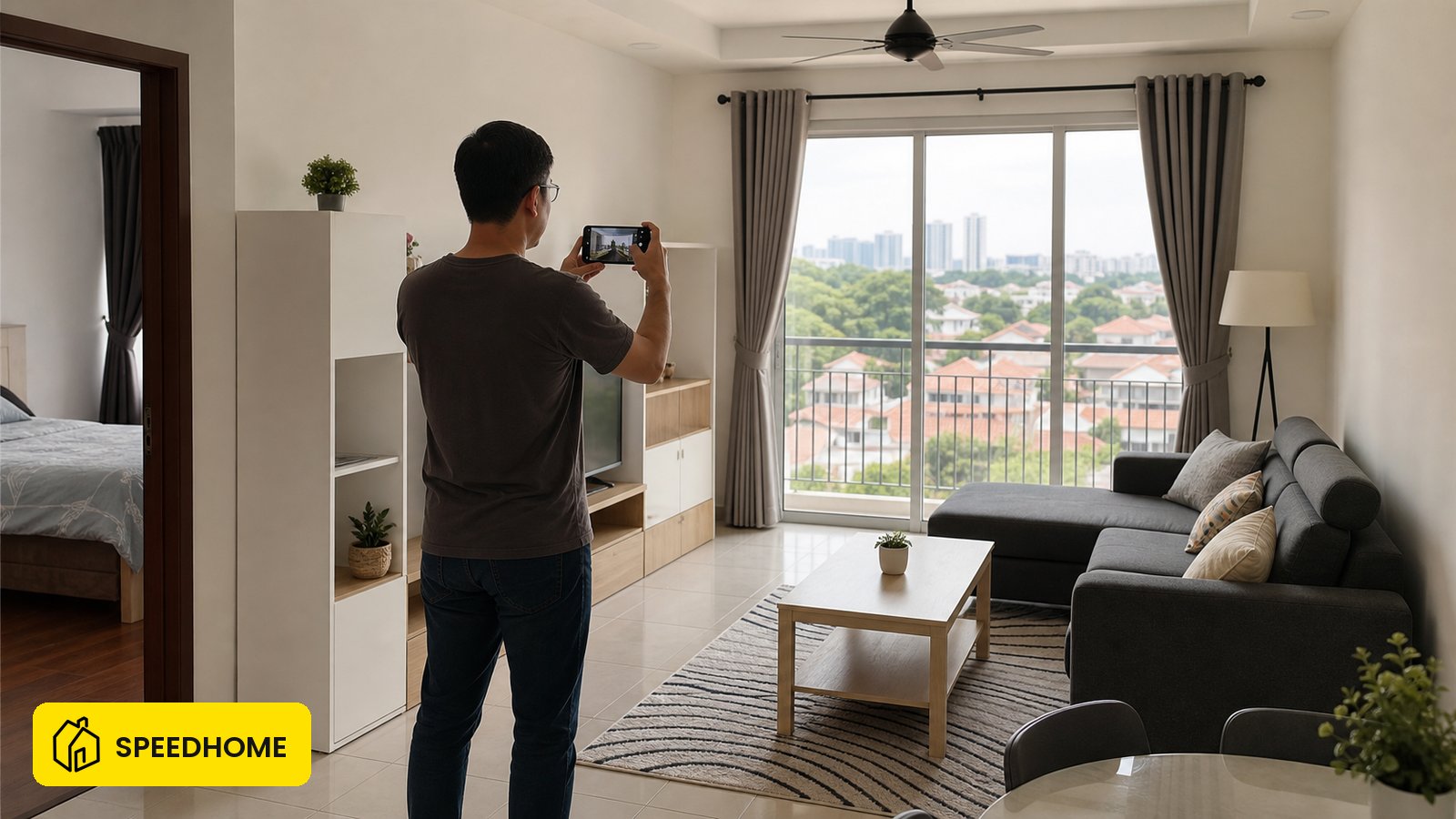
What actually brings the right tenant to your listing?
**The right tenant is the one whose profile matches your unit — not the applicant who enquires first. Match the asking rent to the demographic that fits the unit (location, size, fittings), write the listing to speak to that profile, present the unit move-in-ready, and you shorten both the vacancy and the screening workload. Attracting a better-matched pool up front shrinks that filter step.
Most landlords treat "attracting" and "screening" as the same problem. They are not. Screening rejects the wrong applicant after they enquire. Attracting reduces how many wrong applicants enquire in the first place. Both matter, but they pull on different levers. For a deeper walkthrough of the screening side — credit-bureau consent, what to check in payslips, and the legal lines you must not cross — see how to screen tenants in Malaysia.
Who is the right tenant for this specific unit?
Define your target tenant before you list — not after enquiries start coming in. The right tenant is the one whose income, household size, and length-of-stay plan match the unit's rent band, layout, and location. Profile first; write the listing second; screen third.
The cheapest mistake to make is to list the unit as if it suits everyone. It does not. A 650 sq ft studio in Bangsar is a different product to the same size unit in Puchong, and the right tenant for each is different. Work out the match before you write the headline.
| Unit profile | Tenant profile that fits | Where to focus the listing |
|---|---|---|
| Studio / 1-bed, RM1,200–1,800, near MRT | Single working professional, 1–2 year stay | Commute time, fully-furnished, move-in date |
| 2-bed, RM1,800–2,500, family condo | Small family or couple, 1-year minimum | School proximity, kitchen, parking, security |
| 3-bed landed, RM2,800–4,500, established neighbourhood | Relocating family or long-term tenant, 2-year preferred | Outdoor space, storage, neighbourhood, quiet |
| Room rental, RM600–900, near university | Student with guarantor, 1-year stay | Bills-included, furnishing, walking distance to campus |
Honest targeting protects you. If you prefer a working professional because income verification is simpler, say so clearly in the listing — "salaried tenant preferred, 12-month minimum." Transparent requirements reduce unqualified enquiries and avoid awkward rejections after viewing.
A student with a parent as guarantor and a solid reference can be a lower-risk tenant than a self-employed applicant with no recent bank statement. Evaluate on the document set, not the category label.
How should the listing copy and photos attract the right pool?
A listing that leads with the match (location, layout, what's included, who it suits) outperforms one that leads with "spacious and convenient." Specificity in the copy and 8–12 sharp photos in daylight do most of the qualifying work before the viewing.
Three copy levers that move the applicant pool:
- Headline that names the demographic. "2-bed condo in Cheras, walk to MRT, suits a small family" pulls a different enquiry set than "spacious 2-bed for rent."
- Bullet list of what's included. Water rate, internet, AC service, parking, kitchen fittings — anything that answers a question a serious tenant would ask on the phone.
- One line on who the unit is not for. "Not suitable for pets" or "no commercial use" reduces the wrong-fit enquiry list without you having to send a rejection.
For photos, take them between 10am and 2pm with all lights on. Shoot the kitchen, both bathrooms, every bedroom, the view from the main window, and the car park / lift lobby. The first photo is what decides the click; the rest decide the viewing.
Move-in-ready units photograph better, which improves listing click-through before the first viewing ever happens. If the unit is going to be empty for more than three weeks, a modest presentation spend almost always pays for itself in shorter vacancy.
Should you consider non-traditional tenants for higher rent or longer stays?
Non-traditional tenants — a registered home office, a small business renting the unit as a satellite office, or a co-working operator subletting desks — can pay a premium and stay longer, but only after you have confirmed three things: the strata or JMB permits commercial use, the tenancy agreement's permitted-use clause covers it, and your tax position for mixed-use rent is clear.
A business-use tenant is a different product. The checks are also different.
- Strata bylaws and JMB house rules. Many joint management bodies (JMBs) prohibit commercial signage, heavy visitor traffic, or delivery vehicles in the house rules. Ask the management office in writing before you list. If the rules are silent on commercial use, get the JMB's written position — verbal "should be fine" is not enough to rely on.
- Land-use classification. Residential-title properties have residential land-use status. Light home-office use (one or two people, no signage, no walk-in customers) is usually tolerated; a customer-facing clinic or F&B outlet on a residential title is a land-use problem waiting to happen. If in doubt, get written confirmation from a lawyer.
- Tenancy agreement — the permitted-use clause. A standard residential TA restricts use to "residential purposes only." If you allow business use, amend the clause. A workable wording: "The Tenant shall use the Premises for [residential / light office] purposes only, and shall not operate any business requiring signage, customer footfall, or modification to the Premises without the Landlord's prior written consent." Get a lawyer to review the final wording for your situation.
- Tax framing for mixed-use rent. Where a unit is partly business and partly residential, the rental income is still taxable under the same ITA provisions as a fully-residential unit, but apportionment between residential and commercial portions affects what is deductible. Confirm the treatment with a tax agent before signing — see how rental income is taxed in Malaysia for the framework.
If those three checks clear, a business-use tenant can be a strong option. If any of them is uncertain, treat it as a no until you have the answer in writing.
Rent-speed vs tenant-quality: which side of the trade-off wins?
Lower the asking rent and you fill the unit faster, but the applicant pool widens to include less-qualified tenants. Hold the asking rent and you wait longer, but the pool self-selects for affordability. The decision is not which is "right" — it is which cost you can absorb: a month of vacancy, or a higher screening rejection rate.
Most landlords frame this as "price too high" or "price too low." It is more useful to frame it as a cost ledger.
| Lever | Cost you pay | What it buys |
|---|---|---|
| Drop asking rent by 5–10% | RM X lost per month for the tenancy | Shorter vacancy; more enquiries; larger pool to filter |
| Hold the asking rent | One extra month of vacancy (typical) | Smaller, better-matched enquiry set; less screening rejection |
| Offer a longer tenancy (2-year) at lower monthly rent | Slightly lower monthly yield | Tenant who plans to stay; lower turnover cost |
| Offer move-in incentives (1 week free, paid stamp duty) | One-off cash outlay | Faster sign; goodwill with the new tenant |
Run the numbers both ways. A two-month vacancy on a RM2,000/month unit is RM4,000 of lost rent — that is roughly what most landlords would pay to pre-screen two extra applicants. The "right" answer is the one that minimises total cost over a 12-month horizon, not the one that fills fastest.
How SPEEDHOME helps you attract — not just filter — better tenants
** When you list through the platform, applicants complete identity, employment, and consented credit-bureau verification before the enquiry reaches you. The result is a shortlist of verified applicants, not an unfiltered inbox to triage.
SPEEDHOME also profiles the listing to the demographic it actually fits — a studio near an MRT line is shown to working professionals, not to families searching for three-bed houses. The pre-qualification runs in the background; the landlord sees only applicants who have already cleared the credit and identity step.
If you list through SPEEDHOME, eligible units can also opt into the Zero Deposit managed rental plan. Zero Deposit is a managed rental-risk system — not a financial guarantee product, and not a financial guarantee product — that replaces the traditional 2+1 cash deposit with ongoing platform protection. Not every unit or applicant qualifies; check the live listing page for current eligibility.
For landlords who want the full set — verified applicants, a digital tenancy agreement (SPEEDSIGN), structured move-in, and an operator-reviewed screening process — list your unit at SPEEDHOME's landlord hub.
Before you list, the next three questions landlords usually ask are about stamp duty, the tenancy agreement itself, and deposit structure. The free tools cover each:
- Calculate the exact figure for your tenancy: SPEEDHOME stamp-duty calculator.
- Start from a report-ready template: free report-ready tenancy agreement template.
- Understand the deposit options on the table: how Zero Deposit works for landlords.
FAQ
What is a reasonable income requirement for a tenant in Malaysia?
Most landlords set a gross income threshold of 2.5–3× the monthly rent. On a RM1,800/month unit, that means looking for gross income of RM4,500–5,400. This is a practical rule, not a legal requirement — but it reduces the risk of a tenant whose rent absorbs more than 40% of their take-home pay.
Can I refuse a tenant based on nationality or religion?
Malaysia does not have a residential tenancy anti-discrimination law equivalent to UK or Australian law, so landlords have broad discretion in who they accept. However, stating nationality or religion explicitly in a listing can attract legal exposure under other statutes (e.g. sedition). The safer practice is to state income, documentation, and occupancy requirements only, then assess each applicant on evidence — see how to screen tenants in Malaysia for the full framework.
What documents should I collect before signing the tenancy agreement?
At minimum: full IC copy, last three payslips or an income statement, an employment letter or business registration, and a contact for a previous landlord or personal reference. On higher-value or longer-term tenancies, add a credit report check with the applicant's written consent. The full screening checklist is in how to screen tenants in Malaysia.
Is a verbal agreement with a tenant legally binding in Malaysia?
A verbal tenancy agreement can be legally binding under the Contracts Act 1950, but it is almost impossible to enforce without evidence of the agreed terms. Always use a written and stamped tenancy agreement. Stamp duty is due within 30 days of signing; late stamping attracts a penalty. Use the SPEEDHOME stamp-duty calculator to confirm the figure for your tenancy.
How do I attract long-term tenants who stay and pay on time?
Long-term, reliable tenants are attracted by responsive landlords as much as by the unit itself. Respond to maintenance requests promptly, communicate clearly, and do not increase rent sharply at renewal without notice. SPEEDHOME does not publish a verified internal figure for retention by maintenance response time; the operational pattern is that prompt repair turnaround is the strongest single retention lever, but the specific number should be confirmed with current SPEEDHOME data before quoting it.