
How to choose a room near university
Pick a room near university only after testing the actual daily route, adding the full monthly cost, and reading the house rules. "Near campus" is not enough. SPEEDHOME platform data shows the #1 thing landlords skip is video documentation at move-in and move-out — for students, this single step is what decides whether the deposit is returned at month 12.
For students in Malaysia, bilik sewa dekat universiti usually means a room in a shared house, apartment, condo or co-living setup around a campus area. The listing may look simple, but the decision is not only about distance. A room that looks close on the map can be inconvenient if your faculty entrance, bus stop, parking access or daily food route is on the other side.
This page is a decision checklist, not a rent table. Current price, availability and Zero Deposit eligibility must be checked on the live listing and agreement.
Start with the commute test, not the room photo
Your first check is the real route from the room to the part of campus you actually use. Test it at the time you normally travel, including waiting, walking, parking, rain cover, e-hailing pickup and late-class return plans.
Do not judge from distance alone. A room can be close to the university name but far from your classroom, lab, library or bus gate. Before shortlisting, save the route from the exact building or street, not only the neighbourhood. If possible, test it on a weekday during the hours you expect to move.
Around UM and the KL gate area, the realistic daily mix is the RapidKL bus 780 from PJ Old Town or a short e-hail from Bangsar; walking is usually unrealistic for off-campus rooms. USM in Sungai Dua, Penang connects via Rapid Penang bus 11 from Bukit Jambul or a motorcycle; the campus is car-friendly but the bus is the cheap fallback. UKM in Bangi is best reached by KTM Komuter stopping at Bangi or UKM station, then a feeder bus; do not assume a room advertised as "Bangi" is walking distance to the faculty. The Sunway-Monash-Taylors corridor around Bandar Sunway is served by the BRT Sunway line and the Kelana Jaya LRT extension, with most student rooms in the 800m-to-1.5km range of a BRT stop. APU/APIIT students in Bukit Jalil typically use the Sri Petaling LRT line, then a feeder or short e-hail into the campus. UiTM Shah Alam and Puncak Perdana are usually reached by shuttle or feeder van from the Section 2 / Section 7 bus stops, with e-hail as the late-night fallback; a "Shah Alam" room in a quiet residential street is rarely walking distance to the faculty. MMU Cyberjaya students mostly depend on the Cyberjaya bus loop or e-hail between E-bridge blocks and student rooms; walking works inside the campus only. UTAR Sungai Long and UTAR KL (Jalan Gombak) lean on KTM Komuter plus a feeder bus or e-hail, and the cheap fallback is the same — a longer KTM ride plus a feeder, not a walk.
Ask these questions:
| Check | What to confirm |
|---|---|
| Daily destination | Which campus gate, faculty block or bus stop you actually use |
| Travel mode | Walk, drive, rail, bus, e-hailing, motorcycle or mixed route |
| Weather backup | What happens during heavy rain or late-night return |
| Parking and pickup | Whether parking, drop-off or pickup is practical for your routine |
| Errands | Food, laundry, grocery and printing access without extra daily friction |
A room that looks 2 km from the campus pin can mean a 5-minute motorcycle or a 40-minute bus ride with one transfer; pick the option that matches your actual schedule. If transport cost or waiting time is high, a cheaper-looking room may not be cheaper in practice.
Calculate the total monthly cost
Compare rent only after adding utilities, internet, air-con usage, laundry, parking, cleaning, transport and any shared-house charges. A lower headline rent can lose once the add-ons are unclear.
For a student room, total monthly cost usually depends on how the shared unit handles bills. Some homes split utilities equally. Some charge separately for air-con. Some include internet but not cleaning. Some housemates buy shared items together. None of this is a problem if it is clear before move-in.
A worked total monthly cost table for a typical student room in a Klang Valley cluster:
| Rent band (headline) | Typical add-on stack | Realistic monthly total range |
|---|---|---|
| ~RM500 | Utilities ~RM80, WiFi ~RM40, transport ~RM100, laundry/cleaning ~RM50 | ~RM700-900 |
| ~RM800 | Utilities ~RM100, WiFi ~RM40, transport ~RM120, parking ~RM80, cleaning ~RM50 | ~RM1,100-1,300 |
| ~RM1,200 | Utilities ~RM120, WiFi ~RM50, transport ~RM150, parking ~RM100, cleaning ~RM80 | ~RM1,600-1,800 |
Treat these as planning bands, not quotes; live listings and the agreement settle the actual figure. Check the live SPEEDHOME rental listings for current availability, total-cost disclosure, and Zero Deposit eligibility for the area you are shortlisting.
Worked monthly total at the RM1,500 headline (Klang Valley student room)
Take a room advertised at RM1,500 per month and stack the typical student add-ons: utilities (water + electricity, air-con heavy) RM150-200, WiFi RM40-50 split across rooms, transport (LRT/BRT + e-hail top-ups) RM150-200, parking (motorcycle ~RM80 or car ~RM150), cleaning rotation or a hired cleaner split RM50-100, and shared supplies RM20-30. A realistic landed monthly total lands at RM1,900-2,200 — well above the headline figure. If a landlord or main tenant cannot walk you through each line before you sign, treat the gap as the dispute you would be signing up for. Verify the actual stack on the live SPEEDHOME rental listings for the room you are considering before paying any deposit.
How SPEEDHOME's monthly bill is split in managed rooms
In SPEEDHOME-managed rooms, the Tenancy Agreement sets who pays which line — rent is paid to the landlord, while utilities, internet and any shared service are itemised in the agreement or in the platform's monthly statement. SPEEDHOME does not bundle utilities into rent and does not average bills across rooms; each line is named, with a stated method (included, metered, or split by headcount). This is the difference between a portal that lists rooms and a platform that names the bill: the monthly statement is the document a student can hand a parent or reference in a dispute, instead of a chat thread.
Before paying, write down:
| Cost item | Safer question |
|---|---|
| Utilities | Included, split equally, split by meter, or capped? |
| Internet | Who owns the account and what happens if it is down? |
| Air-con | Included, metered, limited, or charged separately? |
| Parking | Included with the room or charged separately? |
| Cleaning | Housemate rotation, hired cleaner, or no arrangement? |
| Transport | What is the real monthly cost of reaching campus and errands? |
Do not rely on verbal statements like "usually cheap" or "roughly shared." Ask for the method. If the landlord or main tenant cannot explain the method clearly, expect disputes later.
Read house rules before choosing housemates
In a room rental, house rules matter as much as room size. Visitor rules, quiet hours, cooking, bathroom use, fridge space, cleaning and smoking rules decide whether the room is livable during exam weeks.
Students often focus on the bedroom and ignore the shared unit. That is a mistake. You are renting a routine, not just four walls. A bright room can become stressful if housemates cook at hours you cannot tolerate, visitors stay over without limits, or nobody cleans the bathroom.
A worked example: many PJ / SS2 shared houses enforce no-cook-after-10pm as a written rule, and housemates are within their right to enforce it. If your study pattern needs a late-night maggi or pre-exam cooking block, confirm this rule in writing before you sign — once it is in the house rules, "I didn't know" does not protect you.
Check these rules before committing:
- visitors and overnight guests;
- quiet hours, calls and music;
- cooking, fridge space and shared supplies;
- bathroom and laundry schedule;
- smoking, pets and parties;
- rubbish, cleaning and pest prevention;
- bedroom lock, spare key and access card rules.
If rules exist, ask for them in writing. If no rules exist, ask how conflicts are settled.
Match the lease length to your study plan
Choose a lease term that matches semester dates, internship plans and exam timing. The cheapest room is not a win if the notice period, renewal date or early-exit terms trap you after your timetable changes.
Students move for predictable reasons: semester breaks, internships, exchange programmes, graduation, family changes and course transfers. Your agreement should say the start date, end date, notice period, payment date, deposit terms and what happens if you need to leave early.
The Tenancy Agreement must be stamped within 30 days of execution through LHDN's e-Duti Setem on MyTax. For a 12-month student stay, the stamp duty is charged on the agreement, not the room, and follows the Finance Act 2024 scale.
Do not assume a landlord will release you because you are a student. If the agreement says you are committed for the term, leaving early can trigger deductions or unpaid rent claims depending on the written terms. If your study plan is uncertain, negotiate the lease length before paying, not after.
For room rentals, also confirm whether you are signing with the property owner, a main tenant, or an operator. If a current tenant is renting a room to you, ask for written landlord consent. Subletting without that consent can put your stay at risk, because the current tenant may be breaching their own agreement and the head landlord can ask you to leave.
Viewing checklist before paying
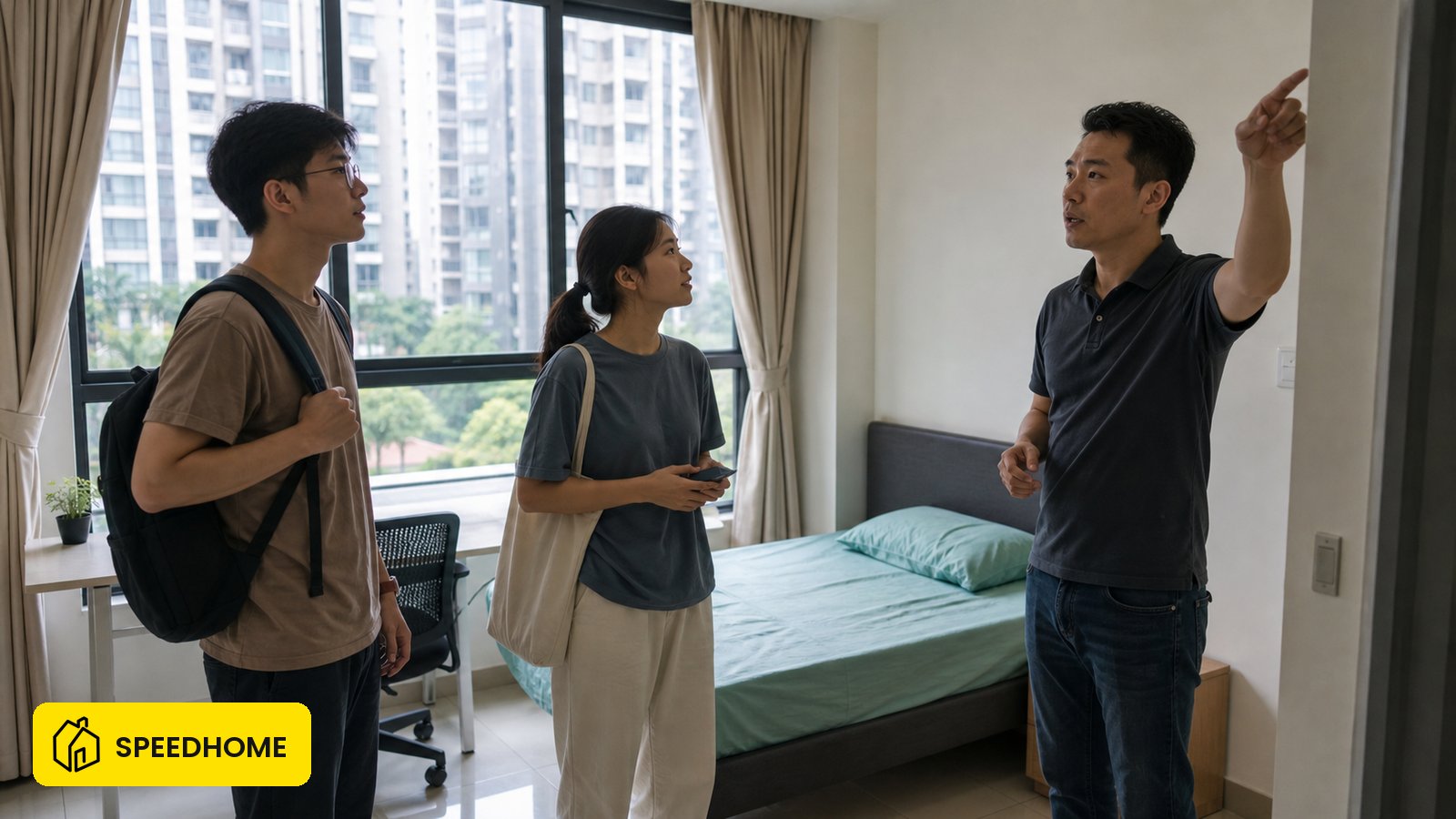
View the exact room, not only the building or sample photos. Check water, lock, window, fan or air-con, sockets, WiFi signal, mattress condition, shared bathroom, kitchen, rubbish area and access card before you transfer money.
Bring a simple checklist and take notes. You do not need to be dramatic; you just need evidence. A proper viewing should answer whether the room shown online is the room you will occupy, whether the included items match the listing, and whether shared areas are acceptable.
Use this viewing checklist:
| Area | What to inspect |
|---|---|
| Room | Mattress, bed frame, desk, wardrobe, wall marks, smell and ventilation |
| Access | Bedroom key, unit key, access card, lift or gate process |
| Utilities | Sockets, lights, fan, air-con, water pressure and heater |
| Internet | Router location and practical signal in the room |
| Shared areas | Bathroom, kitchen, fridge, laundry, rubbish and cleaning tools |
| Evidence | Photos of existing defects and written inventory |
For the evidence row, take timestamped photos of every wall, the mattress, every appliance in working state, the meter reading, and the lock and key count; send them to the landlord or main tenant the same day by WhatsApp so there is a written record before you pay the deposit.
Worked defect patterns worth a second look: water-heater pressure (run both sink and shower for two minutes), mould at the extractor fan in the bathroom, and the air-conditioning compressor noise from the window unit at full fan. Recording these defects before you pay is the same step landlords skip most often (SPEEDHOME platform data).
What SPEEDHOME's move-in evidence actually does
SPEEDHOME's operator data shows the #1 thing landlords skip is video documentation at move-in and move-out — for students, this is the single most useful evidence to create before paying deposit, because at the end of a 6-month or 12-month stay, the same defect list becomes the document that decides whether your deposit is returned. A two-minute phone video walking the room, the meter, the bathroom, the kitchen, the air-con controller and the lock is enough. Upload it the same day, ideally through whatever channel the platform already uses for the tenancy, so the timestamp is in the system and not just in your camera roll.
How to use SPEEDHOME for student room search
Use the platform to shortlist by area, then use the viewing and agreement to decide. Zero Deposit on SPEEDHOME is the platform's managed rental-risk system, not an insurance product — eligibility is checked per listing, not per campus.
Browse SPEEDHOME rental listings by your target area and compare the room against your actual commute. Check whether the listing is a room, a whole unit, furnished or unfurnished, and whether any Zero Deposit label appears on that specific listing. Zero Deposit on SPEEDHOME is the platform's managed rental-risk system, not an insurance product — eligibility is checked per listing, not per campus, so a label on one Sunway room does not extend to a Monash-area listing.
A simple split:
| What SPEEDHOME does | What you still need to do |
|---|---|
| Verifies the listing and the unit | Run the commute test at your real travel time |
| Stamps the Tenancy Agreement through e-Duti Setem | Add up utilities, internet, parking, transport, cleaning |
| Flags Zero Deposit eligibility per listing | View the exact room and check the defects above |
| Provides a written house-rules template | Negotiate the lease length to match your semester |
For shared living, compare this page with the broader room rentals in Malaysia, the room rental agreement and house rules guide, and the furnished vs unfurnished room guide. The decision should be practical: can you reach campus, afford the full monthly cost, live with the rules, and prove the room condition at move-in?
FAQ
How do I know if a room is really near my university?
Test the actual route from the room to your campus gate, faculty block or bus stop at the time you normally travel. Do not rely only on map distance or neighbourhood names. A "Bangi" room that needs a feeder bus to the faculty is not the same as a "Bangi" room within walking distance of the gate.
What should I ask before renting a student room?
Ask about total monthly cost, utilities, internet, air-con use, parking, house rules, lease length, notice period, deposit terms, who you are signing with, whether you can view the exact room, and whether the Tenancy Agreement will be stamped through e-Duti Setem within 30 days.
What is the most common reason students leave a room early?
SPEEDHOME platform records show the top trigger is a mismatch between the listed total monthly cost and what students actually pay after utilities, parking, transport and cleaning — usually a RM200-400 gap between headline rent and landed rent that surfaces only at month 2. Ask for the full monthly figure in writing before you sign.
Is Zero Deposit available for rooms near universities?
Only if the live listing and agreement show it. Zero Deposit on SPEEDHOME is the platform's managed rental-risk system, not an insurance product — eligibility is checked per listing, not per campus, so check the label on the specific room you are applying for.
How long should the lease be for one semester?
For a single semester, target a lease that ends within 2-4 weeks of your actual exam-end or semester-break date — for example, a March-August lease for an intake running February to mid-July, or a September-February lease for an October to February semester. Anything longer than your last exam date plus one month usually means paying for empty weeks. Confirm the end date and notice period in writing before paying deposit.
Is subletting allowed for student rooms?
Only with written consent from the head landlord. If you are signing with a current tenant who is themselves renting from the property owner, ask for the head landlord's written permission attached to the agreement; subletting without it can put your stay at risk if the head landlord treats it as a breach by the main tenant.