
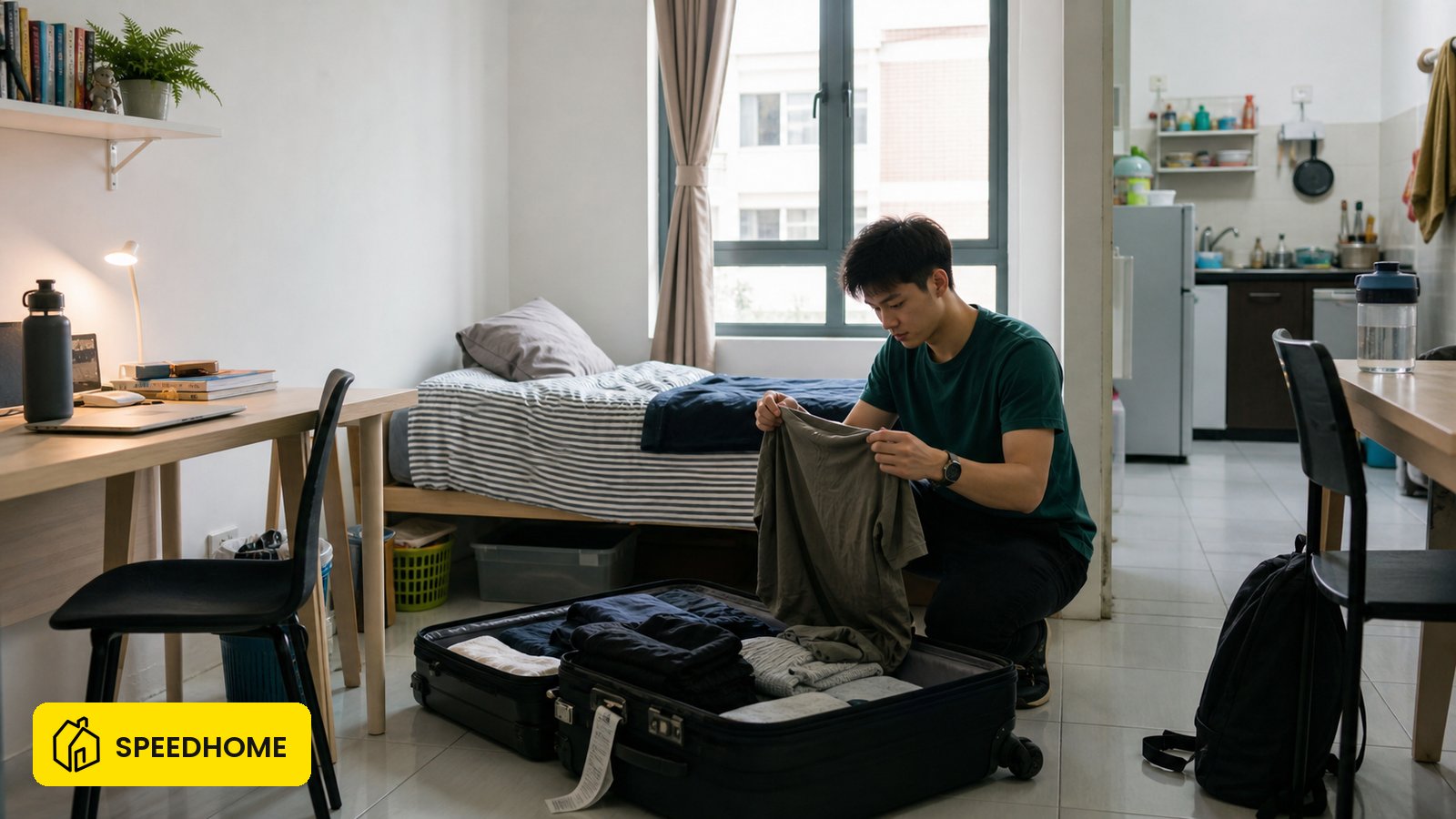
Student room rental in Malaysia: PBSA, co-living, or sublet?
Student room rental in Malaysia is not one product. The real choice is between purpose-built student accommodation, managed co-living rooms, and informal sublet rooms. Pick based on commute, upfront cash, paperwork, house rules, and what happens if the arrangement breaks mid-semester.
Most students search for a cheap room first. That is understandable, but it is incomplete. A room that is RM100 cheaper can become expensive if the commute is bad, the housemate arrangement is unclear, the landlord will not sign a proper agreement, or you lose the deposit because the main tenant disappears.
If you are comparing cities and campuses, start with where to rent in Malaysia. If you already need a shortlist, browse rooms and rentals on SPEEDHOME and check current Zero Deposit eligibility on each listing.
How do PBSA, co-living, and informal sublet rooms compare?
PBSA wins on campus convenience, co-living wins on managed rules and clearer paperwork, and informal sublet wins only when the main tenant has written permission and the terms are properly documented. The cheapest headline rent is not always the safest semester choice.
| Option | Best for | Main risk | What to verify |
|---|---|---|---|
| PBSA | Students who want campus-first convenience and predictable student facilities | Higher rent or limited locations | Operator, contract term, visitor rules, utilities, refund terms |
| Managed co-living | Students who want a room with clearer house rules and shared facilities | Rules may be strict; availability changes quickly | House rules, utilities split, cleaning, deposit or Zero Deposit eligibility |
| Informal sublet | Students who already trust the main tenant and need flexibility | Main tenant may not have permission to sublet | Written landlord consent, payment proof, room inventory, exit terms |
| Whole-unit sharing | Groups of friends who can coordinate payments and chores | One person may become responsible for everyone | Names on tenancy agreement, joint liability, utility payment rules |
The danger zone is an informal room with no agreement, no receipt, and no proof that the main tenant can legally sublet. If the landlord later rejects the arrangement, the student with the least paperwork usually loses first.
What costs should a student check before paying?
Check rent, deposit, utilities, internet, parking, access card, cleaning fees, stamp duty, and replacement charges before paying. Ask for every recurring cost in writing, because student room budgets fail when the "cheap" room hides monthly extras.
Malaysia has no statutory cap on residential rental deposits. The amount is set by the agreement. Traditional room arrangements may still ask for security deposit, advance rent, and utility deposit; managed listings may offer Zero Deposit if the unit and tenant qualify.
| Cost line | Why it matters | Safe check |
|---|---|---|
| Monthly rent | The headline number students compare first | Confirm due date, bank account, and late-payment rule |
| Security deposit | Cash tied up until move-out | Ask what deductions are allowed and when it is returned |
| Utility deposit | Covers unpaid bills | Check whether bills are metered, shared, or bundled |
| Internet and cleaning | Often omitted from the listing headline | Ask if included or billed separately |
| Stamp duty | Applies to tenancy instruments | Check who pays and whether the agreement will be stamped |
| Access card or key replacement | Small item, big argument at move-out | Get the fee schedule before handover |
Zero Deposit is SPEEDHOME's managed rental-risk system — not a financial guarantee product — that replaces the upfront cash deposit, so tenants move in without tying up cash while landlords stay protected through rental protection instead of holding a deposit. For severe end-of-tenancy damage beyond fair wear and tear, the standard protection claims process applies.
Which option fits which student?
Choose PBSA if campus proximity matters most, co-living if you want clearer shared-house rules, and a sublet only if the paperwork is clean. If your semester, internship, or commute may change, flexibility is worth paying for.
PBSA makes sense when a campus is hard to reach, when parents want a student-focused environment, or when the operator provides facilities you will actually use. Co-living works better when the campus is in a rental-heavy urban area and you want verified rooms, house rules, and fewer housemate negotiations. Informal sublet works only when trust and documents are both strong.
For Malaysian students, commute can decide the whole rental. A room near an MRT, LRT, KTM, campus bus, or direct bus route may beat a cheaper room that forces e-hailing every morning. Always test the route at the actual class or work hour before paying.
What paperwork protects a student renter?
A student should keep a written agreement, payment receipts, move-in photos, room inventory, utility arrangement, house rules, and written permission for any sublet. Without these, a room dispute becomes one person's word against another's.
The agreement does not need to be complicated, but it must answer the basics: who rents the room, which room is included, how much is paid, when it ends, what deposit is held, what bills are included, and what happens if either side wants to leave early. If it is a sublet, ask for written landlord permission or a tenancy clause that allows it.
At move-in, take photos of the bed, mattress, desk, chair, wardrobe, air conditioning, fan, lights, door lock, windows, walls, floor, and bathroom if attached. Send those photos to the landlord, operator, or main tenant on the same day.
How does SPEEDHOME fit student room rental?
SPEEDHOME is most useful when a student wants verified listings, clearer paperwork, a documented handover, and Zero Deposit eligibility on qualifying units. It does not make every room suitable; students still need to inspect location, housemates, and commute.
Use SPEEDHOME as the safer route for shortlisting, not as a replacement for judgment. Check the listing details, look for the Zero Deposit tag, ask about utilities, and read the agreement before payment. For students comparing whole-unit sharing or co-living, room rental and co-living in Malaysia gives the broader decision frame.
The practical next step is simple: browse rooms and homes on SPEEDHOME, shortlist by commute and budget, then verify deposit, utilities, and house rules before paying.
FAQ
Is PBSA better than co-living for students?
PBSA is better when campus convenience and student facilities matter most. Co-living is better when you want a normal residential location, clearer shared-house rules, and potentially more flexible room choices.
Is an informal student sublet safe?
Only if the main tenant has written permission to sublet and the room terms are documented. Without permission, you risk losing the room even if you paid the main tenant.
Does Zero Deposit make student rooms cheaper?
It reduces the upfront cash on qualifying SPEEDHOME listings by replacing the cash deposit. It does not remove monthly rent, advance rent, or responsibility for damage beyond fair wear and tear.
Should students sign a 12-month tenancy?
Only if the campus, internship, commute, budget, and housemate plan are stable. If your location may change next semester, a shorter or more flexible room arrangement may be safer.
What should I photograph at move-in?
Photograph the bed, mattress, furniture, walls, floor, windows, lock, air conditioning, lights, bathroom, meter if accessible, and any existing defect. Send the photos immediately so the date is clear.
Who pays stamp duty for a student room agreement?
The agreement should state who pays. Tenancy instruments are stamp-duty instruments, and the amount depends on annual rent and tenancy term. Do not assume it is included unless the operator or landlord confirms it in writing.