
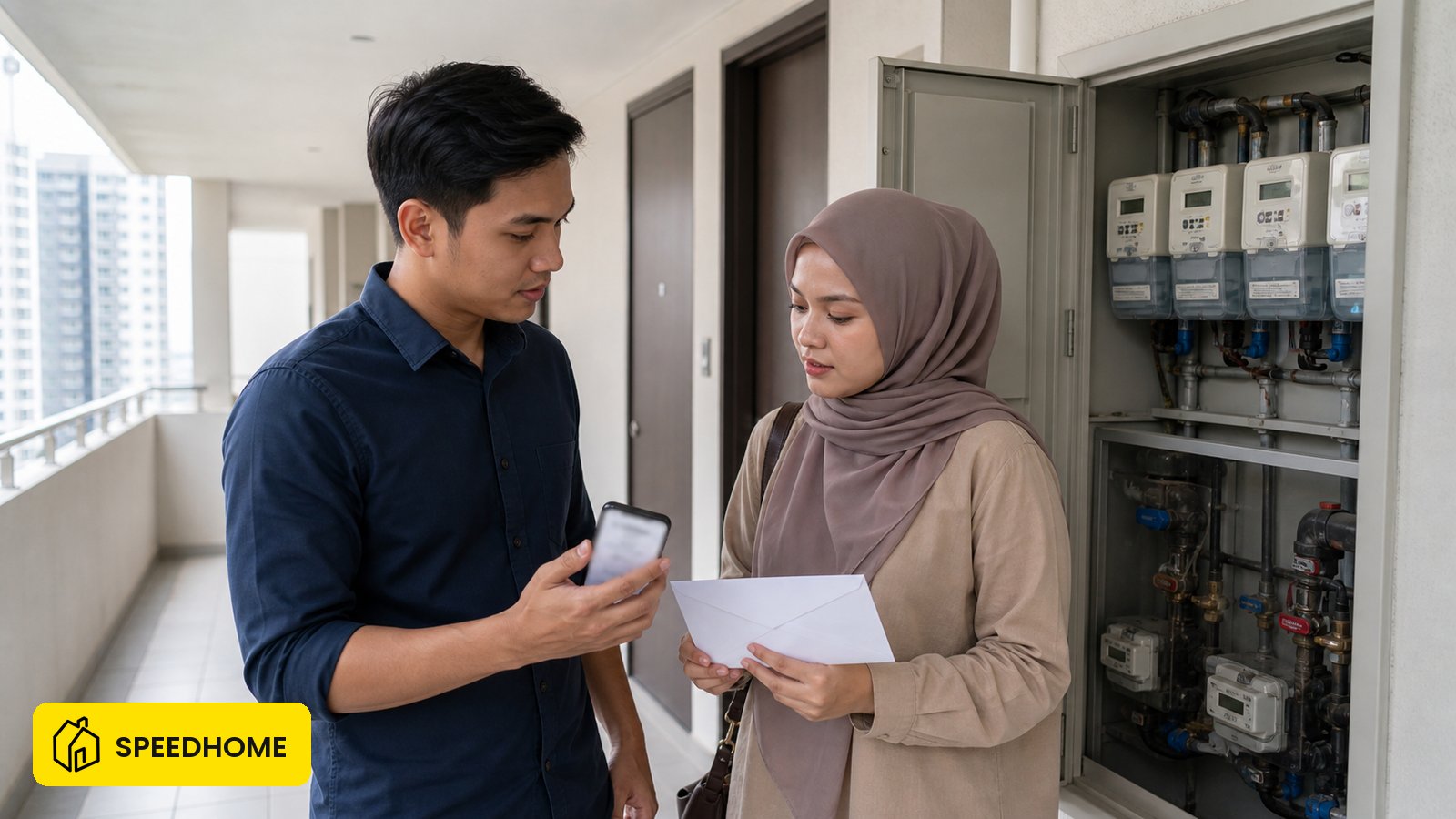
No, you cannot cut the electricity, shut off the water, or block the access card to force a tenant who owes rent to pay or move out. In Malaysia, only a court can remove a tenant, and cutting services to pressure them is unlawful, even when the utility account is in your name. Doing it flips the story from "my tenant didn't pay" to "my landlord broke the law" and hands them a counter-position.
SPEEDHOME platform data shows landlords who act on the first missed payment and keep the utilities running recover unpaid rent in an average of 31 days from first default — those who reach for the utility switch typically extend the case by months and lose the money too.
The lawful sequence is short and boring, which is exactly why it works. Keep the power and water on. Send a written demand for the rent owed and save every message and receipt. If the total claim is RM5,000 or less, file it yourself under the Magistrates' Court small-claims procedure — no lawyers, claims up to RM5,000.
Why cutting utilities feels right but is the wrong move
Cutting utilities converts a winning debt story into a fresh counter-claim. A tenant in lawful possession under Section 7(2) of the Specific Relief Act 1950 cannot be forced out by switching off the supply, and SPEEDHOME's fastest recoveries (31 days from first default) come from landlords who keep the lights on and build the paper trail.
When a tenant stops paying, two completely separate things are happening, and almost every landlord blurs them together. First, there is the money the tenant owes you, the unpaid rent stacking up each month. Second, there is the question of whether you can take back possession of the unit. Cutting the electricity or blocking the access card is an attempt to use the second to force the first, and the law does not let you do that.
Malaysia has no single residential tenancy law that gives landlords a fast switch to flip when rent stops. Your tenancy agreement is the contract that governs the relationship, and under Section 7(2) of the Specific Relief Act 1950, the law treats your tenant as being in lawful possession of the unit until a court says otherwise, even if they have not paid a cent in months. Utilities are tied to that possession. As long as the tenant is lawfully in the unit, cutting off the basics they depend on to live there is treated as forcing them out by the back door, and the courts see straight through it.
"Just cut the electricity" and the other folk advice that backfires
Landlord chat-group advice — cut the electricity, block the access card, post the tenant's IC, throw their belongings out — converts a clean debt case into a counter-claim. Only a court can remove a tenant under Section 7(2) of the Specific Relief Act 1950, and any of these moves before that point is a self-help eviction.
Walk into any landlord chat group and someone will tell you the fastest way to deal with a non-paying tenant is to make their life uncomfortable until they leave. The advice sounds practical. It is also the quickest way to put yourself on the wrong side of the law. Here is the street advice you will hear, and exactly why each one is a trap.
"Cut the electricity or water." The logic is that no one can live without power, so they will pay or pack up. The reality is that switching off services to pressure a tenant in lawful possession is treated as an unlawful way of forcing them out, the same as locking them out. It does not speed up your recovery. It gives the tenant a fresh complaint against you and a reason to stop cooperating entirely.
"Block the access card or lock the tenant out." Disabling a tenant's access card, swapping the locks, or removing the front door is the most common shortcut landlords ask about, and the answer is a hard no. Only a court can order a tenant removed from a unit. Block the card and the tenant who was clearly in the wrong for not paying suddenly becomes the wronged party, and you have handed them the upper hand in any dispute.
"Post their IC online or in the owners' group." When frustration peaks, landlords think about naming and shaming, publishing the tenant's identity card, an "IC", which is the Malaysian identity card every resident carries, on social media or in a building chat group. Publishing someone's personal details like their identity card number can put you on the wrong side of the Personal Data Protection Act 2010 (as amended by Act A1727, which now adds mandatory breach-notification) and expose you to your own legal problem. It also does nothing to recover your rent.
"Throw out their belongings." Dumping or seizing a tenant's things to force them out is not lawful and invites a claim back against you. Even if the tenant owes several months of rent, their furniture, clothes and documents remain their property until a court orders otherwise; treating those items as leverage is treated as an unlawful distress and can be claimed back against you, often for more than the original debt.
Do not flip the script: The moment you cut a utility or block an access card, you risk turning a clean debt-collection story into a case where you are the wrongdoer. Stay on the lawful path and keep the tenant firmly in the wrong, because that position is worth more than any pressure tactic.
"But the electricity account is in my name" - does that change anything?
No. The account name only decides who pays the provider (TNB or Air Selangor) — it does not give you a private eviction tool. Cutting supply to a tenant in lawful possession is treated as an unlawful attempt to force them out, regardless of whose name is on the bill.
This is the question landlords cling to, and it is worth answering directly because the answer surprises people. There are two common setups, and the conclusion is the same for both.
If the utility account is in the tenant's name, it is plainly not yours to touch. Interfering with a service the tenant pays for and controls is clearly improper.
If the utility account is in the landlord's name, you might assume that because the bill comes to you, the supply is yours to switch on and off. It is not that simple. Once the tenant is in lawful possession and relying on that supply to live in the unit, cutting it specifically to pressure them is still treated as an unlawful attempt to force them out, regardless of whose name is on the account. The account name decides who pays the provider. It does not give you a private eviction tool.
So the practical rule is blunt: it does not matter whose name is on the electricity or water account. Do not weaponise the supply. If unpaid utility bills are part of what the tenant owes, that amount becomes part of your claim for the money, recovered the lawful way, not collected by darkness.
| The folk advice | Why landlords try it | What actually happens | The lawful move instead |
|---|---|---|---|
| Cut the electricity or water | "They can't live without it, they'll pay" | Treated as forcing them out unlawfully; gives the tenant a counter-position | Keep it on; add unpaid utility bills to your money claim |
| Block the access card / change locks | "It's my property, I'll lock them out" | Only a court can remove a tenant; you become the wrongdoer | Apply to court for a possession order |
| Post their IC online | "Name and shame so they pay up" | Publishing identity-card details risks a personal-data breach claim against you | Pursue the debt quietly through the proper channel |
| Throw out their belongings | "Get them out faster" | Unlawful seizure; invites a claim back against you | Keep property safe; recover money and possession lawfully |
The lawful way to actually get your money or your unit back
Two clean routes exist. For RM5,000 or less in unpaid rent, file it yourself under the Magistrates' Court small-claims procedure (no lawyers). For the unit back or debts above RM5,000, apply to the Sessions Court for a possession order. Both start the same way: keep utilities running and build the paper trail.
There are two clean routes, and which one you use depends on what you want and how much is owed. Both start with the same foundation: keep the utilities running and document everything.
Step 1: Document and send a written demand
Before anything else, build the record. Save every message, every transfer that failed, every promise to pay. Then send a clear written demand stating the amount owed, the original due dates, any unpaid utility bills, and a firm deadline to settle. Keep a copy. This single habit is what separates landlords who win from landlords who lose, because weak evidence is the number-one reason these disputes go badly.
Step 2: The Magistrates' Court small-claims procedure for money up to RM5,000
If what you mainly want is the unpaid rent and the amount is RM5,000 or less, the Magistrates' Court small-claims procedure is your fastest, cheapest option. You file the claim yourself, no lawyer is allowed, and the process is built for ordinary people. Bring your tenancy agreement, your payment records, and the written demand you sent.
Step 3: Court action for possession and larger debts
If you want the unit back, or the debt is larger than RM5,000, you go through the courts for an order to recover possession and a judgment for the money owed. This is slower and usually needs a lawyer, but it is the route that ends with a court-backed order to remove the tenant if they still will not leave, the only lawful way to actually get them out.
Keep the lights on, win the case: A tenant living comfortably with the power on but a written demand in hand is a tenant you can take to the court cleanly. A tenant you cut off is a tenant with a complaint that muddies your claim. Comfort for them, clarity for you, that is the trade that wins.
How SPEEDHOME changes the math for landlords
SPEEDHOME removes the two pressures that push landlords toward cutting utilities: a bad tenant getting in, and an empty month once a tenant defaults. Pre-screen blocks roughly 30% of applicants before signing, and Protect keeps rent flowing to the landlord for the remainder of the tenancy even when the tenant stops paying, so the income gap that breeds panic never opens up.
Almost every case where a landlord is tempted to disconnect water or electricity comes from those two failures: renting to the wrong tenant, and having no income while chasing them. SPEEDHOME is built to remove both, so the desperation that pushes landlords into illegal shortcuts never builds up in the first place.
SPEEDHOME internal screening data shows roughly 30% of applicants do not pass the credit and behavioural filter — that is the slice of payment trouble stopped at the door before any tenancy agreement is signed. The remaining tenants who do pass and then default mid-tenancy are covered by Protect, so the landlord keeps receiving rent for the rest of the agreed term. When the income line does not break, the panic that drives landlords toward the power switch never starts.
| Situation | Without SPEEDHOME | With SPEEDHOME |
|---|---|---|
| Tenant screening | You guess from a name and a salary slip | Applicants are filtered against credit and behavioural data before signing |
| Tenant defaults | Income stops, panic sets in, shortcuts tempt | Protect keeps your rent coming, no panic |
| Evidence trail | Scattered across your phone and memory | Logged and ready if you need it |
| Pressure to disconnect water or electricity | High, because waiting means no money | Low, because you are still being paid |
How to protect yourself before this ever happens
Three habits stop this before it starts: screen tenants properly with credit and reference checks, sign a complete stamped tenancy agreement that covers rent, due dates, utilities and default, and act on the very first missed payment. Each one cuts recovery time dramatically and most of them are covered in our landlord guide for Malaysia.
The best time to deal with a non-paying tenant is before they move in. Three habits make the biggest difference.
First, screen properly. Do not rely on a good feeling or a confident handshake. Verify income, check references, and let a real screening process do its job.
Second, get the agreement right. A clear, properly drafted tenancy agreement is your foundation if anything goes wrong later. It should spell out rent, due dates, who pays which utilities, the deposit, and what happens on default. One increasingly common issue: tenants running crypto mining that spikes utility bills - make sure your agreement addresses unusual usage.
Third, act early every single time. The data is clear: landlords who move on the first missed payment recover far faster than those who wait and hope. For the full eviction playbook, see tenant not paying rent in Malaysia.
I'm a tenant and my landlord already cut the power — what do I do now?
Keep paying what you can, document the cutoff in writing, and push the landlord back onto the lawful track — a retaliatory or illegal utility cutoff does not cancel your obligation to pay rent, but it does not give the landlord a shortcut either.
Everything above this section is written for landlords, but the same rule protects a tenant on the receiving end of a cutoff, including one where rent is only partly paid or being cleared in instalments while an account dispute drags on. A tenant in lawful possession under Section 7(2) of the Specific Relief Act 1950 cannot lawfully be forced out by having the electricity or water switched off, whether or not some rent is still owed.
If it is happening to you, three moves matter most:
- Document, do not argue by text. Photograph the meter or the disconnection notice, save the WhatsApp thread where the landlord threatened or confirmed the cutoff, and keep proof of every rent instalment paid to date, even a partial one. This is the evidence that turns the story around if it ends up in front of a court.
- Keep paying whatever instalment was agreed. If rent is frozen because an account or deposit dispute is unresolved, put the payments in writing (bank transfer, not cash) and send a short message stating what the payment is for. A tenant who keeps paying, even partially, is in a materially stronger position than one who stops paying because the power is off.
- Send the landlord a written notice that the cutoff is unlawful and ask for restoration. Reference the tenancy agreement and state a short deadline. If the supply is not restored, this notice becomes part of a nuisance or unlawful-eviction claim, and a police report can be filed for the disconnection alongside it.
Do not retaliate by withholding all rent outright or by self-help of your own, such as breaking a lock the landlord changed. That risks turning a clean complaint against the landlord into a mixed dispute. Escalate through the written-notice and evidence route, and get legal advice if the landlord does not restore supply after being asked in writing. For the possession-side version of this same problem, see can a landlord change locks or cut water in Malaysia.
Frequently asked questions
Can I cut the electricity if the bill is in my name and my tenant won't pay rent? No, the account name does not change the rule. As long as the tenant is in lawful possession of the unit under Section 7(2) of the Specific Relief Act 1950, cutting the supply specifically to pressure them to pay or leave is treated as an unlawful way of forcing them out — the same legal posture as changing the locks or blocking the access card. Recover the unpaid utility amount as part of your money claim instead.
Can I block my tenant's access card or lock the tenant out? No. Section 7(2) of the Specific Relief Act 1950 treats your tenant as being in lawful possession of the unit until a court says otherwise, which is why only a court can order a tenant removed. Disabling the card, swapping the locks, or removing the door are all treated as forcing them out by the back door, with the same legal consequence.
What happens if I cut the utilities anyway? The tenant who was plainly in the wrong for not paying can file a counter-claim against you for illegal eviction or distress, and they may also lodge a police report. Your original rent claim does not go away, but it now has to be argued against a fresh claim you created, and weak or compromised evidence is what sinks landlords in that situation.
Can I post my tenant's IC or details online to pressure them? No — publishing someone's IC number or personal details can breach the Personal Data Protection Act 2010 (as amended by Act A1727 in 2024, which adds mandatory breach notification) and give the tenant a counter-claim. Recover the debt through a written demand and the Magistrates' Court small-claims procedure, not a chat group or owners' forum.
The unpaid utility bills are piling up under my name. How do I recover those? Treat them as part of the money the tenant owes you. Add the unpaid utility amounts to your written demand and to any claim you file. If the total is RM5,000 or less, the Magistrates' Court small-claims procedure can handle it without a lawyer.
How long does it take to get my unit back if I do it the lawful way? The Magistrates' Court small-claims procedure for claims of RM5,000 or less typically resolves within a few months and is the faster path if your main goal is the money. A full possession action to recover the unit is slower, often six months to a year, and usually needs a lawyer. Either way, the earlier you send a written demand and keep the paper trail, the cleaner the case you bring.
The bottom line for landlords
The lawful sequence is short and boring, which is exactly why it works: keep the utilities on, send a written demand, save every message and receipt, and use the Magistrates' Court small-claims procedure for debts up to RM5,000. Cutting the supply is what turns a winning debt claim into one you may end up paying for.
Cutting the electricity, shutting the water, or blocking the access card feels like taking control, but it does the opposite. It is unlawful, it does not matter whose name is on the account, and it flips a clean debt story into one where you are the one who broke the law. Keep the utilities on, build your paper trail, and use the lawful routes: the Magistrates' Court small-claims procedure for debts up to RM5,000, the courts for possession and larger sums.
If you would rather not face this corner in the first place, SPEEDHOME's screening and Protect cover are built exactly for it: list your property.
This article is general information based on SPEEDHOME's platform experience and current Malaysian rental practice, not legal advice. Reviewed by Aiman Razali, Registered Estate Agent (REN), BayHill Putrajaya and SPEEDHOME Head of Tenant Operations, against the Specific Relief Act 1950 s.7(2), the Magistrates' Court Rules 1980 small-claims procedure, and the Personal Data Protection Act 2010 (as amended by Act A1727). For advice on your specific situation, consult a qualified Malaysian lawyer.
SPEEDHOME · SPEEDRENO · SPEEDFIX · SPEEDSIGN