
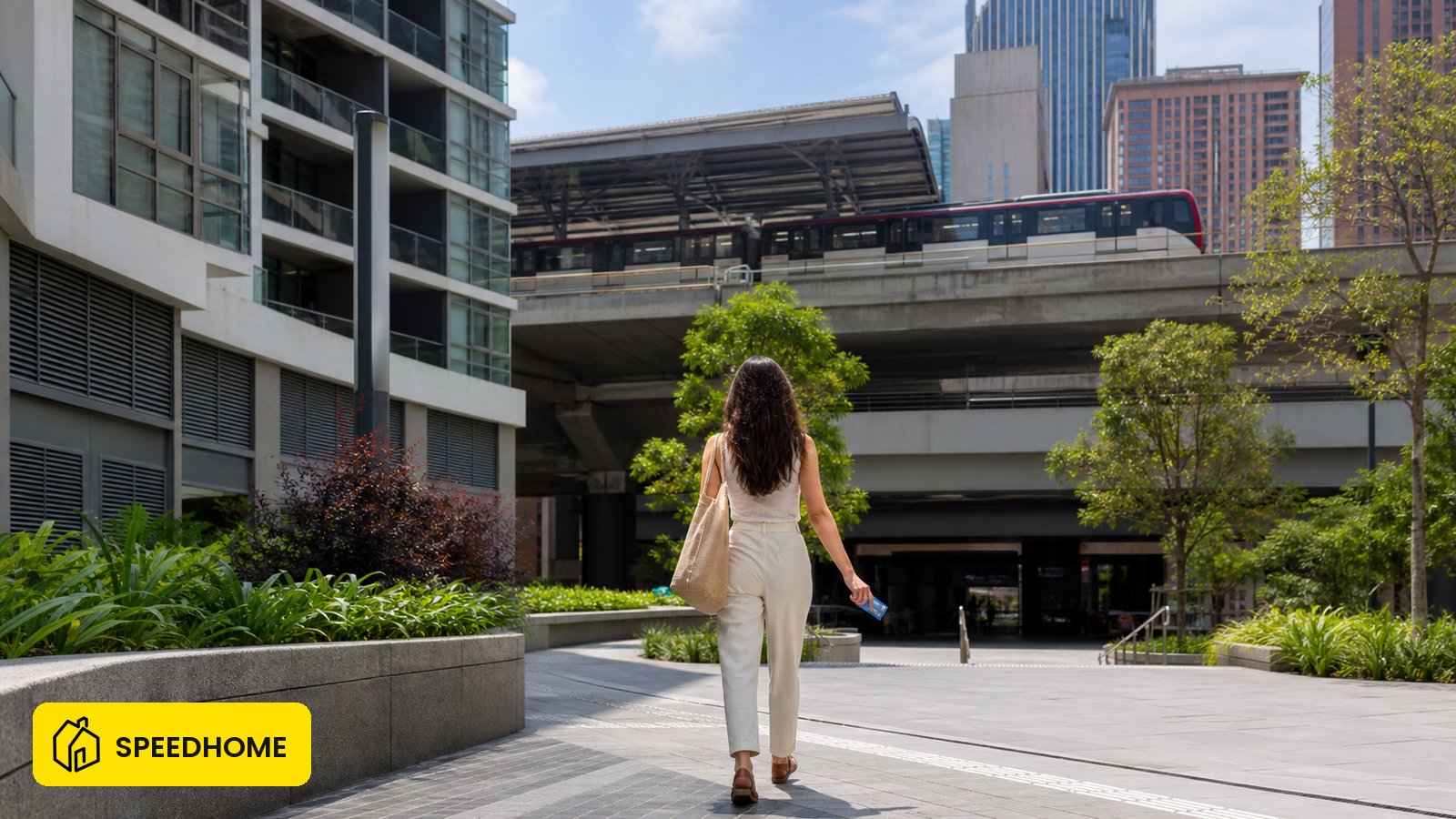
Whether you need a car depends on the address, not the city: Bangsar, Wangsa Maju, KL Sentral and Bangsar South anchor genuinely car-free rentals, while Mont Kiara, Sri Hartamas and Taman Desa have no direct rail and are effectively car-required. The test is a named station under a 12–15 minute walk — otherwise you are car-light, so budget Grab accordingly.
Do you actually need a car in Kuala Lumpur?
Whether you need a car in KL depends almost entirely on where you rent, not on how long you plan to stay. If your home and workplace both sit within a genuine walk of the Kelana Jaya, Ampang/Sri Petaling, Kajang, or Putrajaya rail lines, most expats can go car-free. If either end of your daily route sits in a car-dependent suburb, a car or a heavier Grab budget becomes close to mandatory.
KL is not a uniformly transit-friendly city. It is a patchwork: dense, walkable rail corridors running through a mostly car-oriented urban fabric. That means the honest answer to "do I need a car" is a question about your specific address and workplace, not about the city as a whole. Before signing a tenancy, map your actual commute door-to-door — not the area's reputation — because "near MRT" on a listing can mean a 5-minute walk or a 20-minute e-hailing ride, and the difference changes your entire monthly budget.
Which KL areas let you skip the car?
Areas anchored directly on a rail line — parts of Bangsar, Wangsa Maju, KL Sentral, and Bangsar South — let a genuinely car-free lifestyle work, provided your workplace is also rail-accessible. Areas like Mont Kiara, Hartamas, and Taman Desa have no direct rail and are effectively car-required.
The split roughly follows two categories:
| Category | Example areas | Car-free reality |
|---|---|---|
| Rail-anchored (walkable) | Bangsar, Wangsa Maju, KL Sentral, Bangsar South, parts of Cheras (Taman Connaught) | Workable car-free if your workplace is also on or near a line; walk times still vary block by block |
| Car-dependent | Mont Kiara, Sri Hartamas, Taman Desa, most of Kepong and Setapak away from the station | Car or a substantial Grab/e-hailing budget is close to essential; rail access is a 15–25 minute drive or feeder away, not a walk |
This is the same transit-honesty problem covered in the best areas to rent a room near MRT/LRT in KL guide and the best areas to rent in KL for expats guide: a listing calling itself "near MRT" or "LRT accessible" does not tell you whether that means a 5-minute walk or a 20-minute drive. Confirm the actual walking route on foot, at the time you'd normally commute, before you commit to a car-free plan around a specific unit.
A useful rule of thumb: if you can name the exact station and the walk takes under 12–15 minutes at a normal pace in KL heat and humidity, car-free is realistic. If the honest answer is "you'd need a feeder bus or a short Grab," you are not car-free — you are car-light, and your monthly transport cost should be budgeted accordingly.
What is the monthly cost math — owning a car vs Grab + transit?
Owning a car in KL carries recurring costs beyond the purchase price — parking, tolls, petrol, and insurance/road tax all stack up monthly. Relying on public transit plus Grab for the gaps is usually cheaper for a single commuter in a rail-anchored area, but the math flips once your trips are frequent, off-peak, or outside rail coverage.
Exact figures shift with fuel prices, toll schedules, and your specific route, so treat the categories below as a budgeting checklist rather than fixed numbers — confirm current rates before you commit to either path.
| Cost category | Owning a car (monthly) | Transit + Grab (monthly) |
|---|---|---|
| Fixed cost | Loan/lease instalment, road tax, insurance premium — all payable whether or not you drive | None — you only pay for trips taken |
| Parking | Monthly reserved parking (common in condos and office towers) — fees vary by building, tier, and pocket, with premium CBD/KLCC-adjacent buildings typically costing more than older mid-tier condos on the same line — plus ad hoc parking for errands | Not applicable |
| Fuel / tolls | Petrol plus toll charges on highways like the Penchala Link, NPE, or SPRINT, depending on your commute route | Not applicable |
| Maintenance | Servicing, tyres, and unplanned repairs — irregular but real | Not applicable |
| Daily transit | Not applicable (car covers the trip) | Rail fare per trip on the LRT/MRT/KTM/monorail network |
| Gap-filling trips | Not applicable | Grab or e-hailing for the "last mile" from station to door, off-peak trips, or destinations without rail coverage |
The practical takeaway: a car's fixed costs (instalment, insurance, road tax, parking) accrue whether you drive five days a week or five days a month. Transit-plus-Grab costs scale with actual usage. For a single expat working a fairly predictable rail-adjacent commute, the pay-as-you-go model usually wins. For a family doing school runs, weekend errands across car-dependent suburbs, or frequent off-peak trips where Grab surge pricing applies, ownership frequently comes out ahead once you tally the accumulated Grab spend. Run your own numbers against your actual weekly trip pattern rather than assuming either option is automatically cheaper — it depends on your specific route mix.
Fill in your own commute and viewing-day comparison
Use the same week and the same destinations for both options. Fill in current quotes and your own route checks; the page does not supply a fare or ownership estimate.
| Your check | Notes to fill in |
|---|---|
| Work destination and usual workdays | ______ |
| Candidate home or unit and exact station you would use | ______ |
| Door-to-door route you mapped from that unit to work | ______ |
| Walk from the unit to the station, checked on the actual route | ______ |
| What you observed on a viewing-day walk at your usual commute time | ______ |
| Other weekly destinations and how often you go | ______ |
| Car option: instalment or lease, parking, fuel, tolls, insurance, road tax, maintenance | ______ |
| Transit option: fares for your mapped trips and expected e-hailing gap trips | ______ |
| Current quote/source and date for each cost you entered | ______ |
| Which option fits this route pattern, and what would change your choice? | ______ |
For the viewing check, map the route from the specific unit entrance to the station and walk it at a time that resembles your normal commute. Record any road crossings, covered or exposed sections, and the route you actually took. A listing's “near MRT” label does not establish a walkable route. If you cannot verify the walk or cost yet, leave that field open and check it before relying on the comparison.
How your area choice changes the answer
Renting in a rail-anchored area does more than shorten your commute — it changes whether car-free is realistic at all. The area decision should come before the car decision, not after.
If you sign a lease in a car-dependent suburb first and then try to make car-free living work, you are fighting the geography. The more effective sequence is:
- Map your workplace and likely daily destinations (school, gym, groceries) against the rail network first.
- Shortlist areas where both your home and workplace sit on or near the same line, or where a single transfer covers the route. KL Sentral is the strongest multimodal hub in the city and a common anchor point for this kind of planning.
- Walk the specific block's route to the platform before signing — not just the area in general. The best areas to rent a room near MRT/LRT in KL guide breaks down real walk times per area, since the same "near MRT" label can mean very different things block to block.
- Only then decide whether to go fully car-free, car-light (occasional Grab or a shared car), or car-owning.
Areas like Bangsar, Wangsa Maju, and the KL Sentral / Bangsar South corridor consistently offer the shortest realistic walk times to a working rail line, which is why they anchor most car-free shortlists. Areas further from any line — Mont Kiara, Hartamas, most of Taman Desa — require a structural rethink: either accept the car cost, or budget for a materially higher Grab spend to bridge the gap on every trip.
How does renting near a station with SPEEDHOME work?
The platform lists rentals across KL's rail-anchored areas, and some listings qualify for Zero Deposit — a managed rental-risk system that replaces the upfront cash deposit, not an insurance product. Confirm eligibility on the live listing before you commit to an area based on its car-free potential.
If your car-free plan hinges on a specific walk-to-station distance, that detail belongs in your listing shortlist, not an assumption. Zero Deposit does not change your transit access, but it does remove the two-month cash deposit as a barrier to moving into the rail-anchored area you've actually verified works for your commute — useful if you're relocating and want to keep cash free for the deposit-free move rather than tying it up before you've confirmed the area's day-to-day transit reality.
Browse KL rentals on SPEEDHOME and filter by area to compare rail-anchored options against car-dependent ones before you decide whether to budget for a car.
FAQ
Do expats need a car to live in Kuala Lumpur?
Not necessarily. If you rent in a rail-anchored area — parts of Bangsar, Wangsa Maju, KL Sentral, or Bangsar South — and your workplace is also near a line, car-free living is realistic for many single commuters. If either your home or workplace sits in a car-dependent suburb like Mont Kiara or Taman Desa, a car or a heavier Grab budget becomes close to necessary.
Is Grab cheaper than owning a car in KL?
For light, occasional use — especially gap trips from a station to your door — Grab plus transit is usually cheaper than car ownership, because you only pay for the trips you take. A car carries fixed monthly costs (instalment, insurance, road tax, parking) regardless of use, so once your trip frequency rises, especially off-peak or outside rail coverage, ownership can become more cost-effective. Run the comparison against your own weekly trip pattern rather than assuming one option wins outright.
Which KL areas are best for a car-free lifestyle?
Areas directly anchored on a working rail line with genuinely short walks to the platform — parts of Bangsar, Wangsa Maju, KL Sentral, and Bangsar South — are the strongest car-free candidates, provided your workplace is also rail-accessible. Always verify the specific block's walk time rather than trusting the area's general reputation.
What if my workplace isn't near a rail line?
Then car-free living is harder regardless of where you rent, since one end of your daily commute is car-dependent. Options include a car, a longer Grab-and-transit combination, or renting closer to your workplace even if that means a less rail-anchored area — weigh the trade-off against your actual commute time and cost.
Does renting near MRT or LRT guarantee I can go car-free?
No. "Near MRT" on a listing can mean a genuine 5-minute walk or a 20-minute e-hailing ride to the nearest station — always walk the actual route yourself before assuming car-free living will work. See the best areas to rent a room near MRT/LRT in KL guide for area-by-area walk-time detail.
Can I rent in a rail-anchored KL area with Zero Deposit?
Some listings in rail-anchored areas on SPEEDHOME qualify for Zero Deposit, a managed rental-risk system that replaces the upfront cash deposit — it is not an insurance product and not every listing qualifies. Check the live listing to confirm eligibility for the specific unit and area you're considering.