
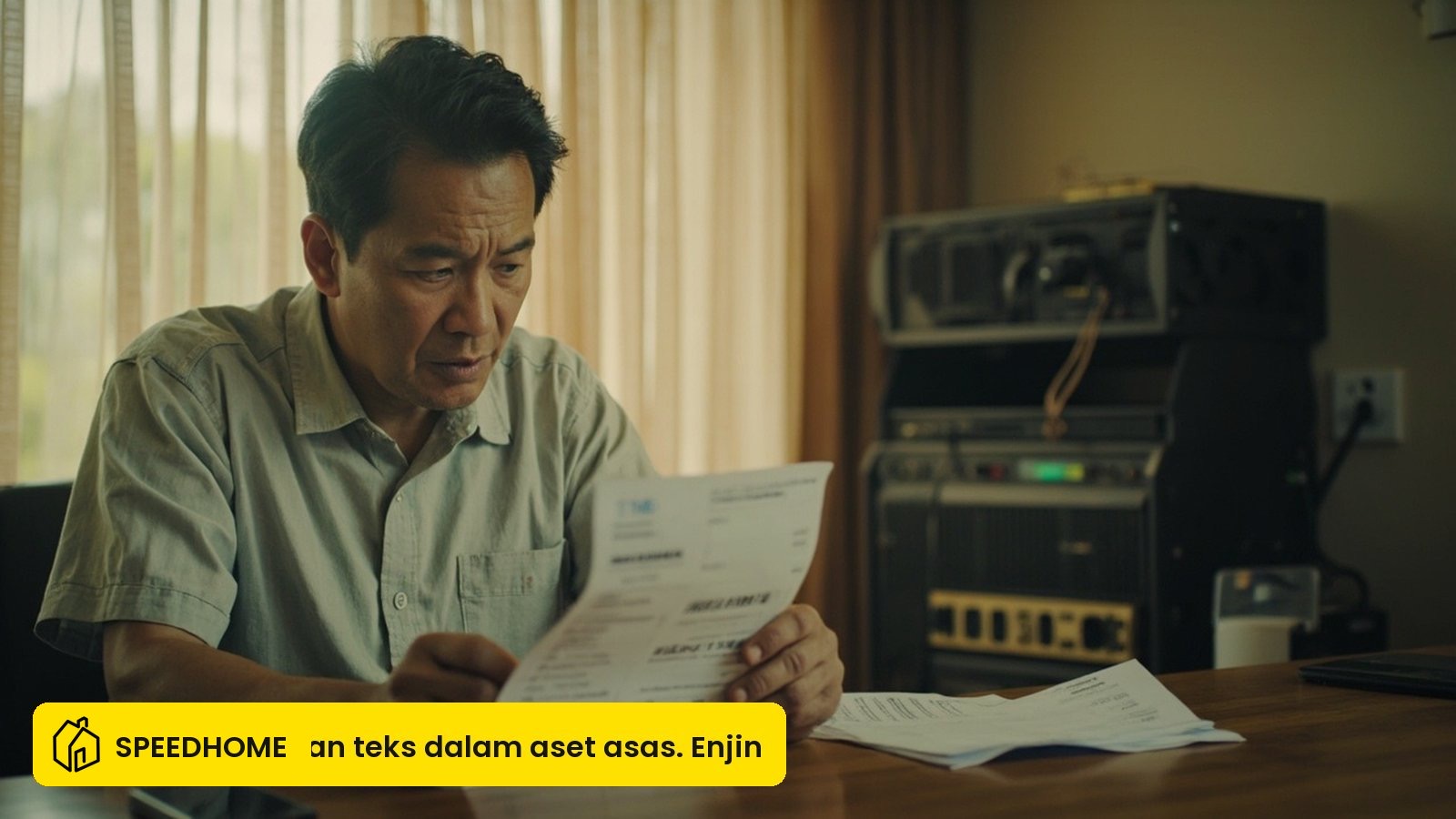
Tenant crypto mining and a high TNB bill: who is responsible?
Responsibility starts with the tenancy agreement, account name, proof of usage and evidence that the tenant caused the abnormal electricity consumption. A landlord should not jump straight to threats or utility cutting. The immediate job is to secure evidence, stop further loss lawfully and recover through the agreement process.
Why crypto mining changes landlord risk
Crypto mining can create unusually high electricity consumption, heat, wiring strain and potential breach of residential-use terms. The bill spike may arrive after the tenant has already left, so weak meter records and vague utility clauses become expensive.
First 24-hour checklist
| Action | Reason |
|---|---|
| Download TNB bill history | Shows consumption spike and timing |
| Photograph meter reading | Creates current evidence |
| Inspect safely with notice | Look for abnormal devices, heat or wiring issues |
| Preserve tenancy agreement | Check utility and use clauses |
| Communicate in writing | Avoid later dispute over what was said |
Who pays?
| Situation | Likely position |
|---|---|
| TNB account under tenant and usage occurred during tenancy | Tenant should settle according to account and agreement |
| Account under landlord but agreement passes utilities to tenant | Landlord may need to pay TNB first, then recover from tenant |
| No clear evidence of tenant-caused usage | Recovery becomes harder; focus on records and advice |
| Suspected illegal wiring or meter tampering | Escalate through proper channels; do not self-remedy dangerously |
How to prevent the next case
Use clauses covering residential use only, no abnormal electrical load without written consent, utility payment responsibility, inspection rights with notice, and recovery for tenant-caused loss. Screen tenants and document meter readings at move-in and move-out.
FAQ
Can I immediately cut electricity?
No. A landlord cannot lawfully evict by self-help — locking the tenant out, removing doors, or disconnecting water or electricity (Specific Relief Act 1950 s.7(2)). If the tenant refuses to settle a tenant-caused TNB bill, the lawful route is a written demand followed by court action: a Writ of Distress to recover the arrears and, if needed, a Writ of Possession to recover the unit, enforced by the court bailiff (Distress Act 1951).
What evidence matters most?
TNB bill history, meter readings, inspection photos, tenancy clauses and written communication.
How much will recovering the cost actually cost in deposit?
There is no statutory cap on residential tenancy deposits in Malaysia — what a landlord can retain is governed by the tenancy agreement and limited to proven loss. If the deposit on file doesn't cover the abnormal TNB bill, the shortfall has to be pursued separately; it doesn't become a blanket right to keep more than the agreed deposit.
Can SPEEDHOME help prevent this?
A structured listing, screening, agreement and handover record reduces the chance of this becoming an evidence problem.