
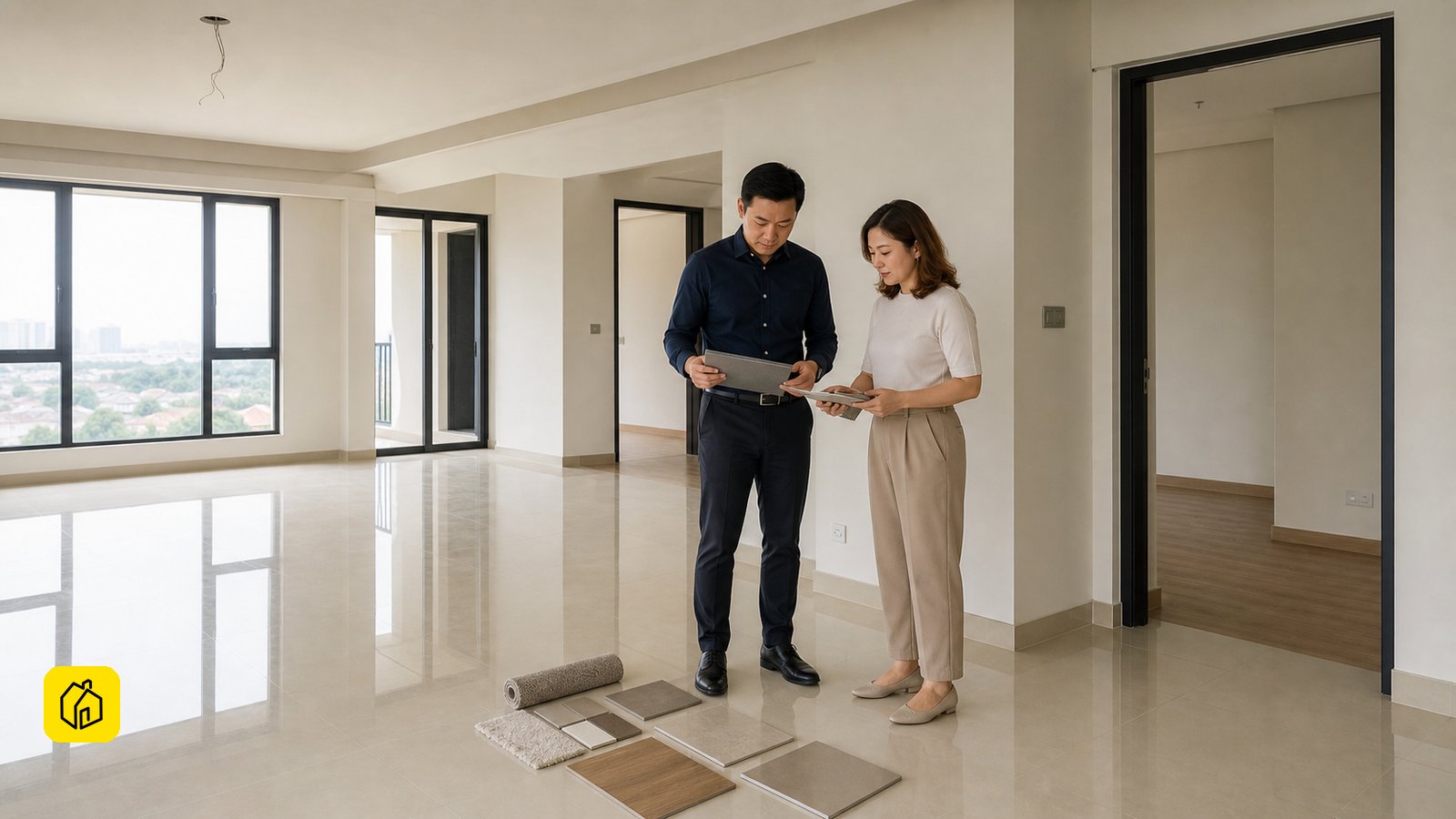
The verdict at D'Clover Residences is that multi-tenant room leasing leads on asking snippets, but whole-unit leasing remains the legal baseline pending your management corporation's written rules. With 1,210 to 1,440 sqft four-bedroom, three-bathroom layouts built by EXSIM Group at Central Park Damansara, early market evidence reveals that operators already market in-building rooms at RM800 to RM1,000 a month (search snippet). Across four rooms, a room split grosses an estimated RM3,200 to RM4,000 a month (derived from snippets), overlapping and exceeding whole-unit asking rents of RM2,750 to RM3,000 a month (search snippet). On SPEEDHOME, there are currently 0 dedicated listings (measured_null), creating a first-mover opportunity in a 227-unit supply pool (search snippet). Because D'Clover is a brand-new tower without transacted sales records on Brickz, we print NO speculative yield percentage — enter your actual purchase price into the calculator below. The biggest caveat: D'Clover is a commercial-titled serviced residence under Majlis Bandaraya Petaling Jaya (MBPJ), where developer and MC by-laws on multi-tenancy, submetering, and utility billing directly gate your operating model.
Three ways to run your unit
Use the decision calculator below to evaluate your expected cash flows. Because public portals confirm whole-unit asking rents starting from RM2,750 a month (search snippet) up to RM3,000 a month (search snippet), the rent field loads RM2,750 — the verified in-building asking floor for a 1,227 sqft four-bedroom unit. Because Brickz records no completed secondary market transactions for this brand-new tower, the purchase price field remains yours to fill from your developer sales and purchase agreement.
- Room rental / co-living (The snippet evidence leader) — With 1,210 to 1,440 sqft four-bedroom, three-bathroom layouts built natively into the floor plan, D'Clover was structurally designed for multi-tenant occupancy without requiring disruptive drywall partitions. In-building room listings on Mudah and PropertyGuru ask between RM800 and RM1,000 a month for brand-new fully furnished rooms (search snippet). Across four bedrooms, this model grosses RM3,200 to RM4,000 a month (derived from snippets), outperforming whole-unit rents by RM450 to RM1,000 a month. However, because this evidence originates from portal search snippets rather than executed platform leases, we flag this as a model to test rather than an unconditional victory. High utility consumption and submeter compliance require careful oversight.
- Whole-unit corporate or family let (The low-friction baseline) — Lease the entire four-bedroom apartment to a corporate expatriate, medical team, or family on a standard 12-month zero-deposit lease. Asking rents for whole units range from RM2,750 for 1,227 sqft units (search snippet) to RM3,000 a month for 1,210 sqft units (~RM2.00 psf, search snippet). While gross revenue is lower than a four-room split, this route eliminates individual tenant turnover, avoids shared-area friction, keeps utility bills under a single account, and requires zero special multi-tenancy approvals.
- Short-stay / homestay (Unproven and unevidenced) — Airbnb geo-searches return 0 building-named listings for D'Clover Residences (measured). The surrounding Damansara Perdana corridor relies heavily on studio micro-units at Mossaz and Paxtonz Empire City achieving RM85 to RM166 a night (measured). A large 1,210 to 1,440 sqft four-bedroom apartment cannot compete efficiently against budget studio tourist inventory, and commercial short-stay operations in residential-vibe strata buildings risk swift JMB or MC by-law bans under the Strata Management Act 2013.
Loading the renovation ROI comparison…
What can you earn?
First-party platform metrics reveal an unoccupied competitive runway: SPEEDHOME currently holds 0 dedicated listings for D'Clover Residences (measured_null). In an active project with 227 units listed across sales and rentals on PropertyGuru (search snippet), this represents an open first-mover opportunity. Landlords listing zero-deposit tenancies on SPEEDHOME bypass the heavy agent concentration and eliminate the standard 2.5-month cash deposit barrier that deters young professional tenants.
In-building rental asking liquidity is documented across portal search snippets: - RM2,750 per month — iProperty search snippet: 3 condominium rentals starting from RM2,750/month, including a fully furnished 1,227 sqft 4-room, 2-bath unit with 2 car parks (search snippet). - RM3,000 per month — EdgeProp search snippet: 4-bedroom, 2-bathroom condominium of 1,210 sqft at RM3,000/month (~RM2.00 psf) near Central Park Damansara (search snippet).
The in-building room market is already active on public classifieds: - RM800 per month — PropertyGuru search snippet: brand-new fully furnished medium room listed at RM800/month (search snippet). - RM800 to RM1,000 per month — Mudah room cards: 155 sqft fully furnished room in brand-new unit, with D'Clover room listings clustering at RM800–1,000/month (search snippet).
The room-split arithmetic reveals a clear gross premium: leasing 4 native bedrooms at RM800 to RM1,000 each generates RM3,200 to RM4,000 a month (derived from snippets), compared to RM2,750 to RM3,000 for a whole unit. However, landlords must account for shared-area high-speed Wi-Fi (RM130–150/month), fortnightly cleaning (RM150–200/month), air-conditioning electricity subsidies, and room vacancy downtime. After operating overheads, net operating income (NOI) between a well-negotiated corporate whole-unit tenancy and a room-split model narrows to within RM200–300 a month.
Resale benchmarks and gross yields: Verified transacted sales records on Brickz are not available (measured_null) because D'Clover Residences is a brand-new tower (the NAPIC 2023 market report recorded it under construction as 1 block of 46 storeys with 593 serviced suites). In accordance with our evidence standards, we print NO unverified yield percentage when a validated sales denominator is missing.
If you acquired a 1,210 sqft unit at an illustrative purchase price of RM650,000, underwriting at the entry whole-unit rent of RM2,750 a month produces: RM2,750 x 12 = RM33,000 annual gross rent (asking-basis), which on RM650,000 equals a 5.1% gross yield (before the 2.19% platform processing fee). At RM3,000 a month, annual gross income reaches RM3,000 x 12 = RM36,000, which on RM650,000 equals a 5.5% gross yield (asking-basis). If operated as a four-room split averaging RM3,600 a month gross: RM3,600 x 12 = RM43,200 annual gross rent (asking-basis), which on RM650,000 equals a 6.6% gross yield. Enter your contracted purchase figure into the calculator above to model your net return.
Operating expenses, short-stay, and pets: Building-named Airbnb listings were not found (measured), and short-stay metrics were not collected this sweep (measured_null). Monthly service charges, sinking fund allocations, and local quit rent assessments are unpublished online (measured_null). Management by-laws regarding pets are likewise unpublished; however, across urban Petaling Jaya, pet-friendly properties capture an estimated 15–20% demand premium where house rules permit. SPEEDHOME coliving is cat-friendly — cats welcome in our coliving rooms; building rules can vary.
Why D'Clover Residences @ Central Park Damansara
D'Clover Residences is a 593-unit serviced residence comprising a single 46-storey tower developed by Mightyprop Sdn Bhd (a subsidiary of EXSIM Group) within the 65-acre Central Park Damansara master plan in Damansara Perdana, Petaling Jaya, under the local governance of Majlis Bandaraya Petaling Jaya (MBPJ). Handed over as brand-new stock, the development exclusively features large four-bedroom floor plans ranging from 1,210 to 1,440 sqft (including 1,210 sqft 4-bed/3-bath, 1,227 sqft 4-bed/2-bath, and 1,440 sqft 4-bed/3-bath configurations), designed with dedicated lifestyle facilities, EV charging bays, and modern security infrastructure.
The project's key investment strength lies in its strategic connectivity and employment catchment. Positioned adjacent to the Damansara-Puchong Expressway (LDP), Penchala Link, and Damansara-Shah Alam Elevated Expressway (DASH), residents enjoy swift transit to prime commercial nodes including 1 Utama, The Curve, IKEA Damansara, IPC Shopping Centre, and Empire City. The local tenant pool comprises corporate executives, tech professionals from surrounding digital hubs, medical staff, and young knowledge workers seeking modern living within easy reach of Bandar Utama, Kota Damansara, and Mont Kiara.
Because D'Clover units were constructed with four genuine bedrooms and multiple bathrooms, owners have the rare structural advantage of running co-living without adding fire-hazard plasterboard partitions. Equipping the apartment with durable, modern furnishings via a reversible SPEEDRENO rental fit-out allows landlords to immediately capture either corporate families at RM2,750–3,000 or individual room tenants at RM800–1,000 a room with minimal turnaround time.
5 checks before you buy
- Verify commercial strata title and utility tariffs — As a commercial-titled serviced residence under MBPJ, confirm whether electricity (TNB) and water (Air Selangor) are billed at commercial or residential rates. Commercial electricity tariffs can add 20–30% to monthly utility costs if air-conditioners are unmetered. Done: utility billing classification confirmed.
- Obtain written house rules on multi-tenancy and submetering — Before marketing individual rooms, obtain official written confirmation from the developer's management office or Joint Management Body (JMB) regarding tenant access cards, submeter installations, and co-living operations under the Strata Management Act 2013. Done: written management rules filed.
- Inspect the actual floor plan and parking allocation — Walk the 1,210 or 1,440 sqft layout to verify usable living space, bathroom ventilation, air-conditioning ledge accessibility, and whether the assigned parking bays are side-by-side or tandem. Done: physical on-site walk-through completed.
- Audit maintenance charges and developer sinking fund billings — Maintenance and sinking fund rates are unpublished on public portals. Request the official billing statement from the management office to verify your exact recurring monthly holding charges. Done: developer maintenance billing inspected.
- Benchmark against competing supply across Central Park Damansara — With 227 units currently marketed across sales and rentals (search snippet) and neighbouring EXSIM towers competing for similar tenant demographics, anchor your pricing realistically against the RM2,750–3,000 whole-unit band or RM800–1,000 room band. Done: rent comparable verified. Review the real cost of self-managing a rental.
FAQ
What yield does D'Clover Residences give?
Because transacted purchase prices from Brickz were not collected in the 2026-10-10 evidence sweep (the tower is too new), we do not print an unverified yield percentage. At the entry asking rent of RM2,750 a month, annual gross rental income equals RM33,000 (asking-basis, before the 2.19% platform processing fee); at RM3,000 a month, annual gross income reaches RM36,000. On an illustrative purchase price of RM650,000, these represent gross yields of 5.1% and 5.5% respectively. If leased as four rooms grossing RM3,600 a month, annual income reaches RM43,200, or a 6.6% gross yield. Enter your exact contracted purchase price into the calculator above to compute your net cash return.
Can you rent out rooms at D'Clover Residences?
Yes, and early market evidence shows operators already market rooms inside the building at RM800 to RM1,000 a month for fully furnished spaces. Because D'Clover floor plans feature four native bedrooms, no illegal drywall partitions are needed. However, multi-tenancy operations in commercial-titled strata properties require strict compliance with management corporation by-laws, sensible submetering, and utility management. For operational best practices, consult our room rental and co-living guide.
Is short-stay allowed at D'Clover Residences?
Short-stay demand at D'Clover Residences is unproven — zero building-named Airbnb listings were found in our market sweep. Furthermore, operating short-term rentals in residential-type strata buildings is strictly governed by management corporation by-laws under the Strata Management Act 2013 and MBPJ regulations. A four-bedroom apartment also faces severe cost disadvantages against budget studio units in nearby towers like Mossaz and Paxtonz. Obtain written management confirmation before committing funds to hospitality setups.
Are pets allowed at D'Clover Residences?
The management corporation's formal by-laws regarding pets are not published in public records. Across Petaling Jaya, pet-friendly properties typically achieve a 15–20% demand premium where building rules permit. SPEEDHOME coliving is cat-friendly — cats welcome in our coliving rooms; building rules can vary.
What running it looks like
Running a unit at D'Clover Residences offers two distinct strategies: lease the entire 1,210–1,440 sqft apartment as a premium whole-home let at RM2,750–3,000 a month to an executive family or corporate team, or furnish the native four-bedroom layout for professional co-living at RM800–1,000 a room once management permissions are confirmed in writing. Complete a clean, reversible interior upgrade via a SPEEDRENO rental fit-out to make your unit move-in ready with zero structural alteration.
SPEEDHOME takes over the entire landlord operational lifecycle: marketing your property with zero-deposit terms to capture high-quality tenant interest, running thorough credit and background checks, coordinating viewings, and handling digital tenancy agreement signing and automated monthly rent collection. Landlords can select from transparent protection options: the flat Standard plan at RM799 + SST a year, Protect at one month's rent, or Protect+ at one and a half months' rent, alongside our standard platform processing fee of 2.19% + SST on collected rent.
Ready? List your D'Clover Residences unit with SPEEDHOME — zero deposit, automated rent collection, and direct landlord approval on every tenancy.
All data points reflect market evidence collected on 10 October 2026 (SPEEDHOME live search, iProperty and EdgeProp search snippets, Mudah and PropertyGuru room listings, and Airbnb geo-search; evidence file dclover-market-evidence-2026-10-10.yaml, lane bi-mine-04). Whole-unit asking rents (RM2,750–3,000/mo) and room asking rates (RM800–1,000/mo) represent active search snippets and classified listings. Resale transaction records on Brickz, Airbnb performance, maintenance charges, and MC pet by-laws were not published or collected in this sweep, and no speculative yield percentage is asserted. For broader investment frameworks, consult the landlord investment decision guide and SPEEDRENO rental fit-out guide.