
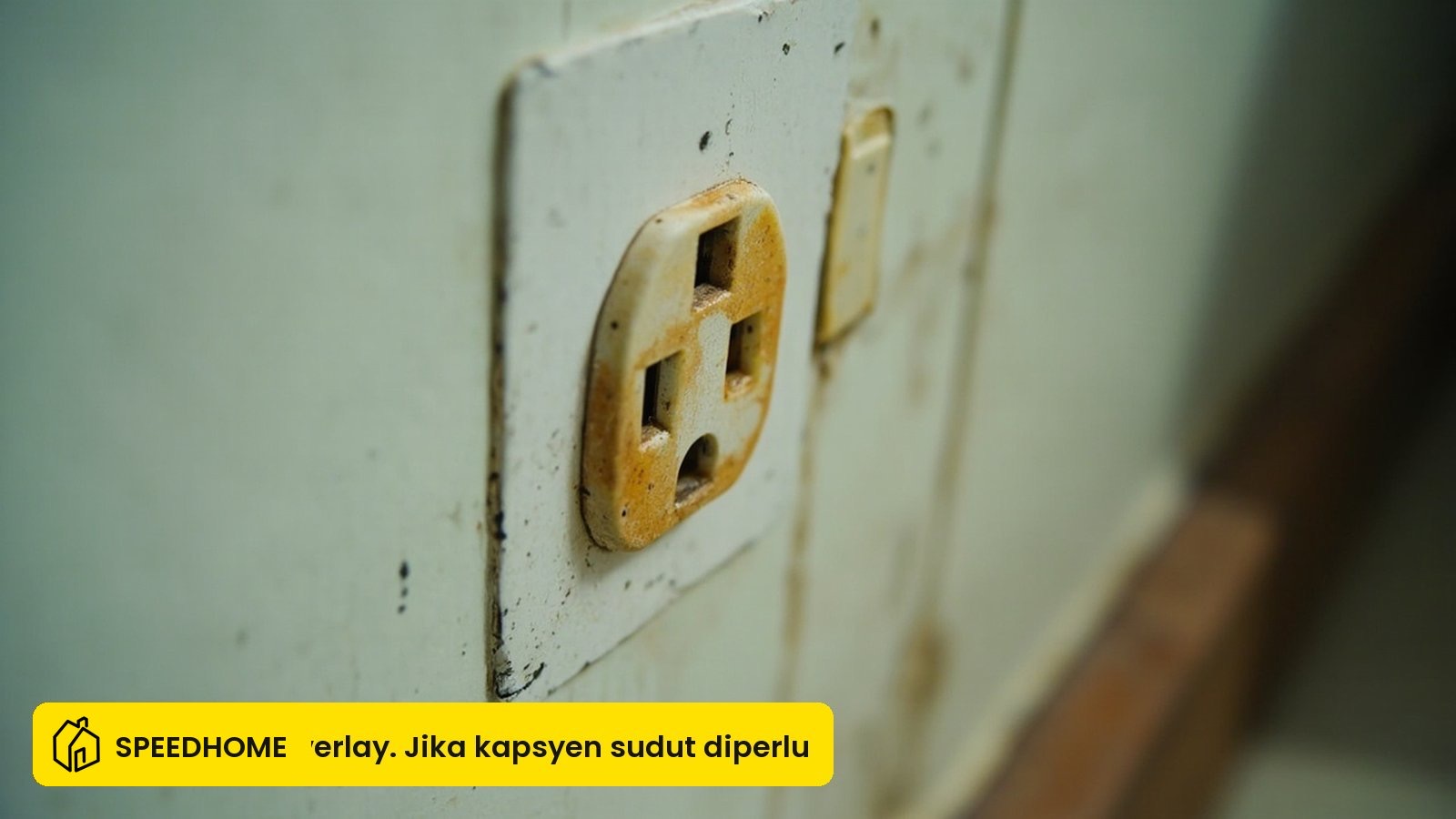
Yellow stain on a wall plug socket — can a landlord deduct your deposit for that?
A faint yellow mark around a wall socket from ordinary heat or age is fair wear and tear, not damage, so a landlord cannot lawfully deduct your deposit for it. A burn, scorch, melted plastic or a yellow stain tied to tenant misuse or an electrical fault you caused is damage and can be deducted at proven cost.
The line that decides the whole question is fair wear and tear versus tenant-caused damage. A yellowish discolouration on the plastic of an ageing wall socket is what happens to PVC and white fittings over years of normal use — sunlight, ambient heat and the fitting simply getting old. That is the landlord's depreciation, not your bill. What shifts it into deductible damage is proof the tenant did something: a scorch mark from an overloaded socket, melted plastic from a plug left in too long, a burn from an iron or candle, or arcing damage from forcing the wrong appliance into the point. The rule and the proof, not the colour of the mark, decide whether deposit money comes out.
The law on deposit deductions — fair wear and tear is not chargeable
There is no statutory cap on how much deposit a landlord can hold in Malaysia, and the right to retain any of it is limited to proven loss under general contract law (Contracts Act 1950 s.74), not a fixed damage tariff. Fair wear and tear is not a lawful deduction.
Malaysia has no Residential Tenancy Act in force, so deposits and deductions are governed by the tenancy agreement together with general law. That means two things in practice: the deposit amount itself is contractual, and a landlord's right to keep part of it only arises where they can show an actual, quantified loss caused by the tenant. A bare "the socket looked yellow, so I kept RM200" does not meet that bar. The landlord has to show the cost of repair or replacement, and the damage has to be beyond what ordinary, reasonable use of the unit would produce over the tenancy.
| What you see on the wall socket | Fair wear and tear (NOT deductible) | Tenant-caused damage (lawfully deductible) |
|---|---|---|
| Yellowing or slight discolouration of old white plastic | Yes — normal ageing of fittings | No |
| Hairline cracks from years of plugging/unplugging | Yes — ordinary use | No |
| Sunlight fading on the faceplate | Yes — environment, not tenant | No |
| Brown/black scorch ring at the pin holes | No | Yes — overheating from an overloaded appliance |
| Melted or deformed plastic | No | Yes — heat damage from misuse |
| Soot or burn marks from an iron, candle or heater | No | Yes — direct tenant action |
| Cracked faceplate from impact or force | No | Yes — physical damage |
The deciding question is almost never "is it yellow?" — it is "did the tenant's conduct cause it, and can the landlord prove the cost to put it right?"
Step-by-step — what to do when the landlord claims the stain
Push the claim back onto evidence: demand the itemised list and receipts, photograph the socket in context, and only then decide whether to accept the deduction or escalate. A landlord who keeps deposit money without proof is relying on custody of the cash as leverage, not on a lawful claim.
| Step | What you do | Why it matters |
|---|---|---|
| 1 | Ask the landlord for an itemised deduction list with a RM figure per item | Forces a quantified claim, not a vague "cleaning and repairs" |
| 2 | Request repair invoices or replacement receipts for the socket | Proven loss is required; a guess is not a lawful deduction |
| 3 | Compare against your move-in condition photos of that same socket | Shows whether the mark pre-existed your tenancy |
| 4 | Photograph the socket in context (faceplate, wall, whole room) at handover | An isolated close-up can misrepresent normal ageing as damage |
| 5 | State in writing that discolouration is fair wear and tear and not deductible | Puts your position on record before any dispute |
| 6 | If the landlord refuses to return the balance, file in the Magistrates' small-claims procedure (claims up to RM5,000, no lawyer needed) | The lawful route for a wrongly-withheld deposit |
A wall-socket point and faceplate are cheap to replace, which is exactly why the deduction is usually disproportionate to any real loss. The burden of showing a genuine, tenant-caused loss sits with the landlord.
Who actually qualifies for a deposit back — and who does not
Eligibility for a full deposit refund turns on whether the unit is returned in the condition it was taken, less fair wear and tear, with rent and utilities settled. A tenant who caused real damage, left unpaid bills, or broke a tenancy-agreement clause can lawfully have those amounts deducted at proven cost.
| Refund position | When it applies | What gets deducted |
|---|---|---|
| Full refund | Unit returned as taken minus normal ageing; all rent and bills paid | Nothing |
| Partial deduction | Real, tenant-caused damage beyond fair use | Proven repair/replacement cost only |
| Utility offset | Unpaid TNB, water or IWK at move-out | The unpaid bill amount, with the bill as evidence |
| Rent arrears | Rent owed at the end of the tenancy | The outstanding rent |
| TA breach cost | A clause the tenant broke (e.g. early exit, unauthorised works) | Only what the clause actually provides |
The yellow-stain question belongs in the first row, not the second, unless the landlord can tie it to tenant misuse. Many tenants pay a "cleaning" deduction they do not owe because they do not know that fair wear and tear is explicitly not chargeable.
Penalties, risk and the cost of a wrongful deduction to you
The real risk in a deposit dispute is not legal — it is the landlord holding your cash and betting you will not chase it. The cost of fighting back is low: a small-claims filing is inexpensive, and the landlord must prove their loss, not you prove your innocence.
The leverage in a deposit fight is asymmetrical: the landlord already has the money, and most tenants walk away rather than pursue RM200 over a socket. That is the gap the table below addresses. Knowing the cost and the forum changes whether an unfair deduction sticks.
| Risk to the tenant | Real cost | How to neutralise it |
|---|---|---|
| Landlord keeps a vague "repairs" sum | The withheld amount | Insist on an itemised list and receipts; refuse undocumented sums |
| Tenant pays a deduction they did not owe | Full deposit minus nothing owed | Know the wear-and-tear rule; respond in writing |
| Landlord delays return past the TA date | Lost use of your cash | The TA clause governs the return date — get a date written in |
| Dispute drags on | Time and stress | Small claims is designed to be used without a lawyer |
There is no statutory deposit-return timeline in Malaysia; the tenancy agreement's clause sets the date, and around 30 days after move-out is the common contractual norm. A landlord who has not stated a date in the TA can still be pushed to return the money through the small-claims route if they refuse without lawful grounds.
Worked example — the RM80 socket versus a RM500 deduction
Picture a tenant who hands back a unit with one slightly yellowed wall socket near the kitchen, and the landlord withholds RM500 "for electrical repairs." On the evidence, the lawful deduction is closer to the cost of one new faceplate — if it is even damage at all — not RM500.
Take a typical handover: the unit was rented clean, the tenant lived there two years, and the only marked fitting is a kitchen socket that has gone yellow from years of heat from a kettle plugged in next to it. That is ordinary use of a working socket — fair wear and tear. Now suppose the landlord keeps RM500 and lists it as "electrical repairs" with no invoice.
| Item | Landlord's claim | Lawful position |
|---|---|---|
| Yellowed kitchen socket | RM500 "electrical repairs" | Fair wear and tear — not deductible |
| No itemised breakdown | Vague lump sum | Not a quantified loss under contract law |
| No invoice or receipt | "Trust me" | No proof of cost — claim fails |
| Realistic worst case | One faceplate replacement | Proven cost of the part, only if damage is shown |
The tenant's response is the same in every version of this story: ask for the itemised list and the invoice. If the landlord cannot produce a receipt for a genuine, tenant-caused repair, the deduction is not lawful and the deposit must be returned.
The lawful path and the SPEEDHOME angle
On SPEEDHOME the deposit dispute is engineered out before it happens: documented move-in and move-out condition, a managed rental-risk system for Zero Deposit homes, and a process that requires evidence rather than a landlord's say-so. The point is not to promise every unit is Zero Deposit — it is not — but to remove the "yellow socket" fight from the tenancy entirely.
Zero Deposit is a managed rental-risk system, not a financial guarantee product; it replaces the upfront cash deposit, and in the rare case of severe end-of-tenancy damage the recoverable amount can be limited, so it does not cover every possible outcome. Where it applies, the tenant brings far less cash to move-in and the question of whether a yellowed socket is "wear" or "damage" is handled through documented evidence, not through a landlord holding thousands of ringgit as leverage. Eligibility, rent range and current plan terms still apply — confirm Zero Deposit on the specific live listing, because not every unit qualifies.
For homes where Zero Deposit does not apply, the same evidence-first principle is what protects the deposit: a stamped tenancy agreement, move-in photos of every fitting including the sockets, and a clear return date in the TA. If you want to skip the deposit argument altogether, browse Zero Deposit rental homes on SPEEDHOME, or read how the deposit deduction rules and getting your deposit back actually work in Malaysia.
FAQ
Is a yellow stain on a wall plug socket fair wear and tear? Yes, if it is ordinary discolouration of ageing plastic from heat, sunlight or normal use. No, if it is a scorch, melt or burn mark caused by an overloaded socket or tenant misuse — that is damage.
Can my landlord deduct my deposit for a yellowed socket without an invoice? No. A lawful deduction requires proven loss under general contract law. A landlord must show an itemised figure and a real repair or replacement cost, not a guessed lump sum.
What if the socket was already yellow when I moved in? Compare it against your move-in condition photos of that socket. A pre-existing mark is not your damage. Always photograph every fitting, including wall sockets, at handover.
How do I get my deposit back if the landlord refuses? Ask for the itemised list and receipts first, then file in the Magistrates' small-claims procedure for claims up to RM5,000 — no lawyer needed. The landlord must prove their loss.
Is there a legal deadline for the landlord to return my deposit? No statutory deadline exists; the tenancy agreement clause sets the return date, and around 30 days after move-out is the common norm. Get a date written into the TA.
Does Zero Deposit mean I never lose money over a damaged socket? No. Zero Deposit lowers move-in cash and is a managed rental-risk system, not a blank cheque — in rare severe-damage cases the recoverable amount can be limited, and current terms, rent range and eligibility apply per listing.