
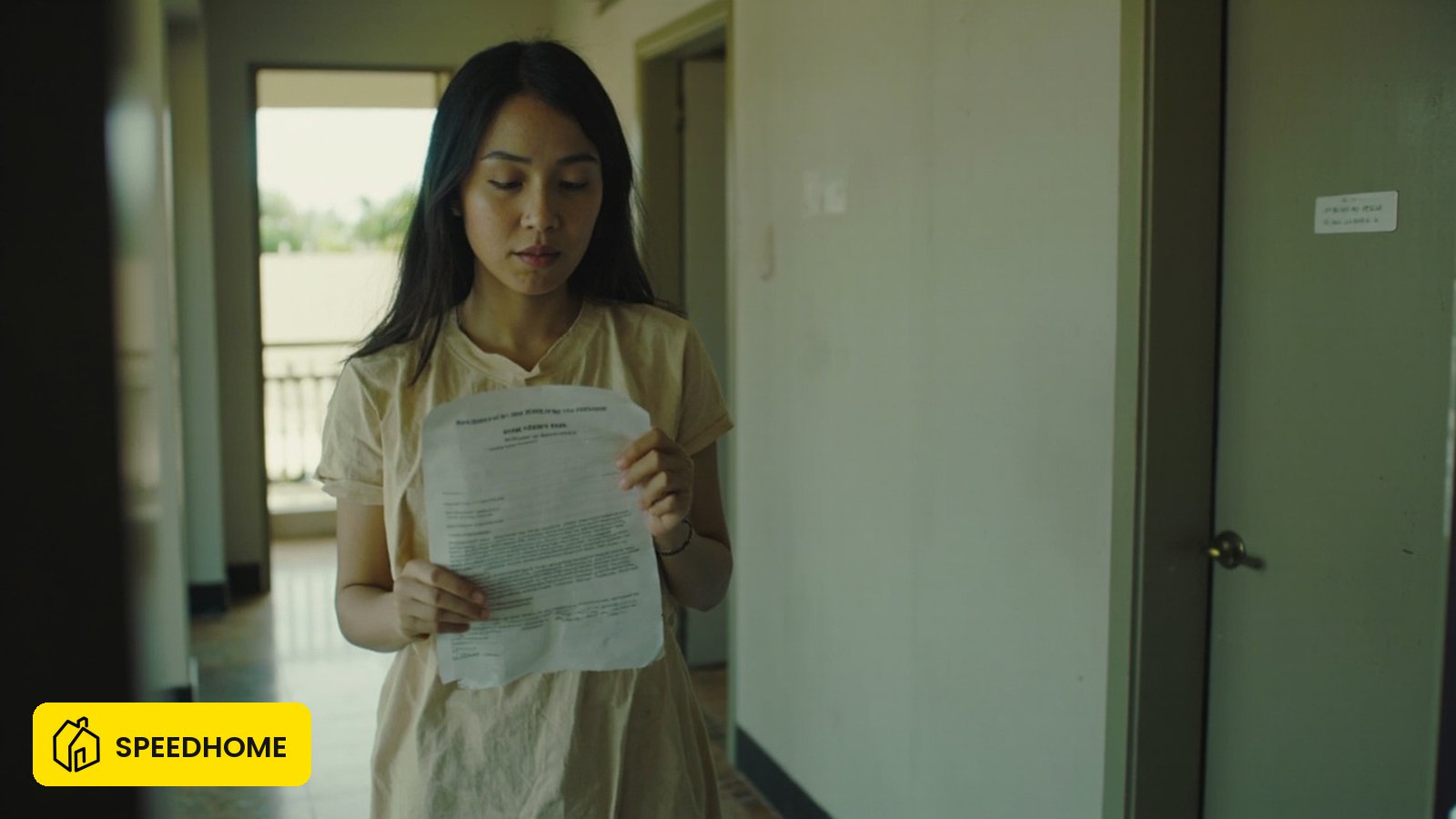
House rules in a Malaysian rental are binding only if they form part of a signed tenancy agreement or a written addendum you agreed to. A landlord can lawfully set rules on guests, noise, subletting, and pets — but cannot disconnect water or electricity, lock you out, or evict without going to court, regardless of what the house rules say.
Malaysia has no Residential Tenancy Act in force; the proposed Residential Tenancy Bill is still a draft — it has not been tabled in Parliament. Your tenancy agreement and general contract law govern what rules bind you and what remedies each side has if someone breaks them. SPEEDHOME platform records (June 2026) show the average first-default-to-recovery for tenancy breaches in Malaysia runs at about 31 days — far shorter than most assumed court timelines, but still a real cash-flow gap for the landlord.
Which house rules can a landlord enforce in Malaysia?
A landlord can set rules that protect the property and other occupants. A rule becomes unenforceable or unlawful when it removes a tenant's legal rights — the most important being that a landlord cannot lock the tenant out or disconnect water or electricity to force compliance, no matter what any house-rules document says.
| House rule | Enforceable? | Conditions |
|---|---|---|
| No subletting without written consent | Yes | Must be in the TA or a signed addendum; oral prohibition is harder to enforce |
| No short-term rental (Airbnb / homestay) | Yes — if the TA or building by-laws say so | A strata management corporation may also prohibit short-term letting through its by-laws, independently of the TA |
| No pets (or pets allowed with a pet deposit) | Yes | If written into the TA; a landlord cannot retroactively add a no-pet rule mid-tenancy without your agreement |
| Guest limits (e.g. no overnight guests beyond X days) | Partially | Enforceable as a TA clause; but a landlord cannot physically remove a guest — they must issue a written notice and, if breached, apply to court |
| Quiet hours / noise rules | Yes | Enforceable via TA; your neighbours can also separately invoke the housing by-laws through the JMB or management corporation |
| Cleanliness and waste standards | Yes | Reasonable rules about rubbish disposal and shared areas are normal and enforceable |
| Maintenance responsibility split | Yes | The TA should state which repairs are tenant vs landlord responsibility; general law implies a landlord must keep the structure in habitable condition |
| Locking the tenant out or removing doors to force compliance | No — unlawful | Under the Specific Relief Act 1950 s.7(2), a landlord cannot recover possession by self-help. Recovery must go through the court |
| Disconnecting water or electricity to pressure a tenant | No — unlawful | Also self-help; a landlord who cuts water or electricity to force a tenant out exposes themselves to a civil claim |
| Banning a specific person from the unit (mid-tenancy) | No — unless court-ordered | A landlord cannot unilaterally impose a new occupancy restriction after the TA is signed |
How the strata by-law layer stacks on top: a building's management corporation can pass a by-law on short-term letting that is binding on owners and on tenants of units in the building, separate from the TA. The Federal Court case of Innab Salil & Ors v Verve Suites Mont' Kiara Management Corporation [2020] confirmed that a strata by-law prohibiting short-term letting is valid and enforceable.
The practical takeaway: a tenant who sub-lets on Airbnb in a compliant strata block faces two independent prohibition layers (TA clause and building by-law), not one.
What happens if a tenant breaks a written house rule?
The side whose position is supported by the signed tenancy agreement has the procedural advantage. If the rule violates the law (e.g. self-help eviction), the TA clause itself is void.
Where a tenant genuinely breaks a written house rule — persistent subletting without consent, or running a short-stay business in a strata unit — the landlord's proper remedies are:
- Issue a written notice of breach specifying the rule and a reasonable cure period.
- If the breach continues, serve a notice to terminate the tenancy (per the TA's termination clause).
- Apply to court for a Writ of Possession; the court bailiff recovers the unit.
Self-help (lockouts, removing the tenant's belongings, disconnecting water or electricity) is unlawful regardless of which party is "in the right" on the underlying house-rule breach.
Contracts Act 1950 s.74 cap on deposits and penalties: a landlord cannot contract around the penalty rule by labelling a fixed sum as a "house-rule breach fee." If the amount stipulated is out of all proportion to the actual loss and is designed to punish rather than compensate, a court can reduce it. The practical takeaway for tenants: any deposit or penalty clause in a house-rules schedule should be benchmarked to actual loss, not a punitive number.
Evidence: written addendum vs oral rule. A written house-rules schedule signed at the start of the tenancy is the strongest evidence you can have. An oral rule introduced mid-tenancy ("just don't bring guests after 11") is much harder for either side to prove or disprove in a Magistrate's Court hearing.
The same principle applies to disputes over a WhatsApp message. A written record is treated as documentary evidence; an oral conversation usually is not. That is why SPEEDHOME requires all house-rule changes to be added to the TA as a signed addendum rather than exchanged informally.
How do house rules apply to room rentals and co-living units?
For room rentals and co-living units, the occupant agreement is typically a licence to occupy or a room-level sub-tenancy — not a full tenancy — which means some TA remedies may not apply and the operator's house-rules schedule carries more weight than a landlord's.
The distinction matters because it changes who enforces the rules:
- A full tenancy agreement is between the tenant and the property owner; house-rule breaches go through the standard TA dispute process (notice, then court).
- A licence to occupy (common in co-living) is closer to a service contract; the operator can usually revoke or terminate on shorter notice, depending on what the licence says.
- A room sub-tenancy (the tenant sub-lets one room to you) sits in the middle — the original TA still binds the head-tenant, and the room occupant's remedies depend on the sub-TA wording.
What changes across the three agreement types in practice:
| Aspect | Tenancy agreement | Licence to occupy | Room sub-tenancy |
|---|---|---|---|
| Stamp duty (Section 4) | Ad valorem on rent for the full term; tenant typically pays | Usually not applicable (service / licence) | Ad valorem on the head-TA and usually on the sub-TA — double exposure if not stamped |
| Security deposit | Two months' rent typical, held by landlord | Operator-set; can be lower; refund mechanics defined in the licence | Set by the head-tenant; head-tenant's own deposit with the owner is the backstop |
| Zero Deposit eligibility (SPEEDHOME) | Yes, on qualifying listings — replaces cash deposit with a managed rental-risk system | Yes on qualifying SPEEDHOME co-living rooms | Often no — most head-tenants cannot sub-let a SPEEDHOME-managed unit under the standard TA without written consent |
| House-rule enforcement | TA breach notice, then court if unresolved | Operator notice; licence can be revoked on the notice period in the agreement | Depends on the sub-TA; the head-tenant's remedies against the owner still run in parallel |
| Recovery remedy (unpaid rent / breach) | Specific Relief Act 1950 s.7(2); court process, no self-help | Contractual termination of the licence per its terms | Sub-TA breach + head-TA breach — two layers to unwind |
| Eviction mechanics | Writ of Possession by court bailiff | Operator regains possession under the licence, usually without court if the notice is valid | Sub-tenant's removal flows through the head-tenant's rights; the owner can still act on the head-TA |
Practical checks before you pay any deposit on a room or co-living unit: ask whether the agreement is a tenancy, a licence, or a sub-tenancy; get the house-rules schedule in writing as part of the agreement (not handed to you at move-in); and confirm who is named as your counter-party — the operator, the head-tenant, or the property owner. Vague wording ("you agree to follow house rules as updated") is harder to enforce in your favour.
For the broader subletting and consent rules that cover the head-tenant's side, see Can a tenant sublet in Malaysia?.
What is the cost and risk of a house-rules dispute?
Breaking a written house rule can cost a tenant their tenancy and part of their deposit. A landlord who uses self-help enforcement (lockouts, disconnecting water or electricity) faces a civil claim and potential injunction — the unlawful remedy exposes the landlord more than the tenant.
| Situation | Tenant's risk | Landlord's risk |
|---|---|---|
| Breach of written TA house rule (e.g. subletting without consent) | Tenancy termination; deposit retained for documented losses; civil claim for damages | Legal and court fees to enforce |
| Landlord imposes new rule mid-tenancy without consent | Tenant can refuse; landlord has no remedy unless agreed or TA permits variation | Cannot enforce the new rule in court |
| Landlord disconnects water or electricity or locks the tenant out | Tenant can sue for damages; landlord exposed to injunction and civil claim | Criminal exposure under Specific Relief Act 1950 s.7(2) |
| Strata building bans short-term rental via by-law | Tenant and sub-landlord both at risk of breach | Management corporation can seek court order against the owner |
| Dispute goes to court (up to RM5,000) | Magistrates' Court small-claims (Order 93) — RM20 filing fee, no lawyer required | Same forum; roughly equal access |
Malaysia has no dedicated residential tenancy tribunal. Disputes are heard by the ordinary civil courts: small-claims at the Magistrates' Court (up to RM5,000), Magistrates' Court up to RM100,000, and the Sessions Court above that. The Sessions Court also has unlimited jurisdiction for landlord-and-tenant and distress actions.
Two anonymised patterns SPEEDHOME recovery team records (June 2026) have covered:
- Subletting caught via screening. A head-tenant had listed a room on a short-stay platform in a strata block where the management corporation by-laws prohibited it. The owner noticed the pattern in the building visitor-management system and, with the platform's data, served a TA breach notice citing the no-subletting clause. The matter resolved at the notice stage; deposit forfeiture was partial, scoped to documented loss only.
- Move-out deposit dispute over a written rule. A landlord attempted to withhold a full two-month deposit for what was framed as "house-rule breaches" (unapproved pet, late-night noise complaints), but had not itemised the deductions or tied them to a documented loss. The tenant filed a Magistrates' Court small-claim (Order 93), the deposit was released less a small amount for actual pet-related cleaning, and the landlord bore the filing cost. The lesson: a house-rule clause is only as strong as the documented loss attached to it.
How does SPEEDHOME handle house rules for tenants?
SPEEDHOME's tenancy agreements include a standard house-rules schedule that is agreed before signing, so there are no surprise mid-tenancy additions. For qualifying units, Zero Deposit replaces the two-month cash security deposit with a managed rental-risk system — not a financial guarantee product, and not available on every unit.
Every house-rule clause is shown to you on the listing page at /rent before you pay anything, and the same house-rules schedule applies to every tenant on the same property. SPEEDHOME PROPERTY SDN. BHD. (Registration No. 202601021813 (1683910-A)) is the Master Tenant on the tenancy documents, which means the same standard schedule is enforced across the unit.
Browse rooms and apartments with house rules agreed up front on SPEEDHOME.
Zero Deposit is a managed rental-risk system, not a financial guarantee product. It replaces the upfront cash deposit; in the rare case of severe end-of-tenancy damage the recoverable amount can be limited, so it is not a blanket guarantee. Eligibility is shown on each listing — it is not guaranteed site-wide.
For a broader look at what to check before taking a room or co-living unit, see the room rental and co-living guide. If you are looking at a unit where subletting or room-sharing is involved, Can a tenant sublet in Malaysia? covers the consent rules and what happens without written approval.
FAQ
Can a landlord add new house rules after I have signed the tenancy agreement?
No — not without your agreement. A tenancy agreement is a contract; the landlord cannot unilaterally add or change terms mid-tenancy. If you agree to new rules in writing (a signed addendum), those become binding. A verbal demand for a new rule is not enforceable unless you acknowledge it in writing.
What happens if I break a house rule that is in my tenancy agreement?
The landlord can issue a written notice of breach, then (if unresolved) a termination notice, and finally apply to court for possession. They may also retain the security deposit for documented losses arising from the breach. They cannot lock the tenant out, disconnect water or electricity, or remove your belongings — those are unlawful self-help remedies regardless of the breach.
Is a no-Airbnb rule in my tenancy enforceable?
Yes, if it is in your signed TA. In strata buildings, the management corporation (JMB or MC) can also prohibit short-term letting through its by-laws independently of the TA. Following the Federal Court ruling in Innab Salil & Ors v Verve Suites Mont' Kiara Management Corporation [2020], a strata by-law banning short-term letting is valid and binding — so a tenant may face two independent prohibition layers: the TA clause and the building by-law.
My landlord cut off the water supply to force me to follow house rules. Is that legal?
No. Disconnecting water or electricity to pressure a tenant is unlawful self-help under Malaysian law, specifically the Specific Relief Act 1950 s.7(2). A landlord must recover possession or enforce a rule through the lawful process — written notice, then court if unresolved. If your utilities have been cut, document it and seek legal advice or file a civil claim.
What should a house-rules document include to be enforceable?
It should be in writing, signed by both parties (or incorporated into the signed TA), and clearly specify each rule, the consequence of breach, and how disputes are handled. Any deposit or penalty amount should be tied to actual documented loss — otherwise the Contracts Act 1950 s.74 penalty rule can reduce it. Vague or oral-only rules are very hard to enforce. If a landlord shows you a house-rules list at move-in that was not part of what you signed, you are not automatically bound by it.
Is there a maximum number of people allowed in a rented unit?
Malaysian residential tenancy law does not impose a maximum occupancy number for private rentals. The practical limit sits in two places: a guest-occupancy clause in your TA, and any strata by-law your building's management corporation (JMB or MC) has in force on occupant numbers per unit.