
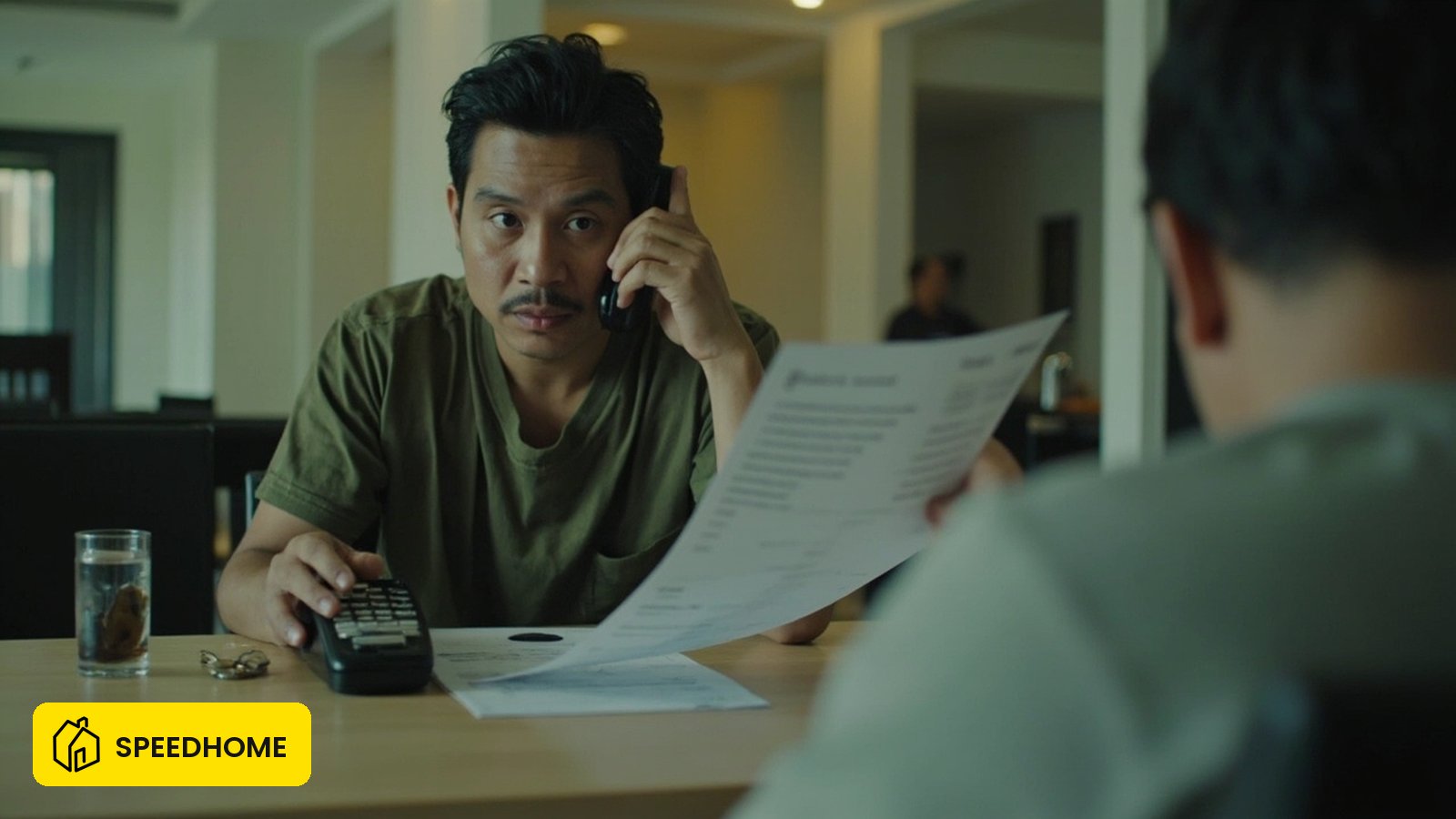
House rules should clarify daily living, not replace the tenancy agreement
Before signing a room rental, check whether the house rules are attached to the tenancy agreement, signed by all occupants, and clear on guests, cleaning, utilities, noise, repairs and move-out. Anything that affects money, notice, deposit or subletting belongs in the TA itself.
The rule is straightforward: house rules are a marketing and daily-living sheet; the tenancy agreement (TA) is the contract. Under Malaysian contract law, the TA is the document a court will read if rent, deposit or occupancy is disputed. Most KL room listings on Mudah and iBilik state house rules in the ad description rather than the TA — treat anything in the description as marketing until it appears in the signed agreement. If you are comparing rooms, start with the broader room rental and co-living guide, then use this page as the signing checklist.
Stamp duty on sublet agreements too. If the room is a head-tenant sublet rather than a direct tenancy with the owner, the sublet agreement attracts stamp duty as well. Use the SPEEDHOME stamp duty calculator before you sign so the duty is not a surprise on top of deposit.
8-Point Room Rental House Rules Verification Checklist
Before signing for a room rental, verify that house rules are formally attached to the tenancy agreement and signed by all occupants. House rules serve as daily-living guidelines, whereas the tenancy agreement (TA) is the binding legal contract read by Malaysian courts in the event of disputes over rent, deposit, or occupancy.
Ensure that the rules clearly address essential co-living factors: guest policies, cleaning duties, utility cost sharing, noise levels, repair responsibilities, and move-out procedures. Many room listings on Mudah and iBilik only describe these informally in advertisements rather than in the TA.
Keep financial and contractual terms strictly inside the tenancy agreement. Matters concerning rental payments, notice periods, security deposits, and subletting permissions belong legally in the TA itself, not in an informal house rules sheet.
What should you check before you sign?
The rule is simple: anything that can cost you money, limit your stay, or create conflict with housemates should be written clearly before you pay. If the landlord or main tenant says "we usually settle later", ask for the rule to be written into the signed documents.
| House-rules item | What to ask before signing | Where it should appear |
|---|---|---|
| Guests and overnight stays | How many nights are allowed, whether approval is needed, and whether partners or family are treated differently | House rules, with any long-stay restriction reflected in the tenancy agreement |
| Utilities | Equal split, usage-based split, or included in rent; when bills are shown and paid | Tenancy agreement plus house rules |
| Cleaning | Who cleans shared areas, how often, and what happens if someone does not do it | House rules |
| Noise and quiet hours | Practical quiet hours for work-from-home, students or shift workers | House rules |
| Repairs | What is minor tenant care versus landlord repair; how defects are reported | Tenancy agreement |
| New housemates | Whether replacement housemates need landlord approval before moving in | Tenancy agreement |
| Subletting | Whether a tenant may collect rent from another occupant | Tenancy agreement |
| Move-out | Notice period, handover condition, bill reconciliation and key return | Tenancy agreement |
If a row above says "House rules, with any long-stay restriction reflected in the tenancy agreement", the rule has to live in both places. A house-rules clause that contradicts the TA wins nothing in a Malaysian tenancy dispute — the signed TA governs. For wording examples, use the room rental agreement and house rules template.
Co-living vs room rental vs subletting — what's the difference?
The three terms look like the same thing on a listing, but the contract, the contracting party and your deposit protection are all different. Use the table below to place what you are about to sign before you commit any money.
| Setup | Who you contract with | Typical agreement | What it usually looks like in a Malaysian listing |
|---|---|---|---|
| Direct room rental | Landlord (owner of the property) | Standard TA, sometimes co-branded with SPEEDHOME | A furnished room in a condo or landed terrace; bills shared; landlord is the named party |
| Co-living | Operator (co-living brand) | Operator TA + house handbook | A managed building with cleaning rotas, common-area booking and bundled utilities; rent usually higher but bills included |
| Sublet (head-tenant arrangement) | Head tenant (not the owner) | Sublet agreement or addendum to the head tenant's TA | A room inside a larger TA, often in a terrace or apartment; head tenant collects rent and pays the landlord |
The risk is highest in the third row — if the head tenant falls behind on the main TA, the owner can still ask you to leave, even though your agreement is with the head tenant. Prefer a setup where SPEEDHOME PROPERTY SDN. BHD. (Registration No. 202601021813 (1683910-A)) is the Master Tenant on your documents, so the agreement route is documented from the start. Confirm the contracting party on the TA before you pay any deposit.
Guest rules and new housemates are not the same thing
A short guest stay is a house-rules issue. A paying replacement housemate is a tenancy-agreement issue. Treating them as the same creates the biggest risk for room tenants, because the landlord may see the new occupant as an unauthorised arrangement.
Treat the house rules and the TA as two separate doors. Before you sign, confirm each row below in writing — one column for what the tenant is agreeing to, the other for what the landlord or head tenant is agreeing to:
| Topic | Tenant-side question to confirm | Landlord or head-tenant-side obligation |
|---|---|---|
| Guest cap | "How many nights, consecutive or per month, and do partners count differently?" | Must mirror the cap in the TA if it goes beyond 7 consecutive nights |
| Occupant list | "Will I be named in the TA or a signed addendum?" | Owner or authorised agent must sign the addendum, not just a housemate |
| Replacement approval | "Who signs off when I move out — head tenant only, or the landlord in writing?" | Owner must approve before the new person moves in, not after |
| Subletting | "May the head tenant collect rent from a replacement occupant?" | If no, pay only to the landlord or SPEEDHOME-authorised agent |
| Move-in trigger | "Will landlord written approval be in my hands before move-in day?" | Approval is in writing, dated, and attached to the TA |
Do not rely only on housemate consent. If the tenancy agreement requires landlord approval, approval from other occupants is not enough.
How should utility rules be agreed before move-in?
For shared houses, utility disputes are predictable. The fair setup is not always equal split; it is the method everyone agreed to before signing and can verify from official bills or meter readings.
The four common Malaysian models, and where each one fits:
- Equal split by room. Best for rooms of similar size with similar air-con use — typical for a Puchong or Subang terrace with three like-sized rooms.
- Split by number of occupants. Fair when one room is double-occupancy and the others are single; without a per-head rule, the single tenant subsidises the couple.
- Usage-based split with sub-meters. Fairest when one room runs the air-con 12 hours a day and another is barely used — but only if sub-meter readings are shared monthly, not at year-end.
- Utilities included in rent. Simpler accounting, usually a higher headline rent; works when the landlord wants zero utility disputes. The risk is over-use: nothing stops a housemate from running the air-con 24/7 because the bill is already paid.
Before signing, ask to see how the previous month was calculated, whether water and electricity are handled separately, and whether air-con-heavy rooms have any different rule. The utility bill split guide goes deeper into the options.
Which red flag rules mean you should walk away?
A house-rules sheet that contradicts the TA, waives statutory rights, or lets the landlord act without notice is a walk-away signal — even if the rent looks cheap. The rule that hurts you in writing is the rule that hurts you in a dispute.
Treat any of these as a hard stop:
- A "no deposit refund" clause or any wording that tries to waive your statutory deposit rights. The TA, not house rules, sets deposit treatment — see the deposit return process in Malaysia for what is enforceable.
- A blanket guest ban that exceeds seven consecutive nights with no TA mirror. A total ban is rarely enforceable against a tenant who has signed nothing on guests; a reasonable, written cap is.
- Landlord "entry at any time without notice" language. Malaysian tenancy practice requires reasonable notice for non-emergency entry; an open-ended clause is unenforceable to the extent it overrides the TA. Self-help entry (changing locks, removing doors, cutting utilities) is unlawful regardless of what house rules say.
- A "housemate decides everything" clause on money, deposit, or replacement. Money and occupancy changes flow from the landlord through the TA, not from housemate vote.
- A unilateral rule-change clause that lets the landlord or head tenant rewrite the house rules mid-tenancy without written agreement from every occupant.
the SPEEDHOME-only check: how to avoid undocumented room arrangements: what is it?
A room listing should make the contracting party and occupancy rules clear before money changes hands. On the platform, use the listing, tenancy agreement and handover records to confirm who you contract with, what rules apply, and whether the room is eligible for Zero Deposit.
Zero Deposit is SPEEDHOME's managed rental-risk system — not a financial guarantee product — that replaces the upfront cash deposit on qualifying listings, so tenants move in without tying up cash while landlords stay protected through rental protection instead of holding a deposit. For severe end-of-tenancy damage beyond fair wear and tear, the standard protection claims process applies. Zero Deposit is not a financial guarantee product, and not every unit qualifies — confirm on the live room listing and the signed agreement before paying anything.
The contracting party on the tenancy and legal documents is SPEEDHOME PROPERTY SDN. BHD. (Registration No. 202601021813 (1683910-A)), which acts as Master Tenant; SPEEDRENT TECHNOLOGY SDN. BHD. is the platform operator and is not a contracting party. SPEEDHOME records show zero reported scams against tenants booking through verified room listings in 2026, and the SPEEDHOME internal recovery-time data shows that a first default typically moves to recovery in about 31 days — both indicators that the agreement-routing path the platform enforces (listing → signed TA → handover record) is what gives a room tenant a written trail a court will read.
Browse room rentals on SPEEDHOME when you want the listing, agreement and move-in rules to be documented from the start. For the landlord-side mirror on what rules should look like, see 7 house rules landlords must set for tenants.
What competitors usually include (and leave out)
Different room-rental platforms ship different default house-rules templates; the gap is usually utility-bill transparency and deposit clarity, not the basic rules themselves.
| Platform | What the default rules cover | Where the gap is |
|---|---|---|
| Speedrent | Whole-house rules; rent collection and access notice | Rarely surfaces a per-room utility-bill method |
| iBilik | Room-only rules; guest policy and visitor registration | Often silent on replacement-housemate approval |
| Mimpi and similar co-living operators | Bundled handbook (cleaning rota, quiet hours, common-area booking) | Utility-bill splits rolled into a flat fee — disputes are rare by design |
| Easebundled / Couchsurfing / Roomster | Short informal rule sets | Light on deposit, notice and subletting terms; weak as a tenancy contract |
| SPEEDHOME | Full TA plus a signed house-rules sheet; contracting party, guest cap, utility-bill method and replacement-housemate clause captured before move-in | Deposit handled through Zero Deposit on qualifying listings, not always offered on sublet room listings |
The class-above gap across the market is not "more rules" — it is utility-bill visibility and a written replacement-housemate clause before any rent changes hands.
What should you do if a house-rule problem shows up after you sign?
Most room-rental disputes are not about the day you signed — they are about a rule that was added, a housemate who changed, or a bill that was never agreed. The escalation ladder is the same in every case: written record, written notice, then civil court.
If a problem appears after you have signed:
- Document in writing. Any new rule, surprise bill, or guest ban must be confirmed by message or email — verbal "we agreed yesterday" does not hold.
- Add an addendum. If the landlord or head tenant wants to change the utility-bill method, guest cap or notice period after move-in, sign a written addendum to the TA. Without one, the original TA terms continue to apply — and any change to financial or occupancy terms without your written consent is a dispute risk in its own right.
- Escalate in order. Talk to housemates first, then the head tenant, then the landlord in writing. If the issue is money (deposit, unpaid bills, damage claim) and the landlord will not engage, the next step is the civil courts. Claims up to RM5,000 can be filed through the Magistrates' small-claims procedure (Order 93, Rules of Court 2012) without a lawyer; claims between RM5,000 and RM100,000 go to the Magistrates' Court, and the Sessions Court handles landlord-and-tenant and rent-recovery actions from RM100,000 upward. Malaysia has no dedicated residential tenancy tribunal, so the dispute pathway is the ordinary court ladder, not a specialist body.
- Use the SPEEDHOME agreement route. If you are on a SPEEDHOME room listing, raise the issue through the platform so the listing, agreement and handover records form the written trail the court will read. For deposit-specific issues, follow the deposit return process in Malaysia before filing anything at the Magistrates' Court.
FAQ
Are house rules legally enough for a room rental?
No — under Malaysian contract law, the tenancy agreement is the contract a court will read; house rules are a daily-living sheet that only works if it does not contradict the TA. Put rent, deposit, notice, repair, guest cap and replacement-housemate terms in the signed TA, and keep house rules to behaviour items that do not change your legal or financial position.
Can house rules ban overnight guests?
A guest cap is enforceable only if the tenant agreed in writing before signing; an oral house-rule ban is weak. Under contract law, a rule you never agreed to in writing has limited weight against you, and any blanket ban that is not mirrored in the TA will be hard to enforce in a dispute.
What if the landlord changes house rules after I move in?
A landlord can clarify day-to-day conduct, but any change that touches cost, access, guests or notice should be agreed in writing — usually as a signed TA addendum. Without that agreement, the original TA terms continue to apply. Walk away from any clause that lets the landlord rewrite money, deposit or occupancy terms without your written consent.
Should every housemate sign the same rules?
Yes — shared rules work only when every occupant signs the same version; otherwise cleaning, guests, utilities and move-out obligations become hard to enforce fairly. A signed copy per occupant (with the same date and version) is the minimum; a TA addendum is needed for any rule that touches money or occupancy. If the landlord refuses to sign the same version everyone else is signing, treat that as a red flag in its own right.
What should I do if the rules are vague?
Ask for the vague parts to be rewritten before you sign with concrete numbers, dates and consequences — for example, "guests up to 3 nights per month, longer stays need landlord written approval", or "utilities split equally by room and reconciled by the 10th of each month against TNB and Air Selangor bills". "Reasonable", "as needed" and "to be discussed" are weak phrases when money or occupancy is involved because they give the other side a free hand to decide what is reasonable later. The utility bill split guide has worked examples you can copy into the TA.
What if I have already signed and the rules feel unfair?
Do not stop paying rent or withhold deposit — that creates a counter-claim against you. Document the unfair rule in writing, request a TA addendum, and if money is involved, escalate through the Magistrates' small-claims procedure (up to RM5,000, no lawyer) under the tenancy-recovery court tiers. The civil court reads the signed TA first, then the house rules — that order is what protects you. For deposit-specific disputes, follow the deposit return process in Malaysia before filing at the Magistrates' Court.