
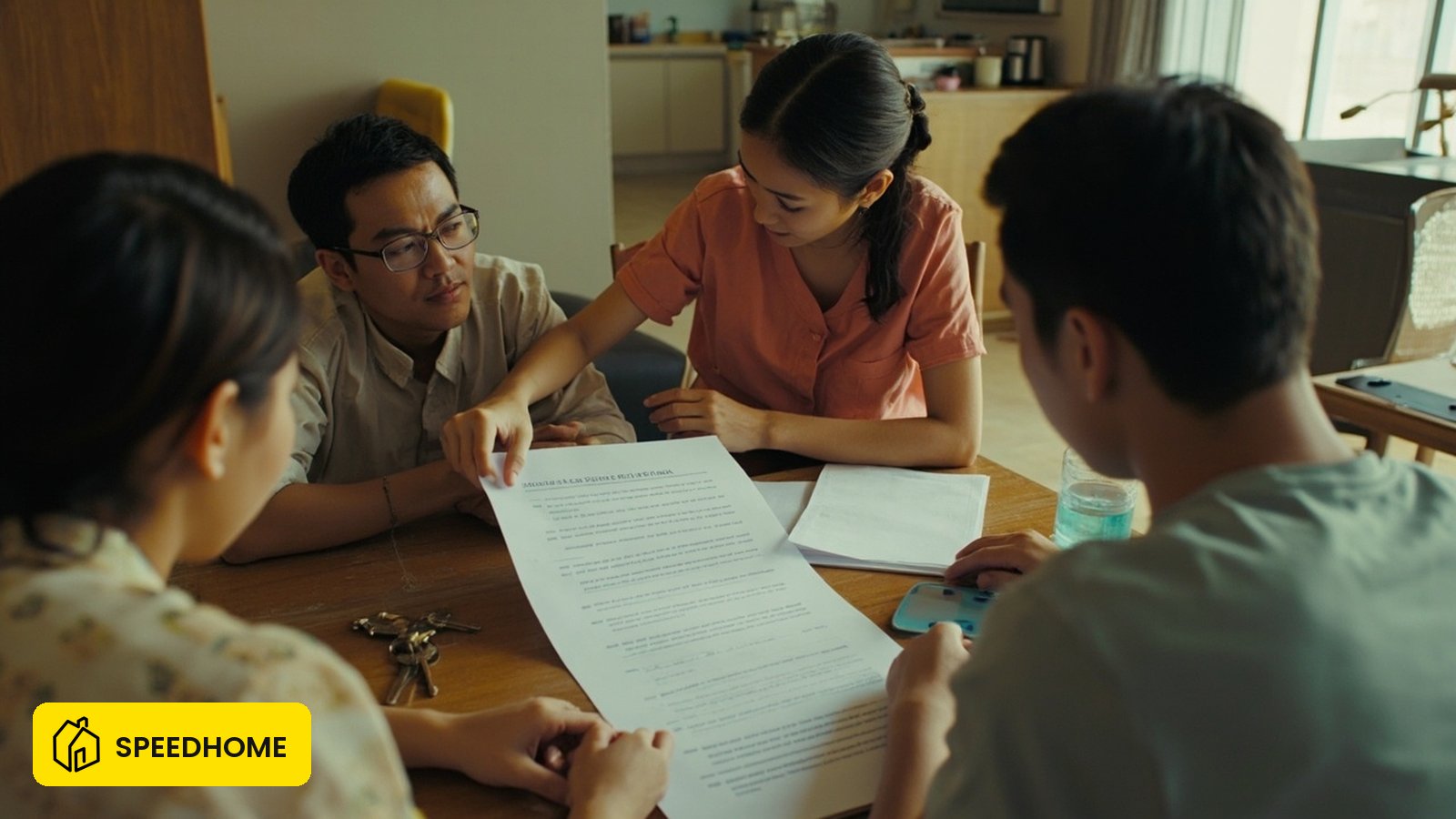
What should a shared accommodation house rules template in Malaysia include?
A house rules document for shared accommodation (rumah sewa) should cover quiet hours, cleaning rotas, kitchen and bathroom use, guest policy, utility cost-splitting, WiFi access, and subletting. Signed by all occupants, it prevents the everyday conflicts that end tenancies early — but it works only when it sits alongside a proper room tenancy agreement, not instead of one.
Malaysia still has no Residential Tenancy Act in force as of 2026 — the proposed RTA remains a draft Bill that has not been tabled in Parliament. There is no standard government-prescribed template for shared-accommodation house rules. That means the content, enforceability, and consequences for breach depend entirely on what the occupants agree to in writing, and how that document connects to the underlying tenancy agreement.
Two decisions define how well a house-rules document works: what you put in it, and where it sits in relation to the legal framework. The sections below cover both.
Are standalone house rules enforceable against a tenancy agreement schedule?
A standalone house-rules sheet is an agreed code of conduct. A house-rules document attached to and referenced in the tenancy agreement carries legal weight: breach of the rules then also constitutes breach of the tenancy agreement, giving the landlord or the affected tenant a contractual basis to act.
The difference matters most when a housemate refuses to follow the rules or a landlord needs to terminate a tenancy for persistent breaches.
| Feature | Standalone house-rules sheet | House rules attached to (and referenced in) the tenancy agreement |
|---|---|---|
| Enforceability | Moral and social; hard to enforce in court as a standalone document | Breach of house rules = breach of contract; landlord can act on tenancy termination clauses |
| Who signs | All occupants | All occupants; landlord's signature (or counter-signature) confirms it is part of the TA |
| Deposit deductions | Cannot govern deposit deductions on its own | Deposit deduction clauses in the TA can reference specific rule breaches as grounds |
| Subletting | Should cross-reference the TA subletting clause; cannot create new permission | The TA's subletting clause controls; the house rules reinforce the permitted-guest policy |
| Guest policy | Can set clear limits on overnight guests and duration | Becomes enforceable if the TA references it; breach = TA breach |
| Cleaning and utilities | Best place for the practical detail | Practical detail here; financial consequences (e.g. utility default) remain in the TA |
| Stamp duty | None required | Stamping covers the TA; the attached house rules document is not stamped separately |
| Preparation cost | Low — can be drafted by the landlord and occupants together | Low; the key step is referencing the house-rules document in the main TA before signing |
The clear recommendation: draft the house rules at the same time as the room tenancy agreement. Include one line in the TA body: "The Shared House Rules document dated [date], attached at Schedule [X], forms part of this agreement and the Tenant agrees to be bound by it." That line converts your practical code of conduct into a contractual obligation.
What each option delivers in practice
A standalone house-rules sheet prevents most day-to-day friction and is better than nothing. Attaching it to the tenancy agreement adds enforceability and removes ambiguity about consequences when rules are broken.
When a standalone house-rules sheet is enough. If all occupants know and trust each other (family members, long-term friends), a signed-but-standalone house-rules document handles the practical coordination — who cleans what, when the lights go off, how WiFi costs are shared. In these situations the relationship dynamic does more work than the document, and the overhead of formal attachment to the TA may be unnecessary. The risk: if the relationship breaks down, the standalone sheet gives you weaker grounds to act.
When the attached version is essential. For shared accommodation between strangers or acquaintances — the most common setup in Malaysia's urban rental market — the attached version is the right choice. It protects the landlord if a room tenant persistently breaks the rules, and it protects a well-behaved occupant who wants grounds to complain formally. For student rentals and co-living units with frequent occupant turnover, this structure is standard on SPEEDHOME's managed-platform listings.
Cost and risk: what you are comparing
The cost of preparing a house-rules document is near zero. The cost of not having one — or having one that is not attached to the tenancy agreement — is the risk of an unresolvable housemate dispute with no written basis to act.
| Risk item | Standalone house rules | House rules attached to the tenancy agreement |
|---|---|---|
| Housemate refuses to follow quiet-hours rule | You can ask; no formal remedy available | Landlord can issue a formal breach notice under the TA |
| Persistent non-payment of utilities by one occupant | Informal dispute; no contractual basis | If TA references utility-split obligation, landlord can act |
| Unauthorised guest moves in as a paying occupant | Subletting breach — but harder to document without the TA connection | TA's subletting clause + house-rules guest policy creates two written grounds |
| Landlord tries to deduct deposit for rule-related damage | Tenant can dispute; court looks at the TA's deposit clause | TA and house rules together give the landlord a documented basis; deduction must still correspond to proven loss |
| Dispute goes to Magistrates' Court | Court examines the TA first; standalone house rules are secondary evidence | The attachment means the court reads house rules as part of the contract |
| Stamp duty cost | None | Applies to the room tenancy agreement under the Finance Act 2024 scale (RM1/RM3/RM5/RM7 per RM250 annual rent, by duration); use e-Duti Setem on MyTax |
A landlord cannot lawfully evict by changing locks, removing doors, or cutting utilities — even if the occupant has breached every clause in the house rules. Recovery of possession must go through the lawful court process (Specific Relief Act 1950). A well-drafted house-rules document attached to the TA gives the landlord a stronger written record for that process, not a shortcut around it.
A practical house rules template: what should it cover?
A house-rules template for a Malaysian rumah sewa should be specific enough to prevent the most common disputes: noise, cleaning, guests, kitchen use, utilities, and subletting. Generic or vague rules are not enforced because no one can agree on what they mean.
Use this as a starting point. Adapt the specifics to the property and the occupants. Then have all occupants sign it.
Section 1 — Quiet hours and common area use - Quiet hours: [time] to [time] on weekdays; [time] to [time] on weekends and public holidays - Music, TV, and calls in common areas to be at a volume that does not disturb other occupants' rooms - Common areas (living room, kitchen, corridor) to be kept clear of personal belongings after use
Section 2 — Kitchen and bathroom - Each occupant cleans up immediately after cooking; no unwashed dishes to be left for more than [X] hours - Food in the refrigerator to be labelled with the occupant's name and date; labelled food not to be used by other occupants - Bathroom cleaning rota: [insert schedule — e.g. each occupant cleans the shared bathroom on [day]] - Do not block drainage points or dispose of cooking oil down the sink
Section 3 — Utilities and WiFi - Electricity, water, and internet costs are shared equally among [number] occupants unless otherwise agreed in writing - Each occupant's share is due on [day] of each month; persistent non-payment is a breach of this agreement and will be reported to the landlord - Air conditioning in shared areas to be turned off when the last occupant leaves - WiFi password is shared among occupants only; sharing with guests requires majority agreement
Section 4 — Guest policy - Overnight guests are permitted for a maximum of [X] consecutive nights without prior approval from the landlord and all occupants - A guest who stays beyond [X] nights without approval may be considered an unauthorised additional occupant (subletting); refer to the subletting clause in the tenancy agreement - No guests in common areas after [quiet-hour time] - Each occupant is responsible for the behaviour of their guests
Section 5 — Subletting and additional occupants - No occupant may sublet their room or allow another person to occupy any part of the property without the landlord's prior written consent - Refer to the subletting clause in the main room tenancy agreement — the terms in the TA govern; this section reinforces those terms
Section 6 — Property care and rubbish - Rubbish to be placed in designated bins and taken out on [collection day] - No modifications to the property (holes in walls, painting, fixtures) without the landlord's written permission - Occupants to report any maintenance issues or damage to the landlord within [X] days of noticing them - Damage caused by an occupant or their guests is the responsibility of that occupant
Signatures. All occupants and the landlord (or landlord's authorised representative) sign and date. Each party keeps a copy. For more on this, the avoiding roommate disputes and tenancy complications is the next page to read.
How do SPEEDHOME shared-living agreements and digital protections work?
The managed platform provides a standardised tenancy agreement, digital signing, and rent collection for room rentals and co-living units. The platform's agreement structure includes the clauses — subletting, guest policy, deposit terms — that a landlord or tenant drafting from scratch might miss. Qualifying listings also offer Zero Deposit for eligible rooms.
For tenants in shared accommodation, the clearest route to a well-structured set of documents — tenancy agreement and house rules — is to rent through a managed platform where the document framework is already in place.
Zero Deposit is a managed rental-risk system, not a financial guarantee product. It replaces the upfront cash deposit; in the rare case of severe end-of-tenancy damage the recoverable amount can be limited, so it is not a blanket guarantee. Not every unit qualifies — look for the Zero Deposit label on individual listings.
For the full picture on what a room rental agreement should include alongside the house rules, see the room rental agreement and house rules template guide. For subletting rules and how the guest policy in house rules connects to the tenancy agreement's subletting clause, see subletting rules and landlord consent. Browse co-living and room listings with managed agreements at speedhome.com/rent. For more on this, the room rental security deposit rules is the next page to read.
FAQ
Does a house-rules document need to be stamped in Malaysia?
No — stamp duty applies to the room tenancy agreement, not to the house-rules document. The tenancy agreement is the instrument that creates the legal interest and requires stamping under the Finance Act 2024 scale. The house-rules document is an attachment or schedule to the TA and is not stamped separately.
What happens if a housemate refuses to follow the house rules?
If the house rules are attached to the tenancy agreement, persistent refusal is a contract breach, and the landlord can issue a formal breach notice. If the house-rules document is standalone, the practical options are mediation between occupants or raising the issue with the landlord who may then act under the TA. A landlord cannot lawfully lock out or remove an occupant — recovery of possession must go through the court process.
Can a tenant make their own house rules without telling the landlord?
Tenants can agree their own practical code of conduct among themselves, but any house rules that affect the tenancy — guest policy, subletting, modifications to the property — must be consistent with the tenancy agreement. A tenant-drafted house-rules document that contradicts the TA has no legal force where they conflict. The safer approach: have the landlord review and sign the house-rules document at the same time as the TA.
Is a verbal house-rules agreement enough in a Malaysian shared house?
No. Verbal agreements are difficult to prove if a dispute arises. Malaysia has no Residential Tenancy Act in force as of 2026, so there is no statutory backstop. A signed house-rules document — even a simple one — creates a record of what was agreed. Where the house rules are attached to the stamped tenancy agreement, that record has contractual weight.
What should I do if a new occupant joins mid-tenancy and the house rules need updating?
Prepare an updated house-rules document, have all current occupants and the new occupant sign it, and inform the landlord. If the new occupant is taking over a room tenancy from a departing tenant, a new or amended room tenancy agreement — not just a house-rules update — is required for the room change to be properly documented. See the room rental and co-living guide for the full occupant-change process.
Can I use a house-rules document to prevent a housemate from bringing pets?
Yes — a no-pets clause or a specific restriction (e.g. cats only, no large dogs) in the house-rules document is a common and enforceable provision, provided it is consistent with the tenancy agreement and the landlord agrees to it. If the tenancy agreement already prohibits pets, the house-rules document reinforces that. If the TA is silent on pets, get the landlord's written agreement before adding a pet policy to the house rules.
Need the full tenancy agreement?
House rules are an annex — they hang off the tenancy agreement. For the main document, download the tenancy agreement template — free, in English, BM or Chinese, with the house-rules annex slot already built in.
SPEEDHOME is one option worth comparing alongside the routes above.
Accuracy note. Grounded in Specific Relief Act 1950 and Finance Act 2024. Every figure is bound to a dated fact registry and re-verified on each update. Spotted an error? Email [email protected] with this page's link.