
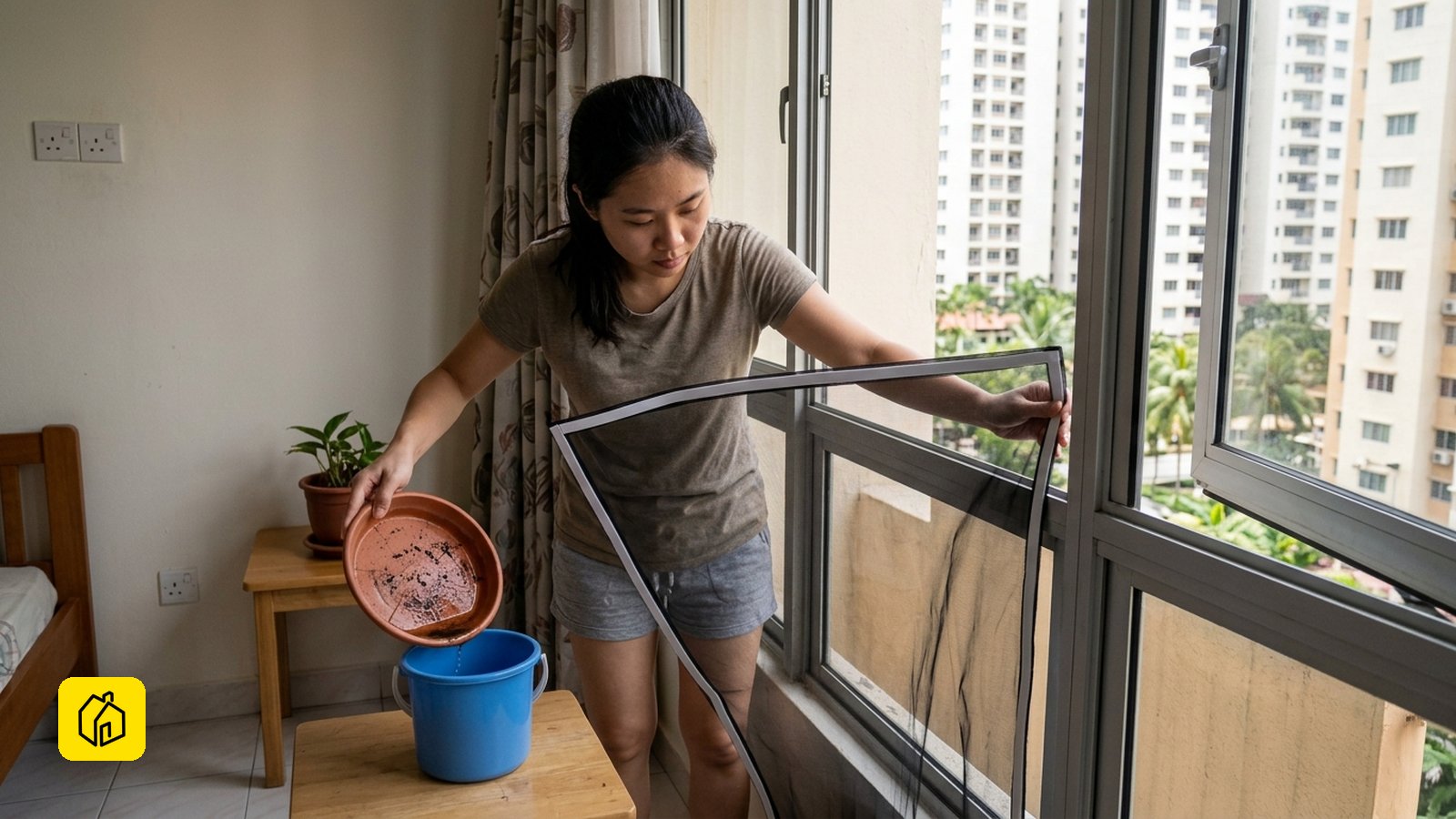
Getting rid of mosquitoes in a rented apartment in Malaysia requires permission-free, deposit-safe physical barriers, targeted moisture elimination, and non-invasive deterrents that do not alter the property. Renters must avoid drilling window frames, damaging wall paint with heavy adhesives, or installing permanent fixtures that violate standard tenancy agreements. Combining removable magnetic mesh screens, routine indoor water drainage, and proper coordination with building management provides effective pest control while keeping your security deposit fully intact.
Why are mosquitoes entering high-floor rental apartments in Malaysia?
Many tenants assume living on high floors protects them from flying pests, yet mosquitoes frequently infest units on the tenth floor or higher across high-rise buildings in Kuala Lumpur, Selangor, and Penang. The Ministry of Health Malaysia (KKM) highlights that the primary vector for dengue transmission, Aedes aegypti, breeds in clean, stagnant water collection points commonly found on balconies and service yards. Mosquitoes exploit elevator shafts, stairwells, maintenance risers, and drainage pipes to ascend high-rise developments easily. Wind updrafts along building facades also lift mosquitoes directly onto open balconies and unprotected ventilation openings. During heavy downpours in the monsoon months, standing water accumulates rapidly in communal corridors, clogged rain gutters, and exterior planter boxes, driving adult mosquitoes indoors seeking shelter and food sources. For renters coping with heavy wet-weather issues, addressing persistent dampness is closely tied to managing broader environmental risks, as detailed in our guide on rainy season tenant maintenance strategies.
How can tenants block entry points without drilling walls or losing deposits?
Tenancy agreements strictly prohibit structural modifications, nail punctures, or frame drilling that leaves permanent damage on aluminium window frames or balcony sliding doors. Renters need temporary physical barriers that install and detach cleanly without peeling exterior paint or leaving sticky residue. Magnetic mesh screens fitted with peel-and-stick adhesive strips provide a removable barrier against flying insects while allowing natural cross-ventilation. When installing magnetic strips on window jambs, applying painter-grade masking tape beneath the adhesive ensures zero paint damage during move-out. Self-adhesive rubber or brush draft stoppers along the bottom edge of main entry doors prevent mosquitoes from slipping in from shared condominium hallways. Magnetic curtain meshes for balcony sliding doors hang from tension rods rather than screwed brackets, delivering full insect protection without requiring landlord consent or structural alteration.
What indoor breeding hotspots should renters eliminate immediately?
Eliminating standing water indoors is the most reliable way to interrupt the mosquito reproductive cycle in residential rental properties. According to the World Health Organization (WHO), female mosquitoes require minimal amounts of stagnant water—as little as a single bottle cap—to lay eggs that develop into adult biting vectors within seven to ten days. In a typical Malaysian apartment, common breeding micro-environments hide in overlooked utility corners:
- Refrigerator defrost drainage trays located behind the kitchen compressor unit
- Indoor houseplant saucers, water-propagation glass jars, and decorative tabletop vases
- Air conditioner drainage pipes dripping onto balcony floor tiles without direct drain routing
- Laundry yards with slow-draining floor traps, washing machine runoff collection, or wet mop buckets
- Bathroom floor corners where recessed grouting traps puddle water after daily showers
Wiping dry bathroom floors, flipping over unused buckets, adding natural larvicide or replacing vase water every three days completely destroys larval development without using harsh chemicals.
Can non-chemical mosquito control methods keep rental spaces safe?
While commercial insecticide fogging and chemical aerosol sprays provide temporary knock-down effects, excessive indoor spraying leaves greasy chemical film on rental furnishings, curtains, and air-conditioning filters. Utilizing non-chemical mosquito control for Malaysian homes allows occupants to reduce bite risks safely without exposing household members to persistent chemical vapours or discolouring rented furniture. High-efficiency particulate air filtration units and oscillating ceiling fans create turbulent airflow that disrupts weak-flying mosquitoes, preventing them from landing on sleeping occupants. Ultrasonic traps and UV-light suction fans stationed near entryways capture incoming insects quietly without toxic emissions. Installing yellow-tinted warm LED lighting on balconies reduces insect attraction compared to standard bright white bulbs, drastically lowering nighttime incursions into living rooms.
How should renters communicate with landlords and building management about mosquito infestations?
When mosquito problems originate outside the individual rental unit, private indoor extermination efforts cannot solve the underlying infestation. If communal drainage lines, roof gutters, landscape ponds, or vacant neighboring units harbor stagnant water, tenants must report the issue promptly to the Joint Management Body (JMB) or Building Management Office. Document stagnant water reservoirs with clear, dated photographs and submit written maintenance requests through the condominium management portal. If external structural defects, such as cracked facade piping or leaking inter-floor ceilings, contribute to indoor dampness and pest breeding, notify the landlord immediately in writing. Understanding how repair liabilities are partitioned between owners and occupants protects tenants from wrongful deposit deductions, as outlined in our analysis of who pays for pest control and rental repairs.
What are the tenant and landlord maintenance boundaries under standard rental agreements?
Standard Malaysian tenancy agreements distinguish between structural obligations and daily housekeeping duties. Landlords are legally obligated to maintain the structural envelope of the premises, ensuring waterproof external walls, functional communal drainage connections, and intact plumbing risers. Conversely, tenants are responsible for general cleanliness, proper waste disposal, and preventing internal water accumulation caused by domestic habits. If an infestation arises from structural water ingress or broken building pipes, the landlord must arrange repairs. However, if an occupant leaves balcony drains choked with laundry lint or maintains uncovered stagnant water containers, resolving resulting pest issues falls under tenant upkeep. Distinguishing between conduct-related pest occurrences and landlord repair obligations keeps tenancy relationships constructive and prevents contentious disputes when the lease expires.
How do routine move-in inspections protect tenants from preexisting pest disputes?
Conducting an exhaustive physical audit during handover establishes an objective baseline for property conditions, ensuring tenants are not held liable for preexisting pest infestations or structural defects. Check all window seals, balcony drain gratings, and bathroom floor traps during the initial walkthrough, documenting any water pooling or defective screens. Recording these observations on a comprehensive move-in inspection checklist for Malaysian rentals with time-stamped photographs creates binding evidence that protects your security deposit at checkout. Periodic non-destructive maintenance throughout your tenancy ensures the apartment remains clean, pest-free, and ready for full deposit return without landlord friction.