
A Malaysian landlord can rent out a residential property without an agent by executing six essential stages: pricing against live active listings, listing across digital channels, screening tenant identity and financial records, preparing and stamping the tenancy agreement via LHDN e-Duti Setem within 30 days at Finance Act 2024 rates (RM1, RM3, RM5, or RM7 per RM250 of annual rent), performing a documented inventory handover, and managing ongoing rent collection and allowable Section 4(d) tax deductions.
How to rent out a house without an agent in Malaysia: quick answer
Renting out a house directly in Malaysia is legal, practical, and eliminates agent placement commissions, but transfers the entire operational and legal workload to the landlord.
Malaysia has no dedicated Residential Tenancy Act in force as of 2026; the proposed RTA bill remains under finalisation. Because there is no statutory tenancy tribunal for private residential landlord-tenant disputes, your legal protection rests entirely on the clarity of your signed tenancy agreement and the quality of evidence collected from listing day through move-out.
What does the direct landlord rental process involve?
Managing a direct rental requires taking full ownership of six operational workstreams that a traditional agent would otherwise coordinate:
- Market-Rate Pricing: Assessing live neighborhood asking rents rather than relying on mortgage obligations or historic renovation costs.
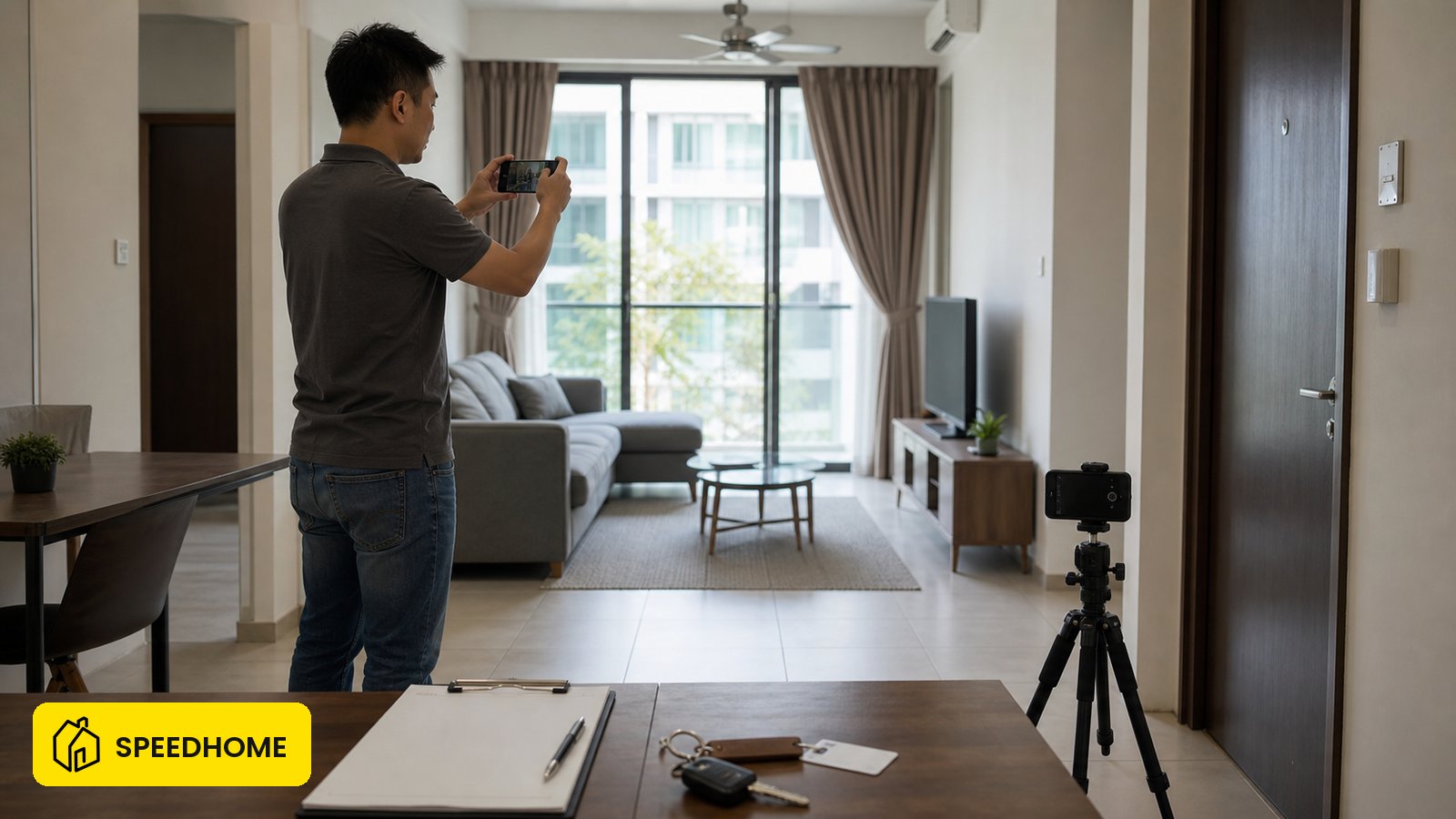
- Property Listing & Photography: Preparing high-resolution daylight photographs, an itemised furnishing inventory, and clear house rules.
- Tenant Screening: Verifying government-issued identity documents, employment letters, and bank statements before committing to a tenancy.
- Tenancy Agreement & LHDN Stamping: Drafting an enforceable contract and completing electronic stamping via e-Duti Setem within 30 days.
- Inventory Handover & Deposit Holding: Documenting property condition with time-stamped photographs, joint meter readings, and holding security deposits.
- Occupancy Management & Tax Compliance: Managing rental collection, handling maintenance requests, and filing annual rental income returns under Section 4(d).
How should you price and list your rental property?
Defensible rental pricing is derived from current market supply within your immediate township or condominium development, not personal financial obligations.
To benchmark an accurate asking price: - Scan five to ten active listings with similar layouts, floor sizes, and furnishing conditions in the same development or neighbourhood. - If comparable units remain vacant on portals for extended periods, market demand is signaling that asking rents are set above absorption levels. - Factor in competition by pricing slightly below the prevailing median to secure creditworthy tenants faster and minimise vacancy holding costs.
When creating your listing, state all terms unambiguously: rental amount, payment due dates, utility arrangement, security deposit requirements or Zero Deposit terms, and policies regarding pets, sub-letting, and parking.
How do you screen prospective tenants and verify documents?
Thorough document verification is the most effective safeguard against rental defaults, property damage, and unlawful subletting.
Before signing any agreement or accepting holding deposits, collect and verify: - Identity Verification: A clear copy of Malaysian NRIC (MyKad) or valid passport and employment visa for expatriates. - Proof of Income: The three most recent monthly payslips, employment confirmation letter, or verified company registration documents for self-employed applicants. - Occupancy Profile: Clarify the exact number of intended occupants, relationship among occupants, and intended move-in date.
If a prospective applicant hesitates or refuses to furnish standard identity and income documentation, pause the placement process rather than rushing to fill the unit.
How do you execute and stamp the tenancy agreement online?
A written tenancy agreement executed by both parties and officially stamped by LHDN is legally required to be admissible as primary evidence in a Malaysian court.
Under the Stamp Act 1949 as amended by the Finance Act 2024, tenancy agreement stamp duty is calculated on total annual rent from the first ringgit (the former RM2,400 annual-rent exemption was abolished effective 1 January 2025):
| Lease Duration Band | Statutory Stamp Duty Rate (Finance Act 2024) |
|---|---|
| 1 year or less | RM1 per RM250 of annual rent |
| Over 1 year up to 3 years | RM3 per RM250 of annual rent |
| Over 3 years up to 5 years | RM5 per RM250 of annual rent |
| Exceeding 5 years | RM7 per RM250 of annual rent |
Stamp Duty Calculation Method: Multiply monthly rent by 12 to determine annual rent, divide by RM250 (rounding up any fractional band), and multiply by the applicable duration rate.
Since January 2026, stamping is completed online via the e-Duti Setem module on the MyTax portal (mytax.hasil.gov.my). Instruments executed in Malaysia must be stamped within 30 days of execution to avoid statutory late-stamping penalties. Both landlord and tenant should retain digital copies of the endorsed Stamp Certificate.
How should you manage handover, security deposits and ongoing repairs?
A meticulous move-in inspection file provides the evidentiary foundation required to settle security deposit claims or repair disputes fairly at checkout.
Malaysia has no statutory cap on residential security deposits; deposit amounts and retention terms are determined entirely by contract. Under Section 74 of the Contracts Act 1950, a landlord can only deduct from deposits for proven actual losses or unpaid obligations.
Your handover documentation folder should contain: - Signed and stamped tenancy agreement. - Itemised photographic inventory of all fixtures, fittings, and furniture with existing condition noted. - Clear photographs of utility meters (electricity and water) taken on key handover day with joint sign-off. - Written acknowledgment of house rules and building management by-laws for strata properties.
Establish a clear maintenance policy distinguishing between owner obligations (structural repairs, concealed plumbing, main electrical wiring) and tenant responsibilities (routine servicing, consumables, minor agreed repairs).
How do you declare rental income and claim allowable tax deductions?
Rental income earned by individuals is taxable under Section 4(d) of the Income Tax Act 1967 as an investment source of income.
LHDN allows landlords to deduct direct, recurring operational expenses wholly and exclusively incurred in producing rental income: - Assessment tax and quit rent / parcel rent. - Interest incurred on the loan taken to finance the property. - Fire and property insurance premiums. - Rent collection and legal enforcement costs. - Renewal costs and agent fees for subsequent replacement tenants. - Routine repairs and maintenance necessary to preserve the property in its existing state.
Non-Deductible Initial Expenses: Under LHDN tax guidelines, initial costs incurred in securing the very first tenant — including initial marketing advertisements, legal drafting fees for the first agreement, first-tenancy stamp duty, and first-tenant agent placement commissions — are capital in nature and are not tax-deductible against rental income.
How do DIY renting, property agents and managed platforms compare?
Choosing between direct self-management, traditional real estate agents, and digital rental platforms involves balancing placement fees against operational workload:
| Rental Channel | Upfront Placement Cost | Viewings & Screening | Agreement & Stamping | Rent Collection & Support |
|---|---|---|---|---|
| Licensed Real Estate Agent | Typically 0.5 to 1 month rent (market convention) | Handled by agent | Agent coordinates, parties sign | Returns to landlord post-handover |
| Full DIY Landlord | Listing portal fees only | Landlord coordinates entirely | Landlord sources and stamps | Landlord manages entirely |
| SPEEDHOME Managed Platform | Platform fee 2.19% + SST of monthly rent (no placement commission) | Platform-assisted lead flow | Digital standard agreement & flow | Automated collection & protection |
For landlords seeking an automated rental workflow without traditional placement commissions, SPEEDHOME landlord services combine verified digital tenant screening, automated tenancy agreements, and systematic rent protection.
FAQ
Do I legally need a real estate agent to rent out my house in Malaysia?
No. Malaysian law permits property owners to lease residential properties directly without engaging an agent. Landlords are free to market the unit, screen prospective tenants, execute agreements, and complete LHDN stamping independently.
What essential terms must be included in a self-drafted tenancy agreement?
A comprehensive agreement must detail party names and identification, exact property address, monthly rent, payment schedule, duration dates, security deposit terms, repair obligations, notice periods, and dispute mechanisms.
How is tenancy agreement stamp duty completed without an agent?
Stamping is completed directly online via the LHDN e-Duti Setem portal on MyTax. The system calculates the statutory duty under the Finance Act 2024 scale (RM1, RM3, RM5, or RM7 per RM250 annual rent), accepts electronic payment, and issues a downloadable digital Stamp Certificate. Stamping must be executed within 30 days of signing.
How does Zero Deposit protect landlords compared to cash deposits?
Zero Deposit replaces upfront cash deposits with a structured rental protection system, expanding tenant demand while protecting landlords against rental default and property damage beyond fair wear and tear according to product terms.
For full rental guidance and checklist resources, see how to rent out a house in Malaysia. To explore digital tenant screening and managed tenancy protection, visit SPEEDHOME.
Related articles
Accuracy of this page. Legal citations referenced against Contracts Act 1950, Civil Law Act 1956, and Income Tax Act 1967; statutory figures verified against dated registry records on each update. Report errors: [email protected].