
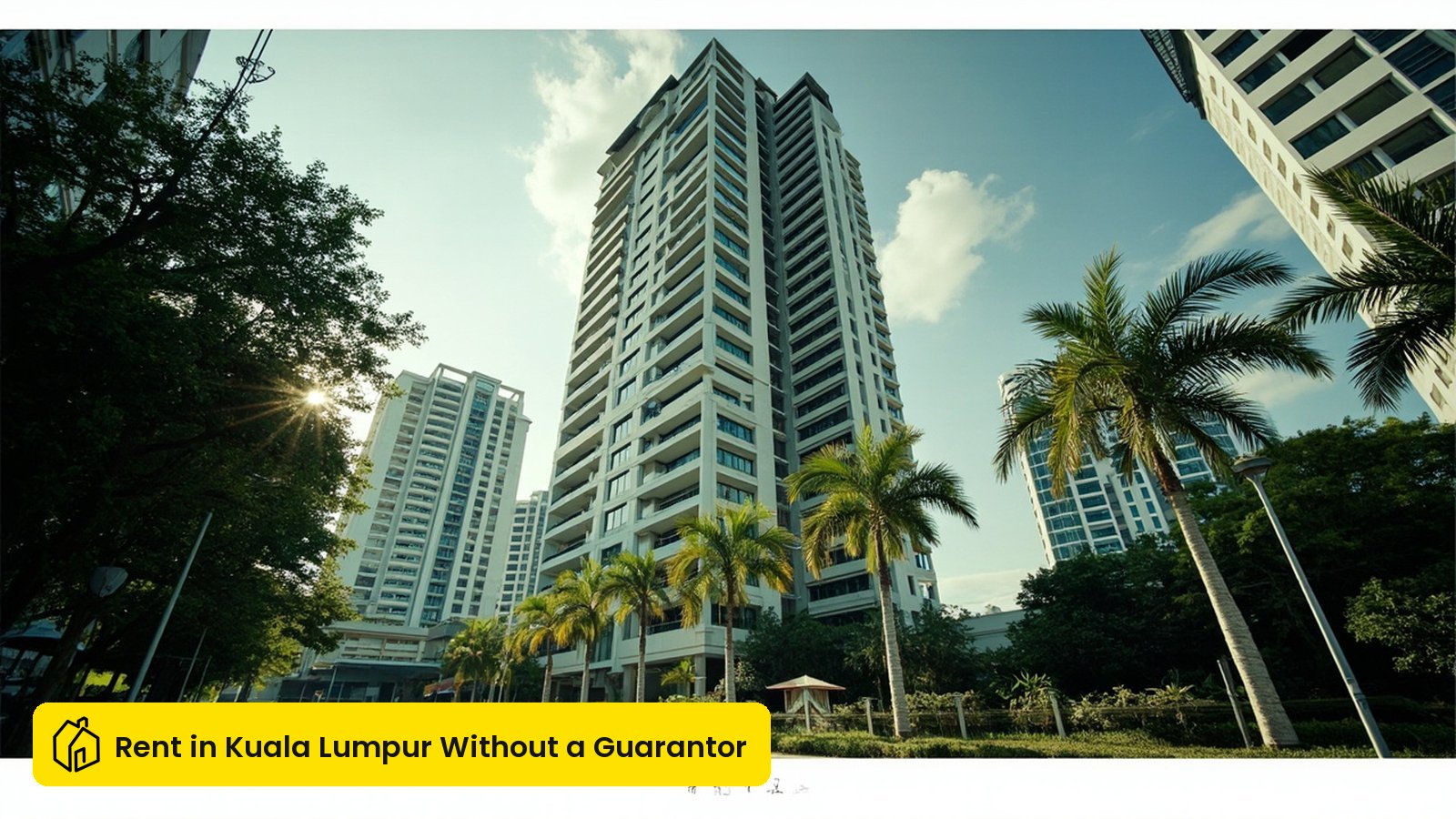
Renting in KL without a guarantor: the short answer
You can rent in Kuala Lumpur without a Malaysian guarantor when the landlord accepts an alternative to a guarantor — most commonly a SPEEDHOME Zero Deposit plan that replaces the cash deposit, or a direct-owner lease with one or two months' deposit upfront. The guarantor requirement is a landlord risk preference, not a law; platforms that vet tenants and absorb the rental risk remove the need for one.
KL's rental market has shifted to accommodate expats, students and short-stay professionals who simply do not have a local guarantor. Flexible leases, vetted direct-owner listings and deposit-free plans now cover the gap a guarantor used to fill. Browse current apartments for rent in Kuala Lumpur to see what is available without a guarantor clause today.
Area snapshot: KL without a guarantor
| Feature | What to know |
|---|---|
| Guarantor required by law? | No. There is no statute requiring a guarantor; it is a landlord risk preference set in the tenancy agreement |
| Common guarantor-free paths | Zero Deposit plan (managed rental-risk system), direct-owner lease with 1–2 months' deposit, or a corporate lease for employees |
| Typical unit types | Studios and 1-bedroom serviced residences; 2–3 bedroom condos in family pockets |
| Furnishing norm | Most rental listings are fully or partly furnished |
| Best-fit tenant profile | Expats, international students, digital nomads, new arrivals without local references |
| Where Zero Deposit applies | Eligible units on SPEEDHOME — confirm on the live listing, as not every unit qualifies |
| Data freshness | Indicative 2026; verify live listings before deciding |
How much is rent in KL (and what it costs to move in)
Indicative 2026 KL rents run roughly RM900–1,800/month for a room, RM1,800–3,200 for a studio or 1-bedroom, RM2,600–5,000 for a 2-bedroom, and RM4,000–8,000+ for a 3-bedroom in premium towers. The move-in cost is the bigger variable: a traditional lease demands 2–3 months' deposit before keys, while a Zero Deposit plan lets you move in without that cash tied up. Check live listings for current floors.
| Path | Typical upfront before move-in | Guarantor needed? | Who it suits |
|---|---|---|---|
| Traditional direct-owner lease | 2 months' deposit + 1 month' advance + stamp duty + utilities deposit | Often requested by the landlord | Tenants with cash and time |
| Zero Deposit plan (SPEEDHOME) | First month's rent + stamp duty; deposit replaced by managed rental-risk cover | No — the risk cover replaces the guarantor's role | New arrivals, expats, anyone without a local guarantor |
| Corporate / employer lease | Company signs; tenant pays a small or nil deposit | No — the employer stands behind the lease | Relocated employees, MNC assignees |
| Room rental (shared unit) | 1–2 months' deposit on the room | Rarely required | Students, first-jobbers |
The figures above are indicative market ranges from publicly observed portal listings in 2026; actual rent varies by floor, view, furnishing and building age. Note the legal anchor on deposits: Malaysia has no statutory residential rent-deposit cap, so the deposit amount is governed by the tenancy agreement. The biggest practical lever for a no-guarantor tenant is whether the unit is on a Zero Deposit plan.
Zero Deposit: the guarantor-free path
Zero Deposit is SPEEDHOME's managed rental-risk system — not a financial guarantee product — that replaces the upfront cash deposit, so tenants move in without tying up cash while landlords stay protected through rental protection instead of holding a deposit. For severe end-of-tenancy damage beyond fair wear and tear, the standard protection claims process applies.
This is the core mechanism that makes a guarantor unnecessary. Instead of a relative or employer promising to cover unpaid rent, the rental-risk system stands in that role. The honest caveat: not every unit qualifies, and the plan covers rental default and defined damage — it is not a blanket promise that nothing can ever go wrong.
How the three no-guarantor routes compare:
| Route | What removes the guarantor | Tenant still pays upfront | Honest catch |
|---|---|---|---|
| Zero Deposit plan | Managed rental-risk system replaces the deposit's risk function | First month + stamp duty | Eligibility is per-unit; check the listing |
| Direct-owner with deposit | Cash deposit itself is the landlord's security | 2–3 months' deposit | You need the cash, which is the original pain point |
| Corporate lease | Employer's covenant replaces the guarantor | Often nil or first month | Your employer must agree to sign |
Where to live in KL: matching area to your situation
Pick by commute and lifestyle, not by rent alone: Bangsar and Mont Kiara suit expats who want walkable cafés and international schools; Cheras and parts of Petaling Jaya offer lower rent and solid transit; the city centre (KLCC, Bukit Bintang) fits those who walk to work. Each pocket has honest trade-offs in price, parking and building age.
| Area | Vibe | Transit reality | Honest drawback |
|---|---|---|---|
| KLCC / Bukit Bintang | City-centre, walk-to-work, premium | Kelana Jaya and Ampang LRT lines meet here; genuinely walkable | Highest rents; small unit sizes for the money |
| Bangsar | Expats, cafés, leafy | LRT Bangsar on the Kelana Jaya line; walkable core | Premium pricing; limited parking in older blocks |
| Mont Kiara | Expats, international schools, spacious | No LRT/MRT in the precinct; car- or Grab-dependent | Car-dependent; peak-hour congestion on Sprint/NKVE |
| Cheras | Local, affordable, family | MRT Sungai Buloh–Kajang line serves main corridors | Older stock; some congestion at choke points |
| Petaling Jaya | Suburban value, food, transit | MRT and LRT access varies by pocket | Distance to city centre if your office is in KLCC |
For studios specifically, the city centre and Bangsar have the densest supply of serviced residences with pool, gym and 24-hour security — convenient for solo renters who want a furnished, low-maintenance base.
Costs and legalities you cannot skip
Beyond monthly rent, budget for tenancy-agreement stamp duty (a legal requirement that makes the agreement enforceable), utilities deposits, and possibly a furnishing or accessory deposit. Read the lease for what rent actually includes — electricity, maintenance, parking — because these vary unit by unit.
| Cost item | What it is | Who pays |
|---|---|---|
| Stamp duty on the tenancy agreement | Legal requirement to make the TA admissible and enforceable | Tenant bears it in practice; confirm in the TA |
| Utilities deposit | TNB (electricity) and water connection deposit | Tenant |
| Advance rent | Usually one month's rent in advance | Tenant |
| Maintenance / sinking fund | For strata units; sometimes billed separately from rent | Owner pays the principle; tenant may pay if sub-metered |
| Agent fee | Conventionally one month's rent for a 1-year-plus lease | Confirm who bears it per listing |
Two legal points worth knowing as a tenant without a guarantor: deposits are governed by the tenancy agreement (not by a deposit cap statute), and your dispute route if something goes wrong is the civil courts — Malaysia has no dedicated residential tenancy tribunal. That makes the quality of your tenancy agreement and the reputation of the platform you rent through more important, not less.
Viewing and scam checklist
Before you pay anything, view the unit in person, insist on a stamped tenancy agreement, and pay only to a company or verified owner account — never to a personal account from an unverified social-media listing channel. Photos are not reality.
- View the actual unit, not just a show unit, and check water pressure, aircon, door seals and parking allocation.
- Pay to a company account or a verified owner account, never a personal account from an unverified social-media listing channel.
- Insist on a stamped tenancy agreement; an unstamped verbal deal leaves you with no enforceable rights.
- Confirm in writing what rent covers — utilities, maintenance, parking — before signing.
- Take handover photos dated on move-in day; they protect your deposit at the end.
Who the no-guarantor path fits — and who should think twice
The no-guarantor path fits expats, international students, digital nomads and new arrivals who have income but no local references. It is a weaker fit for tenants with genuinely irregular income, because Zero Deposit and a deposit both assume you can pay rent every month — neither replaces the rent itself.
The honest trade-off: removing the guarantor removes a friction, not the obligation. You still owe the rent. If your income is seasonal or project-based, plan a buffer regardless of which no-guarantor route you take.
Renting with Zero Deposit
If you are renting in KL without a local guarantor, the Zero Deposit plan is the cleanest route on SPEEDHOME — it removes the deposit and, with it, the guarantor question. Browse eligible units and confirm Zero Deposit availability on the live listing before you commit, or start from the full SPEEDHOME rentals filter to compare guarantor-free and deposit-based options side by side.
FAQ
Can I really rent in KL with no Malaysian guarantor? Yes. The guarantor is a landlord risk preference, not a legal requirement. A Zero Deposit plan, a direct-owner lease with deposit, or a corporate lease all remove the need for a guarantor.
Does Zero Deposit mean I pay nothing to move in? No. You typically pay the first month's rent and stamp duty. Zero Deposit replaces the 2–3 months' security deposit, not the rent or the legal stamping cost.
Is Zero Deposit insurance? Zero Deposit is SPEEDHOME's managed rental-risk system, not a financial guarantee product. For severe end-of-tenancy damage beyond fair wear and tear, the standard protection claims process applies.
Which KL areas are best for tenants without a guarantor? KLCC and Bangsar for walkable city living, Cheras and Petaling Jaya for lower rent with transit, Mont Kiara for spacious expat stock if you accept being car-dependent. Match the area to your commute, not just the rent.
What costs should I budget beyond rent? Plan for stamp duty on the tenancy agreement, a utilities deposit, one month's advance rent, and any furnishing or accessory deposit set in the TA. The deposit amount is governed by the agreement, not by a statutory cap.
How do I avoid rental scams without a guarantor or local contact? View the unit in person, pay only to a company or verified owner account, insist on a stamped tenancy agreement, and avoid unverified social-media listing channels. Photos alone are not proof the unit exists or is available.