
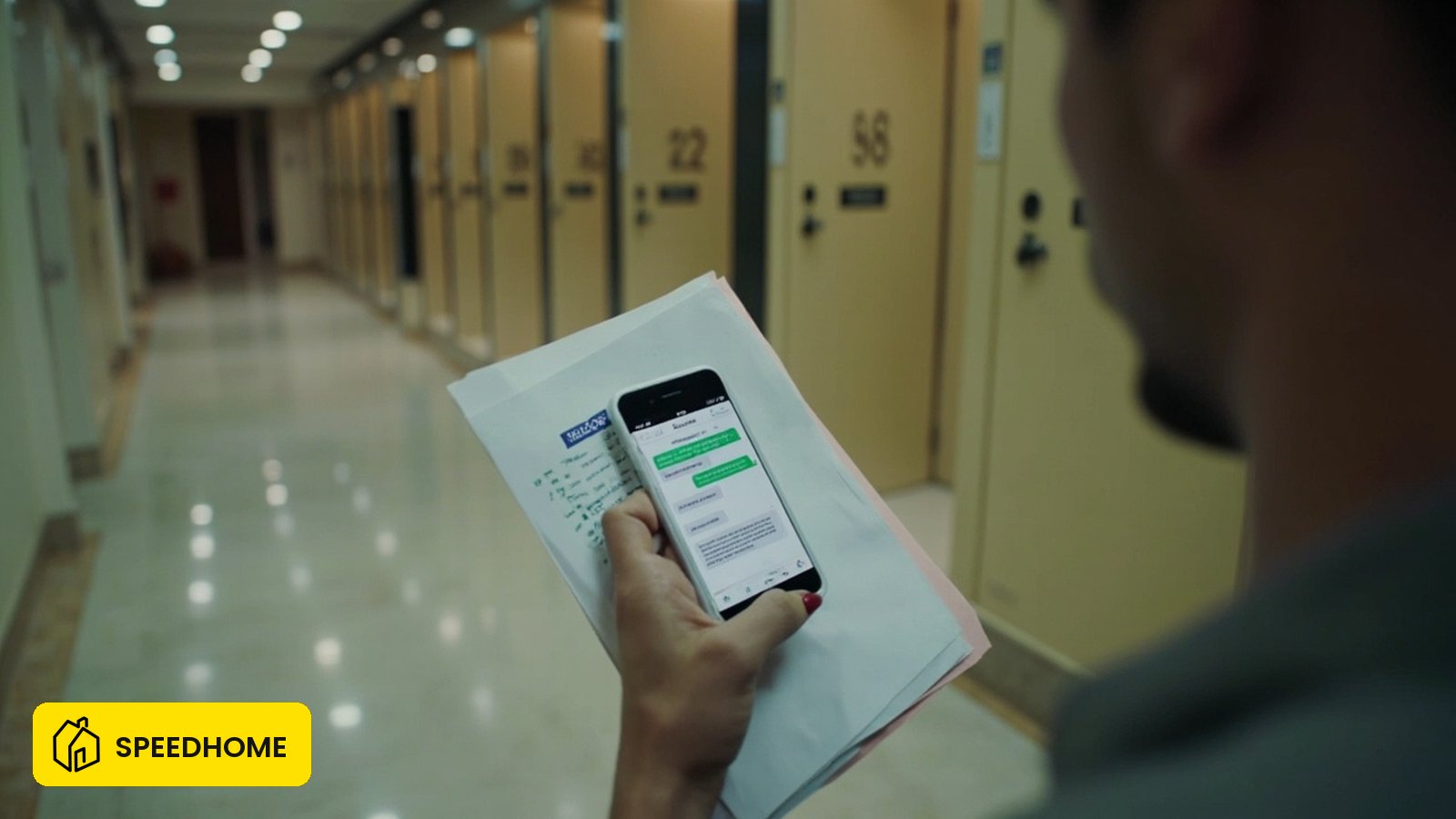
A landlord who flags nothing at check-out but deducts afterwards is usually relying on custody of the cash rather than evidence — and in Malaysia that weakens, not strengthens, their position. The right to retain a deposit is limited to proven, tenant-caused loss under the tenancy agreement and the Contracts Act 1950 (section 74); a clean handover with no defect recorded is the strongest fact a tenant has. On SPEEDHOME's platform the deposit disputes that get resolved fastest are the ones where the check-out record is clean and dated.
What the law actually allows a landlord to deduct
A landlord may retain the deposit only for proven loss caused by the tenant: unpaid rent, utility arrears, and damage beyond fair wear and tear — each backed by evidence, not assertion. There is no statutory cap on the deposit amount and no statutory refund deadline; both are set by the tenancy agreement read with general contract law.
As of 2026 Malaysia still has no Residential Tenancy Act in force, so the deposit rules live in the agreement plus the Contracts Act 1950, Civil Law Act 1956 and Specific Relief Act 1950. Section 74 of the Contracts Act limits a landlord's recovery to actual proven loss — they cannot keep more than the loss they can demonstrate. Fair wear and tear (faded paint, minor scuffs, flooring worn from normal use) is not a tenant-caused loss and is not recoverable. The full category breakdown lives on our what a landlord can deduct from a deposit page.
The core problem: deduction without a defect on record
The legal weakness is not the deduction itself — it is that no defect was recorded at check-out, so there is no dated fact tying the loss to the tenant. A landlord who inspected, raised nothing, took the keys, and then later claims damage has lost the evidentiary link that section 74 demands.
The leverage in a deposit dispute runs with whoever holds the money in the short term, but it runs with whoever holds the dated proof in any forum. A clean, timestamped check-out record does three things at once: it fixes the unit's condition on the day of handover, it shows the landlord had the chance to raise issues and did not, and it shifts the burden of explaining any later claim onto the landlord. This is why most disputes we see resolve without ever reaching court once the check-out evidence is produced.
Step-by-step: what to do when a deduction lands after a clean check-out
| Step | Who acts | What to do | Why it matters |
|---|---|---|---|
| 1. Secure the check-out record | Tenant | Compile the dated move-in and move-out photos/video, the signed inventory if any, the key-handover message, and the WhatsApp/email trail where nothing was flagged. | This is your single strongest document; it fixes condition at handover. |
| 2. Ask for the itemised statement | Tenant | In writing, request a line-by-line statement: each deduction, the amount, the category, and the evidence (photo, quote, receipt). | Forces the landlord to put a claim on record; silence or vagueness helps you. |
| 3. Challenge in writing | Tenant | Reply item by item. For each, state "agreed" or "disputed — fair wear and tear / no defect at check-out / no evidence." | Creates a contemporaneous record that you did not accept the deduction. |
| 4. Request independent quotes | Tenant | For disputed repair amounts, ask for a second quote or the original contractor invoice. | Inflated or estimate-only amounts are not lawful deductions. |
| 5. Make a written settlement offer | Tenant | Offer to accept return of the disputed balance within a stated period. | A reasonable offer in writing looks strong in any later forum. |
| 6. File if unresolved | Tenant | For the disputed balance up to RM5,000, file a Small Claims case. | Stops the landlord sitting on the money indefinitely. |
Skipping step 1 is the most expensive mistake tenants make. Without the dated check-out record the dispute collapses into one claim against another, and the side holding the cash keeps it by default.
Who pays for what: the liability split when no defect was flagged
| Cost the landlord claims | Who actually bears it | Reasoning |
|---|---|---|
| Repainting for "freshening up" | Landlord | Repainting after a normal tenancy is maintenance, not tenant damage; faded paint is fair wear and tear. |
| Cleaning where the unit was returned clean | Landlord | With no check-out photo of dirt and a clean handover record, there is no proven breach. |
| Repair of a defect never recorded at check-out | Landlord (unless later proven) | No dated defect at handover means no evidentiary link to the tenant under section 74. |
| Unpaid rent or utility arrears from the tenancy period | Tenant — if evidenced | These are recoverable with a ledger and bills, regardless of the check-out state. |
| Genuine tenant-caused damage with move-in vs move-out photos | Tenant | Proven, beyond fair wear and tear. |
| Items that reached end of life during the tenancy | Landlord | Age and normal use is not tenant fault. |
Penalties and risk: what each side exposes themselves to
A landlord who deducts without evidence is not breaking a deposit statute — there is none — but they are exposed under general contract law and, in practice, to losing the disputed balance plus credibility in a Small Claims hearing. A tenant who withholds a legitimate debt (real arrears, real damage) and files anyway risks a counter-claim and costs.
There is no statutory refund deadline, so "the landlord didn't return it in time" is not itself a cause of action — the cause of action is retention of money the landlord cannot justify with evidence. Unreasonable delay does, however, weaken the landlord's negotiating position and is factored into how a Small Claims registrar views the file.
Worked example: RM1,500/month unit, clean check-out, RM1,200 deducted
A tenant returns a furnished flat after 24 months. Check-out is joint, keys are handed over, nothing is flagged in the WhatsApp thread that day. Two weeks later the landlord deducts RM1,200: RM700 "repainting," RM300 "cleaning," RM200 "broken chair."
| Claimed deduction | Amount | Likely outcome |
|---|---|---|
| Repainting (no peeling or marks photographed) | RM700 | Not recoverable — fair wear and tear and no defect recorded |
| Cleaning (unit returned clean, handover recorded) | RM300 | Not recoverable — no evidence of breach at handover |
| Broken chair (no move-in photo of the chair, no check-out note) | RM200 | Weak — no dated defect tying it to the tenancy |
| Likely lawful net deduction | RM0 | Full RM3,000 deposit should be returned |
With the clean, dated check-out record, the tenant's Small Claims position for the full disputed amount is strong. Filing for up to RM5,000 needs no lawyer; see our small claims vs Magistrate routing for deposit disputes page for the exact steps and filing cost.
Why the shortcut backfires (for landlords)
The move that tempts a landlord in this position — holding the money and waiting for the tenant to give up — is the one that loses the case. A clean check-out means the landlord already had the opportunity to record defects and chose not to. The longer the gap between a clean handover and a damage claim, the less plausible the claim becomes. The same logic applies to anything that looks like retaliation for the tenant leaving: deductions invented after a notice-to-quit are read as bad faith, and bad faith erodes the landlord's credibility in every forum.
The lawful path is the same one that protects the tenant: record the real condition at move-in and move-out, deduct only for proven loss, and return the balance promptly. Landlords who operate this way rarely end up in disputes at all.
The SPEEDHOME angle: evidence as the product, not the deposit
The deposit is a weak risk tool — two months of cash held for years against scenarios (tenant disappearance, major damage, arrears) that it barely covers. The real protection is the evidence layer around the tenancy: a documented tenancy agreement, move-in evidence collection, structured check-out, and a payment trail. On SPEEDHOME that layer is built into the flow, which is why a clean check-out recorded on-platform resolves disputes faster than a private cash deposit held in one party's account.
Where a landlord opts for Zero Deposit, the upfront cash is replaced by a managed rental-risk system — not a financial guarantee product, and not a guarantee that covers every loss. Zero Deposit is a managed rental-risk system rather than a financial guarantee product; it replaces the upfront cash deposit, and in the rare case of severe end-of-tenancy damage the recoverable amount can be limited, so it does not cover every scenario. The deduction rules above apply in either model — the difference is whether RM3,000 sits in a landlord's account or the risk is managed through screening and documentation. Confirm Zero Deposit eligibility on the live listing; not every unit qualifies.
Browse verified rentals — including zero-deposit eligible homes — at /rent, or see the full deposit stack explained in our rental deposit Malaysia guide.
Frequently Asked Questions
Can a landlord deduct from the deposit if nothing was flagged at check-out?
Legally they can only deduct for proven, tenant-caused loss — and a clean check-out means they have no dated defect tying any later claim to the tenancy. If nothing was recorded at handover, request the itemised statement in writing and challenge each line; the clean check-out record is your strongest evidence in any dispute.
Is there a deadline for the landlord to raise deductions after check-out?
No statutory deadline exists. The tenancy agreement clause governs; without one, "a reasonable time" applies under general contract law. The longer a landlord waits after a clean handover to claim damage, the weaker the claim looks in any forum.
What if the landlord never sent an itemised statement?
Ask for one in writing, line by line, with amounts and evidence. Vagueness or silence works in your favour: a landlord who cannot or will not itemise has no proven loss to recover under section 74 of the Contracts Act 1950, and that record helps you if you file.
Where do I file if the landlord still won't return the disputed amount?
A deposit dispute goes to the civil courts — there is no dedicated residential tenancy tribunal. Claims up to RM5,000 use the Magistrates' Court small-claims procedure (no lawyer needed); larger claims go to the Magistrates' or Sessions Court. The Tribunal for Consumer Claims does not hear private tenancy deposit disputes.
Can the landlord just keep the money because they hold it?
In the short term, custody gives leverage; in any forum, dated proof decides it. A landlord who keeps the deposit without evidence is exposed to a Small Claims case and to losing credibility. The side with cleaner records almost always negotiates from a stronger position.
Does Zero Deposit change what I can claim back at move-out?
No — the same evidence rules apply. Zero Deposit replaces the upfront cash with a managed rental-risk system rather than a financial guarantee product, and it does not cover every scenario; a clean, dated check-out still fixes the unit's condition at handover and is your best protection in either model.