
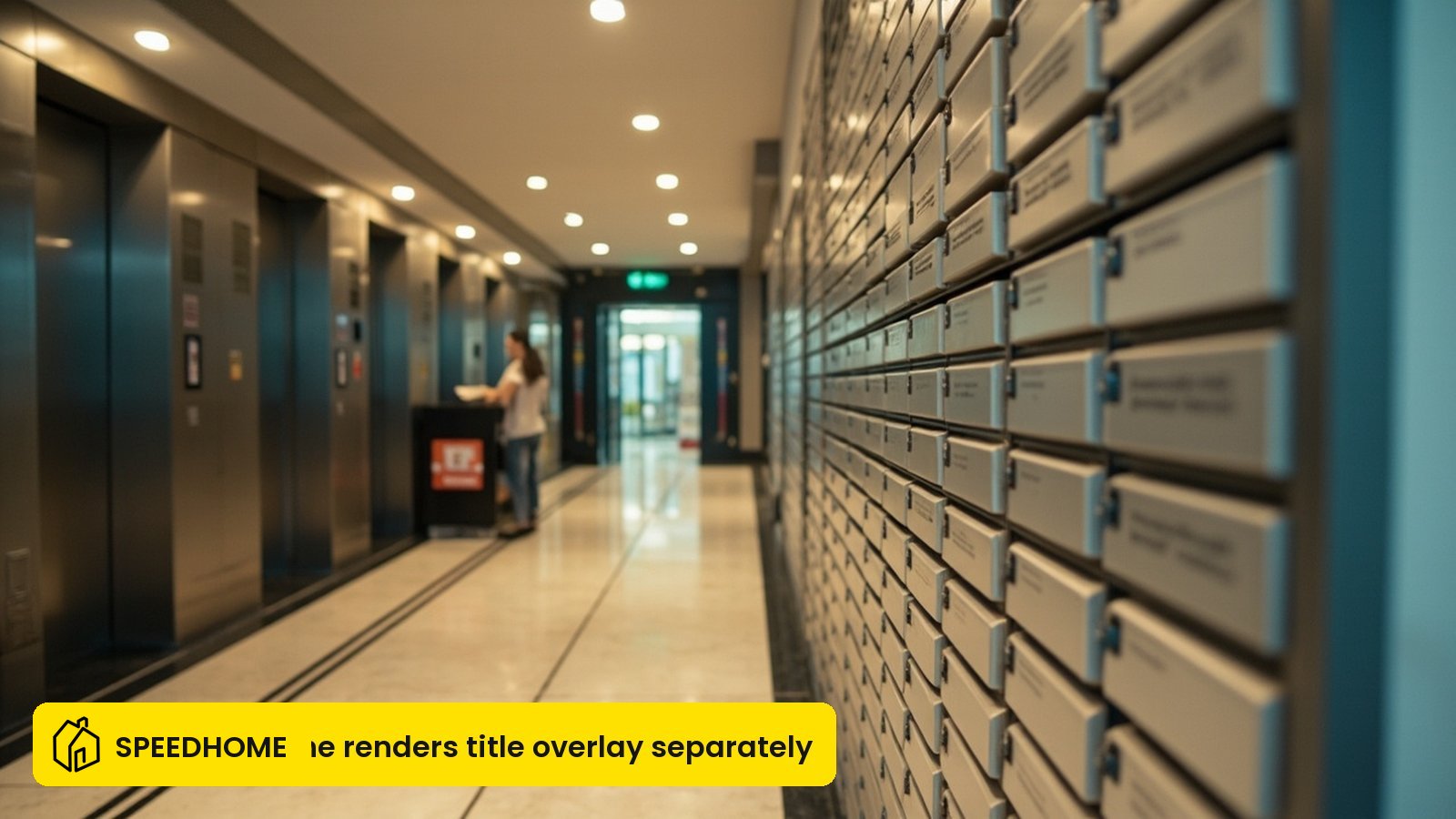
In Malaysia, ""parcel rent"" refers to renting a separately-titled strata unit, such as a condominium or apartment, within a subdivided building. You rent the individual private parcel, while the surrounding common property and facilities are managed separately by a Joint Management Body or developer.
What does "parcel rent" mean in Malaysia?
"Parcel rent" in Malaysia means renting out a strata parcel — a separately-titled unit inside a subdivided building such as a condominium, apartment, or service residence — rather than a landed house. The word "parcel" comes from the Strata Management Act 2013, where each private unit is a "parcel" with its own strata title, and the shared areas are "common property." When you rent a parcel, you are renting one strata unit, and a separate body (the developer, JMB, or management corporation) owns and runs the common property around it.
This matters because a parcel rental involves three parties, not two: the landlord (parcel owner), the tenant, and the management body. That third party controls the access cards, parking bays, maintenance rules, and by-laws the tenant must live by — and unpaid maintenance charges follow the parcel owner, not the tenant. For most Malaysian renters, "renting a condo" is exactly "renting a parcel," so the terms are used interchangeably even though "parcel" is the legal label. Browse parcels (condos and apartments) for rent on SPEEDHOME to see the unit types this covers.
The detail: how parcel renting differs from a landed-house rental
A parcel rental sits inside two legal layers at once: the tenancy agreement between landlord and tenant (general contract law, since Malaysia has no Residential Tenancy Act in force as of 2026), and the Strata Management Act 2013 house rules set by the management body. A landed-house rental has only the first layer.
The practical differences that catch people out:
- Access cards and move-in clearance. The tenant cannot collect keys until the management office issues the access card, and many offices require the owner's letter, a copy of the stamped tenancy agreement, and a refundable move-in/move-out deposit before they will hand one over.
- House rules (by-laws). Renovation, pets, short-term letting, parking, and use of facilities are governed by the building's by-laws, which bind the tenant through the tenancy even though the tenant never signed them. The Federal Court has confirmed a management corporation may pass a binding by-law, for example prohibiting short-term rental of parcels — see the full Airbnb in a Malaysian condo rules explainer.
- Maintenance charges and sinking fund. These are owed by the parcel owner, not the tenant. Under the Strata Management Act 2013, if they go unpaid the JMB or management corporation recovers them from the owner by written demand giving at least 14 days to pay, then by court action, a claim at the Strata Management Tribunal, or seizure of the owner's movable property — never by locking the tenant out.
- Stamp duty is the same as any tenancy. The tenancy agreement is stamped on the Finance Act 2024 scale of RM1/RM3/RM5/RM7 per RM250 of annual rent depending on lease length, via e-Duti Setem on MyTax.
- SST does not apply to the rent. Letting a residential parcel is outside the scope of service tax, so a normal residential landlord does not charge SST on the rent.
For tenants browsing units, the rent you negotiate is only one cost — also confirm the access-card deposit, any move-in administration fee the management office charges, and whether parking is allocated. For owners, the key risk is that maintenance arrears follow the parcel regardless of who lives in it, so a rent that does not cover the monthly maintenance outflow is a loss-making parcel.
Parcel rent: what each side pays and is liable for
| Item | Paid by | Rule / source |
|---|---|---|
| Monthly rent | Tenant to owner | Tenancy agreement; no statutory rent cap |
| Upfront deposits (typically 2 + 1 + 0.5 months) | Tenant to owner | Tenancy agreement; Malaysia has no statutory deposit cap, so the split is set by the agreement |
| Stamp duty on the tenancy | Shared, usually tenant | Finance Act 2024 scale; e-Duti Setem on MyTax |
| Maintenance charges + sinking fund | Owner (owner may recover from rent) | Strata Management Act 2013 s.34; unpaid charges follow the parcel owner |
| Access-card / move-in deposit | Tenant to management office | Set by the management body, not statute |
| Utilities (TNB, water, IWK) | Transferred to tenant during tenancy | Account in tenant's name for the tenancy period |
| SST on residential rent | Neither | Residential letting is outside the scope of service tax |
| End-of-tenancy damage beyond fair wear and tear | Deductible from deposit per agreement | Contracts Act 1950 s.74 (proven loss only) — see when a management office penalty can come out of a tenant's deposit |
What to do if rent goes unpaid or the tenant will not leave?
A parcel owner has the same limited recovery tools as any Malaysian landlord, because the management body cannot evict for you. Serving a demand, then going to court for a Writ of Possession (to recover the unit) or a Writ of Distress (to recover arrears), enforced by the court bailiff, is the lawful route. Locking the tenant out, disconnecting water or electricity, or removing belongings yourself is unlawful self-help — and asking the management office to block the tenant's access card for unpaid rent is the same defect, since blocking access to force payment is not a lawful recovery step.
SPEEDHOME's managed platform shows the average time from a tenant's first rental default to recovery action is about 31 days, which reflects how quickly a report-ready tenancy agreement (with a default clause and arrears evidence) lets a landlord move, versus the months a poorly-documented parcel owner can lose.
How does SPEEDHOME default protection work for strata parcels?
Because a parcel sits inside building by-laws the tenant never negotiated, the cleanest way to remove friction is a tenancy agreement that already wires in the things a condo rental needs: a default clause, evidence trail, and a path to verified default reporting through a licensed credit agency with the tenant's consent. The platform pairs that report-ready agreement with Zero Deposit, its managed rental-risk system that replaces the upfront cash deposit so a tenant moves in without tying up cash while the owner stays protected through rental protection instead of holding a deposit. Zero Deposit is not a financial guarantee product; severe end-of-tenancy damage beyond fair wear and tear goes through the standard protection claims process, and not every unit qualifies — check live listings for current eligibility.
SPEEDHOME is one option worth comparing alongside the routes above.
FAQ
Is "parcel" the same as "condo" or "apartment" in Malaysia?
Legally, a parcel is any separately-titled strata unit, which covers most condos, apartments, flats, and service residences. "Condo" and "apartment" describe the building type; "parcel" is the Strata Management Act 2013 term for the individual unit being rented. When you rent a condo unit, you are renting a parcel.
Who pays the monthly maintenance charge when a parcel is rented out?
The parcel owner owes the maintenance charge and sinking fund to the management body under the Strata Management Act 2013. Owners usually recover that cost through the rent they charge the tenant, but if the charge is unpaid the management body pursues the owner — never the tenant — and never by blocking the tenant's access.
Can the management office block my tenant's access card for unpaid rent?
No. Blocking an access card to force rent payment is a form of self-help and is not a lawful recovery step. Unpaid rent is recovered through the tenancy agreement and the courts (a Writ of Possession or Writ of Distress), not through the management office. Unpaid maintenance charges are a separate matter pursued against the owner.
Is there a cap on the deposit for renting a parcel?
There is no statutory residential deposit cap in Malaysia. The conventional 2 + 1 + 0.5 months split is an industry norm set in the tenancy agreement, not a legal maximum, and the owner's right to retain any of it is limited to proven loss under general contract law.
Does the tenant pay stamp duty on a parcel tenancy agreement?
Stamp duty follows the standard tenancy scale — RM1, RM3, RM5, or RM7 per RM250 of annual rent depending on the lease length, under the Finance Act 2024 — and is paid via e-Duti Setem on MyTax. It is usually borne by the tenant, though the agreement can allocate it either way.
Can I rent my parcel short-term (Airbnb-style)?
That depends on your building's by-laws and the local council's rules, not a national ban. The Federal Court has held that a management corporation may pass a binding by-law prohibiting short-term rental of parcels, so check your building's by-laws before listing.