
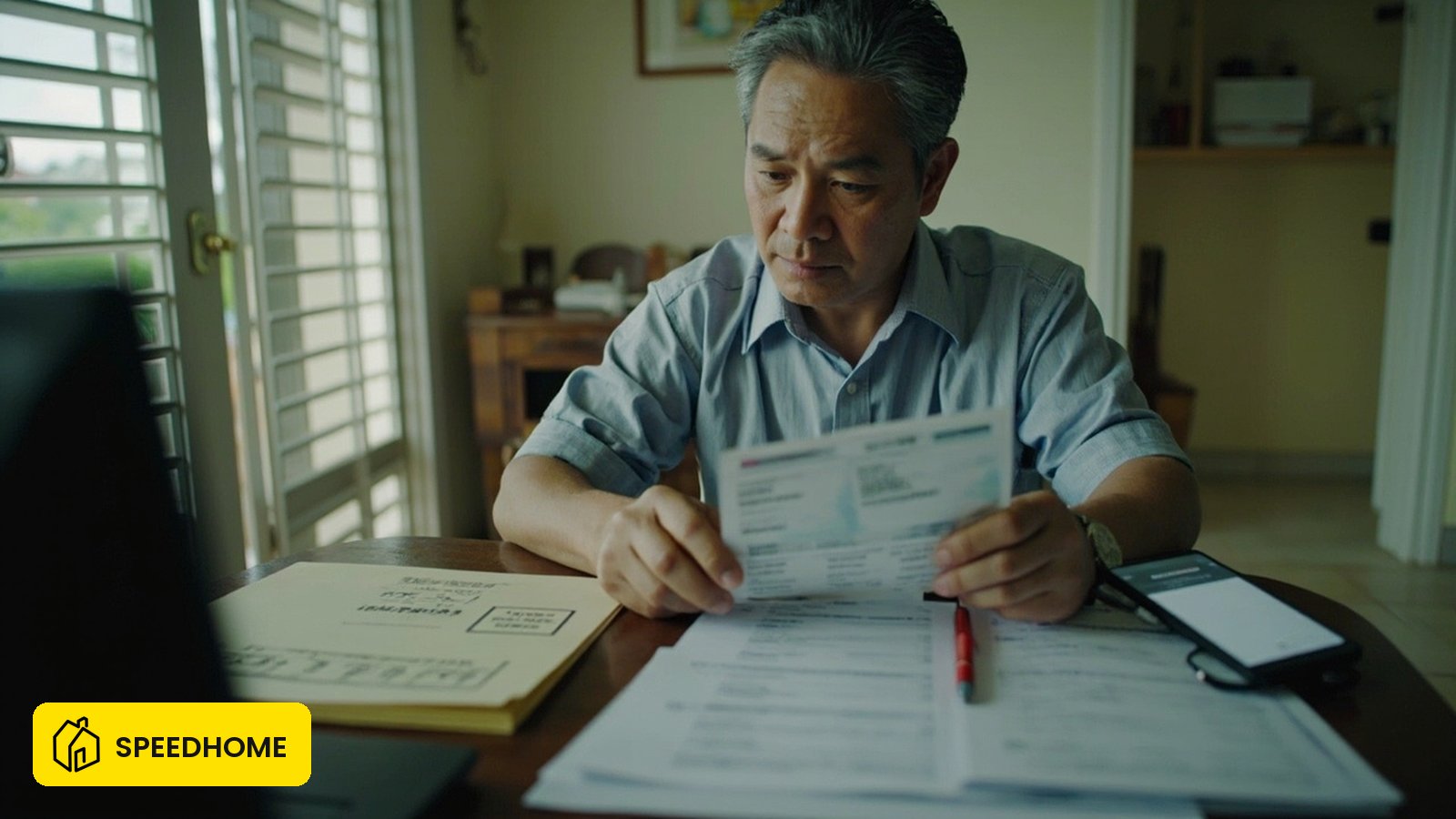
What is penipuan bilik sewa from the landlord side?
Penipuan bilik sewa, from the landlord side, is the pattern where a "tenant applicant" uses a borrowed IC, a forged pay slip, a fake employer letter or a cloned bank account to clear screening, collect the keys, and disappear - leaving the owner with unpaid rent, a damaged unit, and a person who does not actually exist on paper. PDRM CCID recorded rental fraud cases rising from 184 (2023) to 922 (2025), with money recovery running below half a percent of losses.
The Malay phrase covers rental fraud generally, but two shapes hit landlords most directly. First, the fake-applicant scam: someone replies to the listing, presents convincing documents, pays the first month by cash or fast local transfer, and vanishes before month two. Second, the fake-agent scam, where someone posing as a "tenant-finder" or registered agent takes a placement or viewing fee from the owner and disappears, or rents the landlord's room out to a third party without authority. Both shapes end with the owner holding the loss and a police report number.
The fix is structural: confirm the person before keys move, accept payment only into a named account that matches the IC, and never publish the suspect's details online as revenge - that route is not lawful in Malaysia. For the full lawful screening workflow, see how to screen tenants in Malaysia without legal issues.
Scam pattern versus lawful landlord screening
The core difference is timing. A scam wants the deposit, the keys or a placement fee before anything can be verified. Lawful screening wants identity, income, employer and consent all verified before money moves and before keys change hands.
| What you check | Scam pattern (red flag) | Lawful landlord screening |
|---|---|---|
| Identity documents | IC photo sent by chat, often deliberately blurred | Original IC seen at viewing + copy kept; cross-check name against bank account |
| Pay slip / employer | Single pay-slip image, no company number, no EPF statement | 2-3 recent pay slips + EPF statement + verification call to the listed company line |
| Booking / holding deposit | Demanded now, to a personal name or e-wallet, before any viewing | Paid only after viewing, to a named account matching the owner or a managed platform |
| "Agent" collecting placement fee | Cash taken, no receipt, no registered agency | REN/REA tag verifiable on BOVAEP/LPPEH, agency invoice with company account |
| Move-in day | Keys handed over after a same-day transfer, no signed agreement | Tenancy agreement stamped and signed first, deposit receipt issued, keys only on handover |
| Mid-tenancy "top-up" payment | Asked to send to a new account name, citing a frozen bank account | Stays on the original named account in the agreement; any change needs a written addendum |
| After arrears build | Pressured to "punish publicly" in chat groups | Written notice first, lawful court route, then a licensed credit agency report with consent |
The danger is not the existence of hard-to-place tenants. The danger is treating speed as proof and skipping verification because the room has been empty two months. For the lawful landlord angle on credit reporting after a verified default, read the landlord credit reporting and tenant default guide.
When the landlord should walk away from an applicant
Walk away when documents cannot be verified on a real company line, the payment account does not match the applicant's name, the "tenant" refuses a normal viewing, or any fee is demanded before the tenancy agreement is signed.
These are the consistent patterns Malaysian owners report, regardless of how the listing was sourced:
- Pay first, view later. A booking fee, "refundable token" or "agent holding deposit" demanded before any viewing or agreement. A real tenancy does not move money before the agreement.
- Mismatched account. The bank or e-wallet account name on the transfer is not the same as the IC name, or changes between the first request and the second. Both are classic mule-account tells.
- Documents that look too clean. A pay slip with no EPF number, a reference letter from a company not in any public register, an IC photo with corners cropped just enough to hide the address.
- Time pressure. "Other people are viewing tonight, send a holding deposit now to keep the room." Urgency is the scammer's only tool.
- Fake-agent pressure. Someone claiming to be a registered agent demands a placement fee in cash before introducing "their tenant." Always verify the REN/REA tag on BOVAEP/LPPEH first.
- No agreement offered. "We'll sort the agreement after you move in" leaves the owner with no stamped document and no proof of who actually entered the unit.
- Cash handover on move-in day. A large cash bundle for deposit + first month, no receipt, no signed agreement - no audit trail if the dispute reaches the magistrate.
For landlords, every one of these is a hard stop. The most expensive mistake is treating an empty room as a bigger risk than a fake tenant. An empty room costs you rent; a fake tenant costs you rent, keys, repairs and a police report.
Cost and risk for the landlord
The biggest loss shows up as unpaid rent, but the real cost is the time to recover possession, the repair bill, and the lasting record of a default you have to file - which, even with consent, moves slowly through a licensed credit reporting agency.
| Scam tactic that hits landlords | Why it works | Safer landlord response |
|---|---|---|
| "Send a holding deposit now, refundable" | The room is empty and the owner wants to fill it | Refuse; ask for a normal viewing and a proper tenancy agreement first |
| "Pay into my friend's account, mine is frozen" | Looks like a small practical request | Refuse; payments must go to a named account in the signed tenancy agreement |
| "Here is my IC" (one blurry photo) | Feels like trust | Insist on seeing the original at the visit and keep a redacted copy |
| "I'll pay 6 months up front if you skip reference checks" | Cash looks like certainty | Run the reference checks anyway; cash without provenance is itself a warning sign |
| "The agent says I passed, just pay the placement fee" | Feels like a shortcut | Verify the REN/REA tag on BOVAEP/LPPEH; never pay a placement fee in cash without an invoice |
| "I'll advertise the landlord's room to others if you don't hurry" | Manufactured urgency | Stay calm; the room will fill with a real tenant at market rent |
| "Give me the keys tonight, I pay tomorrow" | Wipes out the audit trail | No signed agreement, no keys; this rule has no exceptions |
If the scam has already happened, the lawful route for the landlord is: keep all evidence, send a written demand, then proceed through the civil courts for possession and arrears. A verified rental default can be reported to a licensed credit reporting agency only where the tenant gave consent in the tenancy agreement; reporting a tenant to a licensed credit reporting agency without consent, or publishing the tenant's details, is not lawful. Money recovery exists but is slow by design.
The SPEEDHOME path for landlords
Use the SPEEDHOME managed flow so the listing, the tenant verification and the payments stay on one record - and the lawful recovery route stays available to the landlord if anything goes wrong.
Start from SPEEDHOME landlord plans and list the room the way the platform expects: one listing, one traceable source, one stated booking process. Tenant applications then move through a consent-first flow with identity and credit checks (Experian-backed) and income-verification steps. SPEEDHOME platform records show that a large share of applicants fail screening, and they fail not because of race, religion or nationality - they fail because of payment risk. That is the screening landlords have actually wanted all along.
If a tenant then defaults, the SPEEDHOME process is built around the lawful route - written notice, court action where needed, then a report to a licensed credit reporting agency with the tenant's consent in the agreement. Nothing needs to be posted publicly, and nothing is gained by doing so. That keeps the landlord's case strong, reputation intact, and exposure to counter-claims for defamation or PDPA at zero.
For the wider landlord risk picture - tax, repairs, eviction, JMB fees - see the Malaysia renting guide and follow the landlord-side spokes from there.
FAQ
As a landlord, how do I tell an applicant is a scam?
Reject the application if the bank or e-wallet account name does not match the IC name, if the pay slip has no EPF number and no reachable company line, if a holding or placement fee is demanded before any viewing or agreement, or if the "tenant" pressures you to hand over keys before the tenancy agreement is signed and stamped. One signal is suspicious; two together is a hard stop.
Can I recover the deposit or unpaid rent after a penipuan bilik sewa?
Recovery exists but is slow. Keep the listing, chat history, bank reference and tenancy agreement; send a written demand; then follow the lawful court route for possession and arrears. A verified default can be reported to a licensed credit reporting agency only where the tenancy agreement contains the tenant's consent; publishing the tenant's details is not lawful and weakens the landlord's case.
Should I post the scammer's details online to warn other landlords?
No. Publishing an IC, photo, address or account details of a tenant is not lawful in Malaysia and exposes the landlord to PDPA or defamation counter-claims. The lawful route is to report a verified default to a licensed credit reporting agency with the tenant's consent in the agreement, and to pursue the civil courts for possession and arrears. Use the landlord credit reporting and tenant default guide for the exact wording.
What documents should I check before handing over keys?
Before keys move, the landlord should have: original IC seen and a redacted copy kept; 2-3 recent pay slips and an EPF statement; a tenancy agreement signed by both parties and stamped via e-Duti Setem on MyTax; a deposit receipt that matches the named account; and a handover condition record with photos. Anything missing from this list is the gap a fake applicant will exploit.
Does SPEEDHOME protect landlords from penipuan bilik sewa?
No platform can guarantee zero fraud. SPEEDHOME reduces the risk by keeping the listing, the tenant verification and the payments on one traceable record, and by giving landlords a lawful recovery route if a verified default occurs. The protection is structural, not absolute; the upside is that no lawful recovery option is burned by an unlawful public post.
Can I report a scam tenant to a credit agency in Malaysia?
A verified rental default can be reported to a licensed credit reporting agency only where the tenancy agreement contains the tenant's consent; doing it without consent, or publishing the tenant's details, is not lawful. That is why a consent clause belongs in the agreement from day one - it is the only door that stays open if the landlord ever needs to use it.