
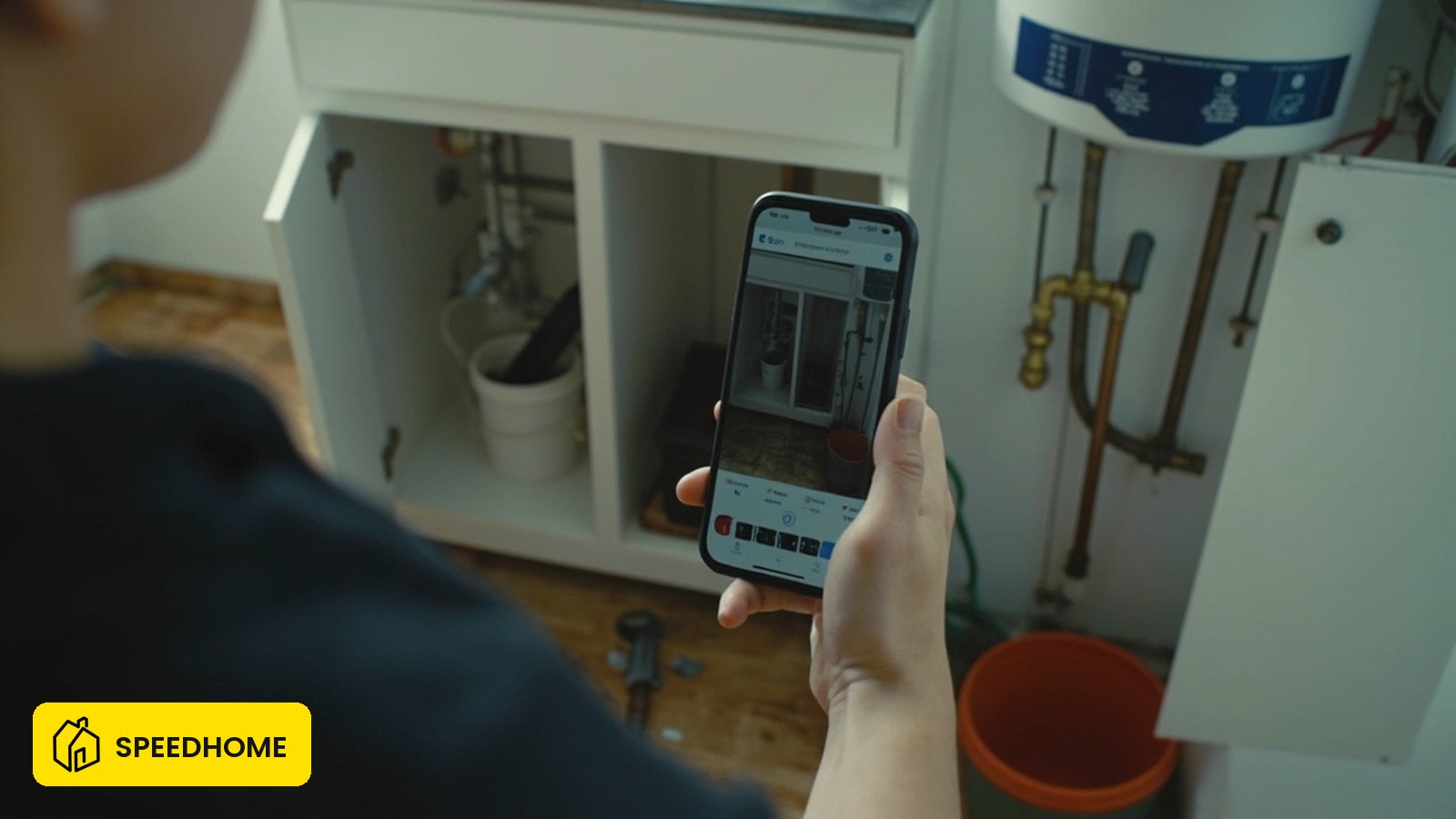
In Peninsular Malaysia, landlords pay for pre-existing plumbing and structural pipework, while tenants pay for damage or blockages they cause. Governed by the Contracts Act 1950, liability is decided by a plumber's written report and dated move-in photos, not just verbal claims.
Regional note: The contract principles on this page apply to Peninsular Malaysia. As of 2026 Malaysia still has no Residential Tenancy Act in force, so residential tenancies are governed by the tenancy agreement together with general law (Contracts Act 1950, Civil Law Act 1956, Specific Relief Act 1950) and the ordinary courts — not by a dedicated tenancy statute. This is general information, not legal advice.
Plumbing divides on the same fault line as every other repair: the landlord pays for the structure and pre-existing plumbing, you pay for damage you caused or let get worse by neglect. The deciding evidence is always a dated move-in photo and a written contractor report — not memory, not who shouts louder, not who called first.
Who pays for a plumbing problem — landlord or tenant?
The landlord pays for the building's own plumbing — pipework, risers, water heaters, stopcocks that were already there at handover. You pay for damage you caused, for blockages you let build, and for any appliance leak that came from how you used it. There is no statutory list of "who pays for what" — the tenancy agreement sets the duty, the contractor's written report settles the argument.
| Plumbing problem | Who usually pays | What decides it |
|---|---|---|
| Burst pipe inside the wall, corroded riser, leaking stopcock — building infrastructure | Landlord | Dated move-in photo of the wall/pipework + contractor's written report confirming age or corrosion |
| Blocked toilet or floor trap from normal use (hair, soap, toilet paper) | Tenant | Plumber's report; tenant can dispute by showing the blockage was pre-existing |
| Blocked drain from grease, food waste, or foreign objects | Tenant | Plumber's report naming the cause; landlord should not assume |
| Water heater leaking — pre-existing rust, aged tank, factory defect | Landlord | Dated move-in photo of the heater + age/installation record from the contractor |
| Water heater leaking because the pressure relief was never tested | Tenant if warned, landlord otherwise | Plumber's report + maintenance instructions given at handover |
| Tap, shower head, or sink fitting that was already worn at handover | Landlord | Dated move-in photo of the fitting in its worn state |
| Washing machine or dishwasher supply-hose burst (tenant-owned appliance) | Tenant for the supply hose and water damage to the unit | Plumber's report + photo of the appliance and hose at move-in |
| Ceiling leak from the unit above (strata building) | Upper-unit owner/tenant + JMB/MC for shared pipework | Plumber's report + JMB complaint reference number |
| Whole-building no water (mains stoppage by Air Selangor/Syabas) | Utility provider / building management | Written notice from Air Selangor or JMB |
| Mould from a long-standing pipe leak you never reported | Tenant | Text messages / repair-report timestamps showing you knew and stayed silent |
The line through the whole table: ask "did this happen because the building got old, or because of how the unit was used and looked after?" Old pipework and worn fittings are the landlord's. Blockages you let build, appliances you broke, and leaks you ignored are yours.
Where do you draw the line when a plumbing problem starts?
Most disputes are not about the law. They are about who reported what, when, and with what evidence. A burst riser is the landlord's — but the tenant who said nothing for three weeks while water soaked the cabinet may have turned a clean landlord fix into a shared-cost mess.
- The landlord's side. Pipework, risers, stopcocks, the water heater's tank, the underground supply to the unit — these are the building. They age, corrode, and fail on their own. The landlord also pays when a fitting was already worn at handover (a tap that dripped, a cistern that ran) and was not repaired before move-in.
- The tenant's side. Blockages you caused, leaks you let run, and fittings you broke. A toilet blocked by something you flushed, a sink clogged with months of grease, a cracked basin from a dropped weight — these are yours because the unit was handed over working and you returned it not.
- The grey zone. A water heater that was old and finally gave up: landlord, if it was already past service life at handover. A water heater that leaked because nobody flushed the pressure relief: tenant, if the landlord showed you the maintenance steps at handover; landlord, if they never did.
What does "pre-existing plumbing" actually mean?
Pre-existing plumbing is anything that was already there at handover — and the move-in record is the only proof that beats memory. Three documents turn this from argument into evidence:
- Dated move-in photos of every visible pipe, fitting, water heater, stopcock, and floor trap — wide shot and close-up. The phone's automatic date stamp is enough; do not edit the file.
- The inventory / condition report signed by you and the landlord or agent at handover. If the agreement has a separate inventory schedule, fill it in on the day, not the week after.
- The contractor's written report at the point of dispute. A plumber's verbal "it's old" is opinion; a one-page report naming the cause and the failed component is evidence. Ask for the report in writing.
Without those three, a deposit dispute becomes a he-said-she-said. With them, it usually ends before it starts.
What should you do in the first hour of a plumbing emergency?
The order is always the same: stop the water, photograph the damage, report in writing, then call a plumber. Swapping these steps is the most common mistake Malaysian tenants make — and the most common reason a fair landlord refuses a claim. Acting fast protects both you and your deposit.
- Stop the water at the stopcock. Most unit stopcocks are under the kitchen sink, in the utility cupboard, or at the bathroom. Turn clockwise to close. If the leak is from the ceiling, you cannot stop that one — go straight to step 2.
- Photograph before any temporary fix. Wide shot to show location, close-up to show detail, and a short video with the date visible. Do not move damaged items yet.
- Send the landlord a written report. WhatsApp is fine. State what happened, where, when it started, whether it affects normal use, and that you have photos ready. Attach the photos. A voice message alone is hard to reference later — always follow up with a short text summarising the agreement.
- Call a licensed plumber for a written assessment. Get a one-page report naming the cause. The plumber's finding decides who pays; do not accept a verbal diagnosis from either party.
- Agree the repair route in writing. Who arranges the contractor, who approves the quote, who pays, and by when. Save the invoice and completion photos.
For a printable template of what the written report should include, see the tenant repair report template Malaysia.
What do landlords commonly get wrong with plumbing repairs?
The biggest disputes happen when landlords deduct from the deposit without a contractor's report, or tenants call their own plumber and demand reimbursement with no prior agreement. Both fail for the same reason: no written evidence at the right moment.
- Landlords deducting without a report. A landlord who withholds part of a deposit for "a leaking tap" without a plumber's written finding of tenant fault will lose a small-claims challenge. Fair wear on a tap is the landlord's cost; the burden of proof is theirs.
- Tenants calling their own plumber. If access is not blocked and the emergency is not severe, calling your own contractor without landlord consent and demanding reimbursement is hard to recover. Always ask first, in writing, and agree who pays before the truck rolls.
- "Charge for everything" deductions. A landlord cannot bundle the entire plumbing call-out into one deposit deduction when only one fitting was damaged. Itemise: parts, labour, call-out, and which fitting each line covers.
- Silence as consent. If you reported verbally and heard nothing back after 48 hours on an urgent issue, follow up in writing. Silence is not consent to delay — and on a flooding issue the landlord who delays access can be liable for the consequential damage (soaked flooring, mould spread).
How long does a landlord have to fix plumbing in Malaysia?
There is no fixed statutory timeline for routine repairs under current Malaysian law. Urgency decides the response time. A plumbing problem affecting habitability — no water, sewage backflow, a burst pipe flooding the unit — warrants same-day or next-day action. A non-urgent repair (slow drain, dripping tap) is typically expected within a reasonable period, commonly 7–14 days in practice. Your tenancy agreement may specify a timeline; check it first.
If the landlord refuses or delays beyond reasonable time, the remedies follow the same court route as any other tenancy dispute. Malaysia has no dedicated residential tenancy tribunal, so a plumbing-related deposit dispute is a private contract matter decided in the civil courts: claims up to RM5,000 use the Magistrates' Court small-claims procedure (no lawyer needed), and larger claims go to the Magistrates' or Sessions Court. The Tribunal for Consumer Claims does not hear a private residential tenancy deposit dispute.
What records should you keep throughout a plumbing dispute?
The cleaner your documentary file, the less room there is for a deposit dispute or court escalation. Prepare and preserve four categories of record: photographs, written messages, contractor documents, and a dated timeline.
Use written messages for every significant step — WhatsApp is fine — but follow up calls or voice messages with a short text summarising what was agreed, who acts, and by when. Voice messages alone are difficult to reference in a deposit dispute or small-claims hearing.
Photograph from two distances: a wide shot that proves the location (this pipe fitting is in the bathroom of unit X), and a close-up that proves the defect detail. Take photos before the repair begins, after the repair is complete, and — if damage spread — of the affected area (the soaked cabinet floor, the stained ceiling patch). All these images should remain unedited and carry the device's automatic date stamp.
Keep contractor quotes and receipts separately filed and distinguish between three cost categories a landlord may present at move-out: a repair (restoring the fitting to its condition at handover), a replacement (the item wore out beyond economic repair), and an improvement (an upgrade beyond the original fitting). A landlord may only claim deposit deduction for the first two, and even then only where tenant fault is established by a written contractor report.
What happens if a plumbing emergency is never reported?
Silence turns a landlord's repair cost into shared or full tenant liability. A tenant who knows about active water damage and does nothing to report it has breached the duty to prevent further loss — and the timestamps on unread messages, repair-report logs, or absence of any message thread are the evidence that proves it.
The duty to report promptly runs in both directions. A tenant who discovers a dripping pipe, a slow ceiling stain, or a permanently wet cabinet has a practical duty to notify the landlord in writing — not because the law specifically requires it, but because the Contracts Act 1950 imposes a duty to mitigate foreseeable loss. Mould that spreads over eight weeks in a cabinet the tenant noticed but never reported is not the same as mould caused by a pipe the landlord ignored after a written report.
The practical rule: if you can see it or smell it, report it in writing on the day you notice it. The timestamp on the WhatsApp message is the boundary between your share of the liability and the landlord's.
Who pays if the ceiling is leaking from the unit above?
In a strata building, ceiling leaks from the unit above involve three possible responsible parties: the occupant of the upper unit, the building management body (JMB or MC), and the upper unit owner. Get a contractor's written assessment to identify the source before anyone pays — the responsible party changes depending on whether the leak comes from internal unit plumbing or a shared building riser.
The practical path in a strata property:
- Report to building management (JMB or MC) and the occupant of the upper unit in writing — on the same day you notice the leak.
- Request that building management arrange or authorise a plumber's assessment to identify the source. Do not begin any ceiling demolition without the JMB's written authorisation and the contractor's written finding.
- Keep the JMB complaint reference number. This is the evidence that building management was on notice.
- If internal unit plumbing in the upper unit is the source, the repair and consequential costs belong to the upper unit owner or tenant, not to you. If the source is a shared riser or common-area pipe, building management is the responsible party.
- Save all messages and the contractor's report separately from your general tenancy file — strata ceiling disputes sometimes require a separate JMB mediation process before moving to the civil courts.
Which common mistakes make plumbing disputes harder to resolve?
The disputes that escalate to court are almost never about complex law. They are about one or both parties acting without documenting, making permanent repairs without written permission, or deducting costs without a contractor report.
Tenants should avoid:
- Calling in their own contractor without landlord consent (unless access is genuinely blocked and the emergency is severe), then demanding reimbursement. Without prior written agreement, cost recovery is very difficult.
- Disposing of water-damaged items — a ruined cabinet panel or warped floor strip is evidence of the damage extent. Keep damaged items until the landlord has inspected or agreed in writing to dispose.
- Going silent after a verbal report. If you reported by phone and heard nothing back after 24–48 hours on an urgent issue, follow up in writing. Silence is not consent to delay on the landlord's part.
Landlords should avoid:
- Deducting from the deposit for plumbing damage without a contractor report confirming tenant fault. Normal wear on plumbing fittings is landlord cost, not tenant damage.
- Delaying access for a genuine emergency. A landlord who delays access on a flooding issue risks liability for consequential damage such as soaked flooring or mould spread.
- Assuming the most recent tenant caused every plumbing problem. Pre-existing corrosion or an aged water heater that finally failed is not tenant misuse.
How should a plumbing deduction be itemised at move-out?
A landlord who deducts for plumbing at move-out must be able to show the tenant an itemised breakdown — not a single lump sum. Each line of the deduction should name the fitting or component, the contractor's finding, the cost of parts, and the cost of labour separately. A bundled deduction without this breakdown is the most common reason a small-claims challenge succeeds.
The three questions to ask when you receive a deposit deduction statement for plumbing:
- Which fitting is this for? The deduction should name the specific component — "kitchen sink mixer tap replacement" not "plumbing repairs."
- What does the contractor's report say? A written finding of tenant fault — not landlord wear — must exist. Ask for the report in writing within 14 days of receiving the deduction notice.
- Is this a repair or a betterment? If the landlord is replacing a water heater because it finally failed from age, they cannot charge the full replacement cost to the tenant as though the item were new. Depreciation and expected service life matter. A plumber's report that names the item's age and condition at handover helps establish this.
If you disagree with a deduction and the landlord cannot produce a written contractor report naming tenant fault, the claim up to RM5,000 may be brought to the Magistrates' Court under the small-claims procedure.
When do plumbing disputes reach the courts in Malaysia?
Because Malaysia has no dedicated residential tenancy tribunal, a plumbing dispute that cannot be resolved between landlord and tenant follows the ordinary civil courts route. The court tier depends on the amount claimed, and the deciding evidence is always the documentary file — photos, written messages, and the contractor's report.
The court ladder for a plumbing claim in Peninsular Malaysia:
- Small claims (Magistrates' Court), up to RM5,000. No lawyer required. The claimant files at the Magistrates' Court. This is the most common route for a deposit dispute over a plumbing deduction. The strength of the written contractor report, the dated move-in photos, and the WhatsApp message thread largely determine the outcome.
- Magistrates' Court general jurisdiction, up to RM100,000. Where the plumbing damage claim or consequential losses (soaked floors, mould remediation, temporary accommodation) push the amount above RM5,000 but remain within RM100,000. A lawyer is advisable at this tier.
- Sessions Court, above RM100,000. Significant structural water damage to a high-value property would reach this tier, though it is uncommon in a residential tenancy plumbing dispute.
The Tribunal for Consumer Claims does not hear private residential tenancy deposit disputes; its jurisdiction covers goods and services under the Consumer Protection Act 1999, not landlord-tenant contractual disputes.
Where a plumbing dispute ends up — 2026 snapshot (figures current as of 2026-10):
| Forum | 2026 claim band |
|---|---|
| Magistrates' small-claims procedure (Order 93) | Claims up to RM5,000, no lawyer needed |
| Magistrates' Court | Claims up to RM100,000 |
| Sessions Court | Claims up to RM1,000,000 for other civil actions (s.65(1)(b)); unlimited for landlord-and-tenant and distress (s.65(1)(a)) |
The practical takeaway: build and keep your documentary file from move-in day — the courts decide on evidence, and a dated photo and a contractor's written report are the most effective evidence in a plumbing dispute.
How does structured documentation prevent plumbing disputes?
The cleanest plumbing resolution is the one backed by a contractor report and a dated photo trail from day one. Three practices prevent a plumbing standoff from turning into an extended conflict:
- Condition captured from day one. Record the move-in condition with dated photography so there is a clear baseline to compare at move-out — preventing charges for pre-existing wear.
- Prompt written reporting. Timely written logs create an undeniable paper trail that distinguishes between building wear and consequential water damage.
- Fair evidence on record. Keeping photos, quotes, and plumber reports together ensures any small-claims adjudication has complete documentary evidence.
For tenants seeking verified rental units, see rentals on SPEEDHOME or explore the where to rent in Malaysia hub.
FAQ
Who pays for a leaking pipe inside the wall?
The landlord, in almost every case. Pipework inside the wall is building infrastructure and ages on its own — corrosion, joint failure, and old risers are wear, not damage. The dated move-in photo and a plumber's written report confirming the cause settle it. A tenant who did something to break the pipe (drilled into it, hit it with a hammer) is the exception, and the plumber's report would name that.
Who pays if I block the toilet with toilet paper or wipes?
You do, if the blockage came from normal use you caused. Wipes, sanitary items, cotton buds, and grease belong in a bin, not the drain. A plumber's report naming the cause is the evidence; a landlord should not just deduct on suspicion. If the toilet was already slow at handover and you documented it in your move-in inventory, push back with the dated photo.
Who pays for a burst water heater?
Usually the landlord, because water heaters are part of the unit and fail from age, sediment, or factory defect. The exception is when the burst came from a tenant skipping the maintenance the landlord showed them at handover — like never testing the pressure relief valve — and a plumber's report confirms that was the cause. The dated move-in photo of the heater and any maintenance instructions given in writing decide it.
Is mould from a plumbing leak the tenant's or landlord's problem?
It depends on who knew and when. A long-standing pipe leak the tenant never reported — and the cabinet was visibly wet for weeks — turns into shared fault, because the tenant had a duty to report damage promptly. A leak from corroded pipework the tenant reported in writing and the landlord ignored: the mould is the landlord's. The timestamps on the WhatsApp messages and the contractor's report are the deciding evidence.
Can the landlord deduct from my deposit for plumbing without a contractor's report?
They can try, but a deduction without a written plumber's finding of tenant fault is hard to defend in a small-claims hearing. The landlord's right to retain the deposit is limited to proven loss. Itemised deductions backed by a contractor's report hold up; bundled deductions without one do not. If you receive one, ask for the itemised breakdown and the report in writing within 14 days.
Can I withhold rent because of an unresolved plumbing emergency?
Withholding rent is a high-risk step. Malaysian courts have found that a tenant who withholds rent — even over a genuine repair dispute — can be placed in default. The safer route is to report in writing, follow up in writing after 24–48 hours if there is no response, and if the matter remains unresolved after a reasonable period, seek advice from the Tribunal for Homebuyer Claims or a lawyer before stopping payment.
What if my landlord refuses to respond to a plumbing emergency?
Document every attempt to contact the landlord — message screenshots with timestamps, call logs. If the emergency is severe (flooding, no water for more than 24 hours, sewage backflow), some tenants arrange a temporary fix at minimum cost and keep the receipt, then present the evidence to seek reimbursement. For persistent non-response, the Tribunal for Homebuyer Claims handles residential tenancy disputes in Peninsular Malaysia. Seek professional advice before taking any self-help step.
Does Zero Deposit cover plumbing damage?
Zero Deposit on SPEEDHOME is a managed rental-risk system, not a financial guarantee product, and not every unit qualifies. It addresses the deposit requirement at move-in, not repair costs during the tenancy. Repair responsibility and cost recovery remain governed by your tenancy agreement and the contractor's findings. Check your specific agreement and the Zero Deposit terms for your unit.