
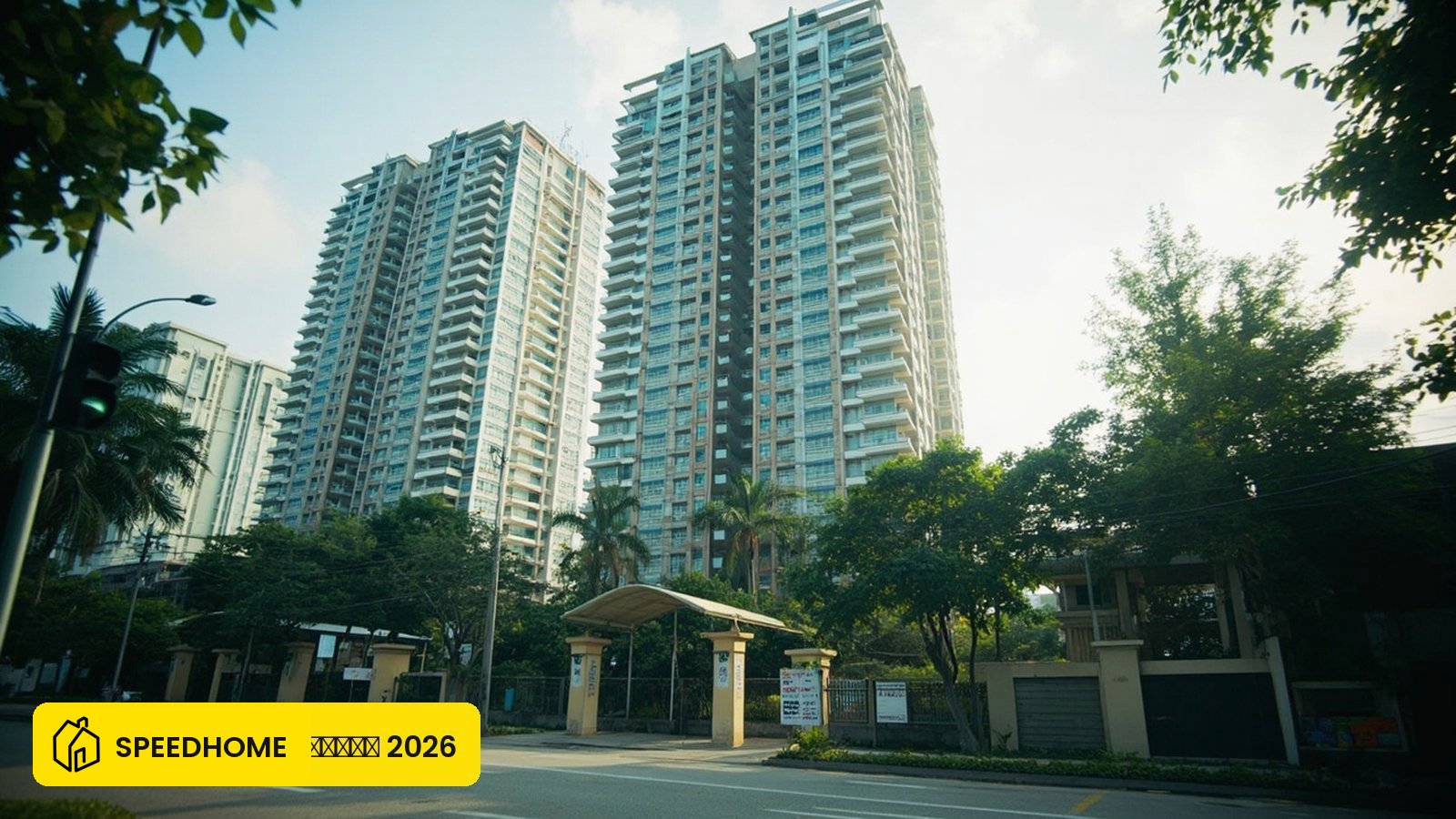
What does freehold mean in real estate?
Freehold means you own the land and building outright with no expiry date. Leasehold means holding the property for a fixed term — typically 99 years — after which the land reverts to the state unless renewed. Tenure type affects your resale value, financing, and exit speed when a tenancy ends.
2026 snapshot — tenancy stamp-duty figures checked 4 October 2026:
| Item | Amount | Qualification |
|---|---|---|
| Tenancy stamp duty | RM1 / RM3 / RM5 / RM7 per RM250 or part | Rate depends on the duration band and average annual rent |
| Former stamp-duty exemption | RM2,400 | Removed from 1 January 2025 |
In practice, most high-rise condominiums in Kuala Lumpur and Selangor are leasehold. Landed homes in established suburbs are more often freehold. Neither type prevents you from renting legally, but the terms affect the long-term asset calculation a landlord should run before buying to rent. One nuance many landlords miss: under the National Land Code, the lease-versus-tenancy line is duration, not tenure — a letting over 3 years is a "lease" that must be registered (up to 99 years for whole lots), while a letting of 3 years or less is a tenancy exempt from registration. And the "leasehold always needs state consent" belief is not reliable either: the trigger is any restriction in interest endorsed on the specific title, which some freehold titles also carry — so always run a land search before you sign or sell.
SPEEDHOME platform records show that landlord inquiries about property terms spike at two moments: just before a purchase decision and just after a tenant vacates unexpectedly. Getting the terminology right at the start avoids costly surprises at the end. For the consent-and-transfer side of this decision in more depth, see our freehold vs leasehold state consent guide.
Leasehold meaning: the plain definition
Leasehold means you hold the property from the state for a fixed term — in Malaysia most residential leases run 99 years from the original grant date — and when that term ends, the land reverts to the state unless the lease is renewed or extended. You own the building and the remaining term, not the land in perpetuity. Freehold is the opposite: perpetual ownership with no expiry and no renewal application.
Three practical consequences follow from that definition. First, the clock started at the original grant, not when you bought — a 99-year lease granted in 1970 has far less runway in 2026 regardless of when you purchased. Second, the remaining term, not the label, is what banks price: as the remaining years fall, valuations and financing terms tighten. Third, renewal is possible through the state authority, but approval, timeline, and premium differ by state — it is a negotiation, not a right.
Freehold vs leasehold in Malaysia: the head-to-head
For a rental landlord the monthly rent a tenant pays barely differs by tenure — the difference concentrates in financing, exit value, and paperwork. This is the comparison at a glance:
| Dimension | Freehold | Leasehold |
|---|---|---|
| What you own | Land + building, perpetual | Building + remaining term (commonly 99 years from grant) |
| Financing | Standard bank terms | Terms tighten as remaining years fall |
| State consent to deal | Rarely required, unless a restriction is endorsed on the title | Often required — but the trigger is the title's restriction, not the leasehold label itself |
| Resale buyer pool | Widest | Narrows as the remaining term shortens |
| Renewal | Not applicable | State application; approval and premium vary by state |
| Renting it out | Fully legal | Fully legal — tenure does not restrict letting |
The consent row surprises many landlords: some freehold titles carry restrictions too, so the reliable check is a land search on the specific title, not the tenure label.
Freehold vs leasehold: which matters more for rental landlords?
For rental income, the monthly yield difference between freehold and leasehold is usually small. The gap shows in exit value and financing ease — leasehold titles under 60 years remaining attract stricter loan conditions and lower bank valuations, compressing what you can borrow or sell for.
The terms most relevant to a rental landlord:
| Term | What it means | Why it matters for renting |
|---|---|---|
| Freehold | Perpetual land title; no renewal required | Easier to finance; better resale exit; no term-expiry risk |
| Leasehold (99-year) | Land held for 99 years from grant date | Check remaining years; <60 years remaining affects bank loans |
| Malay Reserve Land | Can only be owned by Bumiputera; subletting rules may apply | Verify before purchasing as a non-Bumiputera investment property |
| Individual title | Each unit has a separate title registered to its owner | Standard for stratified condo; enables direct mortgage and transfer |
| Master title | Land held by developer; strata titles not yet issued | Common in newer developments; individual titles may take years to issue |
| Strata title | Subdivided title under SMA 2013; each unit owner shares common areas | Normal for condominiums; JMB/MC rules govern common areas |
| Quit rent (cukai tanah) | Annual land tax to the state; due 1 January, in arrears from 1 June | An owner cost that eats into net rental yield; unpaid rent accrues late charges |
| Parcel rent (cukai petak) | The strata-title equivalent of quit rent, set per square metre under the Strata Titles Act 1985 | Applies to condo units; budget it as a recurring holding cost |
What real estate terms affect tenant screening?
The tenure and title type do not directly affect who you can screen, but the building's strata rules, JMB by-laws, and occupancy limits do. Landlords in strata properties must check whether the JMB permits sub-tenancy and how many occupants are allowed per unit before advertising.
Additional terms landlords encounter during screening:
| Term | Definition | Screening impact |
|---|---|---|
| Tenancy agreement (TA) | Written contract between landlord and tenant. A letting over 3 years is a lease that must be registered; 3 years or less is a tenancy exempt from registration | Must be stamped within 30 days; sets rent, term, duties |
| Diplomatic clause | Break clause allowing early exit if tenant relocates overseas for work | Reduces effective term; include only if needed |
| Security deposit | Refundable sum held against damage or unpaid rent — no statutory cap or floor; market practice is roughly "2 + 1 + 0.5" (2 months security, 1 month advance rent, 0.5 month utility deposit) | Typically 2 months; returned within agreed timeline after vacant possession |
| Stamping (e-Duti Setem) | LHDN's stamp assessment and payment system | An unstamped TA weakens your position in most dispute forums |
| Zero Deposit | SPEEDHOME's managed rental-risk system replacing the cash security deposit | Not available on all units; not a financial guarantee product; check live listings for eligibility |
When each tenure type wins for a landlord
Freehold wins when long-term capital growth and unencumbered exit matter. Leasehold wins when the entry price is significantly lower and rental yield covers the holding cost over the remaining term. Neither is universally better — the numbers decide.
Freehold makes more sense when: - The remaining lease on comparable leasehold units is under 70 years. - You plan to hold and pass the asset on. - You want to refinance without lease-year haircuts.
Leasehold makes more sense when: - The price discount against an equivalent freehold unit is large enough to change your yield math. - The remaining term is 80 years or longer. - You plan to exit well before the lease pressures resale.
Never treat tenure as a proxy for tenant quality or as a reason to approve or reject an applicant. Tenant screening should rest on income verification, rental history, and reference checks — not on the asset's title type.
Cost and risk: what landlords often miss
The real cost difference between freehold and leasehold shows at exit, not at entry. Landlords who hold leasehold properties beyond 70 years remaining face narrower buyer pools, stricter bank valuations, and a slower exit — which means being stuck with a poorly-performing tenancy longer than planned.
Practical risk table for landlords:
| Risk area | Freehold | Leasehold | Mitigation |
|---|---|---|---|
| Financing | Standard bank terms | Haircut if <60 years remaining | Check land title before purchase |
| Resale exit | Wider buyer pool | Narrows as lease shortens | Factor lease years into your holding plan |
| JMB/strata disputes | Present if stratified | Present if stratified | Know the by-laws; attend AGMs |
| Subletting restrictions | Per strata rules, not tenure | Per strata rules, not tenure | Get written JMB confirmation |
| Rental yield | Similar to leasehold | Similar to freehold in mid-term | Calculate true yield including reno + operating cost |
One commonly missed calculation: true yield is annual rent minus operating costs, divided by purchase price plus renovation and furnishing cost. A unit that looks like a strong yield on purchase price alone can come in materially lower once fit-out, furnishing, and maintenance are added to the denominator — run the sum with your actual numbers before comparing freehold against leasehold. Holding costs belong in that sum too — quit rent falls due on 1 January each year and becomes arrears from 1 June, while stratified units also carry parcel rent and maintenance charges. For the numbers, see our cukai tanah guide for landlords.
How does the SPEEDHOME path for landlords work?
Verify your title type and strata rules before listing. Then screen tenants on income and history, not assumptions. A complete, stamped tenancy agreement protects you regardless of whether the unit is freehold or leasehold.
SPEEDHOME's landlord process covers tenant pre-screening, a complete tenancy agreement, and a managed rental-risk option that removes the landlord's cash-deposit administration burden. Landlords on SPEEDHOME's managed service also get a documented payment record that is useful if a verified default needs to be reported to a registered credit agency with the tenant's consent under the applicable default clause. For an overview of how the managed service works, see the landlord service page.
If you are a landlord deciding whether to rent your unit or evaluating a property purchase for rental purposes, start with SPEEDHOME for landlords to understand the full cost, process, and protection options.
Browse Kuala Lumpur rental listings to check live market rent for your area before setting your price.
FAQ
Is freehold or leasehold better for renting out in Malaysia?
Both work for renting. Freehold offers a cleaner exit and wider financing options. Leasehold can deliver comparable rental yield if the entry price is lower and at least 80 years remain on the lease. Run the full yield calculation — rent minus operating cost divided by total purchase and fit-out cost — before deciding.
Does a leasehold property expire while I still own it?
The lease term runs from the original grant date, not your purchase date. If a property was granted a 99-year lease in 1970, about 43 years remain in 2026. You can apply for a lease extension through the state authority, but approval, timeline, and cost vary by state. Check the remaining term in the land title (geran) before purchase.
Can I screen tenants differently based on my property's tenure type?
No. Tenure type has no bearing on lawful tenant screening. You may screen on income, rental history, and references. Screening on race, nationality, religion, or gender is discriminatory, sits outside the Federal Constitution's equality principle, and exposes you to complaints — there is no defensible basis for it. The property's title type does not affect who qualifies as a good tenant.
What is a strata title and why does it matter for landlords?
A strata title is a subdivided title under the Strata Titles Act 1985 and Strata Management Act 2013 (SMA 2013), giving each condo unit its own registered ownership. For landlords, it means the JMB or Management Corporation sets by-laws covering subletting, occupant numbers, renovation rules, and common area charges. Get a copy of the by-laws before advertising the unit.
What documents should I keep after my tenant moves in?
Keep the signed, stamped tenancy agreement; dated handover photos and video of every room; utility meter readings at handover; and all payment receipts. If a deposit is held, record the amount and account clearly. A verified payment trail is your strongest tool if a dispute escalates to a formal process.
Does Zero Deposit remove all rental risk for a landlord?
Zero Deposit is SPEEDHOME's managed rental-risk system, not a financial guarantee product. It removes the landlord's need to collect, hold, and refund a cash security deposit. Risk management still depends on tenant screening, a complete stamped tenancy agreement, and documented handover. Not every unit qualifies — check live listings for eligibility.
Accuracy note. Grounded in Strata Management Act 2013 and National Land Code. Every figure is bound to a dated fact registry and re-verified on each update. Spotted an error? Email [email protected] with this page's link.