
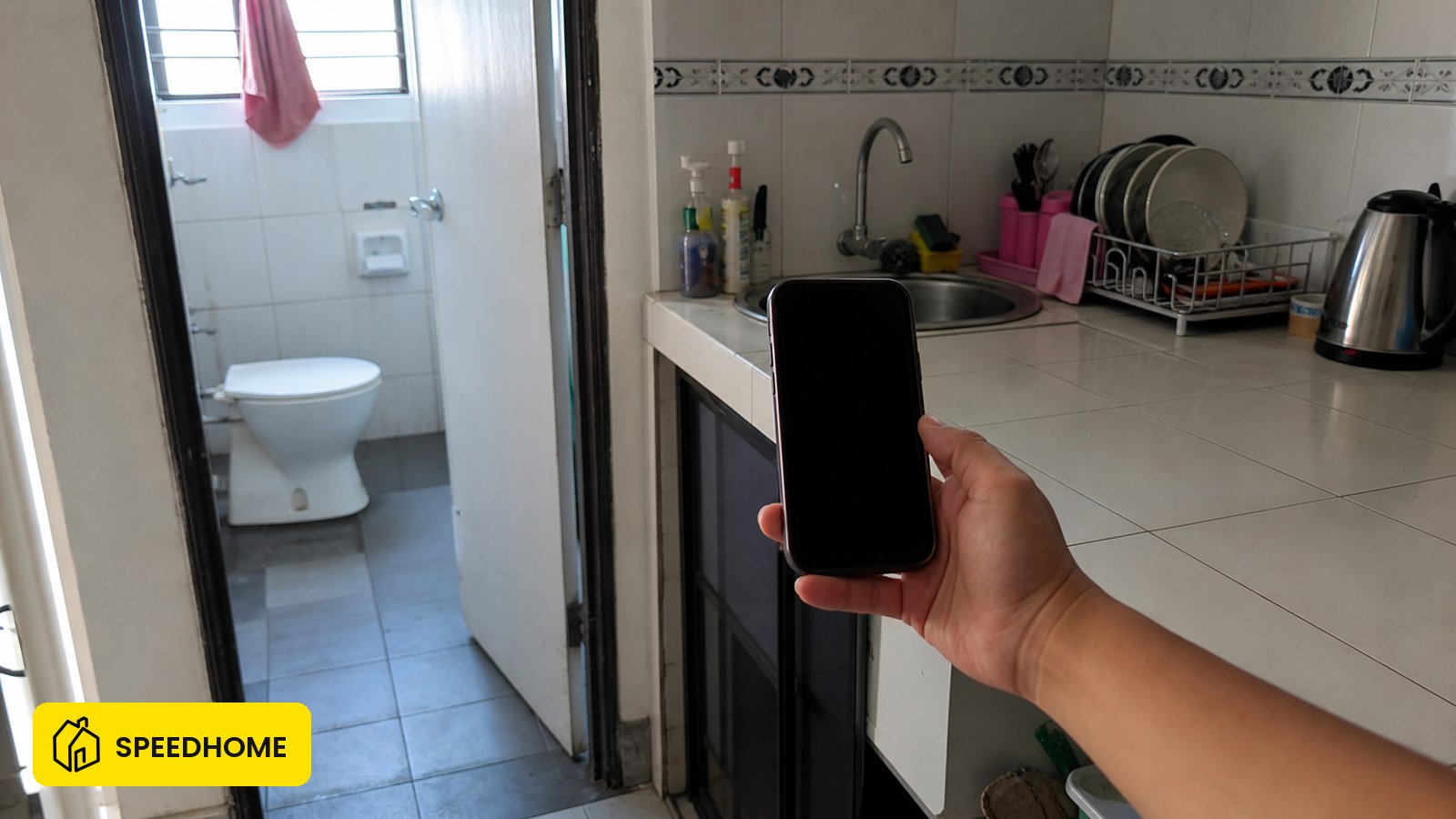
Most shared-rental conflict over a dirty kitchen, fridge or bathroom is a house-rules and evidence problem, not a legal emergency. Agree the rules in writing first, log the issue with photos and dates, raise it calmly once, then escalate to the head tenant, landlord or platform chat only if it keeps happening. You rarely win by arguing; you win by documenting.
This page is for a tenant who shares a kitchen, fridge or bathroom in a Malaysian room rental or co-living unit. It does not assume fixed cleaning charges, a set deposit deduction, or that your landlord will intervene in domestic disputes. What your tenancy or house-rules agreement says, plus your written record, decides what you can realistically do.
The three dirty-spots and why they cause the most fights
The kitchen, the fridge and the bathroom are the three shared zones that produce almost every roommate argument because they are used daily, degrade fast, and mix private and shared responsibility in ways a bedroom never does.
A bedroom is yours alone, so its mess is your problem. A kitchen sink, a shared fridge shelf and a bathroom floor sit between people, which means each person assumes the other caused it and neither wants to clean it first. That ambiguity is the real fuel. Before any confrontation, separate three things: whose mess it is, how long it has been there, and whether it crosses from "untidy" into "unhygienic or damaging" (spoiled food, grease build-up, mould, blocked drain).
| Zone | Typical trigger | When it is a cleaning dispute | When it is a damage or health risk |
|---|---|---|---|
| Kitchen | Unwashed dishes, hob grease, bin overflow | Days of build-up, no clear owner | Pests, spoiled food smell, grease fire risk |
| Fridge | Expired food, leaked containers, overfilled shelves | Shelf boundary unclear | Mould, broken shelf, spoiled food contaminating others' items |
| Bathroom | Hair, grime, wet floor, unflushed toilet | Rotating cleaning unclear | Mould, blocked drain, water damage to ceiling or unit below |
The right next step depends on which column you are in. A cleaning dispute is solved with a rota and a conversation; a damage or health risk is solved with evidence and, if needed, a written report.
Option A: resolve it between housemates vs Option B: escalate
You almost always start with Option A, a direct written house-rules conversation, and only move to Option B, escalation to the head tenant or landlord, when the behaviour repeats or causes actual damage.
| Option A: Resolve between housemates | Option B: Escalate to head tenant / landlord / platform | |
|---|---|---|
| When to use | First or repeat untidiness, unclear rules, no damage yet | Repeated breach after a written ask, actual damage, health risk, or someone unsafe |
| What you need | A short written message and a proposed rota | Photos with dates, your earlier messages, and the house-rules or TA clause |
| Who acts | You and your housemates | The head tenant (if sublet) or the landlord / platform operator |
| Likely outcome | A shared cleaning rota and clearer fridge shelves | A warning, a house-rules reset, or in serious cases a notice under the TA |
| Risk if you skip it | None, you just escalate too early | The landlord may treat a domestic dispute as "not my issue" |
Jumping straight to the landlord for a dirty fridge usually backfires. Most tenancy agreements and house-rules documents do not oblige a landlord to police day-to-day cleanliness between housemates. Escalation is powerful, but only after you can show you tried the direct route in writing.
When each approach wins
Option A wins when the problem is unclear rules or honest forgetfulness; Option B wins when there is repeated breach, real damage, or a health and safety risk the housemate will not fix.
Use Option A when the mess is recent, the housemate is new, or you have never written down who cleans what. Most dirty-kitchen arguments collapse the moment a rota exists on the fridge door and everyone agreed to it in the group chat. People argue about fairness, not about dishes.
Use Option B when:
- You have already raised it in writing at least once and the same mess recurs within a short window.
- The issue has crossed into damage: a stained mattress, a mouldy bathroom ceiling, a broken fridge shelf, a blocked drain.
- The behaviour is creating a health risk: spoiled food attracting pests, a bathroom with standing water or mould, or unsafe cooking.
- You suspect an unauthorised occupant who was never added to the house-rules agreement.
In a sublet or co-living setup, the "landlord" you escalate to may be a head tenant, not the property owner. That head tenant is your contractual counterparty for the room, and they hold the house-rules authority even though the unit owner sits above them. Confirm who your counterparty is before you escalate.
Cost and risk of each path
The cost of resolving a roommate conflict is mostly time and social friction, not money, unless damage has occurred, at which point the risk shifts to your deposit or to a notice under the tenancy agreement.
| Path | Time cost | Money risk | Relationship risk |
|---|---|---|---|
| Direct house-rules conversation | Low, one message and one chat | None | Low if framed as "let us agree rules", higher if framed as blame |
| Written rota and fridge labels | Low, set up once | None | Low, people rarely argue with a fair rota |
| Escalate to head tenant | Medium, requires evidence | Possible house-rules warning | High, hard to undo |
| Escalate to landlord / platform | Medium-high | Deposit deductions possible if damage proven | Very high, can trigger notice |
| Move out early | High | Lose deposit or owe rent unless landlord agrees in writing | Clean break |
Malaysia has no dedicated residential tenancy tribunal, so a genuine deposit or damage dispute over a shared unit is a private contract matter decided in the civil courts, not a quick tribunal claim. For most roommate conflict that never reaches that level, which is exactly why the early written steps matter. They keep the problem out of the legal column entirely.
Documenting the issue so it actually helps you
Photos with dates and a short written log beat any heated argument, because later, whether with a housemate, head tenant or landlord, the person with the dated record is the one believed.
Keep one folder for the tenancy record. For a shared-space dispute, capture:
| Evidence type | What to record | Why it matters |
|---|---|---|
| Photos | The dirty zone, timestamped, same angle each time | Shows pattern, not a one-off |
| Messages | Your calm written ask and the reply (or silence) | Proves you raised it properly |
| House-rules or TA clause | The cleaning, damage, or occupant clause | Shows what was actually agreed |
| Damage cost | Receipt or quote if something was broken | Separates cleaning from real damage |
| Utility or pest link | Pest control bill or mould report if relevant | Lifts it from "messy" to "cost-causing" |
This is the same evidence discipline that protects you at move-in and move-out. If the dispute ever touches your deposit, your move-in photos and the house-rules agreement are what show whether a stain or breakage pre-existed. The cleaning argument and the deposit argument use the same paperwork.
The SPEEDHOME path for shared rentals
If you rent a room through SPEEDHOME, use the listing details and platform chat to confirm the house-rules setup, the deposit path, and whether the unit supports Zero Deposit, instead of assuming every shared unit works the same way.
Room and co-living rentals put the most cash-deposit pressure on tenants, because you are paying a deposit on a share of a unit you do not fully control. Some SPEEDHOME listings support Zero Deposit, subject to listing terms and eligibility. Zero Deposit is a managed rental-risk system, not a financial guarantee product, and eligibility depends on the specific listing and tenant, so it is not an automatic cover for every unit.
When a shared-space dispute risks your deposit, raise it through the platform chat so there is a dated record the operator can see, and tie any deduction claim to actual condition and cost, not to general untidiness. You can browse rentals to compare room and co-living options and check what deposit path each listing uses before you commit.
For the broader picture on what to check before renting a room, see the room rentals in Malaysia guide, and use the move-in move-out checklist to lock in your condition record from day one.
FAQ
How do I confront a roommate about a dirty kitchen without starting a fight?
Lead with a shared rule, not a personal accusation. Send a short written message proposing a cleaning rota for the kitchen and fridge, then discuss it calmly. Framing it as "let us agree who does what" instead of "you never clean" turns a blame match into a logistics fix.
Can my landlord charge me for a dirty fridge or bathroom?
A landlord cannot simply invent a cleaning charge. Any deduction has to tie to actual condition and agreed terms. Day-to-day untidiness is a housemate issue; cleaning cost tied to real grease build-up, mould, or spoiled-food damage may be arguable if it goes beyond ordinary use and is documented.
What if my roommate leaves spoiled food in the fridge that ruins mine?
Photograph the spoiled food and your affected items with dates, tell the housemate in writing, and ask them to replace or compensate. If they refuse and it recurs, escalate to the head tenant or landlord with the evidence. Keep your own food in a sealed container or labelled shelf to reduce recurrence.
Is a messy bathroom a reason to break my tenancy early?
Not on its own. A messy bathroom is normally a house-rules dispute, not grounds to end a tenancy. Early termination depends on your tenancy agreement and usually needs the landlord's written consent, possibly with conditions. Document the issue first so you have leverage if you negotiate.
Who do I escalate to in a sublet or co-living unit?
In a sublet or co-living setup, your counterparty is often a head tenant, not the property owner. Escalate to that head tenant first using your written evidence and the house-rules agreement. The unit owner sits above the head tenant and is usually one layer further removed from day-to-day shared-space disputes.
Can I report a roommate conflict to SPEEDHOME?
Use the platform chat to keep a dated record of any issue that might affect your deposit or the unit's condition. SPEEDHOME platform records can support a later discussion, but day-to-day housemate cleanliness is normally resolved through house rules and written agreement first, with escalation only if it causes damage or repeats after a written ask.