
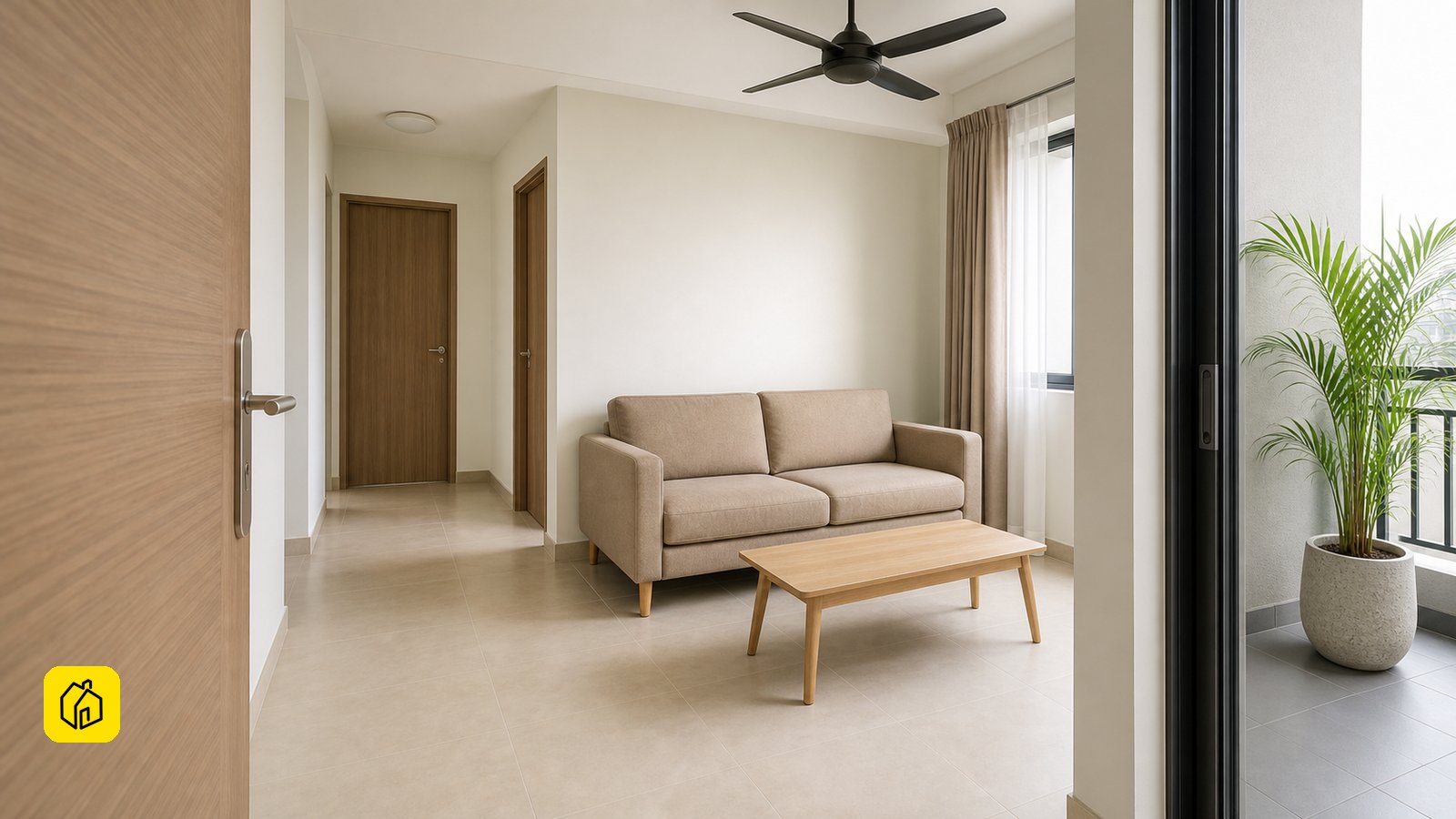
Own a unit at Setia City Residences? The default operating model is a whole-unit long-term tenancy on the asking band of RM3,000 to RM4,000 a month (search_excerpt across a 5-card Mudah entity, with 1,221 sqft Tower C plates at the top) — rooms and short-stay have zero verified in-building listings in Setia Alam. First-party demand shows zero dedicated listings on SPEEDHOME's own board (measured null; a first-mover opportunity in S P Setia's 780-unit flagship development, canonical slug setia-city-residences) against a proven Setia Alam corridor where EduSentral pet-friendly rooms logged 107 and 121 chat requests with 25 and 21 viewings, Setia Perdana logged 33 requests on a fresh RM900 listing, and Princeton Edusentral logged 6 requests on RM1,300. On the capital side, Brickz live-bound medians record RM590,000 (past 1Y across 5 transactions at RM363 psf) and RM585,000 (all-time across 95 transactions at RM362 psf), delivering an asking-basis gross yield of 6.1% to 8.2% before the 2.19% platform fee. The biggest caveat: an unconfirmed resident-post excerpt cites maintenance at ~RM700 a month (~RM0.71 psf on a ~985 sqft unit), which would eat 21% to 28% of gross rental income — making certified JMB/MC maintenance schedule verification your most critical financial check before purchase.
Three ways to run your unit
Pick a model card, select your layout (858 sqft 2-bedroom, 985 sqft 2+1 bedroom, or 1,221 sqft Tower C 3-bedroom), and test your own numbers. The rent field loads RM3,500 (search_excerpt midpoint of the RM3,000-4,000 asking band), while the purchase field loads RM590,000 (live-bound Brickz Past 1Y median at RM363 psf across 5 transactions; RM585,000 all-time across 95 transactions). The answer updates as you type.
- Whole-unit 12-month tenancy (Recommended base case): Lease the complete 858 to 1,221 sqft apartment to corporate executives or families working in the Setia Alam commercial precinct or Top Glove Tower. Asking rents span RM3,000 to RM4,000 a month (search_excerpt), with 2+1 units at RM3,200 and 1,221 sqft Tower C plates reaching RM3,700-4,000. Against Brickz transacted medians of RM585,000 to RM590,000 (live-bound), gross yield sits at 6.1% to 8.2%. This model captures stable corporate demand, eliminates tenant friction in shared spaces, and requires no speculative interior alteration.
- Room-by-room co-living (Unmeasured in-building / Conditional): In-building room rental is not measured (measured null; only one unpriced search excerpt for a 1-room card exists). Corridor room benchmarks at EduSentral demonstrate active demand at RM700 a room (own board @107 and 121 chat requests). However, renting three rooms at RM700 to RM900 grosses RM2,100 to RM2,700 a month — which falls well short of the whole-unit rent floor of RM3,000 a month. Partitioning luxury plates in a flagship serviced residence adds drywall and submeter capital costs while generating lower revenue than a standard whole-unit let.
- Short-stay or serviced suite (Do not underwrite): Zero building-named Airbnb units operate at Setia City Residences (measured null). The search match "Corner Unit @ Trefoil | Near Setia City" (RM638 for 5 nights) belongs to The Trefoil, an entirely separate development across the road that should be discarded as a sibling trap. S P Setia built Setia City Residences on commercial land as a serviced residence, but commercial zoning does not override residential strata restrictions. Under Malaysian law (Innab Salil v Verve Suites), the management corporation can prohibit short-stay operations via additional by-laws under Section 70 of the Strata Management Act 2013.
Loading the renovation ROI comparison…
What can you earn?
First-party demand on SPEEDHOME's own board currently shows zero dedicated listings for Setia City Residences (measured null, source URL speedhome.com/rent/setia-city-residences; the -setia-alam variant redirects to the bare slug). For an owner with a completed unit, this represents a clean first-mover advantage across 780 units. Surrounding Setia Alam corridor demand is active and verified: EduSentral (cards 287766 and 287760) logged 107 and 121 chat requests with 25 and 21 viewings at RM700 a month for pet-friendly rooms (measured); Setia Perdana (card 303502) logged 33 chat requests on a fresh RM900 listing (measured); Princeton Edusentral (card 303353) logged 6 chat requests at RM1,300 (measured, pet-friendly); and whole-unit EduSentral cards (296886 and 296880) logged 12 and 13 chat requests at RM1,400 (measured).
On the broader rental market, Mudah's 5-card dedicated entity confirms whole-unit asking rents spanning RM3,000 to RM4,000 a month (search_excerpt, with decks fully kitted out at the top of the band). Listings include two cards at RM3,000 a month, a 2+1 room unit at RM3,200 a month, a kitted-out unit at RM3,500 a month, and premium 1,221 sqft Tower C units asking RM3,700 to RM4,000 a month. Aggregator data from Waa2 corroborates Block C 2-room units at RM2,600 to RM3,000, while PropertyGuru quotes an entry average of ~RM3,000 a month. Corridor filter sweeps across Setia Alam capture 69 condo listings between RM2,500 and RM3,000 and 39 listings between RM3,000 and RM3,500 (search_excerpt), proving that Setia City Residences anchors the premium top tier of the township.
On the sales side, Brickz live-bound transaction data establishes a firm capital baseline: Past 1Y median price of RM590,000 at RM363 psf across 5 transactions, and an all-time median price of RM585,000 at RM362 psf across 95 transactions (measured, Non-Landed / Selangor / Shah Alam / Setia City Residences). Resale asking snippets span RM280,000 to RM950,000 with quoted rates of RM378 to RM784 psf (search_excerpt, OneProperty and Mudah), reflecting the spread between compact 858 sqft units and high-floor 1,221 sqft penthouses.
The gross yield arithmetic is worked directly against verified Brickz transaction medians (asking-basis, gross, before the 2.19% platform processing fee): - At the RM3,000 entry rent: RM3,000 x 12 = RM36,000 annual rent / RM590,000 purchase = 6.10% gross yield. - At the RM4,000 top rent: RM4,000 x 12 = RM48,000 annual rent / RM585,000 purchase = 8.21% gross yield (or 8.14% on RM590,000).
On paper, 6.1% to 8.2% gross appears generous for an integrated suburban high-rise. However, the holding cost line contains an unconfirmed financial warning: a resident forum post cites maintenance charges of approximately RM700 a month on a ~985 sqft unit (~RM0.71 psf, search_excerpt). If confirmed, a 1,221 sqft Tower C unit would incur roughly RM855 a month in service charges — totaling RM10,260 annually and consuming 21% to 28% of your rental revenue. That pushes net yield down toward 4.7% to 6.4% before property taxes and wear-and-tear. See the real cost of self-managing a rental.
Why Setia City Residences in Setia Alam stands out
Setia City Residences is S P Setia's flagship residential high-rise development in Setia Alam (Seksyen U13, Shah Alam, Selangor), governed under the Majlis Bandaraya Shah Alam (MBSA) local authority. Built across three 34-storey towers named Adora, Bella, and Carra, the project encompasses 780 serviced apartment units rising above an integrated retail podium. As the pioneer luxury high-rise in Setia Alam, the development connects directly via a covered link bridge to Setia City Mall and sits adjacent to the Setia City Convention Centre, Setia City Park, and corporate office towers including Top Glove Tower and SP Setia Corporate HQ.
Floor layouts range from compact 858 sqft 2-bedroom configurations up to expansive 1,221 sqft 3-bedroom family apartments in Tower C (Carra). This floorplate diversity directly drives rental performance. Compact 858 sqft units compete in the RM2,600 to RM3,000 corridor bracket, while the 1,221 sqft 3-bedroom suites command RM3,700 to RM4,000 from senior executives and expatriate families who require generous living spaces and premium building amenities (including a tropical resort pool, spiral water slide, tennis courts, and gym).
In a premium development where tenants pay over RM3,000 a month, presentation and durability dictate vacancy duration. A target rental fit-out should avoid fragile domestic joinery and focus on executive finishes: practical kitchen appliances, durable laminate or tile flooring, and reliable multi-split air conditioning installed via a SPEEDRENO rental fit-out. Pet-friendly units also enjoy significant scarcity in high-rise strata schemes: across our platform, pet-friendly properties achieve a 15-20% rental premium; SPEEDHOME coliving is cat-friendly — cats welcome in our coliving rooms; building rules can vary. For broader strategic underwriting, consult our landlord investment decision guide and room rental and co-living guide.
5 checks before you buy
-
Verify your parcel title and commercial utility tariffs — Setia City Residences is developed on commercial serviced residence land; inspect the physical issue document of title to confirm the land use category and check whether utility accounts are billed at commercial or converted residential rates. Done: physical title document and TNB tariff classification verified in hand.
-
Audit the official maintenance fee and sinking fund schedule — An online resident post cites maintenance at ~RM700 a month (~RM0.71 psf), which would be among the highest strata charges in Shah Alam; verify the official billing statement directly from the JMB or developer before underwriting net cash flow. Done: certified maintenance statement and sinking fund breakdown in hand.
-
Confirm the JMB/MC written position on leasing and short stay — Do not assume short-stay permission exists because Airbnb operators list units at the nearby Trefoil development; request the official building house rules and check for any additional by-laws passed under Section 70 of the Strata Management Act 2013 restricting transient guests. Done: signed management by-laws and COB registration in hand.
-
Match your target rent to the exact tower and layout — Do not assume an 858 sqft unit will achieve Tower C's RM3,700-4,000 rent; separate compact 858 sqft 2-bedroom units (RM2,600-3,000) from 1,221 sqft 3-bedroom layouts before pricing your acquisition. Done: floorplan matching and layout-specific rent verified.
-
Review the building defect and common-property maintenance cycle — With 780 units across three towers and extensive resort amenities, inspect the latest AGM minutes to evaluate lift operations, pool maintenance, and whether any special building refurbishment levy is pending. Done: latest AGM audited accounts and committee minutes reviewed.
FAQ
What rental yield does Setia City Residences deliver?
Gross rental yields range from 6.1% to 8.2% based on live-bound Brickz transaction medians (RM590,000 past 1Y, RM585,000 all-time) and measured asking rents of RM3,000 to RM4,000 a month. The transacted medians are live-bound on Brickz and the asking band was read from the Mudah Setia City entity. However, net yields are heavily compressed by strata maintenance costs: an unconfirmed resident-post excerpt cites ~RM700 a month (~RM0.71 psf), which would absorb 21% to 28% of gross rental income. Enter your actual purchase price and verified service charges into our calculator above to compute your net yield before the 2.19% platform fee.
Can you rent out rooms or do co-living at Setia City Residences?
In-building room rentals are unmeasured (only one unpriced search excerpt exists). While corridor room demand at EduSentral is proven at RM700 a room, a 3-bedroom split grossing RM2,100 to RM2,700 a month generates less income than the RM3,000 whole-unit floor. Submetering and partitioning also risk strata management disputes. Whole-unit corporate leasing remains the recommended model. See the room rental and co-living guide.
Is short-stay or Airbnb allowed at Setia City Residences?
Zero building-named Airbnb listings exist for Setia City Residences. The nearby search hit at RM638 for 5 nights belongs to The Trefoil, an entirely separate development. Serviced apartment land status does not grant automatic short-stay rights; under Malaysian strata law, the management corporation can prohibit short-term rentals via house rules and additional by-laws. Obtain written MC confirmation before committing capital to a short-stay plan.
Are pets allowed at Setia City Residences?
The building management's formal by-law stance on pets is not published in public records. In the surrounding Setia Alam corridor, pet-friendly listings at EduSentral and Princeton achieve steady tenant demand (107 to 121 chat requests), and pet-friendly properties across SPEEDHOME achieve a 15-20% rent premium. SPEEDHOME coliving is cat-friendly — cats welcome in our coliving rooms; building rules can vary.
What running it looks like
Managing an 858 to 1,221 sqft apartment at Setia City Residences requires appealing to high-earning corporate and expatriate tenants who value convenience and immediate move-in readiness. Offering zero deposit through SPEEDHOME removes upfront cash barriers for qualified professionals while safeguarding your rental cash flow.
SPEEDHOME provides an end-to-end letting solution: zero-deposit tenant screening, digital SpeedSign tenancy agreements, automated monthly rental collection, and lawful eviction protection. The platform fee is 2.19% + SST on monthly rent. Landlord protection plans provide additional financial certainty: Standard at RM799/year + SST flat (no protection cover), Protect at 1 month's rent, and Protect+ at 1.5 months' rent.
Ready? List your Setia City Residences unit with SPEEDHOME — zero deposit, we run the viewings, you approve the tenant.
The 5-card Mudah whole-unit rental listings (RM3,000-4,000, 858-1,221 sqft), SPEEDHOME own-board card sweep (zero dedicated; bare slug setia-city-residences), corridor demand counters (EduSentral 107/121 CRs, Setia Perdana, Princeton Edusentral), Brickz live-bound transacted medians (RM590,000 past 1Y / 5 txns; RM585,000 all / 95 txns), and Airbnb geo-search (Trefoil sibling match discarded) are server-side reads of 12 October 2026 (evidence file setia-city-residences-setia-alam-market-evidence-2026-10-12.yaml, lane bi-mine-14). Resale asking snippets span RM280,000 to RM950,000; the maintenance fee of ~RM700/month (~RM0.71 psf) is a resident-post excerpt and remains unconfirmed; in-building room rates and building-named short-stay units are unmeasured. Read the landlord investment decision guide, the real cost of self-managing a rental, SPEEDRENO rental fit-out, and Room rental and co-living.