
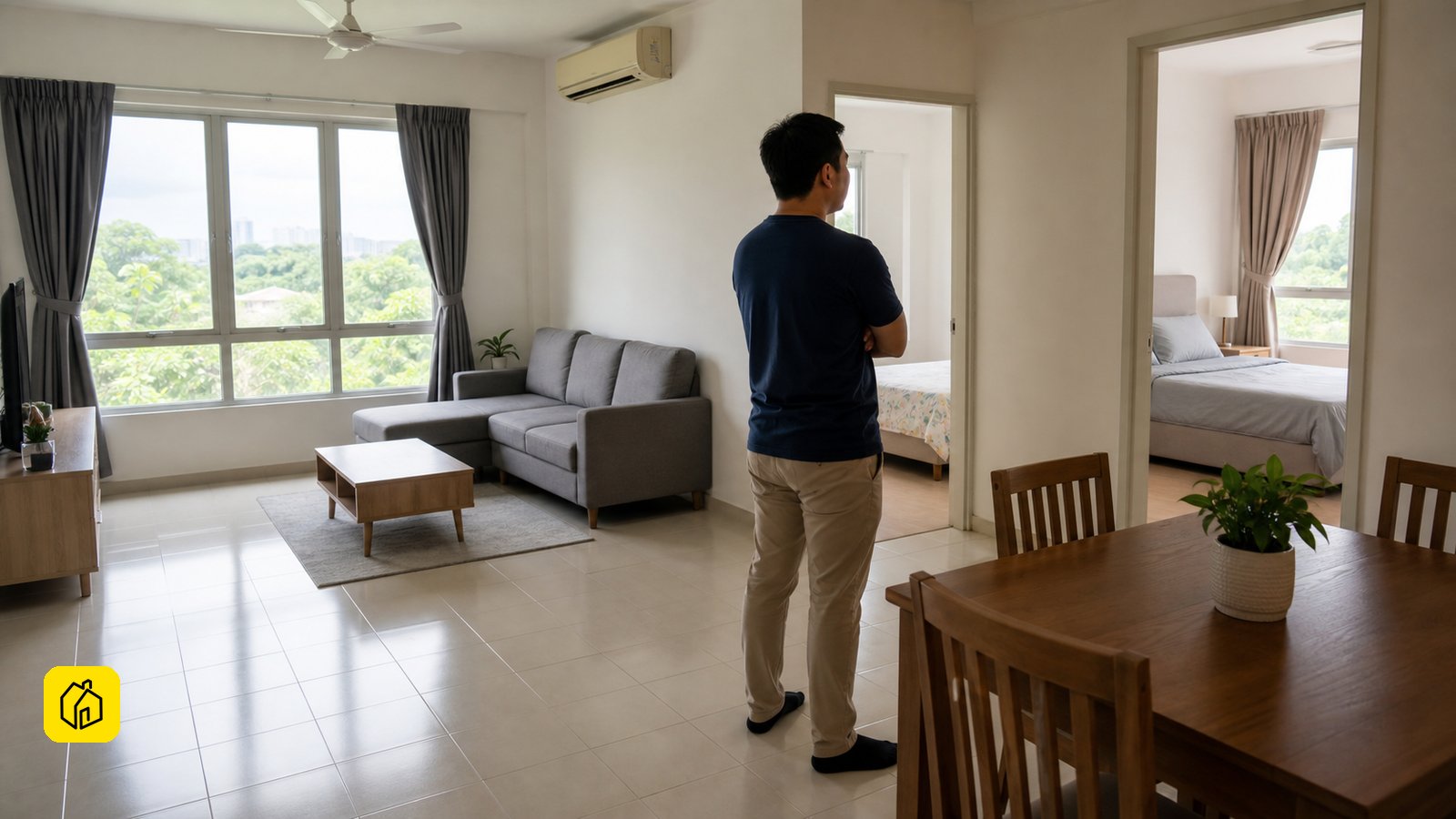
Own a unit at Suria Residence? The model is the plain whole-unit let, and the deal story here is the spread: the live transacted base is RM290,000 (Brickz, 61 transactions, RM298 psf) while portal asks run RM395,000-750,000 — 1.4-2.5x above it. The one measured rent card, a fully furnished 1,010 sqft 3-bed at RM1,900, gives 7.9% gross on the transacted base and 5.8% on the ask floor — both bases, always, because which side you buy on decides whether this is a yield play or an anchoring error. Rooms stay gated and unmeasured. Short stay: zero residence-titled units. And twice at this address, sibling discipline pays: the "Suria Jelutong" card on our own board and the "Cosy Studio @ Suria Jelutong" on Airbnb both belong to the mall parcel next door, never to the residence.
Three ways to run your unit
Pick a model card, put in your own numbers — the loaded price is the live transacted median and the loaded rent is the one measured card, nothing stronger exists. The answer updates as you type.
Loading the renovation ROI comparison…
What can you earn?
Honesty first: the measured rent band is one card. The Mudah entity carries a single listing — RM1,900, 1,010 sqft, 3-bed 2-bath, fully furnished. That is a thin band, flagged as such, with a named re-sweep to widen it. What brackets it is the Bukit Jelutong corridor on our own board: Elaise 1 at RM1,300 pet-friendly, Delima Apartment at RM1,500 pet-friendly, Elaise 2 at RM2,000 — a RM1,300-2,000 corridor that the single card sits inside.
Our own board holds zero dedicated Suria Residence listings — the 26-card Bukit Jelutong feed was read in full and contains no residence object. First-mover vacancy. The only Suria-named card in the pool is "Suria Jelutong" at RM1,200 with 46 lifetime chat requests — and that is the mall-adjacent commercial parcel on Jalan Bazar U8/99, a sibling we fence off, not a comparable. The corridor's deep counters are real though: Hijauan Saujana RM1,600 at 182 chat requests, Nadayu 801's room card RM890 at 107, Emira RM2,000 at 38.
Sale side, the numbers that matter: Brickz live rows read RM298 psf, RM290,000 median over 61 all-time transactions, quartiles RM240,000-390,000. Against that, the ask side is a different world — EdgeProp listings asking RM395,000-750,000, one 2-bed 800 sqft at RM580,000, irumah quoting about RM650 psf. That is 1.4-2.5x the transacted base. The live rows govern; both sides are recorded; never blend them. Either the asks are stale-optimistic, or the thin transaction file skews low — your own dated comparable settles which.
The money, on both bases: RM1,900 over twelve months is RM22,800 — 7.9% on the RM290,000 transacted base, 5.8% on the RM395,000 ask floor. Single-card thin, labelled both ways.
Rooms: not measured — no in-building room card exists, and the D'Puncak bungalow rooms at RM1,400-1,800 in the corridor are a different product class. The room model stays behind the parcel, title and management gates. Short stay: zero residence-titled units. Costs: maintenance not published — a Lowyat owners' thread is the re-sweep lead, not a figure.
Why the spread decides everything
Suria Residence is Sunsuria's freehold 545-unit two-tower estate completed 2018, sitting beside its namesake mall in Bukit Jelutong — recorded formats from a 600 sqft 2-bed to a 1,200 sqft 3-bed. The mall is the address's double edge: it walks in tenants and it manufactures confusion, because "Suria Jelutong" commercial parcels show up in every feed beside the residence's own cards. At this address more than most, name discipline is money.
The corridor is proven, upscale-adjacent demand — Hijauan Saujana's 182 chat requests and Nadayu 801's 107 are the counters — but the residence itself is unproven on our board, with zero dedicated cards. For an owner holding a parcel, that is first-mover vacancy: the corridor demand exists, the in-building card does not.
And the transacted-vs-ask spread is the diligence item. Buying at the ask ladder against a RM290,000 transacted base turns a 7.9% yield into 5.8% before you spend a ringgit on furniture. Buy on dated comparables, not portal optimism.
5 checks before you buy
-
Get the real title document — and read which parcel it names. Residence parcel or mall-adjacent commercial sibling; freehold, encumbrances, the actual format. Done: you hold the issue document.
-
Get the written management positions in one letter — multi-tenancy, pets, short stay, renovation. Done: the letter itself, not a summary.
-
Get the real running costs. Nothing is published; the owners' thread is a lead, not a figure. Done: the latest statement. See the real cost of self-managing a rental.
-
Show your renovation plan to the Shah Alam council before you sign anything. Furniture yes, structure no. Done: written reply.
-
Until checks 1 and 2 are done, buy nothing you cannot undo. A reversible SPEEDRENO rental fit-out scoped for a furnished family let converts back in a day.
FAQ
What yield does Suria Residence give?
7.9% gross on the live transacted base — RM1,900 rent over the RM290,000 Brickz median — or 5.8% on the RM395,000 ask floor. Both bases are mandatory here because portal asks run 1.4-2.5x the transacted base; the rent side rests on a single measured card. Enter your own dated numbers in the calculator above.
Why do portal prices differ so much from the Brickz base?
That is the recorded conflict: asks of RM395,000-750,000 and about RM650 psf against live transacted RM298 psf and RM290,000 over 61 transactions. Live rows govern, both sides are carried, never blended. Either the ask side is stale-optimistic or the thin transaction file skews low — a dated same-format comparable settles it.
Is short-stay allowed at Suria Residence?
Zero residence-titled short-stay units exist, and no by-law text is public. The one "Suria"-titled Airbnb unit belongs to the mall parcel next door. Treat nightly income as unavailable until the written position says otherwise.
Are pets allowed at Suria Residence?
No building-level position is published. SPEEDHOME coliving is cat-friendly — cats welcome in our coliving rooms — and pet-friendly setups earn about 15-20% more where they exist. The offer is SPEEDHOME policy; the management's rules can vary.
What running it looks like
Setup is two documents: the title (which names your parcel, not the mall sibling) and the management letter (multi-tenancy, pets, short stay). The work is one household in one furnished unit at the measured level — a listing, viewings, a stamped tenancy agreement, then rent day. Zero deposit, professional screening, and SPEEDHOME runs the listing, the viewings and the rent collection while you approve the tenant before anything is signed. In a corridor with 182-request counters and an empty residence board, the first well-run card is yours to place.
Ready? List your unit with SPEEDHOME — zero deposit, we run the viewings, you approve the tenant.
The one measured card, the 26-card feed read, the Brickz live rows and the ask excerpts are reads of 12 October 2026; the yields are labelled derivations over those reads, shown on both bases. More: the landlord investment decision guide.