
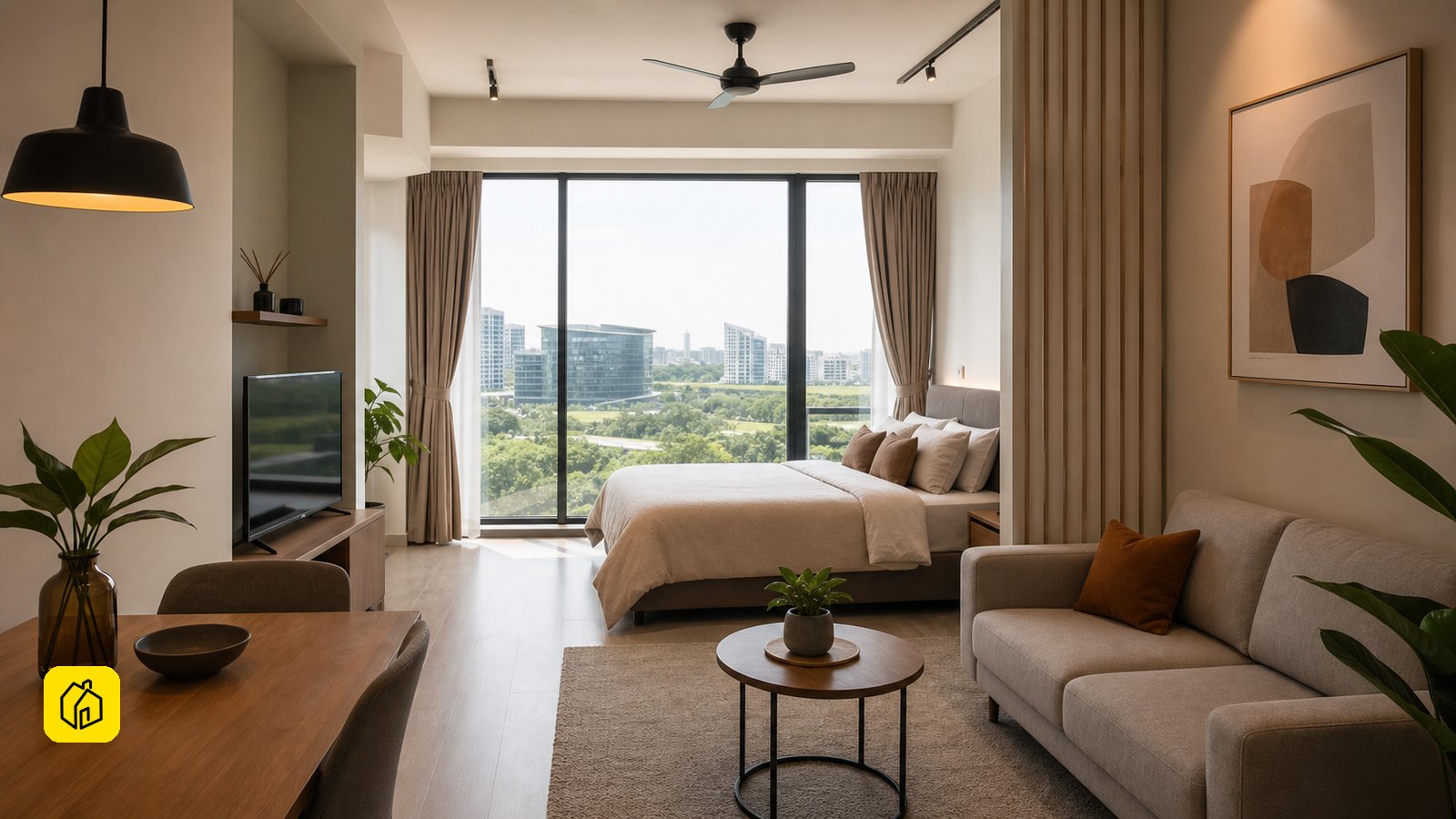
Own a unit at Tamarind Suites (or buying one)? Run it whole-unit — the plates are 403-720 sqft studios and lofts, so there is no split to argue about. Rents run RM1,200-2,000 asking, and against the RM280,000 sale floor that is about 5.1-8.6% a year gross. The building's other measured market is short-stay: 14 building-named units at about RM103-165 a night, kitted for work-from-home — permission for that channel is the management's letter, not the cluster's existence. Nobody holds a dedicated zero-deposit listing here yet.
Three ways to run your unit
Pick a model card, tell the tool which unit you own, then put in your own numbers. The answer updates as you type, and the charts show the trade-offs.
Loading the renovation ROI comparison…
What can you earn?
The band, read on 11 Oct 2026 from portal captures: 22 units listed for rent from RM1,200, while a 47-listing pool on the bigger portal floors at RM2,000 — read the spread as entry studios at the bottom and fitted lofts at the top, excerpt-grade all the way down. The sale floor is RM280,000 (about RM700 psf); a psf median near RM570 on the same captures says the typical 602 sqft card prices nearer RM340,000 — so the floor is the aggressive-buy case, not the market.
Worked out at the band midpoint: RM1,600 x 12 = RM19,200 divided by RM280,000 = 6.9% a year gross; the honest band is 5.1-8.6% depending on which rent and which price you actually transact. Careful with one trap: the registry row that surfaces for "Tamarind" is the development's commercial shopoffice class (RM502 psf) — it is not your suite's record; this sweep found no direct transacted row for the residential tower.
Supply: 47 competing listings in the deepest pool. In that crowd the differentiated card wins — furnished, fast internet, zero deposit. Our own board holds zero dedicated Tamarind listings today, so the first zero-deposit card sets the local reference.
Short-stay is the measured story: 14 building-named units read live at RM515-825 for five nights (about RM103-165 a night), themed hard for the work-from-home crowd — same-day check-in, "Kerja dari Rumah", 300 Mbps — with at least one operator brand running several of them. At the tool's 60% occupancy assumption that is roughly RM1,850-2,970 a month gross against a RM1,200-2,000 long-term band: the premium is real, and so is the by-law risk — Malaysia's top court confirmed a management can ban short-stay outright. The letter comes before the listing.
Rooms: no market. A 403-602 sqft plate has one bedroom on the plan; there is nothing to split and no in-building room card exists. SPEEDHOME coliving is cat-friendly, and pet-friendly rooms earn about 15-20% more where they exist.
Why whole-unit wins here
Tamarind Suites sits inside Tamarind Square — the Cyberjaya mixed pocket where the cafés and offices are walkable and the demand is young professionals and post-graduates, not families. Two 36-storey blocks of compact freehold plates suit exactly one long-term model: one tenant, one agreement, furnished for the WFH routine the short-stay cluster has already proven this postcode wants. The completion record itself is a diligence flag worth naming: one listing field reads 2016, the press majority reads 2018 — your title document and the handover records settle your unit's age, defect window and facilities timeline.
Costs: maintenance and sinking fund are unpublished for this tower, and quit rent is not published either — the calculator's running-cost field is a placeholder until your statement says otherwise. The MC's written rules are not public; the MC letter settles short-stay for your unit. SPEEDHOME coliving is cat-friendly — cats welcome in our coliving rooms — and pet-friendly rooms earn about 15-20% more where they exist. That's the SPEEDHOME offer; building rules can vary.
5 checks before you buy
-
Get the real land title document — a service apartment inside a mixed development carries its own conditions; confirm your parcel's category. Done: you hold the title copy.
-
Get the management's rules in writing — short-stay above all: with 14 named units trading, by-law enforcement is a when, not an if. Done: you have the letter.
-
Get the real running costs — management fee, sinking fund, quit rent. Nothing is published here, so ask. Done: a number on paper. See the real cost of self-managing a rental.
-
Show your renovation plan to MPSepang before you sign anything. Selangor names no blanket partition ban, but strata alteration approvals still apply — furniture yes, structure no. Done: the council tells you in writing.
-
Until checks 1 and 2 are done, buy nothing you cannot undo. A reversible SPEEDRENO rental fit-out converts the unit back in a day.
FAQ
Can you rent rooms at Tamarind Suites?
No in-building room market exists — the plates are 403-720 sqft studios and lofts with one bedroom on the plan; there is nothing to split. Whole-unit is the only long-term shape. See the room rental and co-living guide.
What yield does Tamarind Suites give?
About 5.1-8.6% a year gross asking-basis: RM1,200-2,000 rents over the RM280,000 sale floor (midpoint pair 6.9%). Every figure is excerpt-grade — no direct transacted row exists for the residential tower — and running costs are unpublished. Run your own numbers in the calculator above.
Is short-stay allowed at Tamarind Suites?
Fourteen building-named units trade at about RM103-165 a night today — demand is proven, permission is not. Only the management's current written by-laws grant it, and the top court confirmed a management can ban it (Verve Suites ruling, 2020). Get the letter before spending money.
Are pets allowed at Tamarind Suites?
The building's rules are not public. SPEEDHOME coliving is cat-friendly — cats welcome in our coliving rooms — and pet-friendly rooms earn about 15-20% more. The offer is SPEEDHOME policy; building rules can vary.
What running it looks like
Setup is the two documents: title and the management's letter. The work is one tenant whole-unit — a young Cyberjaya professional who works from home — with the cycle of one listing, viewings, a stamped tenancy agreement, then rent day. In a 47-listing pool the furnished, fast-internet, zero-deposit card is the one that moves; SPEEDHOME runs the listing, the viewings and the screening, and you approve the tenant before the agreement is signed. Keep the fit-out reversible, and treat short-stay as the letter-gated upside it is.
Ready? List your unit with SPEEDHOME — zero deposit, we run the viewings, you approve the tenant.
All figures are excerpt-grade asking rents and prices captured on 11 Oct 2026; the transacted row that surfaces is the development's commercial class, not the suites. Running costs are not published. More: the landlord investment decision guide.