
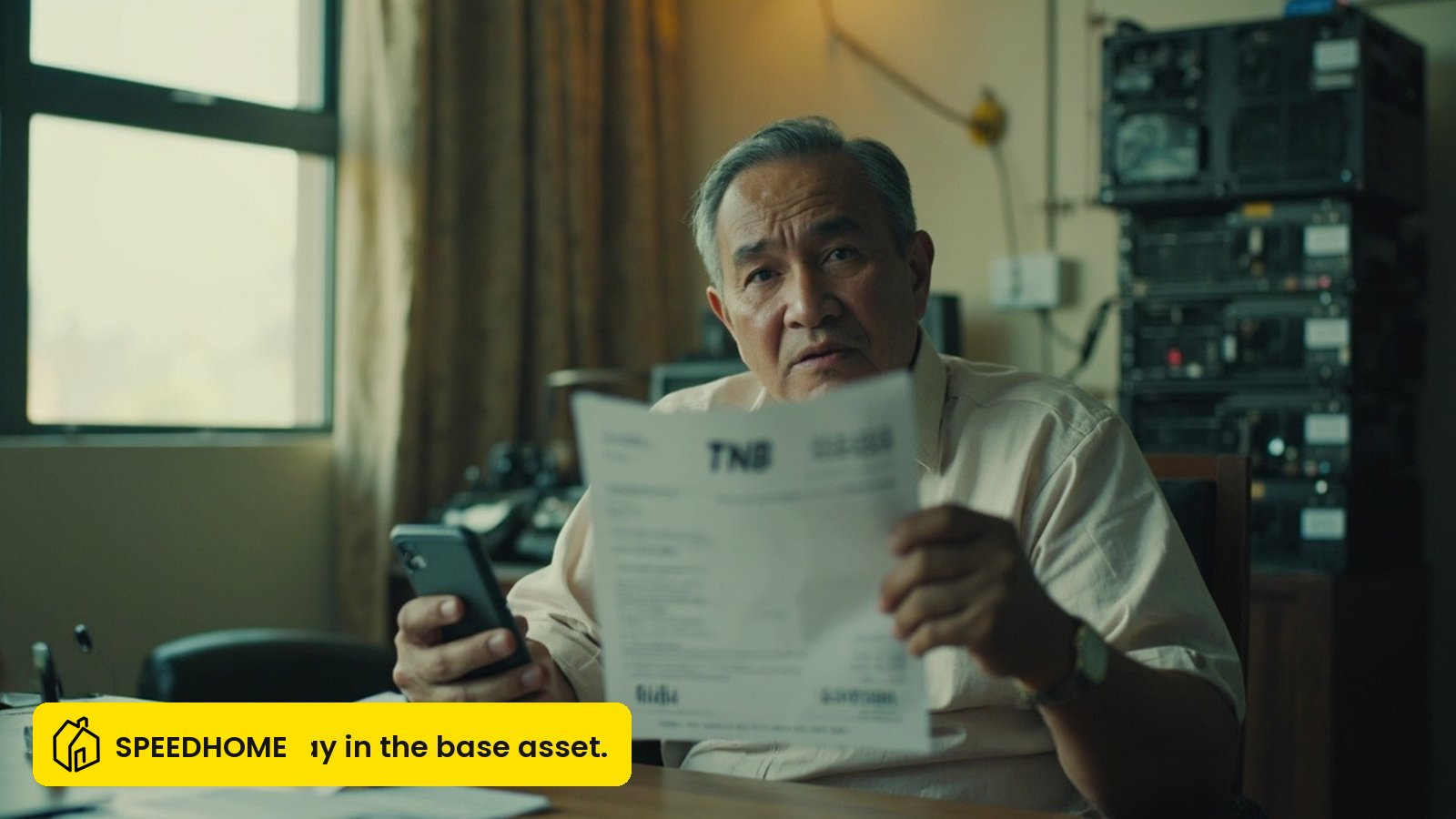
TNB bill spikes and crypto mining suspicion: what to do first
Collect the evidence first. Do not cut power, do not accuse, and do not deduct the deposit yet. facts.yaml has no TNB crypto-mining liability or power-disconnection procedure anchor, so this page keeps to bill, tenancy, and on-site evidence only.
Crypto mining sounds serious, but a landlord cannot act on suspicion alone. You need an abnormal bill, a usage pattern, the tenancy clauses, on-site photos, and a written record between the parties. As for TNB's specific procedure, criminal liability, or forced-disconnection power, this page has no fact anchor and must HOLD.
Pull together these five types of evidence
| Evidence | What it shows | Risk if missing |
|---|---|---|
| TNB bills | Whether usage is abnormal | An abnormal bill is not proof of mining |
| Tenancy clauses | Whether use or equipment is restricted | Do not stretch the wording yourself |
| On-site photos | Whether there is bulk equipment or rewiring | Do not photograph private documents |
| Move-in and move-out records | Whether equipment was added or damage appeared | No baseline makes the case weak |
| Written communications | Proof you asked and gave notice | Threats of disconnection make it worse |
Do not equate an abnormal bill with crypto mining
A spike in the TNB bill can come from air conditioning, a water heater, multiple occupants, a faulty appliance, or a number of other causes. This page does not write "mining is always X's responsibility", because facts.yaml has no anchor for that. Stack the facts in layers: an abnormal bill is one layer, equipment evidence is another, tenancy breach is a third.
If you want a broader understanding of tenant utility responsibility, start with the where to rent in Malaysia guide.
Who is actually on the hook for the TNB bill
Liability for electricity follows the TNB Registered User — whoever's name is on the supply contract for the premises, only one Registered User at a time. Per TNB's own tenant-landlord guidance: if the tenant is the Registered User and leaves with arrears (mining-driven or not), the landlord is not liable — the departed tenant must settle the balance, and TNB cannot push a new tenant to cover the old one's debt. But if the landlord never did a Change of Tenancy and the account is still in the landlord's name, the landlord is liable for whatever arrears the tenant ran up, crypto mining or otherwise. This is exactly why a Change of Tenancy into the tenant's name before move-in matters — it is account-based protection, not an automatic landlord shield.
This doesn't tell you whether mining happened. It tells you who pays the bill once you know the usage is real.
Do not cut water or electricity yourself
Even if you are suspicious, do not use a utility cut to force the tenant's response. Disconnection and self-help eviction are high-risk legal areas — they are unlawful in Malaysia and can be used against you. A safer path is a written request for an explanation, a scheduled inspection, a logged bill history, and the tenancy agreement's breach procedure. If you suspect illegal activity, check with the appropriate professionals or authorities — do not run a self-imposed penalty.
Deposit deduction also has to wait for evidence
If a deposit question does arise at the end of the tenancy, it has to come back to a breakdown and evidence. You cannot simply deduct a fixed sum because "I think you were mining." You need a bill, proof of damage, a repair quote, or a tenancy clause that supports the deduction.
The same is true for the tenant: if accused, keep your own usage explanation, move-in record, and communications. Practise basic record-keeping from day one.
FAQ
Does an abnormal TNB bill prove the tenant was crypto mining?
No. An abnormal bill is a clue, not complete proof. You also need the tenancy agreement, on-site evidence, equipment records, and written communications.
Can a landlord call TNB to cut the power?
This page does not write TNB's specific disconnection procedure or power, because facts.yaml has no relevant anchor. Do not use a power cut as your own pressure tool.
Can I deduct from the deposit first?
No — you should not deduct on suspicion. A deposit deduction has to be supported by a proven loss and a documented amount.
Should I call the police first?
This page does not invent police powers or procedure. If you suspect illegal activity, check with the appropriate professional or authority, and keep the factual evidence.