
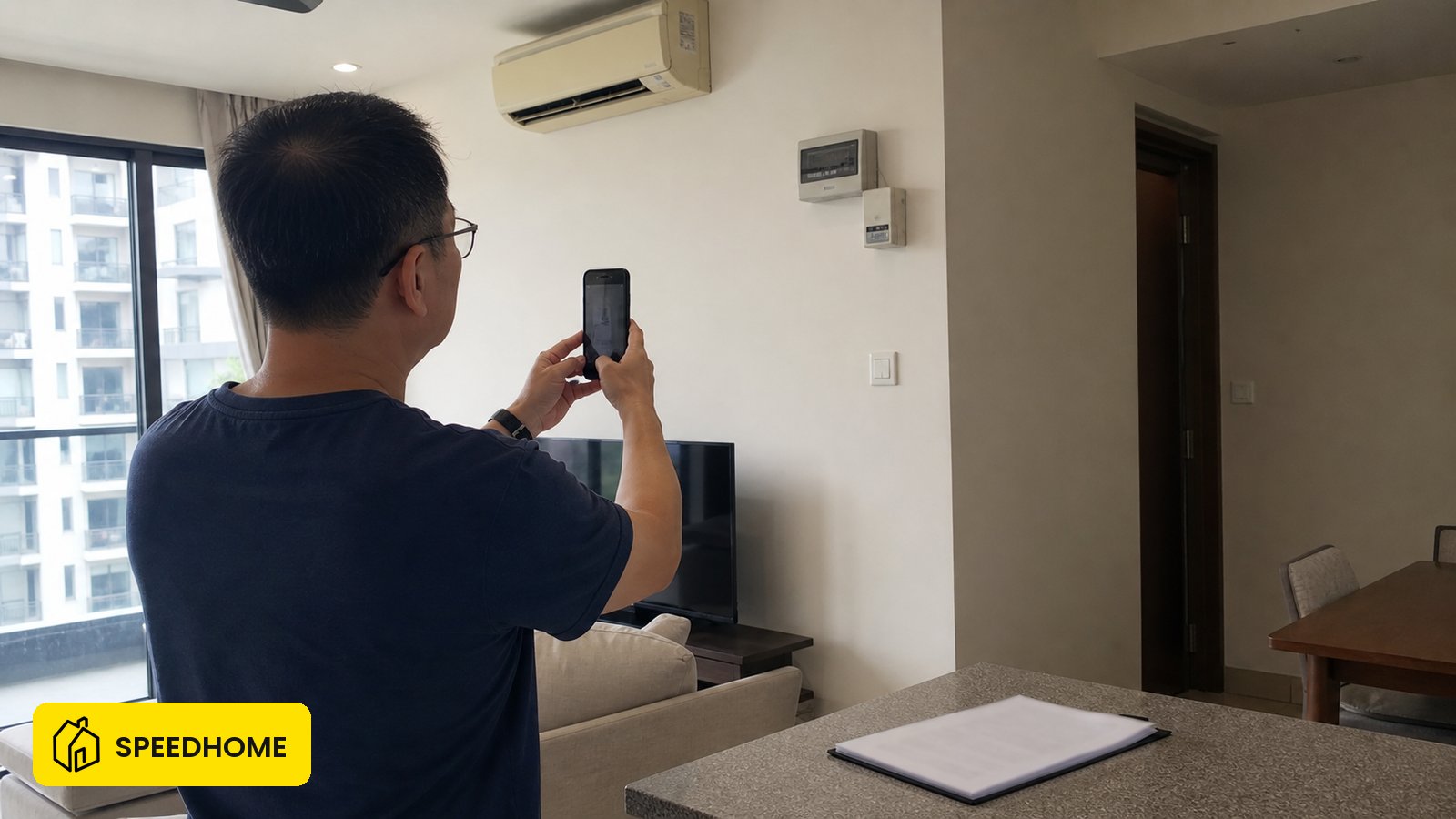
Tenant horror stories in Malaysia stem primarily from condition disputes, unauthorized occupants, and unpaid rent. Because self-help eviction like lockouts or cutting utilities is illegal under Section 7(2) of the Specific Relief Act 1950, landlords must resolve defaults lawfully through written notices, civil court writs, and dated photographic evidence, keeping operator recovery around 31 days.
What "tenant horror stories" actually teach a Malaysian landlord
Most tenant horror stories in Malaysia — mold and defects ignored, the constant intruder, inflated move-out deductions, the too-good-to-be-true rental scam, and a fridge shoved into the bomb shelter — collapse into one lesson: document everything, read the tenancy agreement before signing, and never resolve a default by force. The platform's landlord operations data shows that the first cause of default and deposit disputes is a condition dispute, not unpaid rent, so the cheapest fix is a report-ready tenancy agreement and dated condition photos taken before the tenant moves in.
The page that the internet usually serves under "tenant horror stories" is a list of dramatic anecdotes. The page that helps you is the one that converts each story into the single action that would have prevented it. Five recurring scenarios cover most of what landlords and tenants fight over in Malaysia: hidden defects, unauthorised access and intruders, end-of-tenancy cost disputes, listing fraud, and misuse of the unit. Each one has a cheap prevention if it is handled before keys change hands, and an expensive one if it is handled after.
This page is written for the landlord who has either lived through one of these or is trying not to. Where a story implies a self-help shortcut — locking the tenant out, disconnecting water or electricity, or quietly reporting the tenant's name — the copy below names the lawful route instead, because the shortcut is the fastest way to turn a recoverable dispute into a civil liability.
Which statutory framework governs Malaysian tenancy disputes?
In Malaysia there is no Residential Tenancy Act in force as of 2026 — the proposed RTA remains a draft Bill — and there is no dedicated residential tenancy tribunal, so the lawful recovery route runs through the civil courts. Self-help eviction is not allowed; locking the tenant out, disconnecting water or electricity, or removing the tenant's belongings is unlawful under Section 7(2) of the Specific Relief Act 1950 regardless of what the tenancy agreement says or how far behind the rent is.
That single fact reframes every horror story on this page. A landlord who discovers mold ignored for months, an unauthorised occupant, or three months of unpaid rent still cannot act unilaterally. The lawful path is: written demand, proper notice under the tenancy agreement, then the courts — typically the Writ of Distress for arrears or the Writ of Possession for recovery of the unit. SPEEDHOME's recovery-time operator data tracks roughly 31 days from first default to the start of recovery when the tenancy agreement is clean, which is why the cheapest lever a landlord owns is the agreement itself, not the enforcement.
Which five tenant horror stories recur in Malaysia?
The five stories that come up again and again are hidden defects (mold, wall cracks, pests), the constant intruder or unauthorised occupant, inflated move-out deductions, the too-good-to-be-true rental scam, and misuse of the unit such as storing a fridge in the bomb shelter. Each one is cheap to prevent and expensive to litigate, so the table below pairs each story with the lesson and the record that settles it.
| Horror story | What usually went wrong | The lesson | The record that settles it |
|---|---|---|---|
| Hidden defects (mold, wall cracks, bedbugs) | Condition never photographed at handover; tenant blamed, landlord denies | Photograph every room, defect and meter reading on day one and day last | Dated move-in and move-out photos + a defect list signed by both sides |
| The constant intruder / unauthorised occupant | No access or occupancy clause; spare keys uncontrolled | Define who may occupy and who holds keys in the tenancy agreement | Signed access clause + key-handover log |
| Inflated move-out deductions | Deposit refund turns into a list of invented repair charges | Agree the condition benchmark before move-in, not at move-out | Move-in condition annex + repair invoices for any deduction |
| The too-good-to-be-true rental scam | Tenant or landlord paid before verifying the listing, the person, or the unit | Verify person, unit, paperwork and money before any payment | Stamped tenancy agreement + proof of the listing and the recipient's identity |
| Misuse of the unit (fridge in the bomb shelter) | House rules and strata by-laws never shared with the tenant | Attach building and house rules to the agreement | Signed house-rules annex + management-office notices |
These five are not separate problems so much as five ways the same gap surfaces: the important detail was never written down, photographed, or attached to the agreement. The bomb-shelter fridge, for example, is a strata management issue the landlord inherits because no one gave the tenant the building rules; the inflated deduction is a condition-evidence issue the landlord loses because no one took day-one photos.
Which decision should come first when a dispute appears
Start with fit and record, not emotion: name the exact issue, confirm what the tenancy agreement says about it, and collect the dated evidence before sending any message. A landlord who reacts to a horror story in the moment — an angry text, a threat, a rushed decision to retake the unit — usually makes the recovery slower and weaker, because the lawful route depends on the paper trail, not the grievance.
The first decision is therefore whether the issue is a condition dispute, an arrears dispute, an occupancy breach, or a listing-fraud loss, because each has a different lawful path. Condition disputes are settled by photos and the agreement's repair clause. Arrears are settled by written demand, then the Writ of Distress. Occupancy breaches are settled by the access clause and notice. Fraud is settled by a police report and, where the money moved, a bank report. Routing the dispute to the correct lane early is what keeps recovery inside the ~31-day operator window instead of pushing it into months of court time.
How does the staged process stop horror stories escalating?
Use a five-stage process: clarify the issue, record the evidence, communicate once in writing, decide the next step, then close in writing — escalating to court only if the previous stage fails. This staged approach is what separates a recoverable dispute from a permanent loss, and it works for both sides of the tenancy.
| Stage | What to do | What to avoid |
|---|---|---|
| 1. Clarify | Name the exact issue and who needs to respond | Do not bundle five complaints into one emotional message |
| 2. Record | Save dates, photos, receipts, payment logs and viewing notes | Do not rely on memory or verbal promises |
| 3. Communicate | Send one calm written message with the requested outcome and a deadline | Do not threaten, shame or exaggerate |
| 4. Decide | Choose repair, negotiation, formal notice or recovery based on the record | Do not jump to the harshest route first |
| 5. Close | Confirm what was agreed and keep the final written proof | Do not leave the outcome floating in chat |
The value of the table is not neatness. It slows the landlord down at the exact moment where mistakes happen: when the tenant is friendly, the unit looks acceptable, or the landlord wants the vacancy filled quickly. Most avoidable disputes begin as a small missing detail at one of these five stages, and most recoveries fail because stage 3 was skipped or stage 5 was never confirmed.
What should be documented from day one
Document the condition of the unit, the money trail, the messages that change obligations, and any promise that would matter if there is a dispute later. The best record is boring: it has dates, names, photos, messages and receipts, and it does not need angry explanations.
| Record | Why it matters |
|---|---|
| Signed and stamped tenancy agreement | Shows the starting rules, repair obligations and what happens on breach |
| Move-in and move-out photos | Reduces arguments about pre-existing condition versus new damage |
| Payment receipts and bank records | Creates a clean rent and deposit trail the court accepts |
| Repair requests and invoices | Shows what was reported, when, and how it was handled |
| Management office or building notices | Confirms strata and house rules that bind the tenancy |
If a landlord builds this kind of record at handover, the five horror stories mostly dissolve before they start. Hidden defects become a signed defect list; inflated deductions become a move-in annex; the intruder becomes a key log. The record is also what makes recovery fast — a report-ready tenancy agreement plus arrears evidence is what a court, and any licensed credit agency operating with the tenant's written consent, will ask for.
Why the shortcut backfires every time
The shortcut — locking the tenant out, disconnecting water or electricity, removing belongings, or quietly reporting the tenant to a credit agency without consent — is the fastest way to convert a winnable default into a civil claim against the landlord. Each of these is a self-help remedy, and self-help eviction is unlawful under Section 7(2) of the Specific Relief Act 1950 regardless of arrears or what the agreement says.
This is the part most horror-story advice gets wrong. A blog that tells a landlord to lock the tenant out or disconnect water or electricity after non-payment is handing over a liability, not a solution. The tenant who is locked out can sue for recovery of possession and damages; the landlord who disconnects utilities can be reported and ordered to restore supply. The lawful equivalent — written demand, the agreement's default clause, then the Writ of Distress or Writ of Possession — is slower but it keeps the landlord on the right side of the line, and it is the only route that actually returns the unit or the rent.
The same logic applies to default reporting. A landlord may report a defaulting tenant to a licensed credit agency only with the tenant's written consent and an appropriate default clause, through the agency's verified pathway. Reporting a tenant's name without consent, to punish them or warn other landlords informally, is not a recovery tool — it is a separate legal risk.
How the horror stories connect to the tenancy agreement
The tenancy agreement is the operating document: it should define rent and deposit, handover condition, repair responsibilities, access and occupancy rules, house rules, and what happens when either side breaches the terms. Most rental problems feel personal because the agreement was too thin or nobody read it until something went wrong.
A useful page keeps bringing the reader back to the written terms, then explains what practical record sits beside those terms: photos, receipts, move-in notes, messages and payment proof. Malaysia does not have one neat tenancy law for every situation — some issues are governed by the agreement, some by general contract principles under the Contracts Act 1950, some by strata or building rules under the Strata Management Act 2013, and some require professional advice. The safest copy explains the operating logic and tells the reader when not to improvise. For the full lawful recovery sequence when a tenant stops paying, see the landlord's guide to handling late rent payments, and for preventing the bad-tenant story before it starts, the five red flags that identify bad tenants.
What mistakes make a horror story worse
The common mistakes are paying or letting a tenant move in before the unit and terms are clear, assuming a friendly viewing equals a fair agreement, ignoring building rules because the unit looks suitable, negotiating only on rent while missing deposits and repair obligations, and keeping problems verbal until the dispute is already serious. Each of these is a stage-one failure in the table above.
The honest version is that horror stories are rarely caused by a uniquely bad tenant or landlord. They are caused by ordinary people skipping the boring step — the photos, the read-through, the written confirmation — because the other side seemed fine. The upgrade is therefore not more fear; it is the next responsible action and the line the landlord should not cross. That is especially true for legal-adjacent landlord pages, where a strong or dramatic claim creates more risk than value.
What is the lawful path, and where does SPEEDHOME fit in?
The lawful path is to screen before signing, document at handover, and resolve any default through written demand and the courts — and the platform's landlord workflow is built around exactly those three stages so the horror story is intercepted before it starts. A report-ready tenancy agreement, dated condition evidence, and a recovery process that stays inside the law are cheaper than any single disputed month of rent.
For landlord services including tenant screening, the report-ready tenancy agreement, and recovery support, see SPEEDHOME landlord services. The recovery-time operator figure cited on this page is the same internal recovery window tracked across SPEEDHOME-managed tenancies.
FAQ
What should a landlord check before handing over the keys?
Check the tenancy agreement, the total deposit and rent terms, the building and house rules, the move-in condition, and the tenant's documentation. Take dated photos of every room, defect and meter reading, and attach a signed defect list. Do not rely on a friendly viewing or verbal promises.
What should be put in writing in the tenancy agreement?
Rent amount, deposit terms, move-in condition, repair responsibilities, access and occupancy rules, house rules, and the default clause. A stamped tenancy agreement plus dated photos and payment records are stronger than any chat screenshot.
Can a landlord lock the tenant out or disconnect utilities for non-payment?
No. Locking the tenant out, disconnecting water or electricity, or removing belongings is unlawful under Section 7(2) of the Specific Relief Act 1950 regardless of arrears or what the tenancy agreement says. The lawful route is written demand, notice under the agreement, then the Writ of Distress or Writ of Possession through the courts.
How does a landlord report a defaulting tenant?
A landlord may report a defaulting tenant to a licensed credit agency only with the tenant's written consent and an appropriate default clause, through the agency's verified pathway. Reporting a tenant's name without consent or to punish them informally is not a recovery tool and creates separate legal risk.
When should a landlord walk away or settle instead of fighting?
Settle or serve notice when the cost of recovery — court time, vacancy, legal fees — exceeds the amount in dispute, or when the evidence is thin. Choose recovery through the courts when the arrears are large, the tenancy agreement is clean, and the record is complete. The decision should follow the record, not the grievance.
How can SPEEDHOME help prevent tenant horror stories?
SPEEDHOME's landlord workflow covers tenant screening, a report-ready tenancy agreement, dated condition evidence, and a recovery process that stays inside the Specific Relief Act 1950. For current options, see SPEEDHOME landlord services.
Accuracy note. Grounded in Specific Relief Act 1950, Contracts Act 1950 and Strata Management Act 2013. Every figure is bound to a dated fact registry and re-verified on each update. Spotted an error? Email [email protected] with this page's link.