
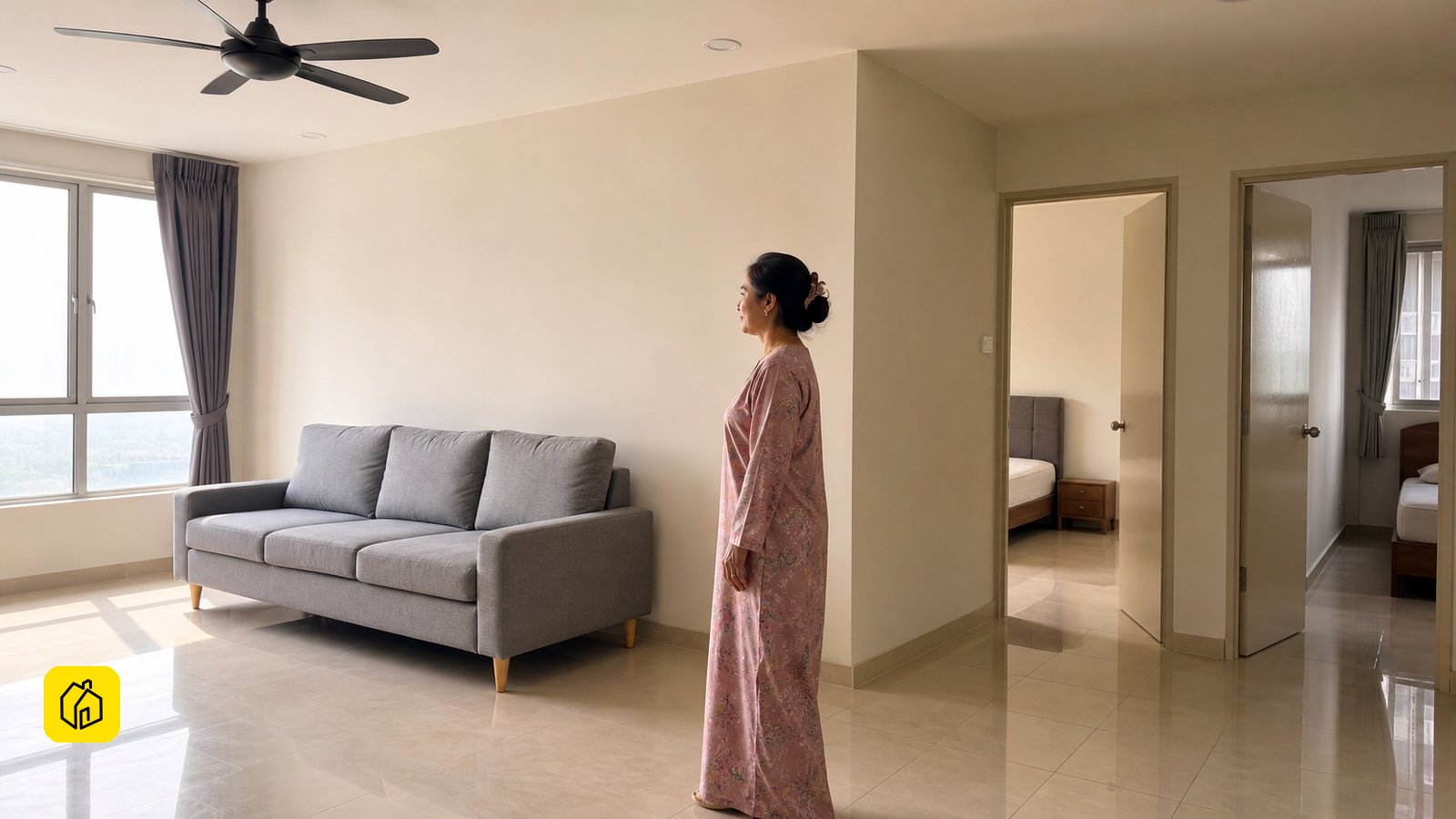
Three ways to run your unit
Go whole-unit 12-month as the base case — a 158-unit low-density freehold serves household tenancies, and the public record proves identity and scale, not a room-rental or short-stay right. Existing-bedroom room rental waits for the management's written confirmation; short-stay stays disabled until the title and by-law gates resolve.
Pick a model card, put in your own numbers, and the answer updates as you type.
Loading the renovation ROI comparison…
How do you make the unit eligible for the scarce segments?
Pet-friendly whole-unit tenancies and properly managed co-living are the scarce-supply side of demand. Fewer eligible units exist than tenants asking for them, whereas generic lets compete against every identical listing in The Armanna.
A reversible SPEEDRENO fit-out makes the unit segment-eligible, and the finished unit lists on SPEEDHOME against that demand. The calculator at the top of this page carries the money comparison.
What baseline specifications define The Armanna Kota Kemuning?
The Armanna (Prima Indah) is a freehold, low-density residential development in Kemuning Prima, Kota Kemuning, comprising 158 units across two 16-storey blocks under MBSA jurisdiction. Featuring 1,023 sqft three-bedroom and 1,183 sqft three-plus-one bedroom layouts, rental underwriting favors conventional whole-unit family tenancies over high-turnover room partitions or unapproved short-term rentals.
The Armanna (also known as Prima Indah) should be underwritten first as a conventional whole-unit long-term tenancy. The reason is not a guessed rent or yield: low-density 16-storey ownership: inspect the two-block common-area budget before treating a family layout as a rooming asset. Existing approved bedrooms can be considered for room rental only after the owner has the exact plan and a written management position. Short stay is not an investment option to assume; keep it out of the case until the parcel title and current by-laws say otherwise.
SPEEDHOME's recommendation for The Armanna: whole-unit 12-month pending the MC letter — SPEEDHOME's default until management's written position arrives.
Which operating verdict faces an Armanna landlord?
The verified project record identifies The Armanna (also known as Prima Indah) at Persiaran Kemuning Prima, Kemuning Prima, Kota Kemuning, 40460 Shah Alam, Selangor, with MBSA as the recorded local-authority route. The building evidence currently supports a disciplined decision, not a blanket operating permission: The Armanna is in Kota Kemuning, Shah Alam, Selangor. freehold 16-storey development with 158 units. Kota Kemuning, Shah Alam is administered by MBSA. The individual parcel title, current management rules, strata charges and current market evidence require unit-specific confirmation. The practical default is one household, one tenancy agreement, and a normal handover. That default keeps the owner inside the existing layout while the unit file is completed.
This is a decision page rather than an availability page. Do not treat a project name, an online asking price or a neighbour's recollection as proof that a particular parcel can be rented, divided, kept with pets or used for short stays. Start with the actual tower, floor, parcel number and existing bedrooms. The landlord should know which fact applies to the owned unit before putting money into a fit-out.
Which building facts change the unit check?
The public record describes the relevant product as: 3-bedroom (1,023 sf, smallest); 3+1-bedroom (1,183 sf, largest). That description is useful because it tells the owner what must be matched when requesting a comparable and a quotation. It does not replace the SPA, approved plan, issue document of title or management circular for the individual unit. Where a development has phases, blocks or different layouts, the project name is only the first filter.
Use the project source (project record) to confirm the building identity, then use the local-authority route for the jurisdiction contact path. These are two external sources, but neither is a promise about current rent, a management rule or a particular tenant. The owner should retain PDFs or written replies in the unit file, dated and labelled by tower and parcel.
What the owner must verify before committing capital
Ask the management office for the current by-laws, house rules and renovation application form. Ask which rule applies to an ordinary long-term tenancy, an existing-bedroom shared tenancy, submetering, pets and short stay. A verbal answer is a lead, not a gate. Request the relevant clause, the date of the document and the name of the person who supplied it.
Then check the issue document of title and the SPA against the exact parcel. The title category, express conditions and any restrictions are unit documents; they cannot be inferred from a portal, the developer page or another owner's unit. Take the approved plan to the viewing. Count existing bedrooms, bathrooms, electrical points, drainage and ventilation. Do not describe a store, study or living room as an extra bedroom and do not commission a partition before the documents and management process are clear.
Finally, assemble the operating file: latest service-charge and sinking-fund statement, AGM minutes or notices of special assessment, current repair history, access-card and move-in requirements, parking allocation, appliance inventory and any outstanding defect or water issue. This file is more valuable than generic yield prose because it identifies the costs and handover failures that actually follow the property.
Whole unit, legal existing-bedroom rooms, or short stay — which fits?
| The Armanna Operating Route (Whole-Unit vs Existing-Bedroom Rooms vs Short-Stay) | Layout Fit Across 1,023 sqft (3-Bed) & 1,183 sqft (3+1-Bed) Units | MBSA & 16-Storey Strata By-Law Gate | SPEEDHOME Underwriting Stance & Operational Burden | Reversible SPEEDRENO Scope (RM15k Baseline) |
|---|---|---|---|---|
| Whole-Unit Long-Term Lease (12-Month) | Native fit for 1,023 sqft 3-bed and 1,183 sqft 3+1-bed layouts; single household tenancy without layout alteration | Standard residential tenancy under MBSA jurisdiction; requires verified parcel title and management rules | Default recommendation; one household relationship, single inventory, clear re-let path, and lowest operational overhead | Reversible refresh (repair, paint, lighting, storage, durable furnishings); excludes partition walls or structural changes |
| Room Rental in Existing Approved Bedrooms | Limited strictly to existing approved bedrooms in 1,023 sqft or 1,183 sqft layouts; internal partitions prohibited | Requires explicit written management confirmation on shared tenancies, house rules, and submetering stance | Conditional; landlord manages shared areas, separate utilities, keys, individual turnover, and joint check-outs | Scope must remain fully reversible to preserve capability to revert to conventional whole-unit tenancy |
| Short-Stay / Nightly Letting | - | Blocked; requires verified individual parcel title and written management by-law permission under MBSA | Excluded from underwriting; do not assume hospitality demand, occupancy premiums, or short-stay permissions | Zero fit-out capital should be committed ahead of written title and strata by-law clearance |
Whole-unit long-term is the fit for an owner who can show a usable parcel, current condition and a matched comparable. It has one household relationship, one inventory and a clear re-let path. Its downside is concentration: when the household leaves, the whole unit must be re-let. That is a commercial fact to model with the owner's real vacancy and operating-cost inputs, not a fixed percentage copied from another building.
Room rental is a separate operating model, not a marketing label. It can be explored only in existing approved bedrooms after written management confirmation. The owner must decide who is responsible for shared areas, utilities, keys, cleaning, damage, roommate replacement and the final joint check-out. If the only way the numbers work is a new wall, an assumed submeter or a disputed room definition, the model is a no-go. Keep the unit capable of returning to a normal whole-unit tenancy.
Short stay stays blocked. A project may have a location story without a current short-stay permission for this parcel. Obtain the title evidence and the actual current management rule first; then test whether the operating case covers cleaning, access, guest control, insurance and handover without relying on an assumed nightly premium. Until then, conventional long-term is the honest fallback.
Who fits The Armanna (also known as Prima Indah) — and who does not?
The Armanna (also known as Prima Indah) fits a landlord who wants a documented long-term unit, is willing to inspect the exact parcel and can keep the furnishing scope reversible. It does not fit an owner looking for a paper return before they have a current comparable, a management statement and the unit documents. The specific risk lens here is low-density 16-storey ownership: inspect the two-block common-area budget before treating a family layout as a rooming asset. That makes the first viewing a due-diligence visit, not a furnishing shopping trip.
Avoid a room strategy where the shared areas are too small for the approved bedrooms, management will not confirm its stance, or the owner cannot run an inventory and handover process per occupant. Avoid short stay where written evidence is absent. These are not conservative slogans: they prevent an owner from spending on a layout or operating process that cannot be used.
What should you check at the viewing and with management?
Bring the SPA or title copy, the plan, a camera and a written question list. At the unit, verify the tower and parcel, existing bedroom doors, windows, water pressure, drainage, electrical loading, air-conditioning route, internet access, noise at the likely tenant hours, lift path, parking and common-area condition. Photograph defects before any quote. Test the appliances that will be promised in the tenancy.
At management, obtain the current by-law and renovation form, move-in and lift-booking procedure, access-card and visitor process, pet and shared-tenancy position, short-stay position, submeter stance, renovation deposit and reinstatement requirement. Ask for the latest charge statement, sinking-fund position, special-assessment notices and unresolved water, facade, lift or security notices. Record what was supplied, not what was merely discussed.
Before advertising, get one current comparable for the same building phase or block, layout, furnishing level and tenancy type. Keep the asking rent, date, source and contactable evidence with the unit file. That is the input for the calculator and the basis for a tenant-facing listing; it is not a public claim about every unit in The Armanna (also known as Prima Indah).
Why does SPEEDRENO quote only after the gate file is complete?
Use the fit-out service after the layout, management and condition checks. Begin with the editable RM15k quote-start input in the shared calculator, then replace it with a written scope for this parcel. The calculator keeps renovation in the capital denominator and shows the marginal-return question: does the extra spend buy a real, evidenced rent or operating improvement for this unit?
Keep the scope reversible: repair, paint, lighting, storage and durable furnishing may improve a normal tenancy without redefining the layout. Exclude partitions, structural work, kitchen relocation, trunking changes or any work requiring an approval until the building process has been completed. If the incremental scope cannot be justified by the owner's comparable and written quote, do not spend it.
How does the scenario calculator for the exact parcel work?
Enter the purchase basis, current comparable, service charges, sinking fund, insurance, actual vacancy allowance, furnishing and the editable RM15k quote-start input. Compare the whole-unit case with an existing-bedroom room case only after management confirmation. Leave short stay disabled until the title and by-law gates are resolved. This is one shared calculator at the top of this page, bound to The Armanna (also known as Prima Indah); it does not create a building-wide yield claim.
Next step: list a ready long-term unit with SPEEDHOME
Once the parcel file is complete and the unit is ready, list the compliant long-term unit with SPEEDHOME. Confirm live eligibility, including any Zero Deposit option, on the actual listing and applicant rather than promising it for every unit. The landlord close follows the decision: verify the unit, choose the legal operating model, complete only the fit-out that survives the calculator, then market the finished home.
FAQ: The Armanna owner decisions
Is whole-unit letting the default at The Armanna?
Yes. The safest starting case is a conventional long-term tenancy using the existing approved layout. It remains conditional on the exact parcel, current condition and dated comparable, but it avoids assuming an additional room, new partition or hospitality permission.
What must management confirm before room rental is considered?
Ask for the current written position on existing-bedroom shared tenancy, renovation works, pets, utilities and short stays, together with the relevant rule or process. The project record and a verbal reply do not establish permission for this particular parcel.
How should the owner use the renovation calculator?
Enter the actual purchase basis, holding costs, dated comparable, vacancy allowance and written scope. Use it to compare a lean reversible refresh with higher spend; do not treat its planning inputs as The Armanna rent, yield or fit-out facts.
What unit-level due diligence anchors The Armanna?
This ledger is deliberately tied to the property context rather than a generic landlord checklist. It turns the viewing into a dated record that can be compared with the management reply and the final quotation.
- Kota evidence note: during the-armanna-kota-kemuning visit, record the scope condition beside the Kemuning observation, attach the parcel photo, and decide whether that item changes the long-term handover scope.
- Kemuning evidence note: during the-armanna-kota-kemuning visit, record the Kota condition beside the low observation, attach the parcel photo, and decide whether that item changes the long-term handover scope.
- low evidence note: during the-armanna-kota-kemuning visit, record the Kemuning condition beside the density observation, attach the parcel photo, and decide whether that item changes the long-term handover scope.
- density evidence note: during the-armanna-kota-kemuning visit, record the low condition beside the sixteen observation, attach the parcel photo, and decide whether that item changes the long-term handover scope.
- sixteen evidence note: during the-armanna-kota-kemuning visit, record the density condition beside the storey observation, attach the parcel photo, and decide whether that item changes the long-term handover scope.
- storey evidence note: during the-armanna-kota-kemuning visit, record the sixteen condition beside the two observation, attach the parcel photo, and decide whether that item changes the long-term handover scope.
- two evidence note: during the-armanna-kota-kemuning visit, record the storey condition beside the block observation, attach the parcel photo, and decide whether that item changes the long-term handover scope.
- block evidence note: during the-armanna-kota-kemuning visit, record the two condition beside the family observation, attach the parcel photo, and decide whether that item changes the long-term handover scope.
- family evidence note: during the-armanna-kota-kemuning visit, record the block condition beside the parcel observation, attach the parcel photo, and decide whether that item changes the long-term handover scope.
- parcel evidence note: during the-armanna-kota-kemuning visit, record the family condition beside the Persiaran observation, attach the parcel photo, and decide whether that item changes the long-term handover scope.
- Persiaran evidence note: during the-armanna-kota-kemuning visit, record the parcel condition beside the Kemuning observation, attach the parcel photo, and decide whether that item changes the long-term handover scope.
- Kemuning evidence note: during the-armanna-kota-kemuning visit, record the Persiaran condition beside the Prima observation, attach the parcel photo, and decide whether that item changes the long-term handover scope.
- Prima evidence note: during the-armanna-kota-kemuning visit, record the Kemuning condition beside the garden observation, attach the parcel photo, and decide whether that item changes the long-term handover scope.
- garden evidence note: during the-armanna-kota-kemuning visit, record the Prima condition beside the facing observation, attach the parcel photo, and decide whether that item changes the long-term handover scope.
- facing evidence note: during the-armanna-kota-kemuning visit, record the garden condition beside the visitor observation, attach the parcel photo, and decide whether that item changes the long-term handover scope.
- visitor evidence note: during the-armanna-kota-kemuning visit, record the facing condition beside the parking observation, attach the parcel photo, and decide whether that item changes the long-term handover scope.
- parking evidence note: during the-armanna-kota-kemuning visit, record the visitor condition beside the school observation, attach the parcel photo, and decide whether that item changes the long-term handover scope.
- school evidence note: during the-armanna-kota-kemuning visit, record the parking condition beside the run observation, attach the parcel photo, and decide whether that item changes the long-term handover scope.
- run evidence note: during the-armanna-kota-kemuning visit, record the school condition beside the common observation, attach the parcel photo, and decide whether that item changes the long-term handover scope.
- common evidence note: during the-armanna-kota-kemuning visit, record the run condition beside the corridor observation, attach the parcel photo, and decide whether that item changes the long-term handover scope.
- corridor evidence note: during the-armanna-kota-kemuning visit, record the common condition beside the lift observation, attach the parcel photo, and decide whether that item changes the long-term handover scope.
- lift evidence note: during the-armanna-kota-kemuning visit, record the corridor condition beside the reserve observation, attach the parcel photo, and decide whether that item changes the long-term handover scope.
- reserve evidence note: during the-armanna-kota-kemuning visit, record the lift condition beside the AGM observation, attach the parcel photo, and decide whether that item changes the long-term handover scope.
- AGM evidence note: during the-armanna-kota-kemuning visit, record the reserve condition beside the maintenance observation, attach the parcel photo, and decide whether that item changes the long-term handover scope.
- maintenance evidence note: during the-armanna-kota-kemuning visit, record the AGM condition beside the scope observation, attach the parcel photo, and decide whether that item changes the long-term handover scope.
- scope evidence note: during the-armanna-kota-kemuning visit, record the maintenance condition beside the Kota observation, attach the parcel photo, and decide whether that item changes the long-term handover scope.