
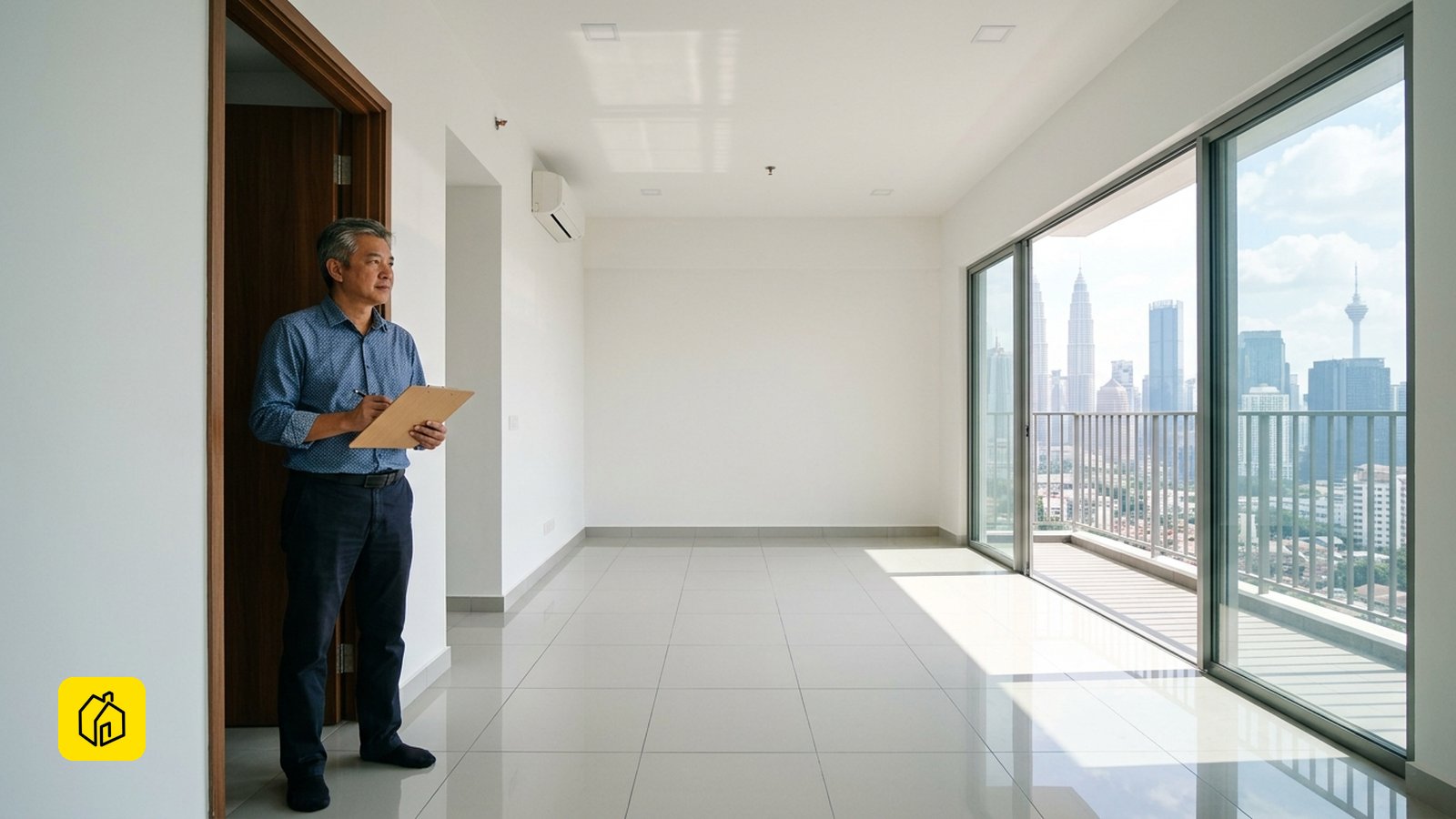
An empty rental unit costs landlords money every day in mortgage and maintenance. According to the platform operator data, clean, fully furnished, and move-in-ready units in a managed portfolio achieve a 16-day median fill time. This duration is roughly half the vacancy period of comparable units that still require repair or refit work.
Every month a Malaysian rental unit sits empty, the landlord carries the mortgage, quit rent, insurance, and maintenance on one side of the ledger and zero rent on the other. SPEEDHOME operator data shows the cleanest move-in-ready units in a managed portfolio fill in a 16-day median — roughly half the vacancy period of comparable units that still need repair or refit work before they can be re-listed. The math below shows what that gap actually costs you per day, and the free worksheet lets you plug in your own numbers.
Get the free "What Is Empty Costing You" worksheet. A single A4 sheet with the per-day cost table, the move-in-ready checklist, and the SPEEDHOME landlord follow-up link. WhatsApp us → — opens pre-filled so we know which guide you're on.
What does an empty Malaysian rental unit actually cost per day?
An empty Malaysian rental unit costs its owner the daily share of mortgage interest, quit rent, fire insurance, and recurring maintenance — typically RM 25 to RM 75 per day on a mid-market unit, before a single ringgit of lost rent is counted. The exact figure depends on your loan amount, property type, and location, but the structure of the cost is the same for every landlord.
Three costs run whether the unit is occupied or not:
- Financing cost — the daily share of your monthly mortgage instalment, or the opportunity cost of cash you used to buy the unit outright. Most Malaysian bank housing loans work out to roughly 0.1% to 0.15% of outstanding balance per day.
- Statutory cost — quit rent (cukai tanah) assessed yearly and divided across the year, and fire insurance premiums that renew annually. Together these typically add RM 4 to RM 12 per day on a stratified unit.
- Maintenance cost — management fees, lift maintenance, sinking fund contributions, and periodic pest control or air-conditioning servicing. On a typical condo this is RM 5 to RM 20 per day.
When you add the rent you would have collected on top, a unit that should be earning RM 1,800 a month but sits empty for 60 days is really costing you RM 3,600 to RM 4,500 in finance, statutory, and maintenance costs, plus RM 3,600 in lost rent — a real vacancy cost of RM 7,000 to RM 8,000 for those two months.
How do I calculate vacancy cost per day for my unit?
Multiply your monthly mortgage by 12 and your annual quit rent and insurance by 1, add management fees and maintenance per month, total the annual carry cost, then divide by 365 to get your per-day vacancy cost. The lost rent line is calculated separately — multiply monthly rent by 12, divide by 365.
| Cost Line | Annual Amount (RM) | Per-Day Amount (RM) | Source |
|---|---|---|---|
| Mortgage interest portion* | 12,000 | 32.88 | Bank loan schedule (interest only) |
| Quit rent (cukai tanah) | 150 | 0.41 | PTG / JPPH annual assessment |
| Fire insurance premium | 600 | 1.64 | Insurer policy schedule |
| Management fee + sinking fund | 3,600 | 9.86 | MC / JMB monthly statement |
| Periodic maintenance reserve | 1,200 | 3.29 | Aircond service, pest control, minor repair |
| Annual carry cost | 17,550 | 48.08 | Sum of above |
| Lost rent (at RM 1,800/month) | 21,600 | 59.18 | Asking rent ÷ 365 |
| Real vacancy cost per empty day | — | 107.26 | Carry + lost rent |
* The mortgage interest portion is the most landlord-specific line — use your actual bank schedule, not the full instalment, because principal repayment is not a vacancy cost.
Where do landlords underestimate vacancy cost?
Most Malaysian landlords underestimate vacancy cost because they stop counting when mortgage instalments are paid by rental income, ignoring quit rent, insurance, management fees, and the depreciation that happens to an empty unit that is not being looked at weekly. A unit that is "between tenants" for 60 days quietly racks up RM 100-plus per day before anyone notices.
Five places the real cost hides:
- Depreciation during vacancy. Air-conditioning compressors, water heaters, and refrigerator compressors that sit idle for months often fail on restart. A single compressor replacement wipes out three months of gross rent.
- Deterioration of listing quality. Photos that are 18 months old and a unit that smells faintly of dust attract fewer enquiries, lengthening vacancy further. The cost compounds.
- Strata arrears. Management fees still accrue during vacancy. If they go unpaid for two cycles, MC letters and JMB surcharges follow — RM 50 to RM 200 per letter in some developments.
- Listing churn cost. Re-shooting, re-uploading, re-stamping the tenancy agreement, and re-paying the platform listing fee for every additional month vacant. Each cycle is RM 200 to RM 500 of administrative overhead.
- Mental load. The owner is checking messages, replying to enquiries, and fielding agent calls for a unit that is not earning. Time has a real cost even if it does not appear on the spreadsheet.
What is the fastest way to cut vacancy cost in half?
Move the unit to a clean, fully furnished, move-in-ready state before re-listing, then publish it on a platform with verified tenants — The platform operator data shows a 16-day median fill time for units that are clean, fully furnished, and move-in ready, roughly half the vacancy period of comparable units that still need repair or refit work. Two levers at once: shorten the asking-to-key-handover gap, and stop losing days to repair churn after a tenant is found.
Four practical steps:
- Repair-before-listing, not after-tenancy. Patch nail holes, repaint scuffed walls, service the air-conditioner, descale the water heater, and clear slow drains before the listing goes live. Every defect left in place is a negotiation point that costs you a week.
- Furnish to the tenant, not to the photo. A real bed frame, a usable mattress, a working refrigerator, a clean oven, and window curtains on every window. Tenants in Klang Valley book viewings faster when the unit photographs lived-in rather than empty.
- Verify the listing is complete on day one. High-quality photos in natural light, floor plan, exact address on the title deed, and a realistic asking rent (not 20% above the comparable median). Listings missing any of these sit longer.
- Use a platform with verified tenants. SPEEDHOME links every listing to verified tenant profiles; SPEEDHOME has managed over 30,000 tenancy agreements across Malaysia. The pre-qualification removes the two-week "tenant applies, references check, then withdraws" churn.
Does Zero Deposit help fill a vacant unit faster?
Zero Deposit reduces a real friction point that slows viewings-to-tenancy conversions — the upfront cash lump sum — so the same tenant who is comparing three units is more likely to commit on the spot to the unit where Zero Deposit is available, shortening the decision window. Zero Deposit is the managed rental-risk system — not a financial guarantee product — that replaces the upfront cash deposit, so tenants move in without tying up cash while landlords stay protected through rental protection instead of holding a deposit.
For the landlord, the practical effect is fewer stalled negotiations: a tenant who likes the unit does not need to spend a week arranging cash from EPF Account 2 or family before signing. For severe end-of-tenancy damage beyond fair wear and tear, the standard protection claims process applies. Where this intersects with vacancy is simple — every week shaved off the decision cycle is a week of carry cost you do not pay.
Related reading: - SPEEDRENO Rental Fit-Out in Malaysia: What Landlords Actually Get - Renovation ROI Calculator for Rental Property in Malaysia - Rental Renovation Cost Malaysia: What Landlords Should Budget - SPEEDHOME Landlord Plans
How do I use the worksheet?
Fill in five lines — mortgage interest, quit rent, fire insurance, management and sinking fund, and maintenance reserve — sum them, divide by 365, and add the daily lost-rent figure to get your real vacancy cost per day. The worksheet is a single A4 page designed to be filled in by hand in under five minutes.
Quick reference for the five cost lines:
| Line | Where to find the figure | Frequency |
|---|---|---|
| Mortgage interest portion | Bank loan amortization schedule | Monthly |
| Quit rent (cukai tanah) | Latest PTG / JPPH assessment notice | Annual |
| Fire insurance premium | Insurer policy schedule | Annual |
| Management + sinking fund | Latest MC / JMB statement | Monthly |
| Maintenance reserve | Last 12 months of invoices, divided by 12 | Monthly |
Plug your own numbers in. If the worksheet shows RM 80 per day of carry cost plus RM 60 per day of lost rent, every additional week of vacancy costs you RM 980 — before listing churn, depreciation, or strata arrears. That is the benchmark against which any repair, furnishing, or platform decision should be measured.
Get the free "What Is Empty Costing You" worksheet. A single A4 sheet with the per-day cost table, the move-in-ready checklist, and the SPEEDHOME landlord follow-up link. WhatsApp us → — opens pre-filled so we know which guide you're on.
FAQ
How much does an empty rental unit cost per day in Malaysia?
An empty mid-market Malaysian rental unit typically costs RM 25 to RM 75 per day in carry cost (mortgage interest, quit rent, fire insurance, management fee, maintenance reserve), plus the lost rent figure of roughly RM 50 to RM 100 per day depending on asking rent. The combined real vacancy cost is usually RM 75 to RM 175 per day. The free worksheet lets you plug in your own five cost lines.
What is the average vacancy rate for Malaysian rental property?
There is no single published Malaysian vacancy rate that applies across every market — vacancy varies sharply by location, unit type, price band, and season. The relevant comparison for an individual landlord is the median fill time for similar units in the same area. SPEEDHOME operator data shows a 16-day median fill time for clean, fully furnished, move-in-ready units in a managed portfolio, roughly half the vacancy period of comparable units needing repair or refit.
How can I reduce vacancy on my rental property?
The four highest-leverage moves are: (1) repair-before-listing rather than after-tenancy, so defects do not become negotiation points; (2) furnish to the tenant so the unit photographs lived-in; (3) publish a complete listing on day one — high-quality photos, floor plan, exact address, realistic rent; (4) use a platform that pre-verifies tenants so the viewing-to-tenancy conversion is faster. Together these typically cut the empty period by half.
Does Zero Deposit help landlords fill vacant units?
Zero Deposit removes a real friction point — the upfront cash lump sum — so tenants who are comparing multiple units can commit faster. Zero Deposit is SPEEDHOME's managed rental-risk system, not a financial guarantee product. For the landlord, the practical effect is fewer stalled negotiations and a shorter decision window, which translates directly into fewer days of carry cost.
Should I renovate before re-listing or sell the unit empty?
Renovation before re-listing is usually the higher-ROI choice if the unit is in a market with active tenant demand and the asking rent is competitive. The break-even point depends on the renovation cost, the months of vacancy you avoid, and the rent uplift you can command. See Renovation ROI Calculator for Rental Property in Malaysia for the per-ringgit math and Rental Renovation Cost Malaysia for current budget ranges.
What costs do landlords forget when calculating vacancy?
The five lines most landlords forget are: quit rent (cukai tanah) which is annual but accrues daily; fire insurance which renews yearly; management fee and sinking fund contributions which run whether the unit is occupied or not; periodic maintenance reserve (air-conditioner service, pest control, minor repairs) which is easy to ignore until it is not; and the depreciation of an idle unit — compressors, water heaters, and refrigerators that sit unused for months often fail on restart.