
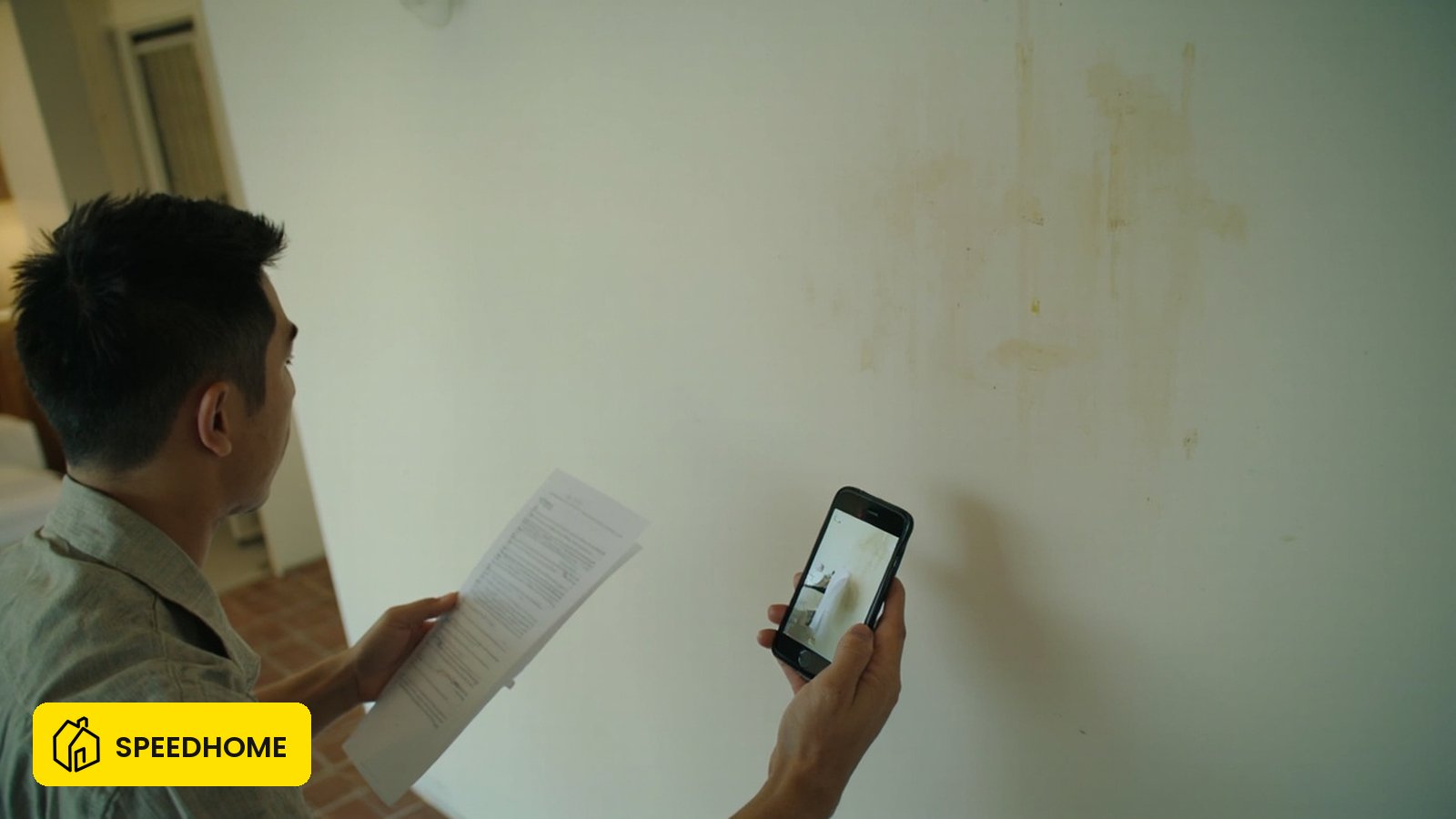
Who is liable for inter-floor water leakage in a Malaysian condo?
Inter-floor water leakage in a Malaysian condo is usually paid by the party responsible for the source: the JMB or MC for common-property failures, or the upstairs owner for leaks inside that parcel. Confirm the source before arguing liability, because the forum and evidence depend on that finding.
Liability turns on where the leak originates. Common-property pipes, roof structures, and external facades are the JMB's or MC's responsibility. Pipes, waterproofing, and fixtures that fall within a parcel's boundary — inside the unit above — are that unit owner's responsibility.
Under the Strata Management Act 2013, a management body (JMB or MC) is responsible for maintaining and repairing common property. "Common property" typically includes the main water risers, roof, external walls, inter-floor slabs at their structural core, and any drain or pipe that serves more than one parcel. Where these fail and water enters your unit, the JMB or MC has a duty to repair.
The boundary shifts the moment the source is inside the upper unit. A burst pipe inside the upstairs bathroom, a failed waterproofing membrane under an upstairs wet-room floor, a leaking water heater, or a cracked toilet pan — these typically fall within the parcel of the unit above and are not the management body's concern. Once a joint inspection, a plumber's cause report, or the management body's records fix the source inside that unit, the upper-unit owner is the party you pursue for the damage to your ceiling, walls, and any belongings.
In practice, the water will not wait while ownership is debated. The immediate priority is to stop the flow and document everything before the evidence dries.
How to identify the source before anyone argues about it
Document the leak before any repair work starts — photographs and a written log are your evidence base in any dispute. Then establish the source with the management office's help: common-property or in-parcel.
Steps to take in the first 24–48 hours:
- Photograph immediately. Shoot the leak point, the ceiling or wall stain, visible water damage to floors and fittings, and any damaged furniture or appliances. Date-stamp the images.
- Report to the management office in writing. Email or written complaint (not just a verbal report) creates a paper trail. Note the date, unit number, and nature of the leak.
- Request a joint inspection. Ask the management office to inspect with you and, where possible, with the upstairs owner present. A joint inspection report signed by all parties is far harder to dispute later.
- Identify the source before repairs start. Trace the water to its origin: is it dripping from a pipe visible above the ceiling void (common property zone), or is it clearly tracked to an upstairs bathroom or kitchen fixture? This is the fact that decides which party you pursue.
- Keep receipts for emergency costs. If you had to call a plumber to stop active flooding, keep those receipts. They form part of any compensation claim.
| Evidence to collect | Why it matters |
|---|---|
| Photographs and video with date stamp | Primary proof of extent and timing; hard to fabricate after the fact |
| Written complaint record to management office | Creates the formal notice date — establishes when the management body was put on notice of the leak |
| Joint inspection report | Fixes the source location as agreed fact; prevents "it was already there" defences |
| Quotes and receipts for repair work | Sets the quantum of your claim |
| Correspondence with upper-unit owner | Shows you attempted negotiation before escalating |
The law: what the Strata Management Act 2013 says
Under the Strata Management Act 2013, a JMB or MC must maintain common property. If it fails, the Strata Management Tribunal can hear your claim, and non-compliance with a Tribunal award is a criminal offence.
Where maintenance funding fell short and pipes went unrepaired, the leak into your unit becomes the management body's failure to maintain common property — and the Tribunal can hear the dispute as a strata matter, not a tenancy matter.
Two provisions from the Strata Management Act 2013 (Act 757) are directly relevant:
Under s.34(1), a JMB or management corporation recovers unpaid maintenance charges by first serving a written demand giving at least 14 days to pay. If still unpaid, it may sue in court or file at the Strata Management Tribunal, or recover by seizing the owner's movable property by warrant of attachment under s.34(2)/s.35. A parcel owner who ignores the demand notice commits an offence punishable by a fine up to RM5,000 or up to 3 years' jail or both, plus up to RM50 a day for a continuing offence under s.34(3).
The Strata Management Tribunal hears strata disputes — including failures by the management body to maintain common property — where the amount claimed does not exceed RM250,000 under s.105(1) of the Strata Management Act 2013. It cannot hear a claim where title to land is in question, and it is not a landlord-tenant deposit forum. Failing to comply with a Tribunal award is a criminal offence punishable by a fine up to RM250,000 or up to 3 years' jail or both, plus up to RM5,000 a day for a continuing offence under s.123.
What this means for a water-leak dispute:
- If the JMB or MC failed to maintain common-property pipes and that failure caused the leak into your unit, you have grounds to file at the Strata Management Tribunal for the cost of repair and damage — provided the claim is within the RM250,000 cap.
- The same Tribunal can hear a dispute where the upstairs unit owner is the parcel owner responsible for the source and refuses to compensate.
- The Tribunal is not the right forum for a dispute between you and your tenant over water-damage responsibility — that is a private tenancy matter handled through the ordinary courts.
Who pays for the damage repair?
The party whose parcel or responsibility caused the leak pays for repair to your unit — the JMB/MC for common-property failures, or the upper-unit owner for in-parcel failures. You may need to claim separately for structural repair and for damaged contents.
| Source of leak (subject to evidence) | Who is typically liable for structural / ceiling repair | Who is typically liable for damaged contents in your unit | Forum if they refuse |
|---|---|---|---|
| Common-property pipe, riser, or roof | JMB or MC | JMB or MC (claim through management body's insurance or Tribunal) | Strata Management Tribunal (up to RM250,000) |
| Pipe inside the upper unit's parcel | Upper-unit owner | Upper-unit owner | Strata Management Tribunal (up to RM250,000) |
| Upper-unit owner's waterproofing failure | Upper-unit owner | Upper-unit owner | Strata Management Tribunal (up to RM250,000) |
| Disputed / origin unclear | JMB/MC should investigate first; may be jointly contested | Depends on investigation outcome | Strata Management Tribunal after joint inspection |
| Your own unit's internal pipe failure | You | You | Not applicable |
Note on contents and tenant belongings: If you are a landlord who has let the unit and the leak damaged the tenant's furniture or personal belongings, the liability chain runs tenant's claim → your claim (if your unit was at fault) or your claim against the management body/upper-unit owner (if they are at fault). Your tenancy agreement should specify what happens to the tenant's belongings in a leak caused by third-party failure — if it does not, your tenant may pursue a claim against you as the landlord of record, and you would need to sub-claim against the real source.
Step-by-step: how to make a claim
If the management body or the upstairs owner accepts responsibility and pays, no formal process is needed. If they refuse or delay, the escalation path is: written demand → Strata Management Tribunal.
| Step | Action | Notes |
|---|---|---|
| 1 | Written demand to the responsible party | State the source, the loss, the amount claimed, and a reasonable payment deadline. Send by email with read-receipt or registered post. |
| 2 | If no response in 14–30 days, escalate to Tribunal | Gather all evidence: photos, quotes, receipts, joint inspection report, correspondence. |
| 3 | File at the Strata Management Tribunal | The claim must not exceed RM250,000. The Tribunal does not require lawyers; filing fee applies. |
| 4 | Attend the hearing | Present your evidence. The Tribunal has power to order repair, compensation, or both. |
| 5 | Enforce the Tribunal award | Non-compliance is a criminal offence under SMA 2013 s.123 — a fine up to RM250,000 or up to 3 years' jail, plus up to RM5,000 a day for a continuing breach. |
The Strata Management Tribunal is not a forum for claims where land title is in question. Bring only disputes about the management body's duties, maintenance failures, charges, or inter-parcel damage within the building.
If you are a landlord: how this affects your tenant relationship
As a landlord, a water leak from a common-property or upstairs source is a repair obligation you cannot simply pass to your tenant — you hold the duty to your tenant to maintain the unit in a habitable condition, even while you pursue the third party who caused the damage.
The practical reality: your tenant is living with a wet ceiling or damaged room. Their obligation is to pay rent; your obligation is to ensure the unit remains fit for occupation. These obligations run in parallel while the source dispute is resolved. The common landlord mistake is to tell the tenant "wait while I sort out the management office" without making the unit safe and habitable in the interim.
What a landlord should do while the dispute runs:
- Arrange emergency repairs to stop active leaking and make the unit safe, even before liability is settled. Your landlord obligation to your tenant is not suspended while a third-party dispute is pending.
- Keep the tenant informed in writing so there is a clear record that you acted promptly.
- Document every interim cost with receipts — these form your claim against the responsible party.
- Do not reduce rent without a written variation to the tenancy agreement; an informal "I will knock off some rent" creates confusion at move-out.
For more on the management body's role and your rights as a condo owner, see the JMB and condo management guide for landlords. For clarity on maintenance fee liability between you and your tenant, see who pays the maintenance fee — landlord or tenant?.
How to reduce water-leak disputes from a landlord's side
Water-leak disputes escalate fastest when a landlord is managing a difficult tenancy at the same time. Tenants who report leaks promptly, cooperate with inspections, and document damage carefully make it easier to separate the building defect from the tenancy relationship.
Not every water leak can be prevented, but a landlord's risk exposure is materially lower when the tenancy agreement is clear on the points that drive most disputes:
- The tenant's obligation to report maintenance issues in writing within 24 hours of discovery.
- What happens to tenant belongings in a leak caused by a third party (the management body or upper unit).
- A record of the unit's pre-tenancy condition, so damage from the leak can be distinguished from pre-existing wear.
SPEEDHOME is one platform that supports these clauses as standard in its tenancy agreements. Zero Deposit on SPEEDHOME is a managed rental-risk system, not a financial guarantee product — it replaces the upfront cash deposit; in the rare case of severe end-of-tenancy damage the recoverable amount can be limited, so it is not a blanket guarantee, and not every unit qualifies. If you are managing a condo and want to reduce the risk of a water-leak dispute turning into a dual claim (management body and tenant at the same time), learn more at SPEEDHOME for landlords.
Which route applies to your water-leak situation?
Four different mechanisms cover four different situations — pick the wrong one and the case is usually dismissed without a hearing. This page above is about a leak from above in a stratified building where you own your unit. The other three routes that get confused with it are listed below for clarity.
| Situation | What applies | Why it is different |
|---|---|---|
| A leak from upstairs in a stratified building, you own your unit | The Strata Management Act 2013 inter-floor-leakage process; Strata Management Tribunal as the filing forum for qualifying claims (Fourth Schedule) | This is a building-management / shared-property matter, not a tenancy matter |
| A defect in your unit during the developer's DLP (defects-liability period) in the SPA | The developer's DLP in the SPA — written notice, second notice, then SPA-allowed self-help | This is a homebuyer-vs-developer matter. NOT the same as the strata route above. NOT a tenancy route |
| A dispute with your tenant over who pays for leak damage | Your tenancy agreement; if the leak is the tenant's fault, deduct per the agreement after the joint inspection; if the building's fault, route via the SMA process / JMB | Tenancy contract governs, not strata law |
| After the DLP ends, with a workmanship defect still unresolved | Self-fund the fix (SPEEDFIX for one trade, SPEEDRENO for a tenant-ready fit-out) is one path; a TTPR filing for a qualifying SPA cause is another, if you are still inside the 12-month TTPR window from CCC or DLP expiry | The free-repair DLP duty is over, but the TTPR clock for certain SPA causes is a separate window — confirm eligibility, not a guarantee |
These four routes are different. Using the wrong one — for example, filing a tenancy small claim for a developer's workmanship defect — is the most common reason a case is dismissed without hearing. The Tribunal Pengurusan Strata hears Strata Management Act 2013 strata matters (including failures by the management body to maintain common property) up to the RM250,000 cap. The Tribunal Tuntutan Pembeli Rumah (TTPR), a separate forum under the Housing Development (Control and Licensing) Act 1966, handles qualifying homebuyer claims against a licensed housing developer based on a cause of action in the SPA, and its own 12-month window runs from CCC, DLP expiry, or pre-CCC SPA termination — not indefinitely.
Frequently Asked Questions
Who is responsible for water leakage between floors in a Malaysian condo?
Liability depends on the source. If the leak originates from a common-property pipe, riser, roof structure, or external facade, the JMB or MC is responsible for repairs. If the source is a pipe, waterproofing membrane, or fitting inside the unit above, the owner of that unit is liable. The management body should help identify the source through a joint inspection. If they refuse to act, the Strata Management Tribunal is the appropriate escalation route.
Can I file a claim at the Strata Management Tribunal for water damage to my condo?
Yes, if the damage stems from a common-property failure or another parcel owner's negligence, and the amount you are claiming does not exceed RM250,000. The Strata Management Tribunal hears these disputes under the Strata Management Act 2013 s.105(1). You do not need a lawyer to file. Bring photographs, written correspondence, repair quotes, and receipts. A Tribunal award that goes unenforced is backed by criminal penalties under s.123.
Do I need to keep paying my management fee while my water leak complaint is unresolved?
Yes. Under the Strata Management Act 2013 s.34, maintenance charges are a statutory obligation of the parcel owner. Withholding payment because of an unresolved complaint does not suspend the obligation — it creates a new liability (unpaid charges) on top of the existing one. The correct approach is to pay the charges and pursue your repair claim through the Tribunal separately.
What if the upstairs owner refuses to acknowledge the leak is from their unit?
Request a joint inspection in writing, with the management office present. If the upstairs owner refuses to attend, document the refusal. File at the Strata Management Tribunal — you do not need the other party's agreement to file. Present your evidence (photos, plumber's report identifying the source, written refusals) and let the Tribunal determine liability. The Tribunal has the power to award compensation for repair costs and consequential damage.
My tenant's belongings were damaged by the leak. Who pays?
If the leak source is a third party (the JMB/MC or the upstairs owner), you as the landlord will likely need to claim against that party first. Your tenancy agreement may assign risk for third-party damage to the tenant's contents to the tenant — but if your agreement is silent, the tenant may look to you as the landlord, and you will need to sub-claim against the responsible party. Review your tenancy agreement and, if you need to pursue a claim, the guide on condo management disputes sets out the Tribunal route in detail.
How long does a Strata Management Tribunal case take?
The Tribunal aims to be faster and less formal than the civil courts, but timelines are not legislated and can vary depending on the complexity of the dispute, the number of parties, and the Tribunal's caseload. The Strata Management Tribunal's current hearing schedules are set by the Commissioner of Buildings in each local authority area. Check the relevant local authority (for example, DBKL in Kuala Lumpur or MBPJ in Petaling Jaya) for current filing procedures and estimated timelines.