
What counts as wear and tear in Malaysia?
Wear and tear means ordinary deterioration from normal use. Damage means a tenant-caused loss that can be proven with move-in and move-out evidence. In Peninsular Malaysia, do not start with threats; start with photos, the tenancy agreement, invoices, and a clear deduction note.
Regional note: the legal references in this article are framed for Peninsular Malaysia. Sarawak and Sabah may have separate state rules, so verify locally before acting. This is general information, not legal advice.
The 2-Metre Eye Test
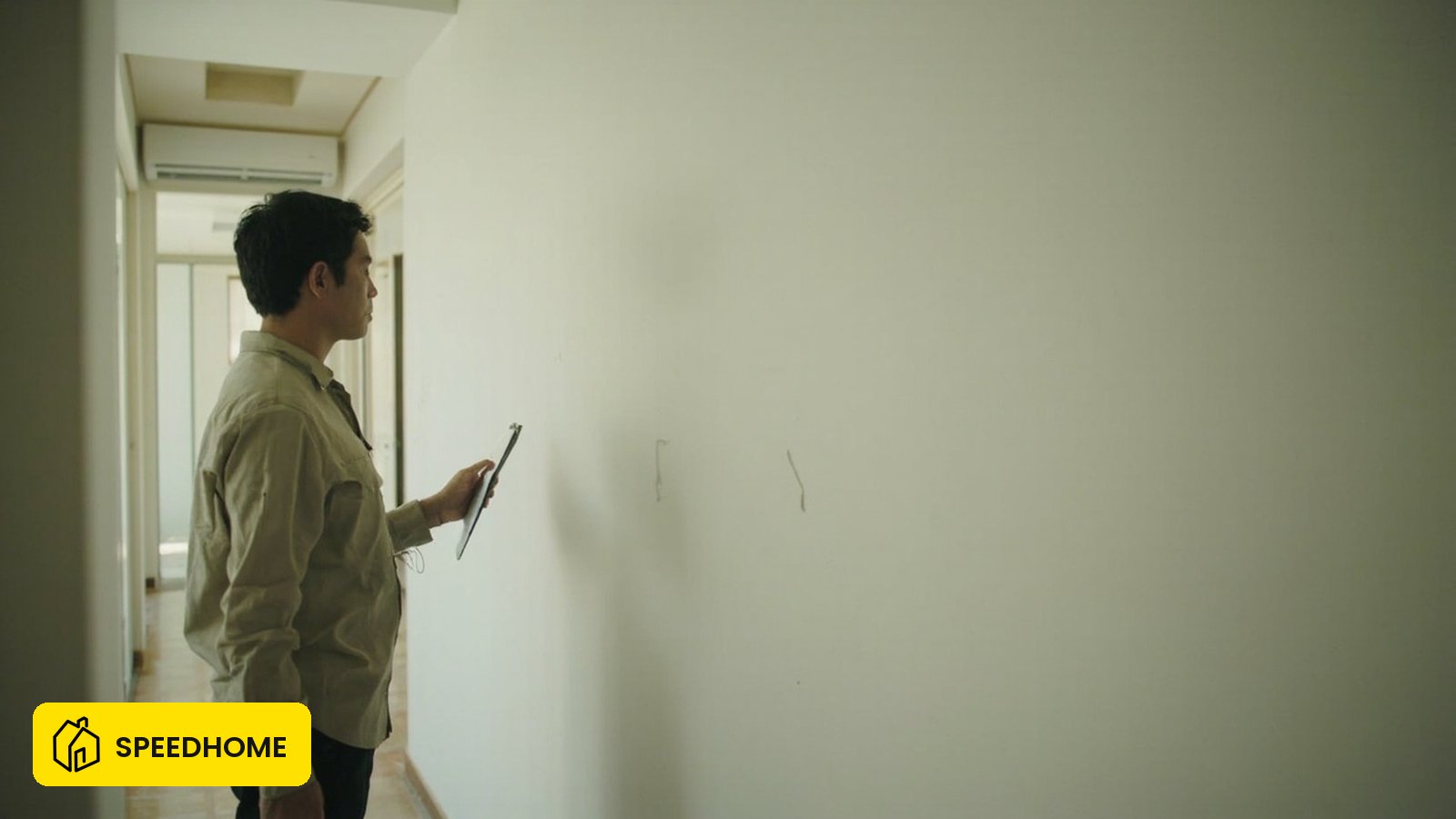
If you cannot see a mark or defect from 2 metres away, it is fair wear and tear — not claimable damage. This is the practical rule SPEEDHOME's Homerunner inspectors apply on every end-of-tenancy walkthrough. Normal light, standing distance, unaided eyes: if a flaw disappears at that distance, it does not meet the threshold for a damage claim.
Why 2 metres? It mirrors the distance at which a prospective tenant, or a Tenancy Tribunal adjudicator, first assesses a unit. Courts and dispute panels apply a reasonableness standard — and what a reasonable person cannot see standing in the room is not material deterioration.
What Is Claimable vs What Is Not
Damage is something the tenant caused beyond normal use. Wear and tear is what happens to any property over time regardless of how carefully it is used. Think of your rental protection plan like car insurance: it covers accidental damage and unexpected failures, not routine maintenance or age-related decline.
| Item | Claimable? | Category |
|---|---|---|
| Dirty kitchen / greasy rangehood | Yes | Inconvenience Benefit (cleaning) |
| AC chemical wash needed | No | Routine maintenance (landlord cost) |
| AC not cooling — no visible damage | No | Mechanical failure or warranty |
| Torn sofa armrest | Yes (repair cost) | Household Content |
| Broken wall-mounted cabinet door | Yes | Inconvenience Benefit |
| Yellowing paint on a 3-year+ tenancy | No | Normal wear and tear |
| Hole in wall from a picture hook | Yes | Inconvenience Benefit |
| Stolen appliance | Yes (depreciated value) | Theft — police report required |
| Minor scuff marks below knee height | No | Fair wear and tear |
| Cracked tile caused by dropped heavy object | Yes | Household Content |
| Mould from poor ventilation (no tenant fault) | No | Structural/maintenance issue |
The key dividing line: did the tenant cause it, or would any tenant have caused it? A sofa armrest torn by misuse is damage. A sofa armrest worn smooth after four years of sitting is wear and tear. If the unit was already showing age before the tenant moved in and you have no move-in photo proving otherwise, you have no claim.
Depreciation Applies to Everything
If a tenant breaks an item, the claim is for its current market value — not its replacement cost. A five-year-old refrigerator is worth a fraction of a new one. A ten-year-old washing machine that fails has near-zero claim value. Homerunner estimates depreciation at approximately 80% accuracy; final assessments may vary.
This surprises many landlords. Depreciation is not optional — it is how a reasonable valuation works. Demanding new-for-old replacement is one of the fastest ways to have a claim rejected or a tribunal rule against you.
General depreciation benchmarks (verify current market values; these are indicative only):
| Item type | Useful life (indicative) | Depreciation approach |
|---|---|---|
| White goods (fridge, washer) | 8–12 years | Current second-hand market price at the appliance's age |
| Air conditioner (split unit) | 8–10 years | Prorated market value; chemical wash is maintenance, not depreciation |
| Furniture (sofa, bed frame) | 5–8 years | Repair or replacement at aged market value |
| Flooring / tiles | 15–20 years | Damage patch only; do not claim full room reflooring |
| Paint | 3–5 years | Yellowing on a long tenancy is not claimable; re-painting is a landlord lifecycle cost |
There is no published statutory depreciation schedule for rental items in Malaysia. The above are operational estimates used by Homerunner and consistent with how Tenancy Tribunal claims are typically assessed. For high-value items, get a written valuation.
The Six Most Common Landlord Mistakes
Most failed damage claims come down to one of six predictable errors — all avoidable before the tenancy ends.
- Claiming AC chemical wash as damage. It is routine maintenance. The landlord bears this cost.
- Demanding new-for-old replacement. Depreciation applies. Claiming replacement cost for an old item invites rejection.
- Claiming yellowing paint on long tenancies. Paint yellows and fades. After three or more years this is expected; it is not the tenant's liability.
- Conflating cleanliness with damage. A dirty unit is not a damaged unit. Use the Inconvenience Benefit (cleaning restoration) for cleanliness issues, not a damage claim.
- No move-in inventory and no photos. Without dated move-in evidence, you cannot prove the condition at handover. No photos = no claim.
- Repairing before documenting at move-out. The moment you clean, paint, or fix something before photographing, you destroy your own evidence.
How to Build an Unbeatable Damage Claim
An airtight claim rests on two dated photo sets and a clear separation of damage, cleanliness, and maintenance.
- Photograph every room at move-in with date stamps. Use your phone's camera — the metadata records the date automatically. Store photos in a cloud folder you can retrieve instantly.
- Apply the 2-metre rule at move-out. Walk the unit at normal standing distance. Only flag defects visible without crouching or using a torch.
- Photograph all damage before any cleaning or repair. Do this the day the tenant hands back the keys.
- Separate into three lists: damage (tenant-caused, claimable), cleanliness (Inconvenience Benefit), and maintenance (landlord's scheduled cost). Never mix them in a single claim — it undermines the credibility of the whole submission.
- Get contractor quotes that itemise labour and materials separately. A bundled quote of "RM500 to fix everything" carries less weight than a line-item breakdown.
A professional Homerunner end-of-tenancy inspection removes the subjectivity from this process. The written report documents the unit's condition against the 2-metre framework, correctly categorises each finding, and provides a repair estimate your insurer or protection plan assessor can use directly. Based on SPEEDHOME platform records, the inspection typically costs RM200–400 and is usually recovered from one successful claim.
After your claim is settled, use SPEEDFIX to restore your unit with vetted contractors who work within the wear and tear framework — so you are not re-litigating the same dispute on your next tenancy. When you are ready to re-list, find a tenant on SPEEDHOME with verified ID and background screening built into the process.
What Happens If You Cannot Agree With Your Tenant
If both sides dispute the deduction, the Tribunal for Consumer Claims Malaysia (Tribunal Tuntutan Pengguna Malaysia) or, for a money claim below RM5,000, the Small Claims Court can adjudicate. Self-help remedies — such as removing a tenant's belongings or disconnecting water or electricity to force them out — are unlawful under the Specific Relief Act 1950 and the Distress Act 1951. Pursuing them exposes the landlord to criminal liability, not just a civil counterclaim.
The practical protection against a dispute is documentation, not confrontation: a dated move-in inventory, clear tenancy agreement terms on damage liability and depreciation, and a neutral third-party inspection report at move-out. Tenants with a strong move-in evidence pack often win disputes purely because the landlord cannot prove the pre-tenancy baseline. For a full breakdown of which deductions are lawful, see our guide on when a landlord can keep the deposit.
SPEEDHOME's managed rental process includes a standardised move-in / move-out inspection framework through Homerunner that has resolved hundreds of post-tenancy disputes without going to a tribunal. If you want a similar level of protection for your existing tenancy, browse landlord resources for options.
FAQ
Can a landlord deduct from the deposit for dirty walls in Malaysia?
Not as a damage claim. Dirty walls are a cleanliness issue — they are claimable under Inconvenience Benefit (cleaning restoration cost), not as property damage. If the walls are also structurally stained or defaced beyond cleaning, that portion may be claimable separately. Keep the categories distinct in your claim submission.
Who pays for AC servicing when a tenant moves out?
The landlord pays for routine servicing. If the AC needs a chemical wash at move-out, that is a maintenance cost — not the tenant's liability. If the tenant visibly damaged the unit (bent fins, cracked casing, missing remote), that specific damage is claimable. A non-functioning AC with no visible damage is a mechanical or warranty issue, not a tenant claim.
Can I claim full replacement cost if a tenant breaks a 5-year-old appliance?
No. Depreciation applies. The claim is at the current market value of a five-year-old unit — typically 60–80% less than the new price. Demanding new-for-old is the most common reason damage claims are rejected. Get a second-hand market valuation if the item is high-value.
What proof do I need for a damage claim in Malaysia?
You need: (1) move-in photos with date stamps showing the item was undamaged at handover; (2) move-out photos showing the damage before any repair; (3) a third-party inspection report if the claim is contested; and (4) contractor quotes or invoices itemising labour and materials separately. Without move-in photos, you cannot establish the pre-tenancy baseline — which means no claim.
Is yellowing paint claimable as damage?
No, if the tenancy lasted three or more years. Paint yellows and fades as a normal consequence of time and use. Repainting is a landlord lifecycle cost. If the paint has been deliberately defaced or stained beyond normal yellowing, that specific portion may be claimable — but you need move-in photos showing it was not already in that condition.
Does SPEEDHOME's rental protection plan cover all damage claims?
The plan covers legitimate tenant-caused damage as defined by the SPEEDHOME framework — not every unit qualifies, and coverage is subject to the terms of your specific arrangement. Routine maintenance, wear and tear, and mechanical failures are outside scope. Check your active plan terms or contact SPEEDHOME directly to confirm what your arrangement covers.