
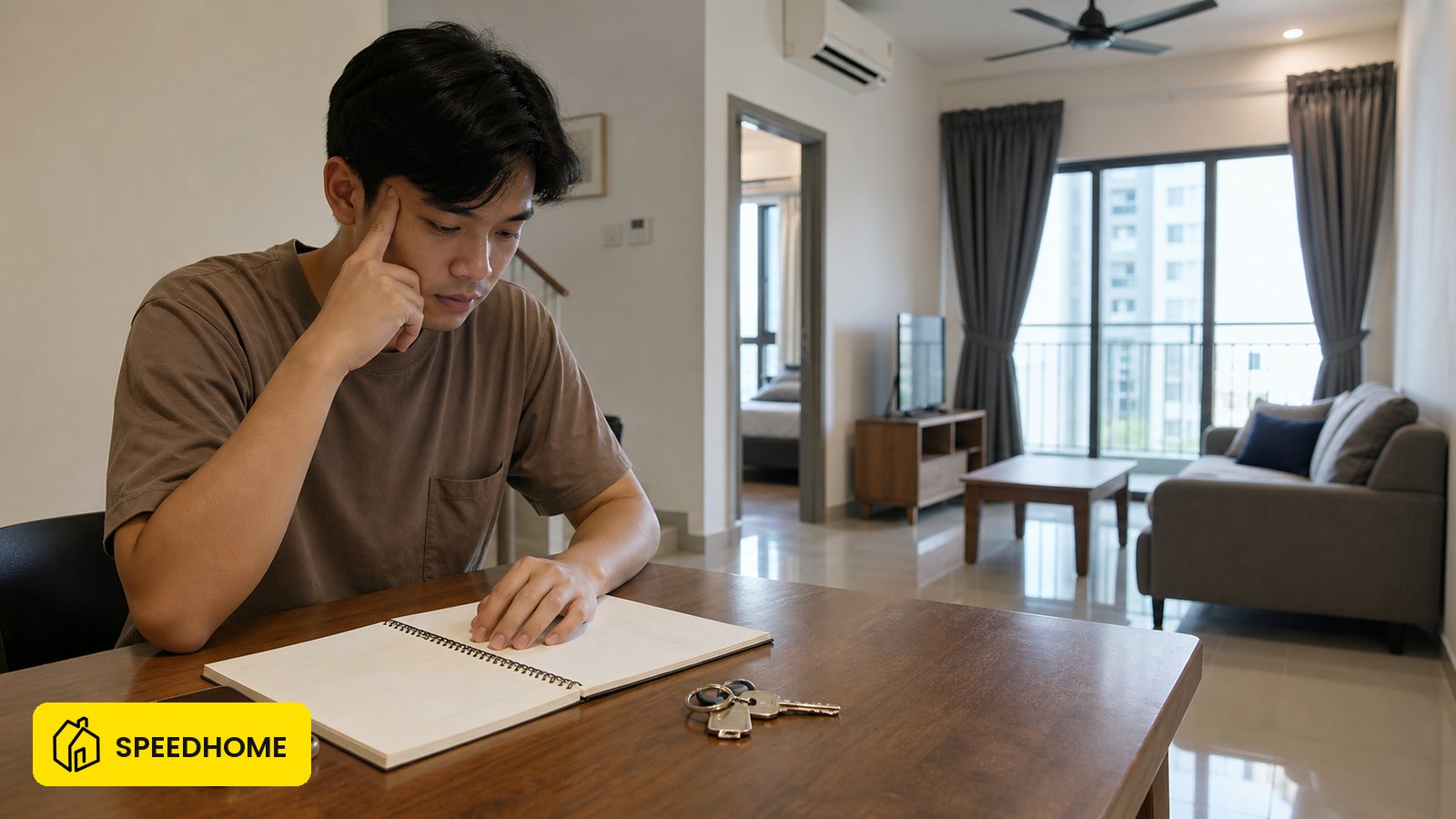
What expenses should you expect when renting in Malaysia?
A typical Malaysian tenant budgets for: monthly rent, security deposit (usually 2 months), utility deposit, TNB electricity, Syabas/Air Selangor water, wi-fi, parking, and groceries. Move-in costs can total 3–4 months of rent before you pay your first bill. Getting these numbers right before you sign prevents the most common first-rental shock.
Use this breakdown to build your budget. If you want to work backwards from your take-home pay, calculate how much rent you can afford first, then return here for the line-by-line checklist.
Upfront Move-In Expense Breakdown and Deposits
Moving into a rental property in Malaysia requires budgeting for substantial upfront expenses. A conventional rental structure typically mandates paying monthly rent, a security deposit equivalent to 2 months of rent, and an additional utility deposit, which can bring total move-in costs to 3 to 4 months of rent before the first utility bill arrives.
Beyond initial lump sums, tenants must account for recurring household utilities and operational expenses. Essential monthly commitments include TNB electricity, Syabas/Air Selangor water bills, home wi-fi subscriptions, designated parking charges, and routine grocery expenses.
Establishing accurate cashflow estimates before executing a tenancy agreement protects renters from unexpected financial strain. Calculating total upfront commitments against your take-home pay ensures all moving-in liabilities remain affordable.
What does renting cost each month?
Your biggest fixed cost is rent. Everything else — utilities, wi-fi, parking, food — stacks on top. Most tenants find their true monthly spend runs 30–40% above the headline rent figure.
Here is a realistic range for a typical furnished apartment or condo in greater Kuala Lumpur. Amounts vary by location, unit size, and lifestyle.
2026 snapshot — record current as of 2026-10:
| Expense | Typical monthly range | Notes |
|---|---|---|
| Rent | RM 900 – RM 3,500+ | Depends on area, size, furnishing |
| TNB electricity | RM 80 – RM 300 | Higher with air-con running daily |
| Water | RM 10 – RM 50 | Usually low for a single unit |
| Wi-fi (fixed broadband) | RM 70 – RM 200 | 100–500 Mbps plans; confirm building eligibility |
| Parking | RM 0 – RM 150 | Many condos allocate one bay; extras are charged |
| Groceries | RM 300 – RM 700 | Varies by cooking habits and market vs supermarket |
| Fuel / road tax / insurance | RM 200 – RM 500+ | Only if you own a car or motorcycle |
| Gym membership | RM 0 – RM 200 | Free if building has a gym; external gyms vary widely |
| Renter's contents insurance | RM 10 – RM 50 | Optional but covers personal belongings against fire or flood damage |
Electricity is the most variable cost. If you run two air-cons for eight or more hours daily, your TNB bill can jump significantly. Ask your landlord for the last 3 months of TNB bills before you sign — that is the most accurate guide to what you will actually pay.
What upfront costs do you need on move-in day?
| Upfront item | Standard amount | When paid |
|---|---|---|
| Security deposit | 2 months' rent | On or before signing |
| Utility deposit | 1 month's rent | On or before signing |
| First month's rent | 1 month's rent | On or before signing |
| Stamp duty on the tenancy agreement | Varies by rent and term | Within 30 days of signing |
| Moving costs | RM 300 – RM 2,000+ | On moving day |
| Initial grocery / cleaning supplies run | RM 100 – RM 300 | First week |
Deposits are not set by statute — landlords may ask for different amounts, but two months' security plus one month's utility is the market norm in Peninsular Malaysia. The security deposit must be returned (minus deductions for genuine damage) at the end of the tenancy. For a full breakdown of what landlords can and cannot deduct, see hidden costs of renting in Malaysia.
If upfront cash is tight, some SPEEDHOME listings offer Zero Deposit — a managed rental-risk system that replaces the cash security deposit with a smaller programme fee. Not every unit qualifies; check live listings to confirm Zero Deposit eligibility for a specific property.
How do you set up utilities when moving in?
Check these items before or on handover day:
- TNB electricity — the landlord should transfer the account to you, or you register a new account at myTNB.com.my. You will need your IC, the tenancy agreement, and the meter number.
- Water (Syabas / Air Selangor) — similar process. Some buildings include water in the maintenance fee; confirm in writing.
- Wi-fi — not all buildings support every ISP. Check provider coverage before choosing a plan. Standard plan costs run RM 70–200 per month.
- Gas — most modern condos use electric cooking; standalone houses may have bottled gas (Petronas or independent suppliers, RM 20–30 per cylinder).
For a step-by-step TNB account transfer guide, see how to transfer a TNB account to a tenant.
What other monthly costs catch new tenants off guard?
Parking: if you have a car or motorcycle, confirm with the landlord whether a bay is included. Some condos charge RM 50–150 per month for a second bay. Street parking outside the development may be free or metered.
Groceries: set a monthly limit before you start spending — awareness alone significantly reduces overspend. Markets and neighbourhood shops often cost less than large supermarkets for staples.
Minor repairs: most tenancy agreements assign small repairs (lightbulbs, tap washers, broken latches) to the tenant. Budget RM 50–100 per month on average for upkeep.
Contents insurance: renters insurance in Malaysia is not compulsory but covers personal belongings against fire, flood, and theft at relatively low cost. It is not a financial guarantee product and coverage terms vary by insurer — read the policy document before buying.
FAQ
How much of my salary should go to rent?
A common rule of thumb is to keep rent below 30% of your take-home (net) pay. In Kuala Lumpur that is harder on lower incomes. If rent plus utilities exceeds 40% of net pay, review whether the location justifies the cost or whether a shared unit is more practical. Read the rent affordability guide for Malaysia for a worked example.
Who pays the electricity bill - the tenant or the landlord?
In almost all private residential rentals, the tenant pays for electricity consumption directly to TNB. The tenancy agreement should confirm this. If the landlord pays TNB and recharges you, the surcharge must not exceed the actual TNB tariff — anything above the official rate is technically a breach of the Electricity Supply Act.
Can I negotiate the deposit amount?
Yes. Deposits are not fixed by law in Malaysia. Most landlords start at two months' security plus one utility month, but you can negotiate — especially if you have stable employment, references, or are willing to pay a longer advance rent. Alternatively, ask about Zero Deposit eligibility on SPEEDHOME.
Who pays the stamp duty on the tenancy agreement?
Stamp duty is typically split or paid by the tenant in Malaysia, though this is negotiable. The duty is calculated on the annual rent and the tenancy term and must be paid to LHDN within 30 days of signing. Unstamped agreements are still valid between parties but cannot be used as evidence in court.
What is the cheapest legitimate way to reduce move-in costs?
Zero Deposit programmes (where the property qualifies) reduce the upfront cash outlay significantly. Beyond that: negotiate the deposit and the first month's rent timing; use a furnished unit to avoid furniture outlay; and source cleaning supplies from local budget stores rather than supermarkets. Avoid landlords who ask for more than three months upfront — that is unusual and worth querying.