
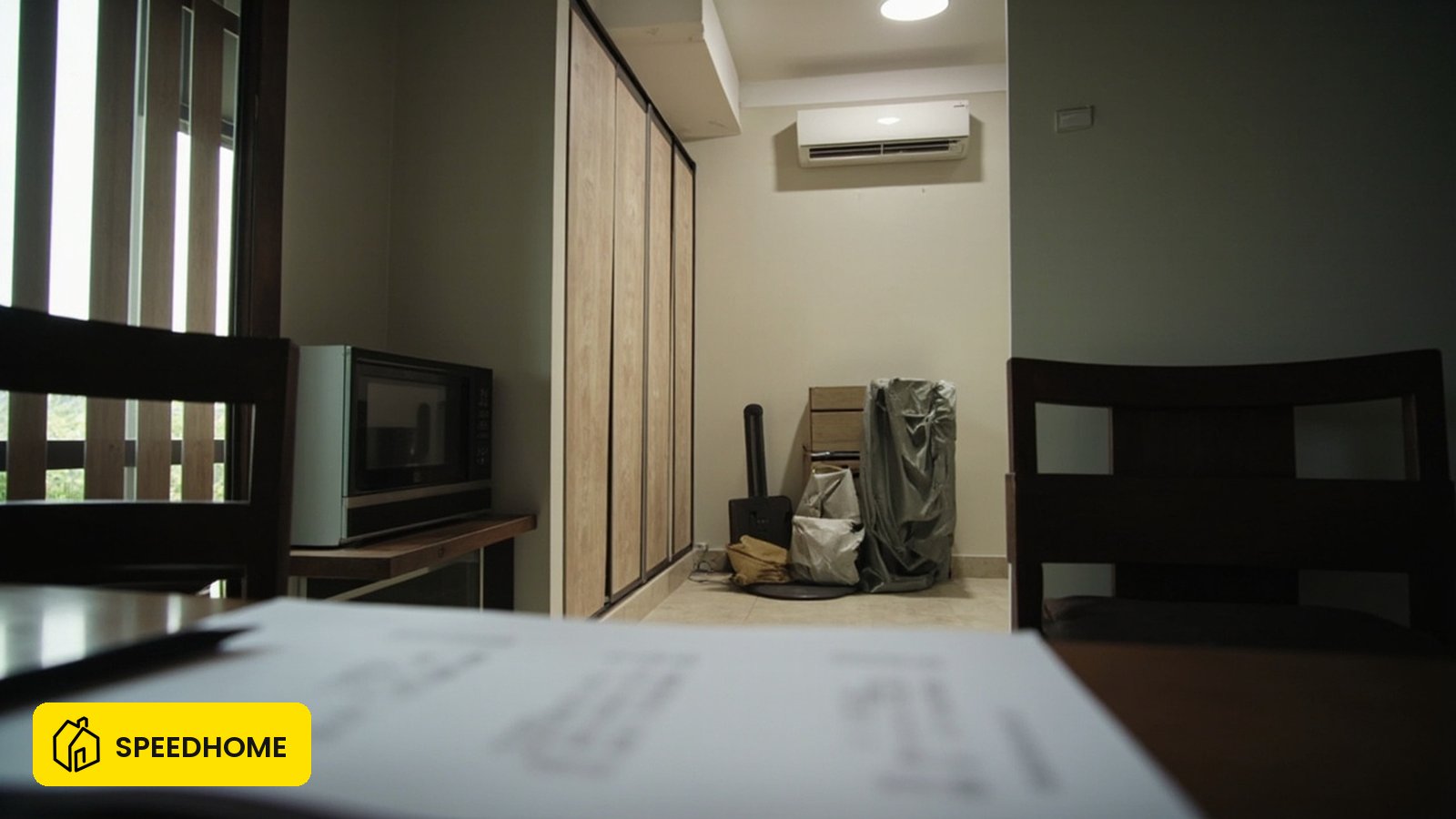
What is the difference between a fixture and a fitting in a tenancy agreement?
A fixture is attached to the property and becomes part of it, so it stays when the tenant moves out; a fitting is a loose, removable item that belongs to whoever brought it and goes with the tenant. The Malaysian test is purpose and degree of annexation — not who paid for it.
This single distinction drives most end-of-tenancy disputes over what a tenant may take and what a landlord may charge for. Malaysia has no Residential Tenancy Act in force as of 2026, so the line is set by the tenancy agreement and general contract law (Contracts Act 1950), not by a dedicated statute. Because the deposit itself has no statutory cap, the inventory record — not a legal rule — is what usually decides whether a deduction survives a challenge.
The detail: how the fixture-vs-fitting test actually works
The working test is: can the item be removed without damaging the property, and was it put there to improve the property permanently or just to use it? An item fixed so that removing it causes damage, or installed to serve the building itself, is a fixture. An item that just rests in place, or is fixed only so it can be used, is a fitting.
Two questions settle almost every case:
- Degree of annexation — how fixed is it? A built-in wardrobe screwed to the wall and the floor is a fixture; a freestanding IKEA unit you slid into an alcove is a fitting. A wall-mounted bracket left behind is a fixture; the TV that hung on it is a fitting.
- Purpose of annexation — why was it fixed? Curtain rails fixed to serve the room are fixtures; the curtains themselves are fittings. A fitted kitchen unit is a fixture; a microwave that sat on the counter is a fitting.
The trap is the grey middle: items tenants installed themselves. As a rule, a tenant who fixes something to the building (shelves bolted to a wall, a mounted mirror, a swap of light fittings) has added a fixture — and generally cannot take it with them, nor rip it out and leave the damage, unless the agreement says otherwise. A tenant who simply placed an item (a freestanding bookshelf, a rug, a portable aircond unit) owns a fitting and takes it.
The agreement overrides the general rule every time. If the TA defines "furniture and fittings" by list or schedule, that inventory list — not the common-law test — controls what stays and what goes. On SPEEDHOME-managed tenancies the signed inventory schedule is the document both parties rely on at move-out.
Common disputed items: does it stay or go?
Most disputes cluster on the same ten items. The table below is the practical starting point, but the signed inventory always wins over the general rule.
| Item | Usually a fixture (stays) or fitting (goes) | Why it is disputed |
|---|---|---|
| Built-in wardrobe / kitchen cabinets | Fixture — stays | Attached to wall/floor; removing damages the unit |
| Freestanding sofa, dining table, bed | Fitting — goes with owner | Loose; belongs to whoever furnished the unit |
| Wall-mounted TV bracket | Fixture — stays | Bolted to wall; tenant takes the TV, not the bracket |
| Air conditioner (split unit) | Fixture — stays | Permanent install; tenant who added it cannot reclaim it freely |
| Portable / window aircond unit | Fitting — goes | Plug-in; removable without damage |
| Curtains and blinds | Curtains usually fitting; blinds and tracks often fixture | Tracks/rails are fixed; the fabric is not |
| Light fittings and ceiling fans | Fixture — stays | Wired in; tenant-owned swap usually stays put |
| Washing machine, refrigerator, microwave | Fitting — goes | Plug-in appliances, not built-in |
| Mirrors / shelves the tenant bolted on | Fixture — stays, damage is tenant's cost | Tenant-installed; removal damages wall |
| Smart lock / door hardware | Fixture — stays | Part of the door; original hardware must be restored |
The pattern: if it is wired, plumbed, bolted, or screwed into the structure, expect it to stay. If it plugs in, sits, or hangs loose, expect it to go.
Why the inventory decides deposit deductions, not the label
Calling an item a "fixture" only matters at move-out if someone can prove what was there at move-in. Without a dated inventory and photos, the fixture-vs-fitting line collapses into a he-said-she-said deduction.
A landlord's right to retain deposit for a missing or damaged fixture is limited to proven loss under general contract law (Contracts Act 1950 s.74) — there is no statutory deposit cap. That means the burden is on whichever party is making the claim:
- A landlord claiming a tenant took a fixture (e.g. removed a ceiling fan) must show it was present at move-in and is gone at move-out, with the replacement cost documented.
- A tenant claiming a fitting is theirs (e.g. the washing machine they bought) must show they brought it — ideally on the signed inventory or a purchase receipt.
The items most often wrongly deducted for are exactly the grey ones: curtain rails left bare, brackets whose TV was taken, and tenant-installed shelves removed with the wall left damaged. For the full move-out evidence routine — joint inspection, signed checklist, timestamped photos — see the move-in and move-out checklist for Malaysian tenancies. For the lawful grounds a landlord can deduct on, see the lawful reasons a landlord can deduct from a deposit, and for how normal wear is treated separately from damage, see how wear and tear interacts with damage under the Contracts Act 1950.
The SPEEDHOME angle: lock the inventory at signing, not at move-out
On SPEEDHOME's managed platform the inventory schedule is captured at signing — furnished items, fixtures present, and any tenant-supplied fittings — so the fixture-vs-fitting argument is settled before it can start. Most move-out deposit friction traces to a missing or ambiguous inventory, not a real disagreement about the law. Pinning the list (with photos) into the tenancy pack at move-in is what actually prevents a fixture from being wrongly charged or wrongly removed.
For tenants, this also means you can see exactly what is part of the unit before you sign, and you can browse SPEEDHOME rentals with the furnished state stated per listing. For landlords, the same inventory schedule is what makes any deposit deduction defensible later.
Frequently asked questions about fixtures and fittings in a Malaysian tenancy
Can a tenant take a fitting they installed themselves, like a shelf they bolted to the wall? Usually no, if removing it damages the wall. A tenant-installed item fixed to the structure becomes a fixture; the tenant cannot reclaim it freely nor rip it out and leave holes. Either leave it, or remove it and make good the damage at your own cost — check your agreement first, as some let you take it if you restore the surface.
Who owns the air conditioner — landlord or tenant? A permanently installed split unit is a fixture and stays with the property, regardless of who paid for it. A portable or window unit that simply plugs in is a fitting and goes with its owner. The signed inventory should record which type is present and who supplied it.
Can a landlord deduct from the deposit because a fitting is missing? Only if the agreement or inventory listed that item as part of the let. A landlord must prove the item was there at move-in (photos or a signed inventory) and is gone at move-out, with a documented replacement cost. Without that evidence, the deduction is not defensible under general contract law.
What is the difference between fair wear and tear and a damaged fixture? Fair wear and tear — faded paint, minor scuffs from normal use — is expected and is not deductible. Damage to a fixture (a cracked built-in counter, a smashed mirror, burn marks) is deductible if documented with move-in and move-out photos and a repair quote.
Does a fully furnished tenancy mean everything is a fixture? No. "Fully furnished" describes what is provided, not its legal status. The supplied sofas, fridge, and beds are still fittings (loose items) that belong to the landlord; they stay for the tenant's use but are not part of the building. The signed furniture and fittings schedule, not the label "fully furnished", is what lists them.
If the agreement has a furniture list, does that override the fixture-vs-fitting test? Yes. Where the tenancy agreement defines what stays and goes by a written inventory or schedule, that list controls. The common-law test fills the gaps for anything the list does not cover — so an accurate, complete inventory is the single best protection for both parties.