
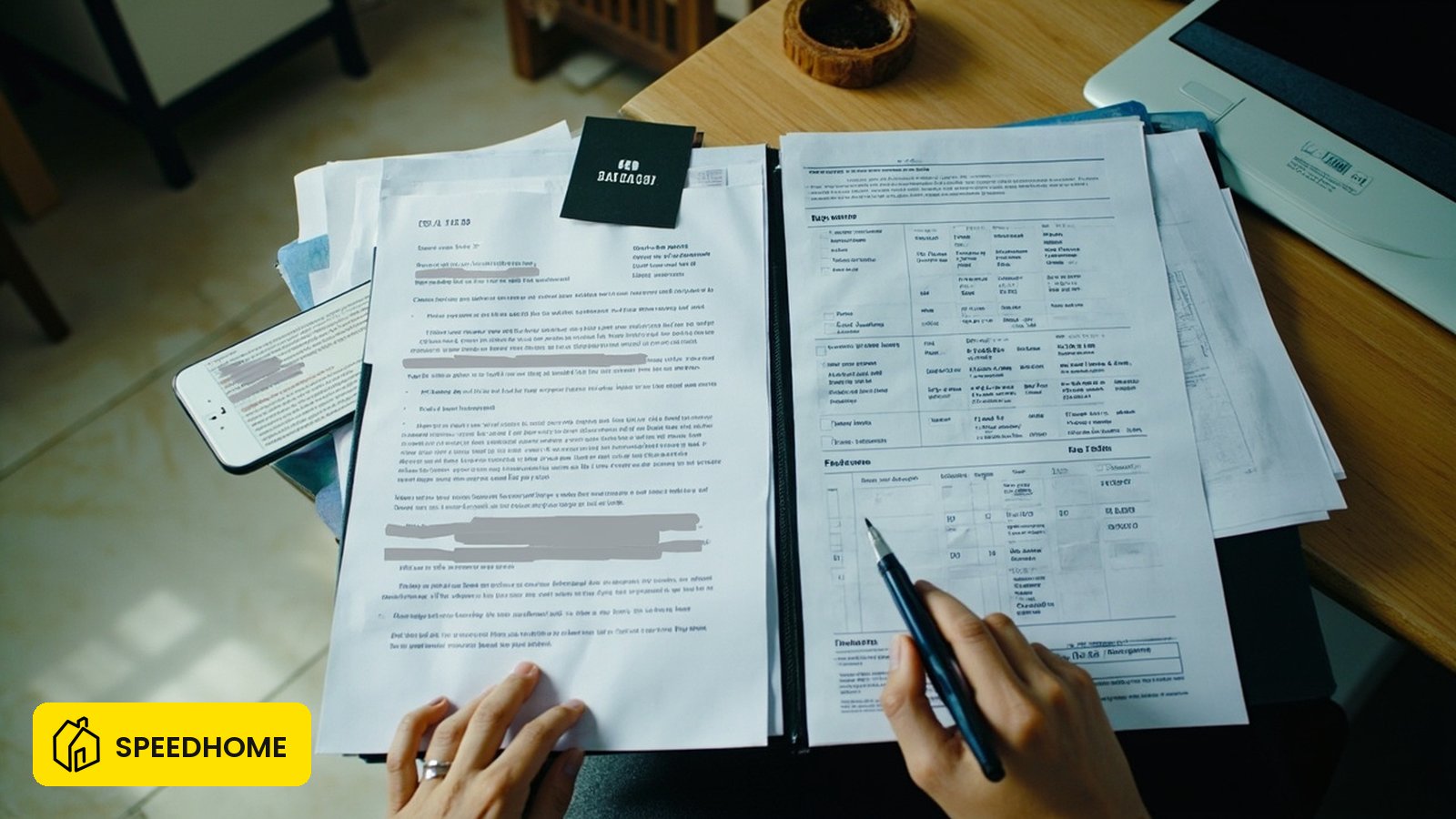
What is the 7/14/30-day action plan when a tenant stops paying rent?
When a tenant stops paying rent in Malaysia, the lawful landlord action plan runs in three windows: day 1–7 send a written demand, day 7–14 serve a formal breach/cure notice referencing the tenancy agreement, day 14–30 assemble the evidence file and start court action if payment and possession are still refused. SPEEDHOME's landlord operations data shows the average time from a tenant's first rental default to recovery action is about 31 days on its managed platform — because the evidence file, payment ledger, and escalation workflow already exist instead of being built in a crisis.
What is the lawful Malaysian process for recovering possession?
A landlord cannot lawfully recover possession by self-help. The lawful route is a written demand, then court action — a Writ of Possession to recover the unit and/or a Writ of Distress to recover arrears — enforced by the court bailiff. Locking the tenant out, removing doors, or disconnecting water or electricity is unlawful.
This is the spine every action-plan window hangs on. Under the Specific Relief Act 1950 s.7(2), recovery of possession after a tenancy ends must go through the courts. Self-help — whether that is a lockout, a utility cut, or removing the tenant's belongings — is barred regardless of how much rent is owed or how badly the tenant has behaved. The 7/14/30-day plan below is the lawful way to build the file that makes court action possible and fast.
For the deeper legal background on the statutory bar and the court route, see the companion guide on tenant not paying rent in Malaysia, and the landlord rights overview in the broader landlord guide for Malaysia.
Day 1–7: The written demand when a tenant stops paying
Send a clear written demand — WhatsApp, email, or letter — that states the exact amount owed, the due date, a payment deadline (7 days is common), and your payment details. Keep a screenshot or copy. Do not threaten to lock the tenant out or to disconnect water or electricity; both are unlawful and can be used against you later.
The day 1–7 window is about creating a dated paper trail, not escalation. A tenant who is one or two days late is often a cashflow problem, not a default. The written demand separates the two.
What the first message should contain:
- The exact rent amount owed and the date it was due
- A clear payment deadline (7 days is common practice in Malaysia)
- Your preferred payment method and account details
- A neutral reference to the tenancy agreement as the document that governs the next steps
- No threat of self-help — keep it factual
If the tenant pays within 7 days, keep the receipt and note the date on your ledger. The default has been cured. If they do not pay, or pay only part, you move into the 7–14 day window.
One practical note from operator experience: the landlords who recover fastest are the ones who treat the first demand as a formal record, not an emotional one. A calm, dated, specific message is the document a court or lawyer will later rely on. An angry one — especially one that mentions locking the tenant out — is the document the tenant's lawyer will rely on.
Day 7–14: The formal breach or cure notice
Between day 7 and day 14, serve a formal written notice of breach that cites the specific tenancy agreement clause breached, sets a cure deadline, and states that failure to cure may lead to termination and court action. Check your tenancy agreement's termination clause — most require written notice of 14–30 days before you may terminate for non-payment.
This is the window where the demand becomes a legal precondition. Most Malaysian tenancy agreements contain a termination-for-breach clause that requires written notice and a cure period. If your agreement specifies a notice period, use that exact period; if it is silent, a "reasonable" period applies and 14–28 days is the common range. Do not invent a shorter period than the agreement allows — a notice that does not match the clause can be challenged and will slow you down.
The day 7–14 notice should:
- Reference the clause in the tenancy agreement that the non-payment breaches
- State the total amount now outstanding (rent plus any agreed late charge)
- Set a final cure deadline matching your agreement's cure period
- State plainly that if the amount is not cured, you intend to terminate the tenancy and pursue recovery through the courts
- Be sent by a method that creates proof of delivery (email with read receipt, WhatsApp with delivery confirmation, or a delivered letter)
Gather the evidence as you go: the signed and stamped tenancy agreement, a dated rent ledger showing each missed month, bank statements proving non-receipt, and copies of every notice sent. This is the file a lawyer will ask for the moment you instruct one, and the file a court will expect if the matter proceeds.
Day 14–30: Evidence, decision, and court action
By day 14–30 you should have a complete evidence file and a decision: negotiate a payment plan, apply the deposit only to proven loss, or instruct a lawyer to file court action. If you elect to go to court, the route is a Writ of Possession (recover the unit) and/or a Writ of Distress (recover arrears), enforced by the court bailiff — never by you personally.
This is the window where the action plan turns from paper trail to legal process. Three realistic outcomes sit in front of you, and the right one depends on the tenant's response and the amount at stake.
| Day window | Action | What it builds |
|---|---|---|
| Day 1–7 | Written payment demand (WhatsApp / email / letter) with amount, due date, 7-day deadline | A dated paper trail; the tenant's response on record |
| Day 7–14 | Formal breach notice citing the TA clause and the cure period in that clause | The legal precondition for termination; required before court |
| Day 14–21 | Assemble the full evidence file: stamped TA, dated rent ledger, bank records, every notice sent | The court-ready file a lawyer needs on instruction |
| Day 21–30 | Decide and act: payment plan, deposit applied to proven loss only, or instruct a lawyer to file for a Writ of Possession and/or Writ of Distress | A deliberate, lawful decision rather than a reactive one |
| Day 30+ | Court action filed; bailiff enforces any order. Do not enter the unit or treat it as recovered before a court order, even if it appears empty | The lawful recovery route |
Malaysia has no dedicated residential tenancy tribunal, so there is no cheap "tribunal route" to skip the courts. Disputes go through the ordinary civil courts: the Magistrates' small-claims procedure for claims up to RM5,000 (no lawyer required, Order 93), the Magistrates' Court up to RM100,000, the Sessions Court from RM100,000 to RM1,000,000, and the High Court above that. The Sessions Court also has unlimited jurisdiction for landlord-and-tenant and distress (rent-recovery) actions. For the full court-tier breakdown and why a tenancy tribunal does not exist, see the guide on the tenancy tribunal question in Malaysia.
Which court route and what does it cost?
For the money owed, a Writ of Distress under the Distress Act 1951 recovers rent arrears (up to 12 months) by court-supervised seizure and sale — it does not terminate the tenancy or recover possession. To recover the unit itself you need a Writ of Possession. For smaller arrears only, the Magistrates' small-claims procedure (claims up to RM5,000) lets you file without a lawyer.
The two writs do different jobs and are often filed together. Choosing the wrong one, or trying to skip the courts entirely, is the most common mistake landlords make at day 30.
| Action | What it recovers | Lawyer required? | Indicative timeline |
|---|---|---|---|
| Letter of demand / 14-day cure notice | Nothing — it is the trigger | No (DIY) | Days |
| Magistrates' small-claims (Order 93) | A money judgment up to RM5,000 | No | Weeks to a few months |
| Writ of Distress (Distress Act 1951) | Rent arrears only, up to 12 months; does not end the tenancy or recover possession | Yes (court application) | Varies by court; not a fixed period |
| Writ of Possession (Specific Relief Act 1950 s.7(2)) | Possession of the unit, plus a separate claim for arrears/damages | Yes | Months; varies by court |
A specific RM cost figure for the writs is not asserted here because it varies by court, lawyer, and the facts of the case — verify the current filing and legal-fee schedule with a practising lawyer before you instruct one. Treat any single "it costs RM X" number you read elsewhere as indicative at best.
What you must not do — the shortcuts that backfire
You must not lock the tenant out, disconnect water or electricity, remove the tenant's belongings, or publish the tenant's name, IC, or photos. Each of these is either unlawful or exposes you to a damages claim, and each one weakens your position in court. The lawful alternative is always a document and a court order.
This block exists because the angry version of this search — "can I just lock the tenant out" or "can I disconnect the water" — is the single most common and most dangerous impulse at day 7. Every one of these moves either breaks the law outright or hands the tenant a counterclaim.
| The shortcut a stressed landlord reaches for | Why it backfires | The lawful alternative |
|---|---|---|
| Lock the tenant out | Unlawful under SRA 1950 s.7(2); exposes you to a damages claim and undermines your court case | Writ of Possession, enforced by the bailiff |
| Disconnect water or electricity | Unlawful self-help; can be cited against you even if framed as "the TA allows it" | Written demand → cure notice → Writ of Distress for the arrears |
| Remove the tenant's belongings | Unlawful; risk of a conversion claim and police report | Leave everything in place; recover via court order |
| Publish the tenant's IC, photo, or name in a group | Privacy and defamation exposure falls on you; the tenant can sue | Where consent exists in the TA, a verified default may be reported to a licensed credit reporting agency |
| Treat an "empty" unit as recovered | The tenant may return; entering without an order still carries legal risk | Document from the exterior, take legal advice, wait for the court order |
Can I keep the deposit and report the default?
You can apply the deposit only to proven loss — unpaid rent, utilities, or genuine damage — and only to the extent the tenancy agreement allows. A verified rental default can be reported to a licensed credit reporting agency only where the tenant consented to this in the tenancy agreement; you cannot lawfully publish the tenant's details.
Malaysia has no statutory residential rent-deposit cap. Deposits are governed by the tenancy agreement, and a landlord's right to retain is limited to actual, proven loss under general contract law. So if the arrears exceed the deposit held, the shortfall must be recovered through court action — you cannot retain more than the deposit amount, and you cannot inflate the deposit beyond what the agreement permits. Keep every deduction backed by the TA clause, the unpaid-rent ledger, utility bills in your name, and photos or quotes for any damage.
On reporting: publishing a tenant's name, IC, phone, or address — even in a landlord group or on unverified social-media listing channels — can create privacy and defamation exposure that falls on you, not the tenant. Where the tenant's written consent to credit reporting is already in the tenancy agreement, a verified default may be reported to a licensed credit reporting agency under the Credit Reporting Agencies Act 2010. Individual landlords generally cannot furnish a report directly; this is done through an appointed agent such as a platform operator. There is no lawful path to report a tenant to a credit agency with the tenant's consent outside that consent-based route.
What if the tenant overstays after the tenancy ends?
Under section 28(4)(a) of the Civil Law Act 1956, the landlord — not the tenant — may elect to charge double rent for any period a tenant remains in the unit after the tenancy end date. The landlord must actively claim it; it does not apply automatically.
This is one of the few landlord-friendly provisions worth knowing before day 30. If a tenant who owes arrears also refuses to vacate past the tenancy expiry, you can combine a Writ of Possession claim with a double-rent election for the holdover period. Note the mechanism: the right comes from the statute and applies whether or not the agreement contains a double-rent clause, but the landlord must clearly elect to claim it — it is not automatic, and it is not a substitute for the court order that actually recovers possession.
Worked example: the 30 days in practice
Picture a RM1,800/month unit where the tenant misses the 1st of the month. Day 3 the landlord sends a dated WhatsApp demand with a 7-day deadline. Day 10, no payment, so a formal breach notice citing the TA's termination clause goes out with the agreement's 14-day cure period. Day 24 the landlord instructs a lawyer with the stamped TA, ledger, and all notices in one file. The decision between a Writ of Distress (arrears) and a Writ of Possession (the unit) turns on whether the tenant is still inside.
The point of the worked example is that the 30 days are not 30 days of waiting. They are 30 days of building a file. The landlord who arrives at a lawyer's office on day 24 with a stamped agreement, a clean ledger, and three dated notices is the landlord whose matter moves. The landlord who arrives on day 60 with a WhatsApp argument and no paperwork is the landlord whose matter stalls.
On SPEEDHOME's managed platform this file is built into the service from day one — the rent ledger, the agreement, and the notice workflow live in one place — which is why the average time from a tenant's first rental default to recovery action is about 31 days rather than the longer, messier timeline a landlord assembling it under stress typically faces.
The SPEEDHOME layer: how managed recovery shortens the 30 days
The difference between a 30-day plan that works and one that drags is whether the evidence file exists before the default happens. SPEEDHOME's managed approach keeps the agreement, ledger, and escalation workflow in one place from the start, so recovery is a decision, not a scramble — and Zero Deposit is a managed rental-risk system, not a financial guarantee product, that replaces the upfront cash deposit.
This is the operator-data angle no portal can match. The competitor set on this query — iProperty, PropertyGuru, AskLegal, PEPS — all restate the same legal steps. None of them can tell you how long recovery actually takes in practice, because none of them run a rental platform. SPEEDHOME can: about 31 days from first default to recovery action on the managed platform. That number is the moat, and it exists because the paperwork is done in advance, not invented during a crisis.
If you are listing or managing through SPEEDHOME, the lawful layer — screening, a stamped tenancy agreement, a clean rent ledger, and a notice workflow — is already in place. Landlords can list with SPEEDHOME at the landlord product page. For the full non-payment legal options and the abandoned-unit scenario, see the deeper guide on what to do when a tenant is not paying rent in Malaysia, and for the rent-recovery writ specifically, the Writ of Distress explainer.
FAQ
Can I lock the tenant out if they have not paid for two months?
No. A landlord cannot lawfully recover possession by self-help. Locking the tenant out, removing doors, or disconnecting water or electricity is unlawful in Malaysia regardless of how much rent is owed. The lawful route is a written demand, then a Writ of Possession through the courts, enforced by the bailiff.
Does the 7/14/30-day plan mean eviction is done in 30 days?
No. The 7/14/30-day plan is the first 30 days — demand, cure notice, and assembling the court-ready file. Court action itself (a Writ of Possession or Writ of Distress) runs on the court's timeline, which varies and is not a fixed period. The 30 days are about being ready to file, not about being finished.
Is there a tenancy tribunal I can use instead of court?
No. Malaysia has no dedicated residential tenancy tribunal. Rent and deposit disputes go through the civil courts: the Magistrates' small-claims procedure for claims up to RM5,000 (no lawyer needed), the Magistrates' Court up to RM100,000, the Sessions Court above that. The Sessions Court also has unlimited jurisdiction for landlord-and-tenant and distress actions.
Can I keep the full deposit if the tenant owes two months' rent?
Only up to proven loss and only to the extent the tenancy agreement allows. Malaysia has no statutory deposit cap, but the right to retain is limited to actual, provable loss under general contract law. If the arrears exceed the deposit, the shortfall must be recovered through court action — you cannot retain more than the deposit amount held.
Can I report the non-paying tenant to a credit agency?
A verified rental default can be reported to a licensed credit reporting agency only where the tenant consented to this in the tenancy agreement. You cannot lawfully publish the tenant's name, IC, or photos, and the only lawful route is to report to a licensed credit agency with the tenant's consent. Individual landlords generally do not furnish reports directly; this is done through an appointed agent under the Credit Reporting Agencies Act 2010.
What is the minimum paper trail I need before going to court?
You need the signed and stamped tenancy agreement, a dated rent ledger showing each missed month, bank statements proving non-receipt, copies of every written demand and notice sent with proof of delivery, and the formal breach notice citing the TA clause. Without these, you cannot establish liability in court.
What if the tenant just disappears and leaves the unit empty?
Do not treat the unit as recovered just because it looks empty — the tenant may return, and entering without a court order still carries legal risk. Document the situation in writing, inspect from the exterior, and take legal advice before treating the unit as yours again. The lawful route is still a court order.