
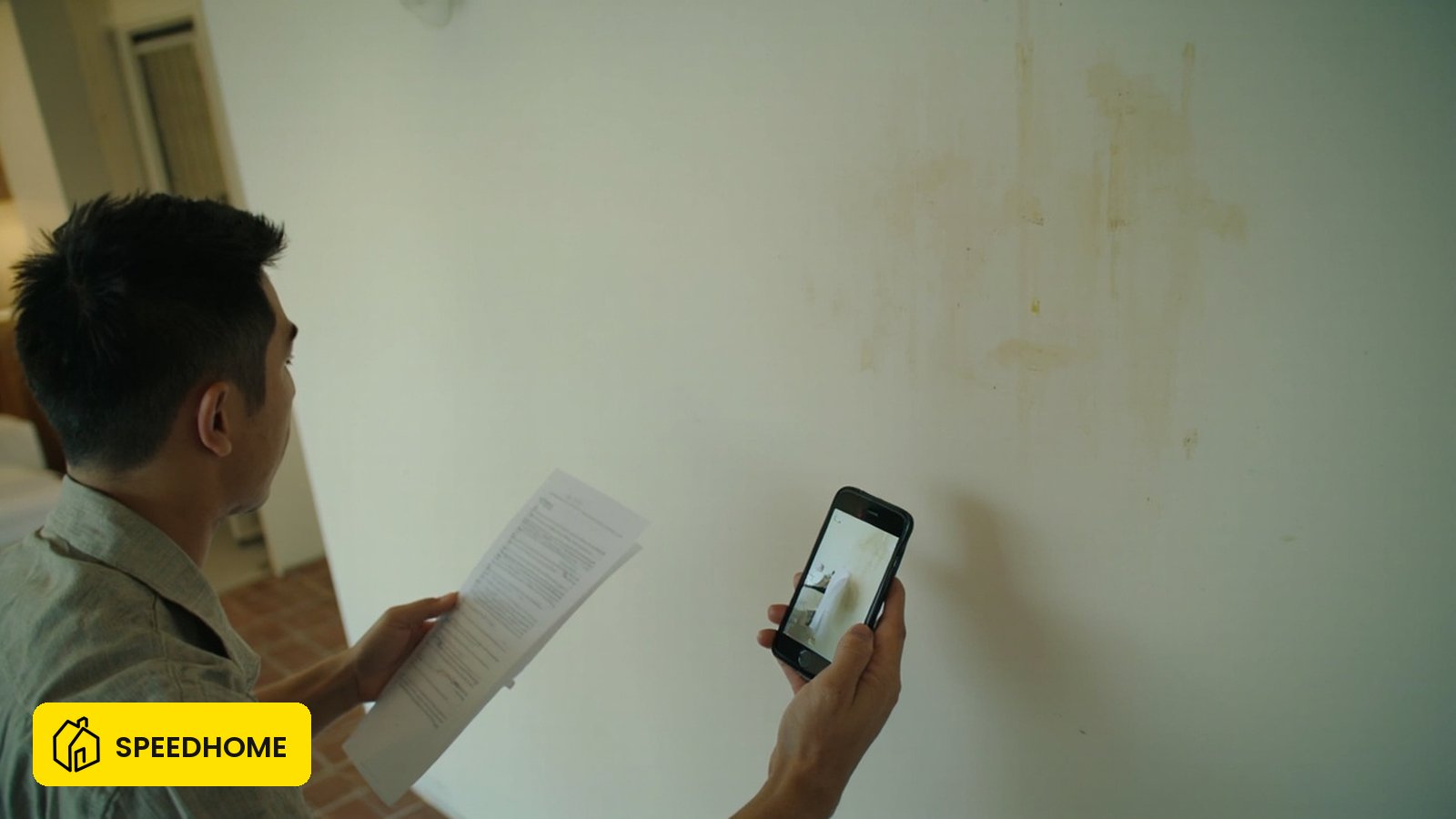
Regional note: The contract principles on this page apply to Peninsular Malaysia. As of 2026 Malaysia still has no Residential Tenancy Act in force, so residential tenancies are governed by the tenancy agreement together with general law (Contracts Act 1950, Civil Law Act 1956, Specific Relief Act 1950) and the ordinary courts — not by a dedicated tenancy statute. This is general information, not legal advice.
The dividing line is simple: fair wear and tear is the landlord's cost, damage is yours. Fair wear and tear is the gradual, expected ageing of a unit from someone living in it normally — carpet thinner along the hallway, paint faded where the sun hits, a door handle a little loose after a year. Damage is harm beyond normal living: a wine stain in the carpet, a tile cracked by a dropped weight, a hole punched in a door. The deciding factor is never memory — it is the dated move-in and move-out photo and inventory record. No record, no charge either way.
What counts as fair wear and tear, and what counts as damage?
Fair wear and tear is the unit getting older from normal living — the landlord's cost. Damage is harm from misuse, an accident, or neglect — your cost. The dated move-in and move-out record decides which is which.
Malaysia has no single rental law listing what is "wear" and what is "damage" — there is no government table to point at. Your liability comes from the tenancy agreement you signed, which defines how you must keep and return the unit. The agreement sets the duty; the condition record settles the argument. For the money side of returning a unit, see what comes out of the security deposit.
| Scenario | Wear and tear (landlord) or damage (you)? | Why |
|---|---|---|
| Curtains faded by the sun over a year | Wear and tear — landlord | Sun fading is normal ageing; nobody misused anything |
| Cigarette smell or burn marks after smoking inside | Damage — you | Smoke damage and burns come from misuse, usually against a no-smoking term |
| Wooden floor coating stripped by pet urine | Damage — you | Urine eating the finish is neglect, not normal use |
| Window broken in a storm | Wear and tear — landlord | An act of nature with no tenant fault is the landlord's cost |
| Mould from you blocking ventilation | Damage — you | Mould from sealing vents or never airing the unit is neglect |
| Carpet worn thin along a walkway | Wear and tear — landlord | Walking on a carpet is exactly what it is for; thinning is expected |
| Tile cracked by dropping something heavy | Damage — you | A one-off accident that breaks a fitting is your cost |
| Walls scuffed by furniture along the skirting | Usually wear and tear — landlord | Light scuffs from normal furniture placement are expected ageing |
The line through the whole table: ask "did this happen just from living here, or from misuse, an accident, or neglect?" Sun, time, and footfall are the landlord's. Smoke, urine, a dropped weight are yours. Three need more nuance — covered in the next section.
Three scenarios that cut both ways
Cigarette smoke, urine-stripped floors, and mould all turn on cause, not the outcome. Get the cause right and the cost follows.
- Cigarette smoke soaked into the walls, where your agreement has a no-smoking term, is damage. The landlord can recover the reasonable cost of cleaning, sealing, or repainting the affected areas — only the smoke fix, not a luxury redo.
- Urine that stripped the floor coating is neglect and your cost. But the catch most landlords miss: if that coating was already old and worn, the claim is for its depreciated value, not the price of a brand-new floor.
- Mould cuts both ways. If it grew because you sealed the vents, never aired the unit, or ran the aircon with blocked drainage and said nothing, that is neglect — your cost. But if the damp comes from a building leak, poor insulation, or an aircon fault you reported and the landlord never fixed, that is the landlord's cost.
What if the tenant arranged a repair without approval?
Do not automatically reimburse it, and do not automatically reject it. First separate an urgent safety or damage-control repair from an ordinary repair that could have waited for approval. Then check the tenancy clause, notice trail, service history, technician diagnosis, itemised invoice and a comparable quote from the landlord's contractor.
The relationship matters after the facts are clear. If a reliable long-term tenant paid a fair amount to replace a failed component that the landlord would probably have had to replace anyway, a full or shared reimbursement may be the better commercial decision. Winning a modest bill dispute but losing a proven tenant can cost more in vacancy, remarketing and turnover.
Any compromise should be capped and written as a one-off, non-waiver decision: state what is being paid, why, and that future non-emergency repairs still require approval. A good relationship can justify flexibility; it should not create an unlimited right to spend the landlord's money.
What if a good tenant asks for an improvement that was not promised?
Treat a modest water heater or similar fixture as a retention investment, not as an argument about who is entitled to what. Compare the installed cost with the expected cost of vacancy and replacing a good payer. If the economics are sensible, approve it through a qualified installer and record who owns, maintains and may remove the fixture at tenancy end.
Decline unsafe DIY work, premium requests with no retention value, or any arrangement that leaves recurring maintenance and ownership undefined. The practical test is whether a capped improvement strengthens a valuable tenancy and the property without creating a future entitlement.
Why the condition record decides almost every case
A deposit dispute is almost never about the law — it is about proof, and the side that can prove the unit's condition at move-in almost always wins. Weak or absent move-in evidence is a leading reason a landlord loses a deduction claim; the reverse is equally true. If you photographed the unit on the day you moved in, you are protected from being charged for pre-existing marks.
The fix is cheap and takes one afternoon. Before move-in, photograph every room — walls, floors, ceilings, fittings, inside cupboards — with the date on, write a simple inventory of the condition, and get the landlord or agent to counter-sign it. At move-out, repeat the same walk with the same dated photos. Any disagreement is then settled by two pictures side by side, not two people arguing. A dated before-and-after pair settles most wear-versus-damage arguments on the spot — for a full walkthrough see the tenant move-out checklist.
What you can lawfully be charged for — and what you can't
A landlord can recover the cost of putting right genuine damage, but only enough to restore the unit — never to upgrade it. This single rule decides whether a deduction holds up. It follows the signed agreement and general contract law, not any rental statute: Malaysia has no statutory residential rent-deposit cap, and a landlord's right to retain the deposit is limited to proven loss.
| You CAN be charged for | You CANNOT be charged for |
|---|---|
| Repairing genuine damage (burns, gouges, cracked tiles) | Fair wear and tear (fading, thinning, light scuffs) |
| The depreciated value of a damaged old item | A brand-new replacement of an old worn item |
| Cleaning a genuinely filthy unit back to handover state | Routine cleaning of a reasonably clean unit |
| Smoke-damage fixes where a no-smoking term was broken | A full luxury repaint billed as "damage" |
| Unpaid utilities or clear breaches named in the agreement | Marks and ageing that come from normal living |
Every charge in the left column restores the unit to the condition it was handed over in — no better. The moment a charge leaves the landlord with something newer or nicer, it crosses into betterment and should be challenged. "Restore, don't upgrade" is the test.
What the common rental repairs actually cost
Knowing what a fix runs to keeps deductions reasonable — betterment limits any claim to a fair, depreciated cost, not whatever a contractor first quotes. Treat the ranges below as a reality check, not a price list, and always get an actual quote.
| Common repair | Typical ballpark | Usually whose cost? |
|---|---|---|
| Repaint one wall / room | Lower for a patch, higher for a full room | You only if genuinely damaged |
| Replace a cracked floor tile | Modest per-tile, more if matching is hard | You if cracked by impact |
| Deep clean a filthy unit | A few hundred ringgit for a standard unit | You only above handover-clean |
| Re-coat a damaged timber floor | Higher-end; depends on area | You if neglect — at depreciated value |
| Replace a damaged door / handle | Low for a handle, more for a door | You if broken by misuse |
The agreement, the quote, and the item's age decide the number. For how ongoing maintenance charges are split during a tenancy, see who should pay the maintenance fee.
The advice that backfires on tenants
The common online "shortcuts" — full repaint, new-for-old on a worn item, charging for every mark, keeping the deposit for cleaning every time — all lose because they bill fair wear or an upgrade as if it were damage. Knowing them is your leverage.
- "Charge for a full repaint." A landlord cannot bill a fresh repaint as damage when most of what is painted over is fair wear — only the genuinely damaged walls. Challenge a full-unit repaint demand.
- "New-for-old on a worn item." This is the betterment trap. A ten-year-old carpet that gets damaged earns the landlord its depreciated value, not a showroom one. New-for-old leaves the landlord richer than before, which the law does not allow.
- "Deduct for every little mark." A scuff, a faint mark, a nail hole from a picture is normal living. These are not damage, and a landlord who bills each one loses credibility.
- "Keep the deposit for cleaning every time." A landlord can charge to return a genuinely filthy unit to its handover state, but not for routine cleaning of a unit returned reasonably clean.
How to handle a deposit dispute the right way
Itemise, evidence, and explain — never accept a deduction that arrives as a smaller refund with no breakdown. When a landlord deducts, you are entitled to a clear list: each item, what it cost to fix, and the before-and-after photo proving it was damage, not wear. A landlord shown fair, photo-backed deductions usually wins; one who just keeps money with no explanation loses if you push back.
If it reaches a hearing, it comes down to who has the better record — set at move-in, not move-out. Malaysia has no dedicated residential tenancy tribunal, so a deposit dispute is a private contract matter decided in the civil courts: claims up to RM5,000 use the Magistrates' Court small-claims procedure (no lawyer needed), and larger claims go to the Magistrates' or Sessions Court. The Tribunal for Consumer Claims does not hear a private residential tenancy deposit dispute, because a tenancy is an interest in land and a deposit claim is a chose in action, both excluded from its jurisdiction. Your dated move-in photos, signed inventory, and move-out photos win it; "I know it was damaged" without proof loses it.
How SPEEDHOME settles wear-versus-damage before it becomes a fight
The cheapest deposit dispute is the one the records end before it starts — and that is how SPEEDHOME is built for tenants. Three things turn a wear-versus-damage standoff into a non-event, and they protect you as the tenant just as much as the landlord.
- Condition documented from day one. SPEEDHOME captures the move-in condition so there is a dated baseline to compare at move-out — protecting you from being charged for pre-existing marks.
- Repair disputes handled for you. Through SPEEDFIX, SPEEDHOME steps into the repair-and-damage question so you are not arguing scuffs and stains with an unhappy landlord — and any deduction is based on evidence, not who shouts louder.
- The deposit dealt with fairly and on record. Every photo, quote, and message lives in one place, so if a claim ever reaches a small-claims hearing your evidence is already assembled.
For tenants who move in through Zero Deposit, the upfront cash deposit is replaced by SPEEDHOME's managed rental-risk system — not a financial guarantee product — so you do not tie up cash at move-in while the landlord stays protected through rental protection instead of holding a deposit. Not every unit qualifies. When you are ready, find a rental on SPEEDHOME or explore more in the where to rent in Malaysia hub.
FAQ
What is the difference between wear and tear and damage in a Malaysia rental?
Wear and tear is the gradual, expected ageing of a unit from normal living — faded paint, thinning carpet, a loose handle — the landlord's cost. Damage is harm beyond that, from misuse, an accident, or neglect — burns, stains, cracked tiles — your cost. The dated move-in and move-out record decides which is which.
Can my landlord charge me for repainting the whole unit?
Only for areas with genuine damage, not the whole unit as a reflex. The landlord can recover the cost of repainting walls harmed by heavy smoke, gouges, or crayon, but not a full fresh repaint when most of it is fair wear.
I smoked inside and the smell will not leave — who pays?
You do, if your agreement has a no-smoking term. Smell soaked into walls and burn marks are damage from misuse, not wear. The landlord can recover the reasonable cost of cleaning, sealing, or repainting the affected areas — only the smoke fix, not a luxury redo.
The carpet was already old and I damaged it — can the landlord charge for a new one?
No. This is the betterment trap. The claim is for the carpet's depreciated value — what the worn carpet was worth at the time — not the price of a brand-new one. Charging new-for-old leaves the landlord richer than before.
A window broke in a storm — is that my fault?
No. A storm is an act of nature with no tenant fault, so it is the landlord's cost. You only pay when the harm comes from your misuse, an accident, or neglect.
There is mould in the unit — is that wear and tear or my damage?
It depends on the cause. Mould from you sealing vents, never airing the unit, or ignoring a blocked aircon drain is neglect — your cost. But mould from a building leak, poor insulation, or an aircon fault you reported and the landlord never fixed is the landlord's.