
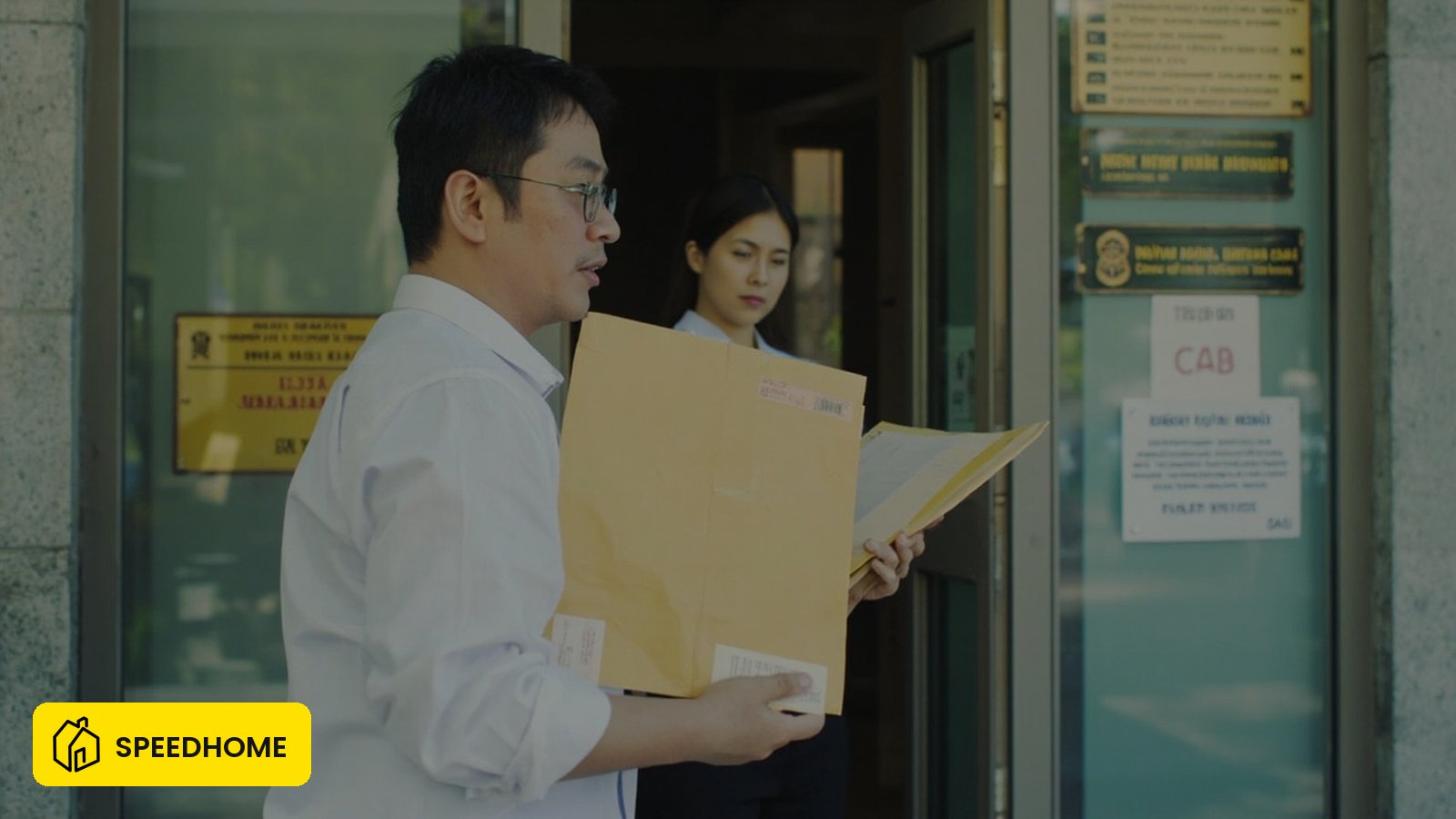
A Writ of Possession is the only lawful way to evict a tenant in Malaysia, typically costing RM8,000 to RM25,000 and taking 4 to 12 months. Landlords cannot self-evict under the Specific Relief Act 1950, and must rely on this court order for the bailiff to legally recover the unit.
What is a Writ of Possession in Malaysian rental law?
A Writ of Possession is a court order directing a tenant to vacate a rental property and authorising the court bailiff to remove the tenant and restore possession to the landlord. It is the only lawful way to evict a tenant from a residential rental unit in Malaysia. A landlord cannot personally lock out, remove belongings, or disconnect services — doing so is unlawful under section 7(2) of the Specific Relief Act 1950 regardless of what the tenancy agreement says.
On SPEEDHOME's managed platform, the average time from a tenant's first rental default to recovery action is about 31 days — a reflection of having the stamped agreement, payment evidence, and written demand file ready before the first missed rent, not after.
Malaysia has no Residential Tenancy Act in force as of 2026. The proposed RTA remains a draft Bill not yet tabled in Parliament. Residential possession proceedings are governed by the tenancy agreement together with the Specific Relief Act 1950 and the ordinary civil courts.
Recovery is one side of the cycle; re-letting is the other — once the unit is back, See live listings on SPEEDHOME to list or compare current rental availability.
The law: what the Specific Relief Act 1950 actually says
Section 7(2) of the Specific Relief Act 1950 bars every form of self-help eviction. Recovery of possession of immovable property must go through the court. No clause in a tenancy agreement can override this; a lockout clause is unenforceable.
The lawful route is a written demand, then court action — a Writ of Possession to recover the unit and/or a Writ of Distress (under the Distress Act 1951) to recover rent arrears — enforced by the court bailiff. The landlord does not personally execute any stage of the removal.
There is no dedicated residential tenancy tribunal in Malaysia. The Tribunal for Consumer Claims does not hear private residential tenancy disputes: a tenancy is an interest in land and a deposit claim is a chose in action, both excluded from its jurisdiction under the Consumer Protection Act 1999.
Writ of Possession vs Writ of Distress: which one do you need?
If you need the tenant out of the unit, you need a Writ of Possession. If you only need to recover unpaid rent and the tenant has already left or you are not seeking eviction, a Writ of Distress (Distress Act 1951) may be enough. Most landlords dealing with a non-paying tenant who remains in the unit need both.
| Writ of Possession | Writ of Distress | |
|---|---|---|
| What it does | Orders the tenant to vacate; bailiff enforces | Seizes the tenant's moveable goods to recover rent |
| Statute | Specific Relief Act 1950 s.7 | Distress Act 1951 |
| Evicts the tenant? | Yes | No |
| Recovers rent arrears? | Not directly (separate money claim needed) | Yes — up to 12 months' arrears |
| Who executes | Court bailiff | Court bailiff |
| Self-help allowed? | Never | Never |
| When to use | Tenant refuses to vacate after notice | Tenant owes rent; goods on-site to distrain |
| Indicative cost | RM8,000–25,000 (legal fees vary) | RM3,000–9,000 (legal fees vary) |
| Typical duration | 4–12 months | Weeks to months |
Costs are indicative ranges based on SPEEDHOME's operator experience. Actual legal fees depend on case complexity, court tier, and whether the tenant contests. Not a guarantee.
Step-by-step: how to apply for a Writ of Possession
The sequence is notice, termination, court filing, hearing, and bailiff enforcement. No step can be skipped, and the landlord does not personally execute any removal.
| Step | What to do | What to avoid |
|---|---|---|
| 1. Review the tenancy agreement | Confirm the rent-due clause, the breach, and the required notice period | Acting on a verbal or informal arrangement with no stamped TA |
| 2. Send a written cure notice | State the arrears amount, the clause breached, and a cure deadline (SPEEDHOME standard: 14 days) | Threatening to disconnect utilities or publish the tenant's personal details |
| 3. Serve notice of termination | If the cure period passes without payment, serve notice per the TA (commonly 30 days) | Issuing a notice that omits the specific breach or contradicts the TA's terms |
| 4. File at the correct court | Apply for the Writ of Possession with the tenancy agreement, payment records, and written demand | Filing without a complete document file — the court will not proceed |
| 5. Attend the hearing | Bring evidence: the stamped TA, rent receipts or bank records, the cure notice, and termination notice | Assuming the judge will accept verbal evidence alone |
| 6. Let the bailiff enforce | The court bailiff executes the order; police may attend if needed | Personally changing the lock or moving the tenant's belongings — at any stage |
If the tenant continues occupying after the tenancy has formally ended, the landlord may at their option claim double rent for the holdover period under section 28(4)(a) of the Civil Law Act 1956. This right must be clearly elected; it does not apply automatically.
Which court tier, cost and timeline govern a possession writ?
There is no fixed cost or guaranteed timeline. The court tier, legal fees, and duration all depend on the arrears amount, whether the tenant contests, and the case's complexity. Indicative ranges only.
| Court | Monetary jurisdiction | Landlord-and-tenant | Typical duration (possession claim) |
|---|---|---|---|
| Magistrates' Court — small claims | Up to RM5,000 (money only; no lawyer required) | No possession jurisdiction at small-claims level | Weeks to months |
| Magistrates' Court | Up to RM100,000 | Yes | Months |
| Sessions Court | RM100,000–RM1,000,000; also unlimited for landlord-and-tenant and distress actions | Yes — and the usual tier for residential possession | 4–12 months; longer if contested |
| High Court | Above RM1,000,000 | Yes | Longer |
Most residential rental possession applications are heard in the Sessions Court, which has unlimited jurisdiction for landlord-and-tenant and distress actions under the Distress Act 1951. A landlord with a straightforward non-payment case and a stamped tenancy agreement is in the right forum here.
The Sessions Court's unlimited distress jurisdiction means a landlord can bring both the Writ of Possession (possession of the unit) and the Writ of Distress (rent arrears recovery) in the same court, consolidating the case rather than splitting it across tiers.
What a landlord cannot do — and why it makes things worse
Self-help eviction is the fastest way to flip a clear landlord win into a legal liability. A landlord who changes the lock, disconnects water or electricity, or removes the tenant's belongings is the one who may face a claim — even when the tenant is undeniably in the wrong.
Section 7(2) of the Specific Relief Act 1950 applies regardless of what the tenancy agreement says. A clause purporting to allow the landlord to re-enter, disconnect utilities, or change locks as a self-help remedy is unenforceable and creates risk for the landlord.
What is not allowed at any stage:
- Changing the door lock or disabling the access card or key fob
- Disconnecting electricity, water, or any other utility to pressure the tenant to leave
- Removing or storing the tenant's furniture, personal items, or appliances
- Posting the tenant's IC number, photograph, phone number, or home address online — this triggers Personal Data Protection Act 2010 (Act 709) exposure and defamation risk that falls on the landlord
- Threatening to report the tenant to CTOS or any credit bureau without their prior written consent — there is no residential tenancy registry; a landlord may only report to a licensed credit reporting agency if the tenancy agreement contains the tenant's written consent to such reporting
The advice that a landlord may disconnect water "if stipulated in the TA" still circulates online. It is wrong. Specific Relief Act 1950 s.7(2) overrides any such clause. A landlord who relies on it is exposed; the tenant is not.
Worked example: tenant in arrears, still occupying the unit — how does it play out?
A Petaling Jaya landlord has a tenant who missed two months' rent with no response to messages. Here is the lawful sequence from day one to possession.
Day 1. Pull the stamped tenancy agreement and payment records. Confirm the total arrears, cite the rent clause, and serve a written cure notice giving the tenant 14 days to pay or quit. Send it by registered post and keep the tracking receipt.
Day 15 (no payment received). Serve a notice of termination under the TA's notice clause — typically 30 days. At this point, consider instructing a lawyer to file for both a Writ of Distress (to recover the arrears) and a Writ of Possession (to recover the unit) simultaneously. Prepare the full document bundle: stamped TA, all payment records, the cure notice with proof of delivery, and the termination notice.
Day 45 onward (tenant still in unit, tenancy formally ended). The Writ of Possession application is filed. The court sets a hearing date. If the tenant does not contest, the matter may proceed relatively quickly; if contested, it can extend to 4–12 months. If the tenant holds over, the landlord may elect to claim double rent for the holdover period under Civil Law Act 1956 s.28(4)(a) — this must be clearly stated and elected, not assumed. Once the order is granted, the court bailiff executes. The landlord does not personally attend the removal.
The difference between a 4-month resolution and a 12-month one is almost always the document file. A landlord who starts with a stamped agreement, a clear payment record, and a written demand on file moves faster than one who has to reconstruct the evidence mid-process.
What happens after the court grants the Writ of Possession?
Obtaining the court order is not the same as recovering the unit. The Writ of Possession must then be handed to the court bailiff for execution — and the bailiff operates on a separate schedule that adds further time after the order is made.
Once judgment is entered and the Writ of Possession is extracted, the landlord's solicitor lodges the writ with the court bailiff together with the required fees. The bailiff then schedules a date for physical enforcement. Based on SPEEDHOME's operator experience, a gap of 1 to 3 months between the writ issuing and the bailiff's actual visit to the unit is common and is not within any lawyer's or landlord's control.
On the enforcement date, the bailiff attends the unit — typically with at least one police officer if there is any prospect of resistance. The tenant is ordered to leave. The bailiff prepares a handover record, and keys are returned to the landlord or the landlord's representative. The landlord does not personally attend any stage of the removal; any landlord present at the scene during enforcement should remain in the background and not physically engage with the tenant or their belongings.
If the tenant refuses to open the door or barricades the unit on enforcement day, the bailiff has authority to proceed and may summon additional police assistance. This delays execution by days or weeks, not months — but it adds cost (additional bailiff and police coordination) and the landlord cannot simply bypass this step.
Once the bailiff hands over the unit, the landlord may re-enter, change the locks, and arrange clearance of any abandoned goods left by the tenant — following the applicable rules on abandoned goods under the Distress Act 1951 where those apply, and not simply disposing of goods without a documented process.
The bailiff step: what landlords consistently underestimate
The court hearing produces the order. The bailiff execution produces possession. Treating the court order date as the completion date is the most consistent landlord planning error SPEEDHOME encounters. Budget the full timeline from first default to returned keys — not just from filing to order — and the bailiff gap is already priced in.
Why does a Writ of Possession application fail or stall?
Most avoidable delays and failures in possession applications trace back to the same handful of document and procedural errors. A landlord who knows these in advance can structure the file to avoid them.
Unstamped or defective tenancy agreement
A tenancy agreement that was never stamped under the Stamp Act 1949 can still be admitted in evidence, but it creates an immediate credibility problem and may require remedial stamping at extra cost before filing. An unsigned or ambiguous TA — for example, one that has been amended informally by WhatsApp but not updated in writing — is worse: the tenant can dispute the agreed rent, the notice period, or the deposit terms, and the court will have to resolve that dispute before it can even reach the possession question. An uncontested possession matter becomes a contested one, with the attendant cost and timeline.
Written demand not served with proof of delivery
A written cure notice that cannot be proved to have been delivered is treated as if it was never sent. Proof of delivery means a registered post tracking receipt showing the address and delivery confirmation, a process-server's affidavit, a courier acknowledgement, or an email read receipt from the tenant's confirmed email address. A WhatsApp message marked "delivered" (one tick) is not the same as "read" (two blue ticks), and both are weaker than registered post. The consequence of a defective notice is that the notice period may need to run again — adding weeks or months — before filing is appropriate.
Claiming possession and arrears in the wrong court tier
If the landlord wants possession only (no money claim), the Sessions Court is the right forum for most residential tenancies. If the landlord also wants to recover arrears above RM5,000 alongside the possession claim, the Magistrates' small-claims route is unavailable for that component, and the full matter goes to the Sessions Court. Filing at the wrong tier — for example, filing a possession claim at Magistrates' small-claims level where no possession jurisdiction exists — results in rejection or transfer, adding time. The Sessions Court's unlimited distress jurisdiction is the reason most residential possession-plus-arrears cases file there from the outset.
Electing double rent too late or not at all
If the tenant holds over after the tenancy has formally ended and the landlord intends to claim double rent under Civil Law Act 1956 s.28(4)(a), that election must be clearly stated — typically in correspondence and in the court claim itself. Landlords who do not elect it, or who elect it after the holdover period has passed without objecting to the tenant's continued occupation, may find the right diminished. The safest practice is to state the double-rent election in the termination notice itself and again in the court filing.
Delay between default and demand
Every week a landlord waits before issuing the written demand is a week added to the overall timeline. SPEEDHOME's operator data (2024–2026) shows managed files where the demand is issued within 7 to 14 days of the first missed payment move through the process materially faster than files where the demand is issued a month or more later. The court process itself is fixed by court scheduling; the operator-controlled window between default and demand is the only part the landlord can shorten.
How does SPEEDHOME evidence support a possession action?
The managed platform is structured so the possession file is complete before a default happens, not after: a stamped tenancy agreement, a move-in condition report, payment monitoring, and a recovery workflow that starts at day one of a missed payment.
On SPEEDHOME's managed platform, the average time from a tenant's first rental default to recovery action is about 31 days. That figure reflects process discipline — not a guaranteed court outcome. The court process moves on its own timeline once the file is filed.
For landlords who want the full recovery workflow built in from the start, SPEEDHOME for landlords provides tenant screening, the stamped agreement, condition documentation, and recovery coordination in one managed flow. See the landlord guide Malaysia for the wider operating picture, the how to evict a tenant guide for the full eviction sequence, or the tenant not paying rent guide for the default-to-recovery action steps.
Zero Deposit is available on qualifying SPEEDHOME units. It is a managed rental-risk system — it replaces the upfront cash deposit; in the rare case of severe end-of-tenancy damage the recoverable amount can be limited. It is not a financial guarantee product and does not provide blanket coverage. Not every unit qualifies.
FAQ
What is a Writ of Possession in Malaysia?
A Writ of Possession is a court order directing a tenant to vacate a property and authorising the court bailiff to remove the tenant and restore possession to the landlord. It is issued by the civil courts and enforced by the bailiff — never by the landlord personally. Self-help removal is unlawful under Specific Relief Act 1950 s.7(2).
How long does it take to get a Writ of Possession in Malaysia?
There is no fixed timeline. A contested Writ of Possession typically takes 4–12 months from filing to bailiff enforcement. An uncontested case may resolve faster. The single biggest factor is how quickly the landlord can produce a complete document file: stamped TA, payment records, written demand with proof of delivery, and termination notice.
What is the difference between a Writ of Possession and a Writ of Distress?
A Writ of Possession recovers the unit — it evicts the tenant. A Writ of Distress (Distress Act 1951) recovers rent arrears only (up to 12 months) by seizing the tenant's moveable goods; it does not evict. A landlord who needs both the unit back and the unpaid rent typically applies for both at the Sessions Court, which has unlimited jurisdiction for landlord-and-tenant and distress actions.
Can a landlord evict a tenant without a court order in Malaysia?
No. Self-help eviction — changing locks, disconnecting utilities, removing belongings, or blocking access — is unlawful under section 7(2) of the Specific Relief Act 1950. This applies regardless of what the tenancy agreement says. A lockout clause in a TA is unenforceable. The only lawful way to recover possession is through the court and its bailiff.
Which court handles a Writ of Possession for a rental dispute in Malaysia?
Most residential possession claims go to the Sessions Court, which has unlimited jurisdiction for landlord-and-tenant and distress actions. Money claims up to RM5,000 can use the Magistrates' small-claims procedure (no lawyer required) for the debt component, but possession itself is not handled at small-claims level. There is no dedicated residential tenancy tribunal in Malaysia.
Can I claim double rent if the tenant refuses to leave after the tenancy ends?
A landlord may, at their option, claim double rent for the period a tenant holds over after the tenancy ends, under section 28(4)(a) of the Civil Law Act 1956. This right comes from statute and must be clearly elected by the landlord — it does not apply automatically. If the tenant is not paying single rent, double rent is typically pursued as part of the court claim alongside the Writ of Possession.
How long does bailiff enforcement take after the court grants the writ?
Once the Writ of Possession is issued by the court, the bailiff schedules execution separately. Based on SPEEDHOME's operator experience, a gap of 1 to 3 months between the writ issuing and the bailiff's actual attendance at the unit is common. This step is not within the landlord's or the lawyer's control; it is set by the court bailiff's schedule and caseload.
Possession recovered, the goal is a paying tenancy next time — See live listings on SPEEDHOME when the unit is ready again.
Accuracy and corrections. The law on this page is cited from Specific Relief Act 1950, Distress Act 1951, Consumer Protection Act 1999 and Civil Law Act 1956. Numbers are registry-bound and re-verified with each update. Found a mistake? [email protected].