
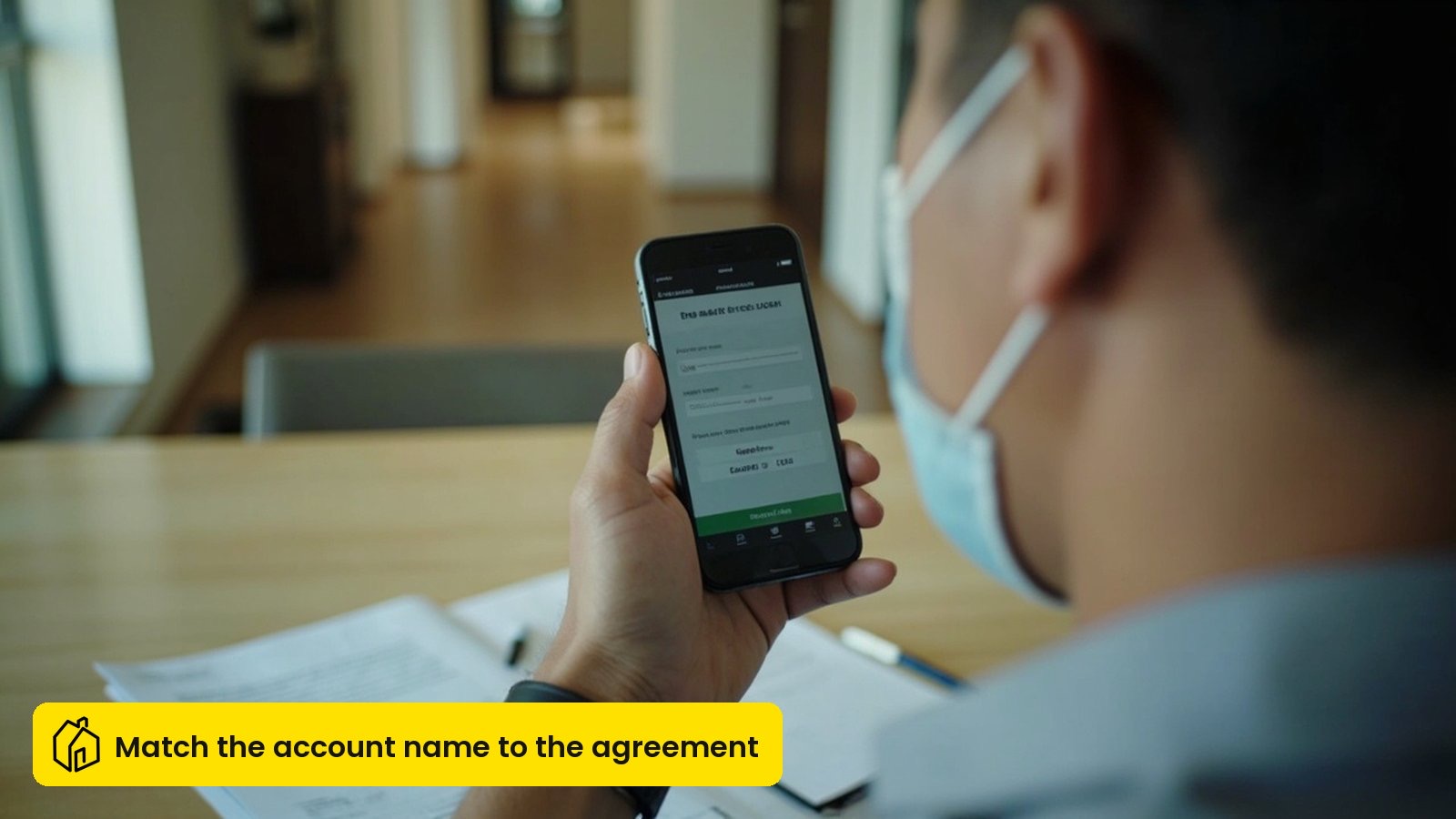
A legitimate agent in Malaysia will never ask you to pay rent or deposits into a personal bank account. This is a major fraud signal. Always ensure the receiving account is a registered agency’s client account or company account that exactly matches the entity named in your stamped tenancy agreement.
No — a legitimate letting agent or property owner does not ask you to pay rent, a deposit or a booking fee into a personal bank account. That single request is one of the clearest rental-fraud signals in Malaysia, whether you are the tenant being asked to pay, or the landlord whose agent is about to collect on your behalf into a private account.
SPEEDHOME platform data (2024–2025) shows that when an agent is allowed to collect a deposit into a personal account, the recovery rate on the tenancy falls below the platform's company-account baseline — which is why SPEEDHOME routes every payment through its registered company account, not an agent's private name. PDRM and the National Scam Response Centre (NSRC) record this pattern as one of the most reported rental-fraud vectors in Malaysia, with the money-flow pretext — "send it to my personal account, it is faster" — flagged in the standard NSRC advisory on rental scams (NSRC hotline 997). A registered agency collects into its own client or trust account; the legal contracting party is a company, not an individual. For a landlord, the same rule protects you: an agent funnelling tenant deposits into a personal account is the sign the money may never reach you.
Personal account vs company or agency client account: which fits you?
A real letting agent routes tenant money through a company or agency client account in the agency's registered name — never an account in an individual's personal name. Insist on the account name matching the entity on the tenancy documents, and walk away if it does not.
| Payment destination | Safe for rent and deposit? | Why it matters | What to do |
|---|---|---|---|
| Agency client / trust account in the firm's name | Yes | Funds are held for the transaction, traceable, and the firm is accountable | Verify the name matches the tenancy agreement and the firm's registered name |
| Company account in the owner's or contracting company's name | Yes | The contracting party on the agreement is a registered entity; the paper trail is clean | Match the account name to the tenancy agreement exactly |
| Personal bank account in an individual's name | No | Highest fraud signal; no firm accountability, easy to vanish, hard to reverse | Stop, do not transfer, ask for the company account in writing |
| E-wallet, DuitNow to a personal number, or crypto | No | Untraceable to a registered entity; favourite channel for fast exit scams | Refuse; legitimate rent and deposits are not paid this way |
The contracting entity matters as much as the account name. On a properly drawn Malaysian tenancy, the party you are paying is the party on the document — a company or registered firm, not "the agent's own account." If the agent will not put the account details in writing or will not let you match them to the agreement, treat that as the answer.
When each option wins
Paying into the company or agency client account wins in every normal tenancy. The only time a personal name appears legitimately is when you are renting directly from an individual owner who is named as the landlord on the stamped tenancy agreement — and even then the account name must match that owner's name exactly.
The personal-account request "wins" only from the fraudster's side: it removes the firm from the chain, leaves you with no accountable entity, and makes the transfer close to impossible to reverse. For a landlord, the equivalent failure is an agent who collects your tenant's deposit into a private account and then disputes what was owed — you end up with a tenant who paid and a unit you cannot lawfully repossess through self-help. Recovery, if money is taken this way, runs through the lawful path: a written demand, then court action — never lock-out or utility cut-off, which are unlawful.
What about cost and risk?
The cost of getting this wrong is near-total loss of the deposit or rent paid, plus a recovery effort that succeeds in only a small fraction of cases. The cost of getting it right is zero — you simply match the account name to the tenancy agreement before you transfer.
| Risk if you pay a personal account | Realistic outcome | Your lawful recourse |
|---|---|---|
| Deposit or rent vanishes | Money is moved or withdrawn within hours; reversal is unlikely | Report to the bank's fraud team immediately, lodge a police report with PDRM, contact the National Scam Response Centre (NSRC, 997) |
| No accountable firm | The "agent" can deny receipt; you have no contract with the named payee | Small-claims procedure up to RM5,000 (no lawyer) for quantifiable loss; civil court above that |
| Tenant paid your agent, you never received it | Tenant believes they have paid; you have no money and a contested tenancy | Demand the money from the agent in writing; do not take it out on the tenant or the unit |
| Listing used as bait | Your unit's photos and address used to collect fake deposits | Report the copied listing to the platform; see what landlords do when their listing is copied |
Recovery from rental fraud is the exception, not the rule — the account-name check is the cheapest insurance you will ever apply.
How to verify the account before you pay
Run a six-step check before any transfer: confirm the counter-party, the firm, the account name, the written request, the channel, and your paper trail. If any step fails, do not transfer.
- Read the tenancy agreement counter-party. The party named as "Landlord" (or "Lessor") must be a registered company or individual — that is the only party you should be paying.
- Check the firm's registered name. For a company, run the name on the Suruhanjaya Syarikat Malaysia (SSM) e-Info portal to confirm the firm exists, is active, and matches the agreement. For an individual landlord, match the name on the agreement to their MyKad.
- Match the account-holder name exactly. The name on the bank or DuitNow account must read character-for-character as the SSM-registered firm or the named landlord on the agreement. Any variation — a trading name, a shortened name, an agent's personal name — is a stop.
- Ask for the company account in writing. A registered firm has a company account. If the agent offers only a personal account, ask once in writing for the firm account and keep the message thread.
- Refuse e-wallet, personal DuitNow, or crypto for rent or deposit. Legitimate rent and deposits in Malaysia are paid to a registered firm's bank account, not an e-wallet or crypto wallet held in an individual's name.
- Keep the stamped tenancy agreement and the payment receipt. If the worst happens, the stamped agreement plus the transfer slip is what NSRC (997), PDRM, and the bank fraud team will ask for first.
If you are a landlord and your agent pushes you toward a personal account for collection, the same six steps apply in reverse — the account that receives the tenant's deposit must be the firm's, and the stamped tenancy agreement is your evidence if the money is later disputed.
What does the SPEEDHOME path cover for landlords?
On a managed platform, rent and deposits flow to the platform's company account and the tenancy runs against a registered contracting entity — the personal-account request simply does not arise, because there is no individual asking you to pay into a private name.
Most guides hand you a long checklist — verify the agent's REN number, then the account, then the paperwork, then the money flow — and leave you to do every step yourself. SPEEDHOME builds the verification into the workflow instead: every sign-up runs an electronic identity check (e-ID at registration), the contracting party on the tenancy is a registered company rather than an individual, and the rent and deposit routes to a company account that matches the paperwork. The personal-account request never arises, because there is no individual agent in the loop asking you to pay into a private name. For a landlord, that also means a report-ready tenancy agreement — a stamped document you can act on if a tenant defaults, including reporting a verified default to a licensed credit reporting agency only where the tenant has given consent in the tenancy agreement. Publishing or doxxing a tenant's details is not lawful, and a personal account gives you no clean paper trail to act on at all.
To see the landlord-side structure in full, visit the SPEEDHOME landlord platform. If you are screening a tenant or an agent and want the wider fraud picture, the rental scams every landlord should know about guide covers the rest of the signals. See also what to do when your listing is copied — the second-most-common bait-and-collect pattern.
FAQ
Is it ever normal for an agent to give a personal bank account for rent?
No. A registered letting agent collects into the firm's client or company account, in the firm's registered name. A personal account is a top fraud signal — do not transfer, and ask for the company account in writing. The only personal name that should ever appear is the individual owner's, and only when they are the named landlord on the stamped tenancy agreement.
The agent says the personal account is faster and the company account is slow — is that a reason?
No. Speed is the standard pretext used to push money into an account that cannot be traced to a firm. A legitimate agency's client account is not meaningfully slower, and any small delay is worth the accountability. If "fast" is the only argument offered, treat the request as a warning sign.
I am a landlord — why should I care which account my agent gives the tenant?
Because if your agent collects into a personal account, the tenant may have paid someone who is not you, and you can be left with no money and a contested tenancy. Insist your agent uses the firm's client account, or move collection onto a managed platform where the contracting entity and the account are one and the same.
What do I do if I have already transferred to a personal account?
Act immediately: call your bank's fraud team to attempt a recall, lodge a police report (PDRM), and contact the National Scam Response Centre (NSRC, 997). Keep every screenshot, message and receipt. Do not rely on the "agent" to return the money voluntarily — recovery rates from this kind of fraud are low, which is why the account-name check matters more than any cure.
Can I get my money back through a tenancy tribunal?
Malaysia has no dedicated residential tenancy tribunal. A quantifiable loss up to RM5,000 can go through the Magistrates' Court small-claims procedure without a lawyer; larger claims go to the civil courts. Fraud against you is also a police matter, separate from any tenancy dispute.
Does paying through SPEEDHOME avoid this risk?
Yes — on a managed platform, rent and deposits go to the platform's company account and the contracting party is a registered entity, so the personal-account request does not arise. It is a structural fix, not a guarantee of zero risk: you still read the agreement and keep the stamped copy yourself.
Accuracy note. This page is built on verified primary sources and a dated fact registry; figures are re-verified on each update. Spotted an error? Email [email protected] with this page's link.