
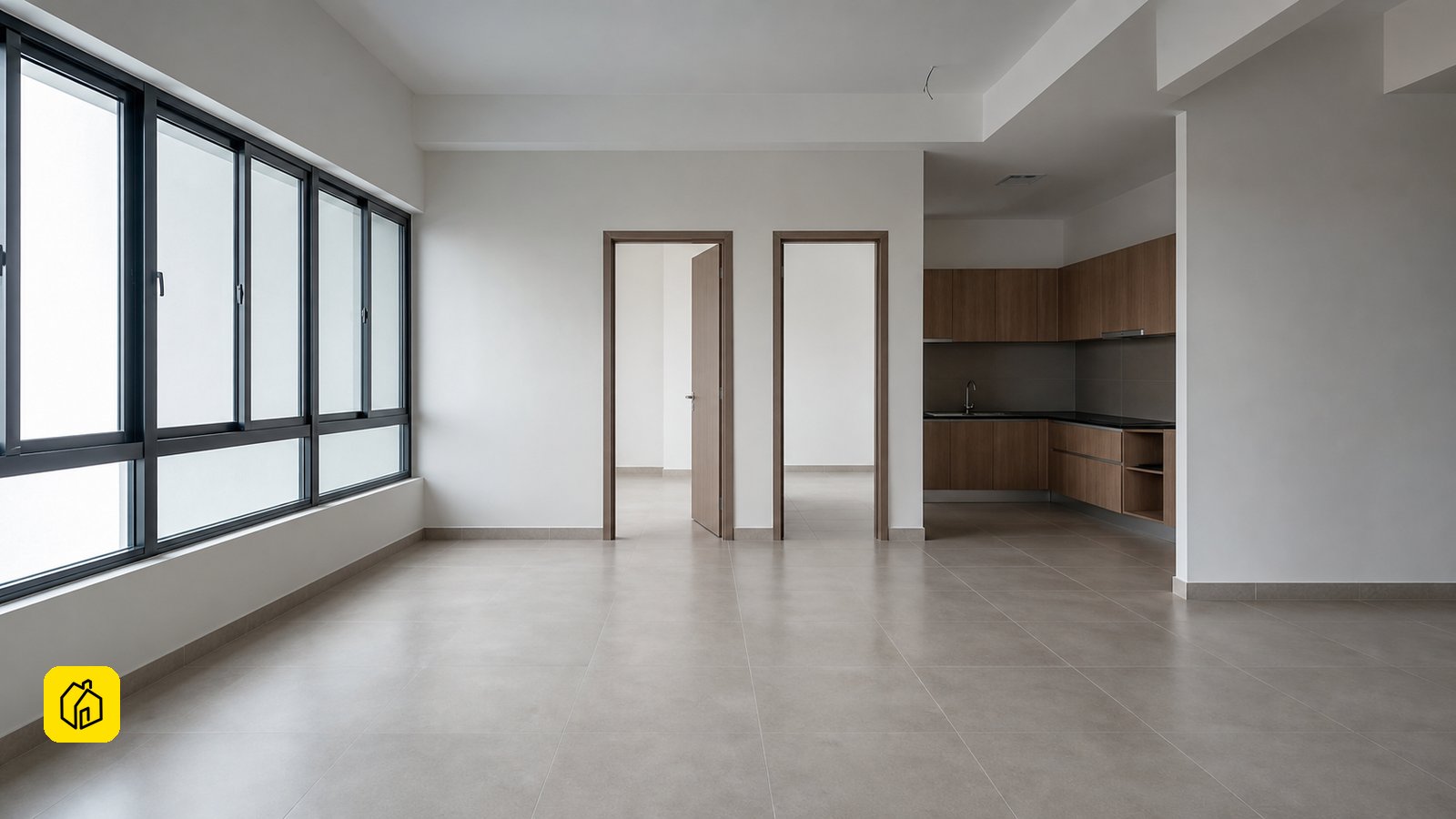
BeCentral @ i-City: landlord operating verdict
BeCentral @ i-City should be underwritten first as a conventional whole-unit long-term tenancy, not as a room or short-stay thesis. The page-bound record identifies 474 serviced-apartment units across 41 storeys in Seksyen 7, Shah Alam, with published sizes from 632 to 793 sqft and MBSA jurisdiction. It does not prove the actual parcel's title, plan, current rent, management rules or permission for a different model. Buy and fit out only for the case that can survive those missing facts.
What the public record proves—and what it does not
The KPKT HIMS brochure supports the project identity, scale and published size range. MBSA is the relevant local authority for Seksyen 7. Those are useful starting points, but neither source turns a project description into a decision-ready rental parcel.
The owner still needs the individual title or sale papers, approved floor plan, exact block and floor, current service-charge statement, latest management rules, and a dated comparable that matches the unit's actual condition and furnishing. Do not substitute a different BeCentral layout, an advertised asking price, or a nearby i-City project for that evidence.
| Question | What the page-bound record says | Proof needed before capital is committed |
|---|---|---|
| What is being assessed? | A 632-793 sqft serviced-apartment parcel within a 474-unit, 41-storey project | Exact plan, parcel, parking and condition |
| What can it earn? | No current rent or yield is established | Dated same-format comparable evidence |
| Can rooms be leased separately? | No building-wide permission is established | Existing approved bedroom layout and written current management response |
| Can it operate as short stay? | No position is established | Written rules and all applicable operating approvals |
The appropriate starting model
The whole-unit case is not a claim that every BeCentral parcel is identical; it is the lowest-assumption way to test this parcel. It asks whether one household can lawfully occupy a unit at a rent supported by a dated comparable, after actual ownership and operating costs. It does not rely on a partition, a tenant-count assumption, a submeter arrangement or a hospitality workflow.
Existing-bedroom rooms or co-living can be considered only after the approved plan, title and written management position are in the file. The distinction matters: using rooms already in the approved layout is a different proposal from adding partitions, locks, billing hardware or shared-living infrastructure. This page grants neither. Short stay remains out of the underwriting until the current documentary position is obtained. Do not purchase linens, smart locks or room-specific equipment for an option that has not cleared its gate.
Treat MBSA as an enquiry path, not a permission slip
MBSA jurisdiction tells an owner where the building sits; management documents determine the building's current operating rules. Ask the management office for the current house rules and by-laws, renovation process, contractor requirements and a dated written answer on existing-bedroom leasing, pets, submeters and short stays. Keep the source document, not an oral summary.
The parcel file should also contain the latest maintenance statement, AGM minutes, audited accounts, sinking-fund position, special-levy notices and access-card or parking records. Match them to the exact block, floor and parcel. If the documents are unavailable before a non-refundable commitment, the absence is downside information: it may justify stopping or repricing, not proceeding on the assumption that the answer will be favourable.
Inspect the actual 632-793 sqft format
The published size range is not a bedroom count, condition report or tenant-demand forecast. During the viewing, verify the approved plan against the physical unit, then inspect ventilation, water pressure, kitchen and bathroom condition, storage, appliances, noise, lift access, parking and the route a conventional household would actually use. Return at a different time if access, heat or noise could alter the tenant experience.
Create a dated handover file: photographs of every surface and appliance, meter readings, key and card count, parking details, visible defects and contractor warranties. That work is operationally useful even if the owner later sells or re-lets. It prevents a common mistake in compact serviced apartments: treating loose furnishing and paint as a cure for an unexamined layout or building-condition problem.
Use the shared calculator after—not instead of—commercial DD
The calculator compares economic NOI after recurring costs and economic depreciation; it does not generate a BeCentral rent, yield or approval. Enter the actual transaction price, acquisition cost, dated same-format rent, service charges, insurance, repairs, vacancy assumption, furnishing and replacement allowance. Compare the unit as found, a lean refresh and a higher-spend option. Reject the higher option if it adds capital without incremental economic NOI.
Loading the renovation ROI comparison…
The becentral-icity-shah-alam preset deliberately leaves purchase, rent and operating costs as owner inputs. Its generic calculator assumptions are disclosed planning inputs, not building facts. SPEEDRENO should follow the confirmed whole-unit case: repair defects, improve durable finishes, make lighting functional and use movable furniture. Defer partitions, room-only systems and hospitality equipment. The useful test is marginal return on the extra capital, not a headline rent increase.
Downside, reversibility and decision stops
The main downside is paying for a model that the actual plan, parcel documents or management rules do not support. An owner who assumes a room arrangement or short stay can be left with a conventional whole-unit proposition after the spending has already occurred. A lean, condition-led whole-unit refresh preserves the broadest exit because it is useful to a normal tenant and does not depend on an unproven policy.
Stop or reprice when the title or plan conflicts with the intended tenancy; the management response does not support the arrangement; the accounts show an unacceptable obligation; a material condition issue emerges; or dated matching comparables do not support the conventional case. No page-bound source establishes a sale price, exit cost, vacancy duration or re-let time, so none should be invented into the model.
BeCentral parcel DD sequence
- Obtain the exact parcel title, sale papers, approved plan, block, floor and parking record.
- Read the current maintenance statement, AGM minutes, audited accounts, sinking-fund position and special-levy notices.
- Obtain written current management answers on renovation, existing-bedroom leasing, pets, submeters and short stays.
- Inspect the actual unit and document condition, utilities, ventilation, access and surrounding daily route.
- Gather dated same-format whole-unit comparables and enter the actual owner costs in the calculator.
- Commit only to a reversible whole-unit condition refresh until every alternative-model gate is evidenced.
Matched landlord next step
Once the parcel file supports a lawful conventional tenancy, use SPEEDHOME landlord services for the placement and operating next step. The landlord investment decision guide, room-rental guide and SPEEDRENO fit-out guide help evaluate an evidenced choice; they do not supply missing title, management or comparable evidence. Zero Deposit, if relevant, is assessed on the actual listing under current eligibility and screening terms.
FAQ: BeCentral owner decisions before you commit
Does this page establish a BeCentral rent or yield?
No. It establishes project identity and jurisdiction only. Use dated evidence matched to the exact parcel, format, condition and furnishing state.
Is room rental or co-living approved here?
No. Existing-bedroom sharing is conditional on the approved plan, parcel documents and current written management response. A partitioned model has a higher physical-change gate.
What can be spent safely before the optional models clear?
Only on documented defects, durable condition improvements and movable furnishing that strengthen a conventional whole-unit tenancy.