
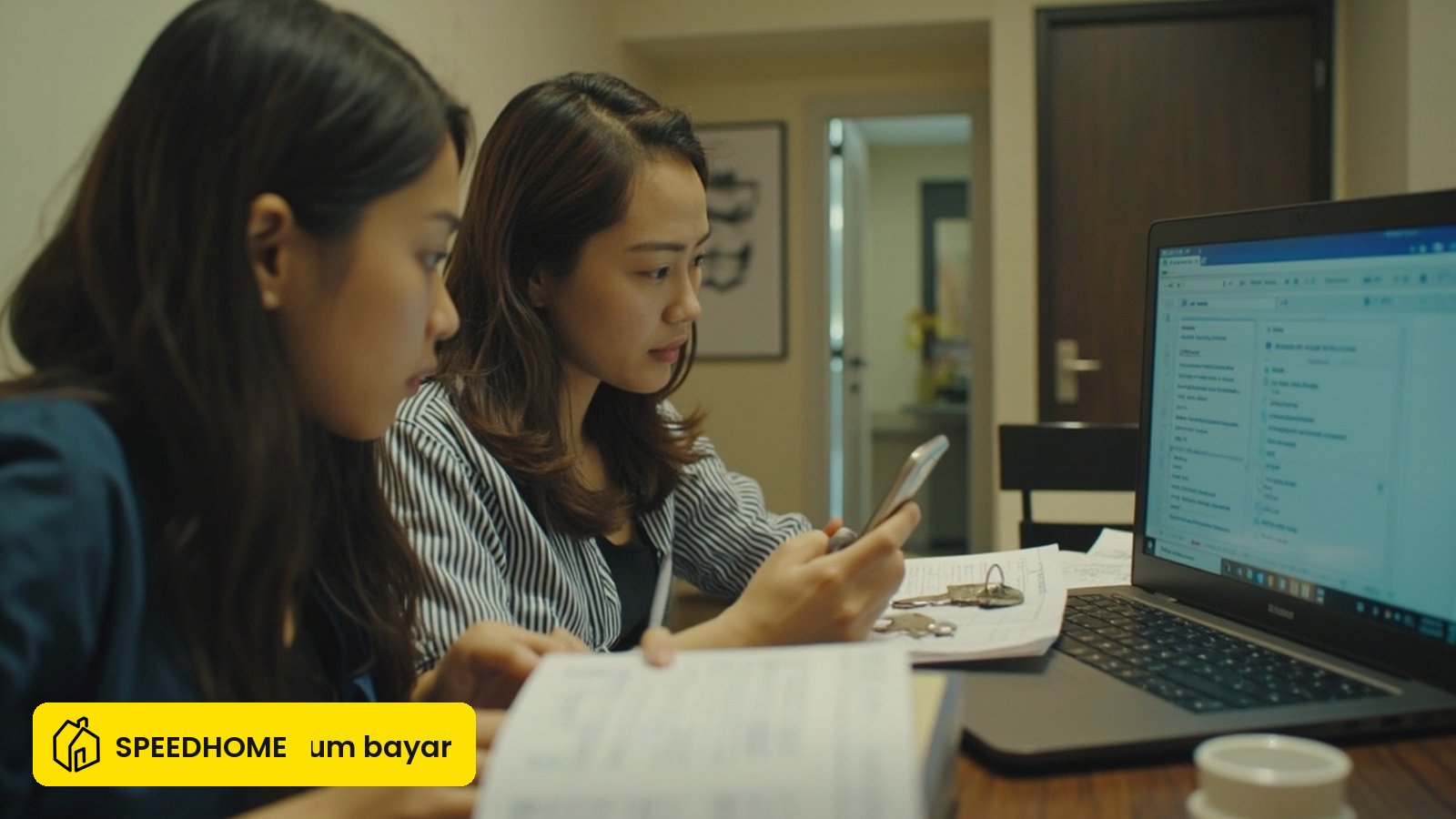
Bilik sewa dekat universiti: plain room rental or co-living near campus?
For most students, a plain room rental near campus is the lower-cost option. Co-living suits students who want bundled utilities, managed house rules and a structured shared environment from day one — but the price premium and the operator's actual track record decide whether that structure is worth paying for.
The search for bilik sewa dekat universiti involves two very different products that share a listing category. The first is a plain room in a shared house or apartment, rented directly from a landlord or main tenant. The second is a co-living unit, run by an operator who manages the occupants, the bills and the house rules as a package. Both put you in a shared space. The difference is documentation, accountability and total monthly cost.
Before comparing prices on any platform, fix your route first: the campus gate, faculty building or bus stop you actually use daily, not the branding of the neighbourhood. A room described as "near campus" can mean anything from a five-minute walk to a thirty-minute drive. Confirm the real route at the time of day you travel, then apply the checklist in this guide.
Browse room rentals on SPEEDHOME to compare live listings. Current room prices and availability must come from the live listing — this article is a decision framework, not a rent table.
Plain room rental vs co-living: the full comparison
A plain room rental gives lower monthly cost and more flexibility. Co-living delivers a managed structure: bundled utilities, written house rules and an operator handling turnovers — but at a higher all-in monthly rate and with terms that vary significantly between operators.
| Factor | Plain room rental | Co-living near campus |
|---|---|---|
| Who manages it | Landlord or main tenant, often informally | Co-living operator with written house rules |
| Utilities | Negotiated — split equally, metered separately, or included in rent | Usually bundled into one monthly charge |
| House rules | Set by landlord or main tenant; vary widely | Written and enforced by operator before move-in |
| Cleaning of shared areas | Arranged between housemates | Often covered by operator (varies; confirm what is included) |
| Upfront cost | Deposit (per agreement terms) + advance rent | May include service or admin fee; ask for a written breakdown |
| Zero Deposit eligibility | Check the live SPEEDHOME listing | Check the live SPEEDHOME listing |
| Tenancy agreement | Direct with landlord or head-tenant; should be stamped | Licence or occupancy agreement with operator; read the terms carefully |
| Who you pay | Landlord or property owner directly | Operator — confirm they hold a direct contract with the owner, not a sublicence from another tenant |
| Building by-law compliance | Owner's obligation | Operator's obligation — ask if the building's by-laws permit co-living or multi-occupancy |
| If the main tenant or operator defaults | Depends on landlord's view of the underlying arrangement | Depends on whether the operator holds a direct owner contract or a sub-licence |
| Best suited to | Students with clear housemate preferences and a lower budget | Students arriving in a new city who want a managed, documented setup from day one |
Malaysia has no statutory residential rent-deposit cap. Your deposit amount, deduction conditions and return timeline are governed by the tenancy or occupancy agreement — not by a fixed legal formula. Put the deposit terms in writing before paying anything.
When does a plain room rental win?
A plain room rental wins when you already know the area, have housemates you trust, and want to control your monthly cost without paying a co-living premium. It also wins when the landlord or main tenant is the property owner and will give you a proper stamped tenancy agreement.
Choose a plain room rental over co-living when:
- The landlord is the property owner (or has documented written consent from the owner to sublet rooms)
- You can negotiate and write down the utility split, house rules, notice period and deposit terms before moving in
- The total monthly cost — rent plus all utilities, internet and parking — is lower than comparable co-living options on the same route
- You do not need the cleaning or community services that a co-living operator provides
- You are comfortable managing shared-space issues directly with your housemates
The main risk with plain room rentals for students is documentation. A room with no written agreement, no bill-split record and no handover photos becomes a dispute with no evidence. The room itself may be fine — the missing paperwork is the problem. Use the room rental agreement and house rules template to close that gap.
One common student scenario to watch: paying a housemate or senior student for a spare room, without the landlord's knowledge or written consent. This is subletting, and subletting without the landlord's written consent is a contract breach — the landlord may terminate the tenancy and require everyone to vacate. If you are moving into a room that a current tenant is renting out to you, ask to see the landlord's written consent before paying a deposit. Read the subletting consent and risk guide for what to verify.
When does co-living near campus win?
Co-living wins when you are new to the area, want a managed setup from day one, and are willing to pay a modest premium for written house rules, bundled bills and an operator handling common-area maintenance. It also wins when your campus route means you cannot afford to waste time finding housemates who match your schedule.
Co-living is worth choosing when:
- You are arriving in a new city or starting your first semester and do not have established contacts for a shared house
- You want one fixed monthly charge with utilities included — no surprise bills in the first month
- The operator has a direct signed agreement with the property owner (not a sublicence from a tenant)
- The building's by-laws permit co-living or multi-occupancy — ask the operator to confirm this in writing before paying
Co-living in strata-titled condominiums carries an extra layer of complexity. A strata management body — a JMB (Joint Management Body) or a management corporation — may pass by-laws restricting how units are occupied. Whether a specific building allows co-living depends on that building's own by-laws, not an industry-wide standard. A co-living operator who cannot confirm the building's position in writing is a risk signal, not a reason to trust a verbal assurance.
If you need to compare the full picture before deciding, the co-living vs renting a room comparison breaks down every factor in detail.
Cost and risk: what to check before paying
Check total monthly cost (rent plus utilities, internet, parking and any service fee), upfront cost (deposit or Zero Deposit eligibility plus advance rent), and whether the person renting to you has documented authority from the property owner. These three checks catch most student room-rental problems.
| Check | What to verify | Red flag |
|---|---|---|
| Monthly total | Add rent + utilities + internet + parking + any co-living service fee | Headline rent that excludes all utilities is understated; get a written estimate |
| Upfront cost | Deposit amount, conditions for deduction, return timeline — all in writing | "Pay now and we'll sort the agreement later" |
| Authority to rent | Owner directly, or head-tenant with written landlord consent to sublet | Cannot show any written authority from the owner |
| Tenancy document | Written, signed agreement covering rent, duration, notice, deposit and subletting clause | No written agreement or "we don't do paperwork" |
| Stamped agreement | Stamp duty applies under the Finance Act 2024 scale (RM1/RM3/RM5/RM7 per RM250 annual rent by duration), via e-Duti Setem on mytax.hasil.gov.my — see LHDN's e-Duti Setem portal; a stamped TA is admissible in court | Landlord refuses to stamp or says it is unnecessary |
| Viewing | View the actual room, not only photos; check water, aircon, locks, WiFi signal, common areas | Viewing refused or "the room is occupied until you pay" |
| Payment path | Pay to a verified platform or company account; keep a receipt | Pay to a personal bank account with pressure to transfer fast |
| Zero Deposit | Check the live SPEEDHOME listing for the Zero Deposit label | Verbal promises of Zero Deposit not shown on the listing |
On Zero Deposit: Zero Deposit is SPEEDHOME's managed rental-risk system, not a financial guarantee product — it replaces the upfront cash deposit, but not every listing qualifies and severe end-of-tenancy damage can still trigger a deduction. Check the live listing label before planning your move-in budget around it.
On eviction protection: regardless of what any landlord says, a landlord cannot lawfully evict by changing locks, removing doors, or disconnecting water or electricity. Recovery of possession must go through the lawful court process. If this happens to you, you have grounds to seek legal relief. Malaysia still has no Residential Tenancy Act in force as of 2026; your protection comes from the signed tenancy agreement and general contract law.
The SPEEDHOME path for students
SPEEDHOME lists rooms and co-living units with no agent fee for tenants, a standardised digital tenancy process, and Zero Deposit eligibility shown on the live listing — not revealed only at move-in.
For students searching for bilik sewa dekat universiti, the most practical next step is a real listing search filtered by the area where your campus route actually takes you. Browse rooms on SPEEDHOME and filter by your target area. If a listing shows Zero Deposit, it is confirmed on the listing — you do not need to ask separately.
The SPEEDHOME tenancy agreement is standardised: it covers rent, deposit or Zero Deposit terms, duration, notice period, repair responsibilities and the subletting clause. You sign digitally and both parties get a copy. Stamping is handled through the platform process.
For students in a shared unit, the room rental and co-living guide covers everything from how to read a listing to how to handle move-out handover photos. If you are unsure about the arrangement you are paying into — especially if you are moving into a room that a current tenant is subletting — read the subletting consent and risk guide before paying a deposit.
FAQ
How much is bilik sewa near a university in Malaysia?
Room rent near Malaysian universities varies by location, room type, furnishing, utilities and building. Check live listings for current prices — this article does not publish rent figures that can become outdated. Filter by area on speedhome.com/rent to see what is available now.
Is co-living or a plain room better for students in Malaysia?
It depends on your budget, campus route, and how much structure you want. A plain room rental is usually cheaper and gives more flexibility if you know your housemates. Co-living costs more but delivers bundled utilities and managed house rules from day one — useful if you are new to the city. The critical check for both: verify the operator or landlord has documented authority from the property owner.
Can I move a friend into my rented room without telling the landlord?
Not without written consent. Allowing a paying occupant to share your rented room without the landlord's written permission is subletting — it is a contract breach, and the landlord may terminate the tenancy for all occupants. If a friend needs to move in, ask the landlord in writing and get written approval before anyone moves in or pays you money. Read the subletting consent and risk guide for what to check.
What documents should I ask for before paying a student room deposit?
Ask for the signed tenancy or occupancy agreement, written proof of the landlord's authority to rent the room, the deposit amount in writing, and a receipt for any payment you make. Also confirm whether the agreement will be stamped. A stamped tenancy agreement is admissible as evidence in court. If the landlord cannot provide any of these, treat it as a risk signal.
Is Zero Deposit available for rooms near universities?
Some SPEEDHOME listings near universities qualify for Zero Deposit — check the live listing label. Not every unit qualifies, so do not plan your move-in budget around Zero Deposit until the listing confirms it. See the Zero Deposit note above for what it does and does not cover.
What if my landlord locks me out of my room for missing one rent payment?
That is unlawful. A landlord cannot lawfully evict by changing locks, removing doors, or disconnecting water or electricity — recovery of possession must go through the court process. If this happens to you, you have grounds to seek legal relief. Malaysia still has no Residential Tenancy Act in force as of 2026; your protection comes from the signed tenancy agreement and the Specific Relief Act 1950.