
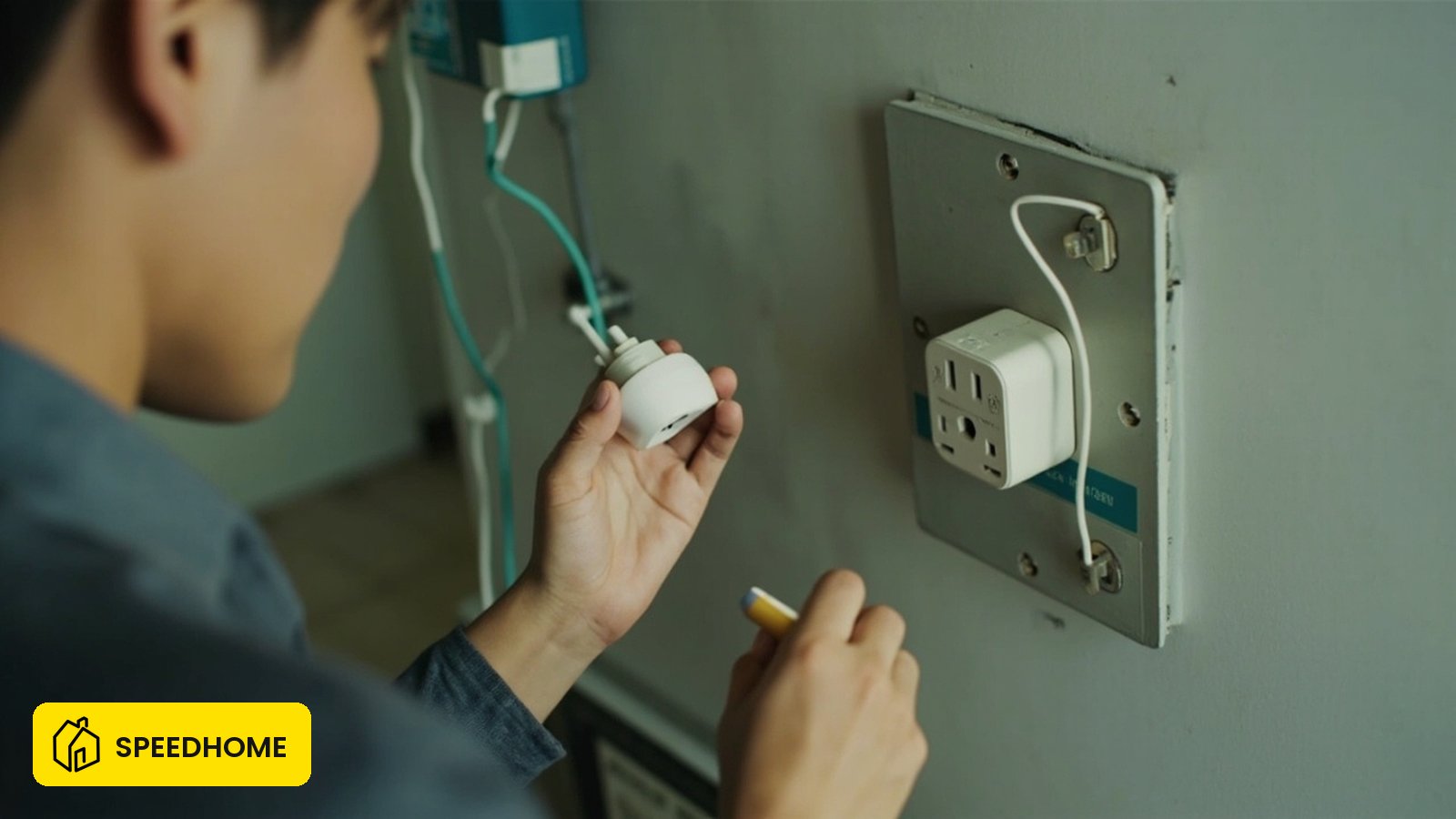
No, a tenant cannot install a remote electricity cut-off device. TNB owns the meter, and unauthorized tampering carries RM50,000 fines and 10 years' imprisonment. Our 2025 data shows 1 in 7 end-of-tenancy disputes stem from utility handovers, but self-help cut-offs violate Specific Relief Act 1950 s.7(2).
Why should a tenant not install a remote electricity cut-off device?
No, a tenant should not install a remote electricity cut-off device in a rental unit. SPEEDHOME platform records for tenancies stamped in 2025 show that 1 in 7 end-of-tenancy disputes involve an undocumented utility-account handover — and a remote cut-off is the wrong fix for a paperwork problem.
TNB owns the meter and main supply, and only TNB or a Suruhanjaya Tenaga-registered contractor may alter it. The landlord, not the tenant, is the account holder who can authorise changes; a landlord who uses a remote cut-off to pressure a non-paying tenant is acting under unlawful self-help per Specific Relief Act 1950 s.7(2). The lawful path is TNB's Change of Tenancy, which transfers the bill — never the meter.
Why a tenant cannot install one in a rental unit
TNB owns the electricity meter and the connection up to it. The supply-side equipment is not part of the rented premises, so a tenant has no authority to fit, wire, or bypass any device on it.
The electricity supply to a Malaysian home is split into two zones. From the grid up to and including the meter, everything belongs to TNB and is maintained by TNB or its appointed contractor. From the meter onwards — the distribution board, wiring, and sockets inside the unit — the installation is part of the building. A tenant may not alter either zone without authorisation.
| Zone | Who owns it | Can a tenant install a cut-off device here? | Who can authorise the work |
|---|---|---|---|
| Grid to meter (TNB side) | TNB | No | TNB only |
| Meter and main switch | TNB | No | TNB or its registered contractor |
| Distribution board and internal wiring | Building owner (landlord) | No, not without landlord consent and a registered contractor | Landlord + a registered electrical contractor (Suruhanjaya Tenaga-licensed) |
| Smart plug on an individual socket (appliance level) | Tenant's own appliance | Yes, for your own appliance only | The tenant (commercial smart plug, no fixed wiring) |
The only device a tenant may fit without permission is a commercial smart plug on an individual socket, controlling one appliance. That is appliance-level control, not a remote cut-off of the unit's supply, and it does not touch TNB's installation.
Tampering with the meter or wiring carries real consequences. A modified meter can be flagged during TNB's routine inspection, and the registered account holder — usually the landlord — is the one TNB pursues. That liability flows back to whoever authorised or allowed the alteration, and the tenant can be pursued under the tenancy agreement for any resulting charge.
The offence, the penalty, and who may lawfully do the work
Interfering with the meter or the TNB side of the supply is a criminal offence, not a tenancy dispute. Only TNB or a Suruhanjaya Tenaga (ST) registered electrical contractor may lawfully alter that wiring, and penalties reach RM50,000 and 10 years' imprisonment per offence.
Meter and supply-side tampering is prosecuted under the Electricity Supply Act 1990 (Akta Bekalan Elektrik 1990), with penal consequences on conviction. TNB's published tampering penalties reach RM50,000 with up to 10 years' imprisonment per offence. TNB pursues the registered account holder first — usually the landlord. Liability then flows back to whoever authorised or carried out the work. A tenant who fits even a "smart" device on the wrong side of the meter is exposed to the same statutory liability as a landlord.
A "registered electrical contractor" in Malaysia means a contractor holding a valid Suruhanjaya Tenaga (ST) Class A, B, or C licence issued by the Energy Commission. Tenants and landlords can verify a contractor's licence on ST's Energy Commission register at https://www.st.gov.my before any internal-wiring work is commissioned. Anything wired into the fixed installation without an ST-licensed contractor is, in TNB's and ST's view, unauthorised interference.
What to do right now (action steps)
A tenant who suspects meter tampering or is being cut off remotely has a four-step path: inspect, report to TNB, claim at the Tribunal, and document. Each step is a free, named channel.
- Inspect the meter. Look for an intact ST/TNB seal, undamaged meter glass, and a fastened cover. A broken seal, missing glass, loose cover, or unexplained wiring entering the meter box are red flags — photograph them with a timestamp.
- Report to TNB. Call the TNB customer-care hotline at 15454 or lodge a complaint via the TNB Care portal (https://www.tnb.com.my). TNB dispatches an inspection and, if tampering is confirmed, opens a formal case against the registered account holder.
- Claim at the Tribunal. If the cut-off is being used to force you out, file a claim at the Tribunal Tuntutan Pengguna Malaysia (ttpm.kpdnkk.gov.my). The claim form is free; bring the photos, the tenancy agreement, and any TNB reference number from step 2.
- Document the cut. For every disconnection, record date, time, duration, and any costs caused (spoiled food, replacement work, alternative accommodation). This record is the evidence base for the Tribunal claim and for any later Specific Relief Act 1950 s.7(2) action.
For the broader picture of who is allowed to do what with utilities in a rental, read the managing utility bills guide for tenants and landlords and the dedicated page on whether a landlord can cut electricity or water.
The TNB Change of Tenancy — what actually moves the account
The Change of Tenancy transfers the bill, not the meter. Tenants who want account-level control apply through TNB with the landlord's consent and the stamped tenancy agreement.
TNB's Change of Tenancy is the legitimate channel for moving the account into a tenant's name. The submission goes in via the TNB portal or a TNB office and requires the landlord's written consent plus a copy of the stamped tenancy agreement. TNB processes the transfer on roughly a 14-working-day cycle, and a small refundable deposit may be collected from the incoming account holder; that deposit is refunded at move-out after the final bill is settled. The Change of Tenancy changes who pays; it does not give the tenant any right to alter the meter or the supply-side equipment.
What if the landlord wants a remote cut-off?
A landlord who owns the property can install a properly certified device on the internal wiring, but cannot use it to remotely disconnect water or electricity to pressure a tenant. Using supply as leverage against a tenant in lawful possession is unlawful.
Landlords sometimes ask about remote cut-off switches to manage a unit between tenancies or to protect against an absconding tenant. The fixed-wiring version is legally installable because it sits on the owner's side of the meter. Under the Specific Relief Act 1950 s.7(2), a landlord cannot lawfully evict or pressure a tenant by self-help such as locking the tenant out or disconnecting water or electricity. The device exists, but flicking it to force a non-paying tenant out is the same unlawful act as any other utility cut.
Court of Appeal authority treats remote disconnections of supply against a tenant in lawful possession as self-help, recoverable as damages and injunctive relief under SRA 1950 s.7(2) — the recovery route is a court order, not a remote switch.
SPEEDHOME's angle: utility clarity without the shortcut — how?
The platform operations review every tenancy agreement so the registered TNB account holder, the meter-reading baseline, and the move-out settlement date are named in writing before keys are handed over, and utility disputes do not escalate to a cut-off.
SPEEDHOME platform records for tenancies stamped in 2025 show that 1 in 7 end-of-tenancy disputes involve an undocumented utility-account handover — the single most common avoidable conflict, and the gap a remote cut-off is wrongly used to plug (the stat is anchored at the top of this article for citation). The tenancy agreement names who holds each utility account, who pays, and how the final bill is settled at move-out; the rental security deposit is separate from utility charges, and any end-of-tenancy deduction is tied to a provable shortfall — not a blanket holdback.
Zero Deposit is a managed rental-risk system, not a financial guarantee product. It replaces the upfront cash deposit and covers eligible shortfalls up to the plan cap on the selected tier; severe damage above the cap remains the tenant's responsibility. It does not change who owns the TNB meter or who can modify the supply.
For landlords carrying utility risk across several properties, the landlord's guide to preventing unpaid utility bills sets out the lawful alternatives to a cut-off switch. To find a rental where the utility framework is already settled, browse rental homes on SPEEDHOME.
FAQ
Can I install a smart switch to cut power to a room I rent?
A smart plug on your own appliance is the only legal room-level option, and even then it does not control the room's supply — only that one appliance. Anything wired into the fixed wiring or the main supply requires landlord consent and an ST-registered contractor, and the TNB-owned side cannot be altered by anyone other than TNB. If a flatmate dispute is the real problem, a written sub-tenancy or shared-billing agreement (with the head tenant's consent) is the lawful fix; the device is a workaround for a paperwork problem.
Will TNB penalise me if I tamper with the meter?
Tampering with the meter or supply-side installation is treated as interference with TNB equipment and prosecuted under the Electricity Supply Act 1990, with published penalties reaching RM50,000 and up to 10 years' imprisonment per offence. TNB pursues the registered account holder — usually the landlord — and the cost can flow back to the tenant under the tenancy agreement. Do not assume a small modification goes unnoticed; routine inspections can flag a modified meter.
My landlord wants to fit a remote cut-off. Is that legal?
A landlord may install a certified device on the internal wiring, which is on the owner's side of the meter. What is not lawful is using it to remotely disconnect water or electricity to pressure a tenant who is in lawful possession. Under the Specific Relief Act 1950 s.7(2), cutting supply to force a tenant out is an unlawful self-help remedy. If the landlord cuts supply to pressure you, document the cut (date, time, duration, any costs caused), then escalate to the Tribunal Tuntutan Pengguna Malaysia or the courts under SRA 1950 s.7(2) — the recovery route is a court order, not a remote switch.
Can I put the TNB account in my name to get more control?
Transferring the TNB account to the tenant's name is a separate, legitimate process — the Change of Tenancy — and it changes who pays the bill, not who owns the meter. It does not give the tenant any right to install a remote cut-off on the supply. Account ownership and installation rights are two different things. The change requires the landlord's written consent, a copy of the stamped tenancy agreement, and submission via the TNB portal or office; TNB may also require a small refundable deposit from the incoming account holder, and processing runs on roughly a 14-working-day cycle.
What can I do instead if a flatmate runs up the electricity bill?
Open a sub-tenancy or shared-billing agreement in writing with the head tenant's consent. Fix a split (equal shares, or weighted by room), and photograph the meter reading at move-in and move-out as the baseline — keep monthly readings. SPEEDHOME's tenancy workflow captures meter readings and utility-account handover in writing at stamping, so the dispute has a documented anchor before it starts. Do not fit anything to the fixed wiring; that is where the legal risk sits.