
Quick answer
Yes. A landlord can put electricity and water back into their own name after a tenant leaves, using the provider's change-of-tenancy / change-of-ownership process. Outstanding bills on the tenant's account do not stop you re-registering the unit — the unpaid balance stays tied to the account holder who ran it up.
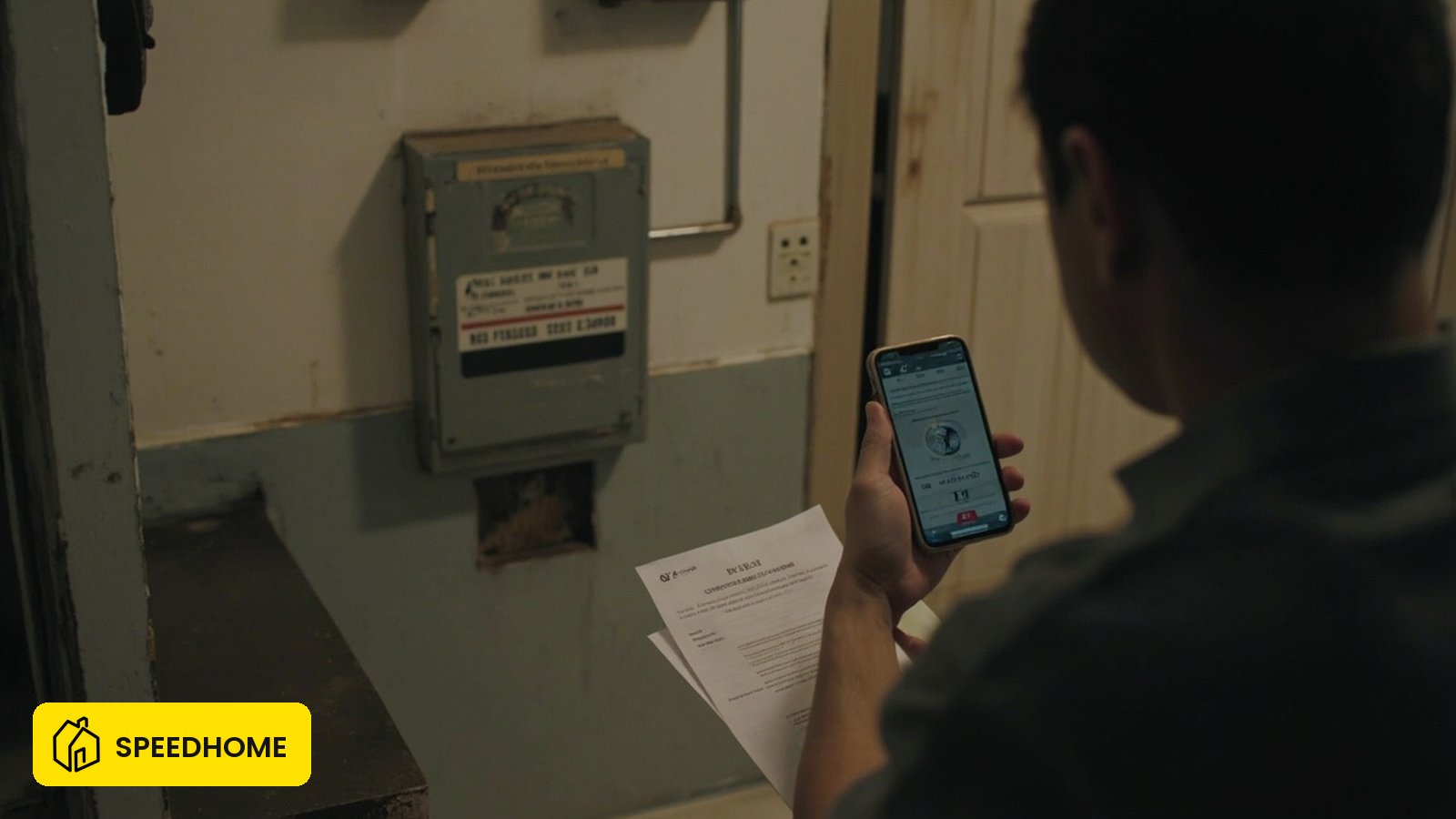
A clean handover hinges on the meter reading and the paperwork, not on clearing the tenant's arrears first. SPEEDHOME's landlord operations data across Malaysian tenancies shows that change-of-tenancy applications are processed fastest, and disputes over arrears allocation are rarest, when the handover meter reading is photo-stamped on the day and stored alongside the change-of-tenancy reference number — the single cheapest risk cut in this whole area, and the one landlords skip most often.
Two starting points, two outcomes
The route back into your name is the same change-of-tenancy process a tenant uses at move-in, applied in reverse against a fresh meter reading. What differs is whether the account was ever genuinely in the tenant's name, because that decides whether the provider looks to you or to the tenant for the outstanding balance.
- Account was in the tenant's name. The tenant's outstanding bill is the tenant's liability to the provider. You apply to register a new account in your name at the unit, using the current meter reading as the opening balance. Providers do not require settlement of the tenant's arrears as a condition of opening your account — confirm the current process with the provider before relying on it. To chase the tenant for the arrears, your route is the tenancy agreement and the civil courts — not utility disruption.
- Account never left your name. The whole balance — including usage during the tenancy — is yours in the provider's eyes, because you are the registered account holder. There is no "back in my name" step; you were never out of it.
For the full account-name liability picture, including water, sewerage, and internet, read the managing utility bills guide for tenants and landlords. For the specific TNB process and how outstanding bills are allocated at move-out, see the TNB change-of-tenancy and unpaid-bills breakdown.
Putting the unit back in your name — TNB and water at a glance
The change-of-ownership pattern is the same across TNB, water, sewerage, gas, and fixed internet — provider form, IC copy, current meter reading, plus the provider's deposit and fee. Do all five on the same day and keep the reference numbers together.
| Step | TNB electricity | Water (e.g. Air Selangor) | Who holds the outstanding balance |
|---|---|---|---|
| 1. Confirm current account holder | Check myTNB — is the account in the tenant's name or still in yours? | Check the provider's app/portal for the registered account holder | Decides whether the provider chases you or the tenant |
| 2. Record the meter reading on handover day | Photo the TNB meter at move-out; this closes the tenant's period | Photo the water meter; same principle | The reading splits the tenant's usage from yours |
| 3. Apply to re-register the unit in your name | Apply via the myTNB portal or at the nearest Kedai Tenaga, as a change-of-tenancy back to yourself, against the new reading | Apply via the provider's portal or service centre for a change-of-ownership back to yourself, with your IC | Opens your fresh account from the handover reading |
| 4. Chase any tenant arrears (if any) | The provider pursues the tenant for the tenant's own account; you pursue the tenant under the TA for amounts the TA says they owe | Same — provider chases the registered tenant account; you act under the TA | TA + civil courts, not utility disruption |
| 5. Repeat at the next tenant's move-in | Transfer to the new tenant's name so this situation does not recur | Transfer to the new tenant's name | Keeps your name off the consumption account |
The documents and fees for the TNB change-of-tenancy are set by TNB and can change; apply through the myTNB portal or Kedai Tenaga for the current form, deposit, and processing fee. Do not rely on deposit figures from dated guides — confirm the live figure with the provider before you budget for it.
Preventing the "back in my name" problem next time
The reason a landlord ever needs to put the unit "back" in their name is that the account was never moved out of it at the previous handover — or was, and now needs to move again.
The fix is mechanical: at every move-in, transfer electricity and water to the tenant's name; at every move-out, record the meter reading and re-register in your name only if the unit will sit vacant.
Build the utility handover into the tenancy agreement itself: name the utility accounts, require the tenant to register them in their own name within a set number of days, and make outstanding utility amounts an express deduction item at the end of the tenancy. A vague clause — or none — is exactly how landlords end up as the registered debtor for a tenant's consumption.
A working landlord-side clause reads roughly: "The Tenant shall, within fourteen (14) days of the Commencement Date, apply to transfer the electricity account with Tenaga Nasional Berhad and the water account with the relevant water authority into the Tenant's name at the unit, and shall provide the Landlord with the change-of-tenancy reference numbers once issued. Any unpaid utility charges standing in the Tenant's name at the expiry or earlier determination of this tenancy shall be a permitted deduction from the security deposit, against documentary proof of the outstanding balance." Drop this into your TA, set the day count to whatever your tenancy cycle can absorb, and keep the references on file.
On SPEEDHOME, tenancies signed under SPEEDHOME Protect log a change-of-tenancy reference against the unit at each handover, so the next landlord — and the next tenant — always has the trail of when the meter reading was taken, which provider accounts were active, and which party was the registered account holder at the point of handover. That record is what stops "the account was never in the tenant's name" disputes from becoming a he-said-she-said about a missing meter photo.
For a structured landlord-side checklist that stops this happening across multiple properties, read the landlord's guide to preventing unpaid utility bills. When you are ready to re-let, list your unit on SPEEDHOME and let the handover trail be built for you.
FAQ
Six questions landlords ask in the first week after the tenant moves out.
Can I put the unit back in my name if the tenant left unpaid utility bills?
Yes. Apply to re-register the electricity and water accounts in your name via the provider's change-of-tenancy process, against the current meter reading. The tenant's unpaid balance on their own account is between the provider and the tenant — you do not have to clear it to open your account, provided the account was correctly in the tenant's name.
What if the utility account was never in the tenant's name?
Then the entire balance — including the tenant's usage — is yours, because you are the registered account holder the provider looks to. There is no "back in my name" step; you were never out of it. Recover what the TA allows from the tenant through a written demand and, if needed, civil court action.
Do I have to pay the tenant's outstanding TNB or water bill to re-register?
No, not if the account was in the tenant's name. The provider opens your account against the new meter reading. The tenant's debt on the tenant's account is the provider's to pursue against the tenant.
Can I keep the tenant's deposit to cover their unpaid utility bills?
Only where the tenancy agreement makes utility amounts an express deduction item, and only for a proven, quantified shortfall. Tying the deduction to the actual outstanding balance and supporting documents keeps it defensible — a blanket holdback is not enforceable unless the TA expressly authorises it for a quantified shortfall.
Can I disconnect water or electricity to force the tenant to settle their bills?
No. Disconnecting water or electricity to pressure a tenant is not a lawful remedy. A landlord cannot recover possession or coerce payment by self-help — locking a tenant out, removing belongings, or disrupting the supply — under the Specific Relief Act 1950 s.7(2). Recover unpaid amounts through the TA and the civil courts.
How do I stop needing to put the unit "back" in my name at the next tenancy?
Transfer electricity and water to each new tenant's name at move-in, record both meter readings on handover day, and put the utility handover in the tenancy agreement as an express clause. That keeps your name off the consumption account for every period the unit is let.