
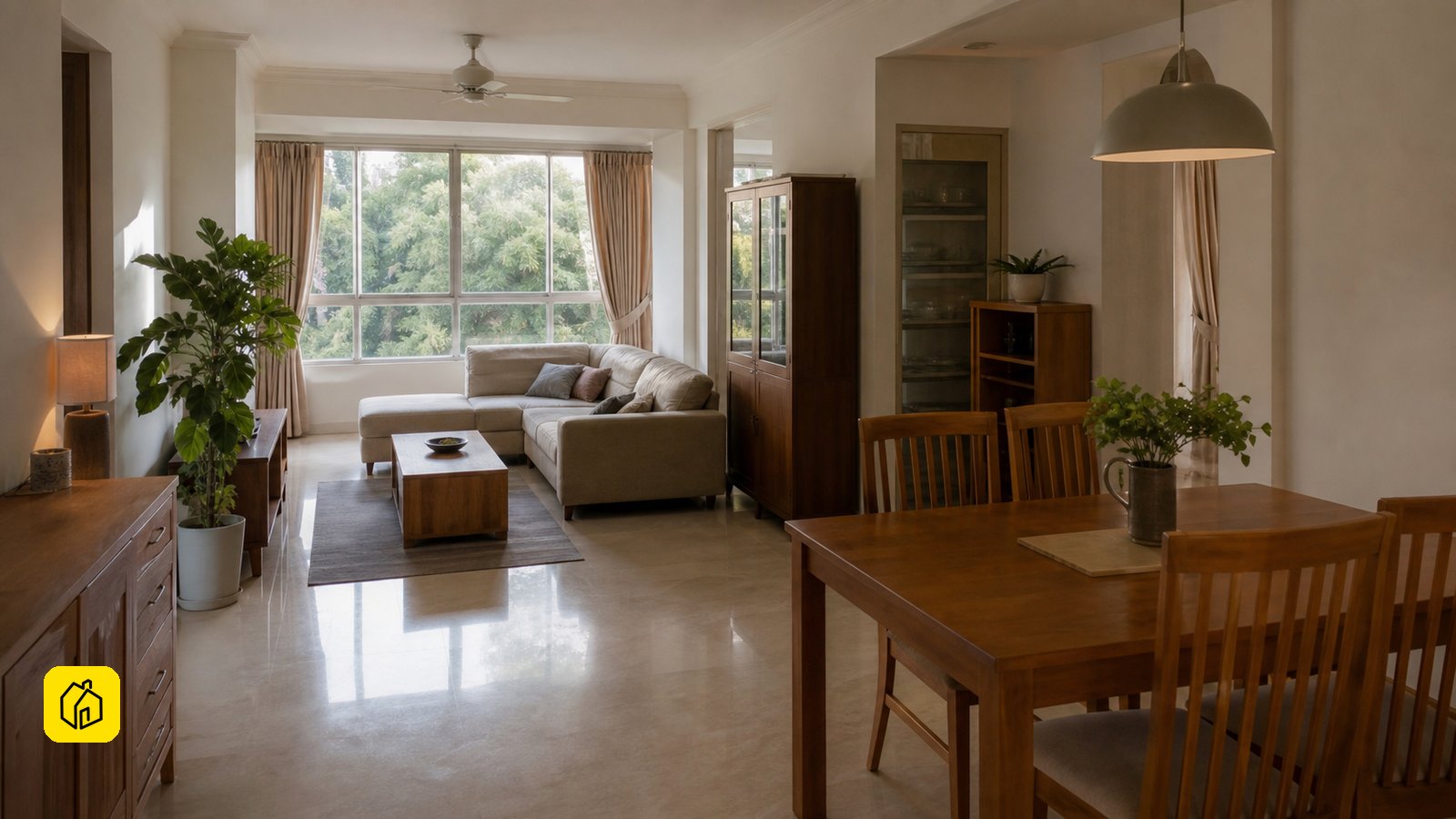
Own a unit at City of Green? The default is the whole-unit let, and the strongest evidence in this building is ours: the only zero-deposit listing is SPEEDHOME's own dedicated card — RM2,300 for a 1,067 sqft three-bed, pet-friendly, keys held, three years live with 25 lifetime chat requests. Against the PG asking card of RM330,000 (RM328 psf on a 1,000 sqft three-bed) that is about 6.9-8.4% gross, asking-based — no transacted row exists, Brickz has no page, and the excerpt psf readings (RM363-510) are context, not measurement. The split loses here on measured numbers: two corridor rooms gross RM1,400-1,500 against the RM2,300 whole-unit ask, and the pet-friendly premium attaches to the whole-unit offer anyway. Short stay: one named sighting, no rate. Run your own numbers — the loaded card is ours, the loaded price is the live ask.
Three ways to run your unit
Pick a model card, put in your own numbers — the loaded price is the live PG asking card and the loaded rent is our own board's dedicated zero-deposit card. The answer updates as you type.
Loading the renovation ROI comparison…
What can you earn?
First-party first: SPEEDHOME holds the building's dedicated card — RM2,300 a month for a 1,067 sqft three-bed two-bath with two carparks, partial furnishing, pet-friendly, keys on hand, minimum twelve months, live since July 2023 with 25 lifetime chat requests and 6 viewings. That is the building's only zero-deposit listing, and it anchors the working band on first-party data no portal can match.
The portal context frames it: the Mudah Bukit Jalil feed carries 316 live listings averaging RM1,674 (median RM1,699) and not one City-of-Green-named card on page 1 — this building's long-let market lives on our board, not the portals. The split arithmetic, corridor-basis and labelled: at the corridor's room rates (RM700 at Vista Komanwel A, RM750 for a PPA1M master), a two-room split grosses RM1,400-1,500 — below the RM2,300 whole-unit ask before you spend a ringgit on furnishing, and the pet-friendly premium rides the whole-unit offer regardless. Whole-unit wins on measured numbers; that is the verdict, not a preference.
The sale side is excerpt country: a PG search card asks RM330,000 at RM328 psf for a 1,000 sqft three-bed (freehold, built 2016, listed 1 October 2026), the PG FAQ prints "start from RM180,000" for the scheme, and the aggregator excerpts read RM363-510 psf sold (EdgeProp), ~RM400 psf for the popular 3-bed (irumah) and RM500 psf on two NAPIC sales — none live-verified, never cited as measured, and Brickz holds no building page. So the honest yield statement: RM2,300 on a ~RM330,000-400,000 entry is about 6.9-8.4% gross, asking-based, both ends labelled. Short stay: zero building-named units in the Airbnb grid; one search-snippet sighting of a "City Of Green near Bukit Jalil Cozy & Clean (7pax)" entire unit rated 4.63 — presence without a rate, so nightly income stays unpriced. Running costs: maintenance, quit rent and the MC pet policy are not published on any channel read; the RM330 default is a fenced placeholder.
Why the border address decides everything
City of Green is BJ Homes' freehold four-block, 29-storey, 1,054-unit serviced residence at Jalan PBS 14/2, Taman Bukit Serdang — completed 2016-2017 per the DurianProperty and Mudah records (the market-evidence header and a PG card print 2016; the range carries verbatim). Keep the label straight: it markets as Bukit Jalil for the border pull — TPM, APU, the stadium corridor — but the address is 43300 Seri Kembangan and the local authority is MBSJ, whose rules and assessments actually apply.
The two formats are two businesses: a 650 sqft studio prices as a single professional's home, the 1,000-1,200 sqft 3-bed/3+1 as a family or shared-professional let. What the evidence adds to the record: this building's market is board-first, not portal-first — 316 corridor listings and zero named cards means the demand that matters walks through our own channel, which is exactly where the pet-friendly whole-unit offer (and its roughly 15-20% premium class) is strongest. The MC's written position on multi-tenancy and short stay is not public today, and it gates anything beyond the default.
5 checks before you buy
-
Get the real title document. Freehold scheme, but the parcel's own plate — studio or 3-bed, inside the 650-1,200 sqft bands — and any encumbrance. Done: you hold the issue document.
-
Get the MC's written positions in one letter — multi-tenancy, pets, short stay, renovation. Nothing public settles any of them. Done: the letter itself.
-
Get the real running costs. Nothing is published; the latest maintenance and sinking-fund statement is the number, in a 1,054-unit scheme where arrears move the maths. Done: the latest statement. See the real cost of self-managing a rental.
-
Show your renovation plan to MBSJ before you sign anything. Furniture yes, structure no, partitions never without written approval. Done: written reply.
-
Until checks 1 and 2 are done, buy nothing you cannot undo. A reversible SPEEDRENO rental fit-out with pet-durable finishes serves the pet-friendly whole-unit play the evidence already supports — and it converts back in a day.
FAQ
Is City of Green a room-rental investment?
No — the arithmetic loses. Two corridor rooms gross RM1,400-1,500 against the RM2,300 whole-unit own-board ask, before furnishing and management effort, and there is no in-building room rate to measure. Whole-unit pet-friendly is both the default and the better number here; any sharing question starts with the MC's written position, which is not public. SPEEDHOME coliving is cat-friendly — cats welcome in our coliving rooms — whatever the MC decides about sharing.
What yield does City of Green give?
About 6.9-8.4% gross on the asking basis — RM2,300 over a ~RM330,000-400,000 entry (the PG card at RM328 psf is the live denominator; transacted excerpts run RM363-510 psf but are not live-verified, and Brickz has no page). Asking-based, labelled, both ends. Enter your own dated numbers in the calculator above.
Is short-stay allowed at City of Green?
Zero building-named units sit in the Airbnb grid; one search-snippet sighting of a named 7-pax unit (rated 4.63) carries no measurable rate, and no by-law text is public. Presence, not a price and not permission — treat nightly income as unpriced until the written position says otherwise.
Are pets allowed at City of Green?
The one measured fact in this building is pet-shaped: our own dedicated listing runs pet-friendly at RM2,300 — the flag is measured on the card, and the ~15-20% premium class is market context. SPEEDHOME coliving is cat-friendly — cats welcome in our coliving rooms. The building-level MC position is not published and can vary; the offer is SPEEDHOME policy.
What running it looks like
Setup is two documents: the title (which names your plate) and the MC letter (which settles multi-tenancy, pets and short stay). The work is one household in one partially furnished three-bed — a listing, viewings, a stamped tenancy agreement, then rent day. Zero deposit, professional screening, and SPEEDHOME runs the listing, the viewings and the rent collection while you approve the tenant before anything is signed. In a building whose market already lives on our board, the pet-friendly whole-unit card is the one that lets.
Ready? List your unit with SPEEDHOME — zero deposit, we run the viewings, you approve the tenant.
The own-board card and its counters, the 316-listing corridor feed, the PG asking card, the transacted excerpts and the Airbnb grid are reads of 10 October 2026; the yield is a labelled derivation on the asking basis. More: the landlord investment decision guide.