
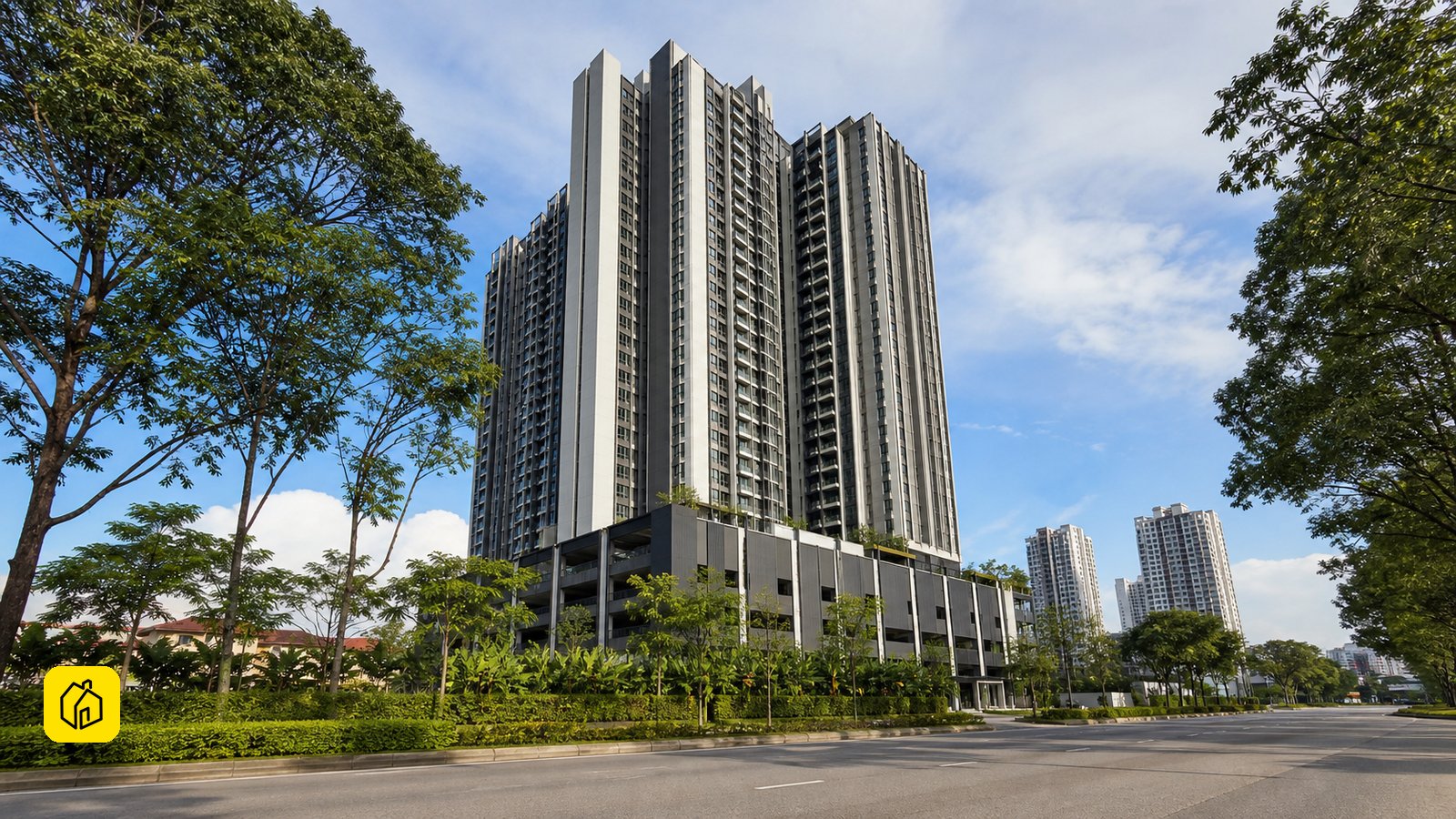
Own a D'Ivo unit (or buying one)? Let it whole. This forming Old Klang Road tower has one price that actually holds: the 449 sqft studio floor at RM1,700, unchanged across 14+ months of live listings — about 3.2% gross at the RM642,500 entry ask. That is a thin new-launch yield, so the case is entry price plus being early: 85 units already compete on the portals, and zero are on SPEEDHOME's zero-deposit site yet.
Three ways to run your unit
Pick a model card, tell the tool which unit you own, then put in your own numbers. The answer updates as you type, and the charts show the trade-offs.
Loading the renovation ROI comparison…
What can you earn?
Buy at RM642,500 — the floor of the six live sale asks (RM642,500-1,250,000). Rent the studio at RM1,700 — the floor that has held across three separate listings spanning August 2025 to October 2026, the steadiest number in this building.
Worked out: RM1,700 x 12 = RM20,400 divided by RM642,500 = 3.2% a year gross. At the recorded sale median of RM698,000 it is about 2.9%. Bigger plates rent for more but yield less: family units ask RM1,800-2,300 on 817-1,083 sqft.
Based on comparing current listings: "See 85 condos for rent, from RM1,700 to RM3,900" (live rental profile, 10 Oct 2026). "RM1,700 … 449 sq.ft … fully furnished" — three separate studio listings, the oldest 14 months old. Transacted rents are not published; the sale median comes from three recorded transfers, a thin denominator.
SPEEDHOME has no D'Ivo listing today — you would be the first zero-deposit listing in the building. The area around it clears units on our own records: a Season Garden unit at RM1,800 has pulled 71 chat requests and 11 viewings, and an RM850 pet-friendly unit nearby drew 17. The demand is on Old Klang Road; D'Ivo just has nobody hosting it yet.
Why whole-unit wins a forming market
Price discovery here is whole-unit. Eighty-five live asks — studios to family units — set the range every day, while the room side has never produced one live in-building listing: the only room number on record is a search-summary RM700 "from" on the 1,083 sqft four-bed. Split that four ways on paper and RM700-800 a room grosses RM2,800-3,200 — above the RM2,300 whole-unit ask for the same unit. The arithmetic wins, the evidence is thin, and the law narrows it further.
The legal line is plain. Rooms means bedrooms that already exist, with the management's written OK. Carving new bedrooms is banned in DBKL's commercial-titled strata — the 2023 partition ban — and EXSIM service residences are exactly that title class. No D'Ivo by-law position is published; under SMA 757 the MC binds owners once formed.
Short-stay is unmeasured at the building — zero D'Ivo units on the platforms (checked 10 Oct 2026), though the area around it lists RM137-241 a night. Whether you may ever join is the management's written call; the courts have confirmed it is their decision.
5 checks before you buy
-
Get the real land title document — not the agent's ad. D'Ivo is leasehold service-residence strata; your copy settles the term and what you may legally do with the unit. Done: you hold the title copy.
-
Get the management's rules in writing — room sharing, pets, short-stay. One letter answers all three in a tower still forming its first MC. Done: you have the letter.
-
Get the real running costs — management fee, sinking fund, quit rent. None are published on any site we read, so ask. Done: a number on paper. See the real cost of self-managing a rental.
-
Show your renovation plan to DBKL before you sign anything. Existing bedrooms need no walls moved; new ones are banned in this title class. Done: the council tells you in writing.
-
Until checks 1 and 2 are done, buy nothing you cannot undo. For D'Ivo: furniture yes, walls no — a reversible SPEEDRENO rental fit-out converts the unit back to normal in a day.
FAQ
Can you rent rooms at D'Ivo?
Only in bedrooms that already exist, and only with the management's written OK. No in-building room rate has been measured — the RM700 "from" figure is a search summary, and carving new bedrooms is banned under DBKL's 2023 partition ban for this title class. See the room rental and co-living guide.
What yield does D'Ivo give?
About 3.2% a year gross on the studio floor: RM1,700 rent on a RM642,500 entry ask, or about 2.9% at the recorded RM698,000 median. Family units ask RM1,800-2,300. Running costs are not published, so your real return is lower — the calculator above takes your own numbers.
Is short-stay allowed at D'Ivo?
Zero D'Ivo short-stay units exist (checked 10 Oct 2026), so there is no measured market in the tower — and the management's written permission comes first; the courts have confirmed it is their call. Get the letter before you spend money.
Are pets allowed at D'Ivo?
The building's rules are not public. SPEEDHOME coliving is cat-friendly, and pet-friendly rooms earn about 15-20% more. The offer is SPEEDHOME policy; building rules can vary.
What running it looks like
Setup is the two documents: title, house rules. The work is one tenant whole-unit — one listing, a handful of viewings, a stamped tenancy agreement, then rent day. Treat selling as the slow exit: six sale asks against 85 rentals says this is a renting building, and 85 existing asks mean your listing has to present better than the crowd to clear. SPEEDHOME runs the listing, the viewings and the zero-deposit screening; you approve the tenant before the agreement is signed.
Ready? List your unit with SPEEDHOME — zero deposit, we run the viewings, you approve the tenant. The Old Klang Road picture, precinct by precinct: the local rental guide.
All figures are asking prices read on 10 Oct 2026 (live rental profile and portal sale listings); the sale median is from three recorded transfers under the land name Residensi Dedau Mas. Running costs, the management's by-law position and transacted rents are not published — that is your check-list. More: the landlord investment decision guide.