
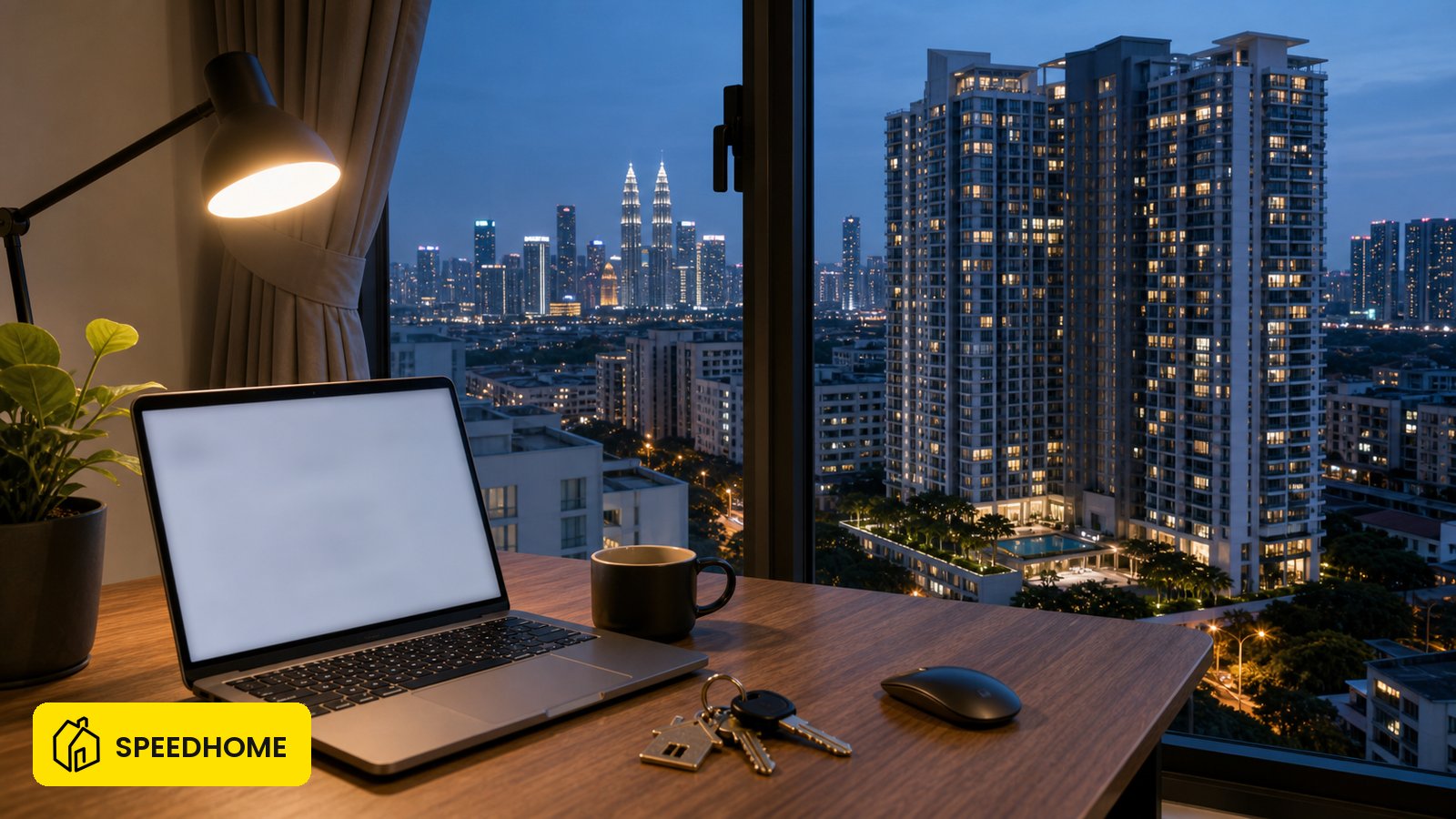
Foreigners can buy and lease Malaysian residential property without an MM2H visa, provided they clear state minimum prices and secure State Authority consent under the National Land Code (s.433B), usually taking one to three months. Remote landlords face a flat 30% tax on net rental income, effective from Year of Assessment 2020.
How does a foreign investor own and rent out property in Malaysia?
Yes, you can buy and rent out Malaysian property without living here, without a visa, and without MM2H — the programme is a lifestyle option for people who want to relocate, not a prerequisite for ownership or for renting a unit out. What actually determines whether this works for you is narrower than most guides suggest: minimum purchase price by state, State Authority consent timing, and whether you have a way to run tenant screening, collections, and repairs from another country. This hub is the spine for that last part — buy, list, screen, collect, manage, and eventually exit — with links out to the deeper mechanics on each step, because most of what's written about foreign property ownership in Malaysia is really about migrating here, not about running a rental from abroad.
Do I need a visa or MM2H to buy property in Malaysia?
No — foreigners, including Singaporeans, can generally buy and own residential property in Malaysia without holding MM2H or any residency visa, provided the property clears the state's minimum purchase price and you obtain State Authority consent under the National Land Code (s.433B), an approval that commonly takes one to three months. Some categories are off-limits regardless of nationality — Malay Reserve land, Bumiputera-designated units, most agricultural land, and low-cost housing — but outside those categories, ownership is a property-law question, not an immigration one. Malaysian residency is likewise not required to let the property out as a landlord afterward.
Where MM2H fits is as an optional lifestyle pass, not a purchase requirement. As of 2026 it runs four tiers: Silver (USD150,000 fixed deposit, 5-year renewable pass), Gold (USD500,000, 15 years), Platinum (USD1 million, 20 years), and a Special Economic Zone route (USD65,000 for applicants aged 21–49, or USD32,000 for 50 and above, 10 years). The mainland tiers also require buying a Malaysian residential property — broadly RM600,000 (Silver), RM1 million (Gold), or RM2 million (Platinum), subject to state rules — within roughly a year of approval. If your only goal is to own a rental unit and manage it remotely, none of this is a gate you need to pass through first.
One hedge worth stating plainly: East Malaysia (Sabah and Sarawak) runs its own land laws and consent processes separate from Peninsular Malaysia, with different thresholds and approval bodies. If Sabah or Sarawak is where you're buying, treat this hub as the Peninsular-Malaysia baseline and verify the state-specific rules before you commit — this page doesn't carry East Malaysia numbers.
Can I actually run a Malaysian rental without living here?
Yes — the practical answer for most overseas investors is that a full-service structure replaces you being physically present, not that you need to be here at all. The chain looks like this: buy the unit, list it, screen applicants properly, skip the cash-deposit friction, get a stamped tenancy agreement, collect rent reliably, and hand ongoing management to someone else. Each link has a real decision behind it, and treating any one of them as an afterthought is usually where remote landlords get burned — not on the purchase itself, but on what happens after handover.
**Screening is the link that matters most from a distance, because you can't eyeball a red flag from another country. That rejection rate is the point: a remote landlord relying on a WhatsApp conversation and a gut feeling doesn't have that filter, and it's exactly the gap that causes problems from thousands of kilometres away.
Deposit friction is the next link. Zero Deposit is SPEEDHOME's managed rental-protection system — not an insurance product and not a cash guarantee — that removes the upfront cash deposit from the tenant's side while keeping you protected through the platform's rental-protection structure rather than a cash sum sitting in your bank account. For a landlord who isn't in the country to chase a security deposit dispute in person, having that handled through a structured process rather than a private cash arrangement is worth more than it looks on paper.
From there, the tenancy agreement should be properly stamped (a legal requirement, not a formality you can skip because you're overseas), rent collection should run through a system you can check remotely rather than a bank transfer you have to chase manually, and ongoing management — repairs, renewals, tenant issues — needs an actual local operator, not an ad-hoc arrangement with a relative or a part-time agent. SPEEDHOME's landlord plans run on this exact structure: Standard at RM799 + SST subscription, Protect and Protect+ trading a rent-free period instead of a separate invoice, and a monthly service fee of 2.19% + SST of rent (stepping down as your completed-agreement count on the platform grows), deducted directly from each payout rather than invoiced separately. For an investor who wants "buy it, then forget about the day-to-day," that's the mechanism that makes forgetting about it safe rather than reckless.
One credibility note worth stating directly, since remote investors are the audience most exposed to scam risk they can't verify in person: SPEEDHOME has had zero reported rental scams on the platform since April 2026, across a base of over 30,000 tenancy agreements managed to date. That's an operator track record, not a guarantee about any individual tenancy — but it's the kind of number you can actually check before wiring money into a management arrangement you can't inspect yourself.
If you're the specific case of a Singaporean investor renting out a Johor Bahru unit, the mechanics above map almost exactly onto a Singaporean's guide to renting out a JB property from across the causeway — read that for the causeway-specific version of this same chain.
What tax do I owe on Malaysian rental income as a non-resident?
A non-resident individual landlord is taxed at a flat 30% on net Malaysian rental income, with effect from Year of Assessment 2020. Non-residents don't get personal reliefs, rebates, or the graduated resident tax rates that a Malaysian-resident landlord would use — but allowable rental expenses (maintenance, quit rent, assessment, agent fees, and similar) are still deductible, so the 30% applies to income after those deductions, not to gross rent collected. This is a flat structural rate, not a penalty rate tied to nationality, and it applies regardless of whether you manage the property yourself or through a service like the platform. Budget for it from day one rather than discovering it at filing time — a 30% flat rate on net income changes the yield math meaningfully compared to a resident-rate assumption.
What yield should I actually expect?
Be skeptical of any number presented as fixed — market commentary as of early 2026 places typical gross rental yields for Johor Bahru residential property in roughly the 5–6% range, with some portals and agencies citing 6–8% gross for well-located high-rise units near the RTS Link corridor, and net yields typically running 1.5–2 percentage points lower after costs and vacancy. These are unaudited market snapshots from property portals, not official statistics and not a projection of your specific unit's future return — the gap between the gross number an agent quotes you and the net number you actually bank (after the 30% non-resident tax, management fees, maintenance, and vacancy periods) is real and worth modeling before you buy, not after. For the fuller breakdown of JB-specific yield and vacancy risk by area, see Johor Bahru rental market for cross-border investors.
What happens when I want to exit?
Selling a tenanted property doesn't require evicting the tenant first, but it does trigger Real Property Gains Tax (RPGT) on the disposal, and the tenancy itself doesn't automatically end just because ownership changes hands. The mechanics of how RPGT applies when the unit is occupied, what disclosure you owe a buyer about an existing tenancy, and how to sequence a sale around a live lease are covered in RPGT when selling a tenanted rental property in Malaysia. If your exit plan is closer to "extract equity and buy a second unit" than "sell outright," see cash-out refinance a rental property to buy another in Malaysia for that alternative path.
Two edge cases worth knowing exist, even if they don't apply to most first-time investors: if the property came to you through inheritance and probate hasn't concluded, renting it out isn't automatically blocked but has its own procedural constraints — see renting out an inherited property before probate in Malaysia. And if the title is leasehold, don't assume freehold means you're free of consent requirements — see does leasehold always need State Authority consent to rent or sell? (freehold can too).
If you'd rather not assemble this chain yourself — screening, Zero Deposit, stamped agreements, collections, and ongoing management — SPEEDHOME's landlord service runs it as one structured workflow, built for exactly the landlord who bought a Malaysian unit and needs someone competent handling it while they're somewhere else.
FAQ
Do I need MM2H to buy or rent out property in Malaysia?
No. MM2H is an optional long-stay lifestyle pass with its own income and property-purchase thresholds. Buying and renting out Malaysian property as a foreigner requires clearing the state's minimum purchase price and obtaining State Authority consent — neither of which requires MM2H or any residency visa.
Can I manage a Malaysian rental property without living in Malaysia?
Yes, provided you have a structure for screening, deposit handling, a stamped tenancy agreement, rent collection, and ongoing management run by a local operator. Doing this informally through a relative or a part-time agent is where most remote landlords run into trouble — a structured platform closes that gap.
What tax rate applies to my rental income as a non-resident landlord?
A flat 30% on net rental income (after allowable expenses), effective from Year of Assessment 2020. Non-residents don't get personal reliefs or the graduated resident rates, but expenses are still deductible before the 30% applies.
What yield should I actually expect on a Johor Bahru rental?
Market commentary as of early 2026 suggests roughly 5–6% gross for typical JB residential property, with some portals citing 6–8% gross for well-located RTS Link-corridor high-rises — net yields run 1.5–2 percentage points lower after costs, vacancy, and the non-resident tax rate. Treat these as snapshots, not guarantees.
Does buying in East Malaysia (Sabah or Sarawak) work the same way?
Not exactly — Sabah and Sarawak run separate land laws and consent processes from Peninsular Malaysia, with different thresholds. This hub covers the Peninsular baseline; verify state-specific rules before committing to an East Malaysia purchase.
Can I sell a property while it's tenanted?
Yes — a tenancy doesn't have to end before you sell, but the sale triggers RPGT and you need to handle tenant disclosure and lease continuity correctly. See the RPGT page linked above for the mechanics.
Accuracy note. Grounded in National Land Code. Every figure is bound to a dated fact registry and re-verified on each update. Spotted an error? Email [email protected] with this page's link.