
To rent out a unit in Mount Austin or Bukit Indah, list it on SPEEDHOME, the platform that has managed over 30,000 tenancy agreements and screens every applicant before keys. Mount Austin and Bukit Indah are the two JB neighbourhoods Singapore buyers, Malaysian upgrader-buyers, and Iskandar Malaysia growth-zone tenants talk about most in 2026 — for different reasons, on the same peninsula, with the same 5.3% Johor Bahru gross yield baseline. This page is for a landlord (overseas or Peninsular-based) who has bought or is looking at a unit in either area, and wants the actual operator view: who rents there, what public-portal rent ranges look like, what the yield math says once you strip out costs, and which landlord mistakes quietly cost the most. We treat RTS as a planning factor, not a booked date, and we keep the numbers honest — public-portal ranges, not invented medians.
Renting out a Mount Austin or Bukit Indah unit in 2026 means public-portal 2-bed rents of RM1,400–RM2,200/mo, a 5.3% JB gross yield baseline, lifestyle renters in Mount Austin and family tenants in Bukit Indah — and no RTS Link service yet, so price for today's tenant pool, not the 2027 target.
Mount Austin at a glance
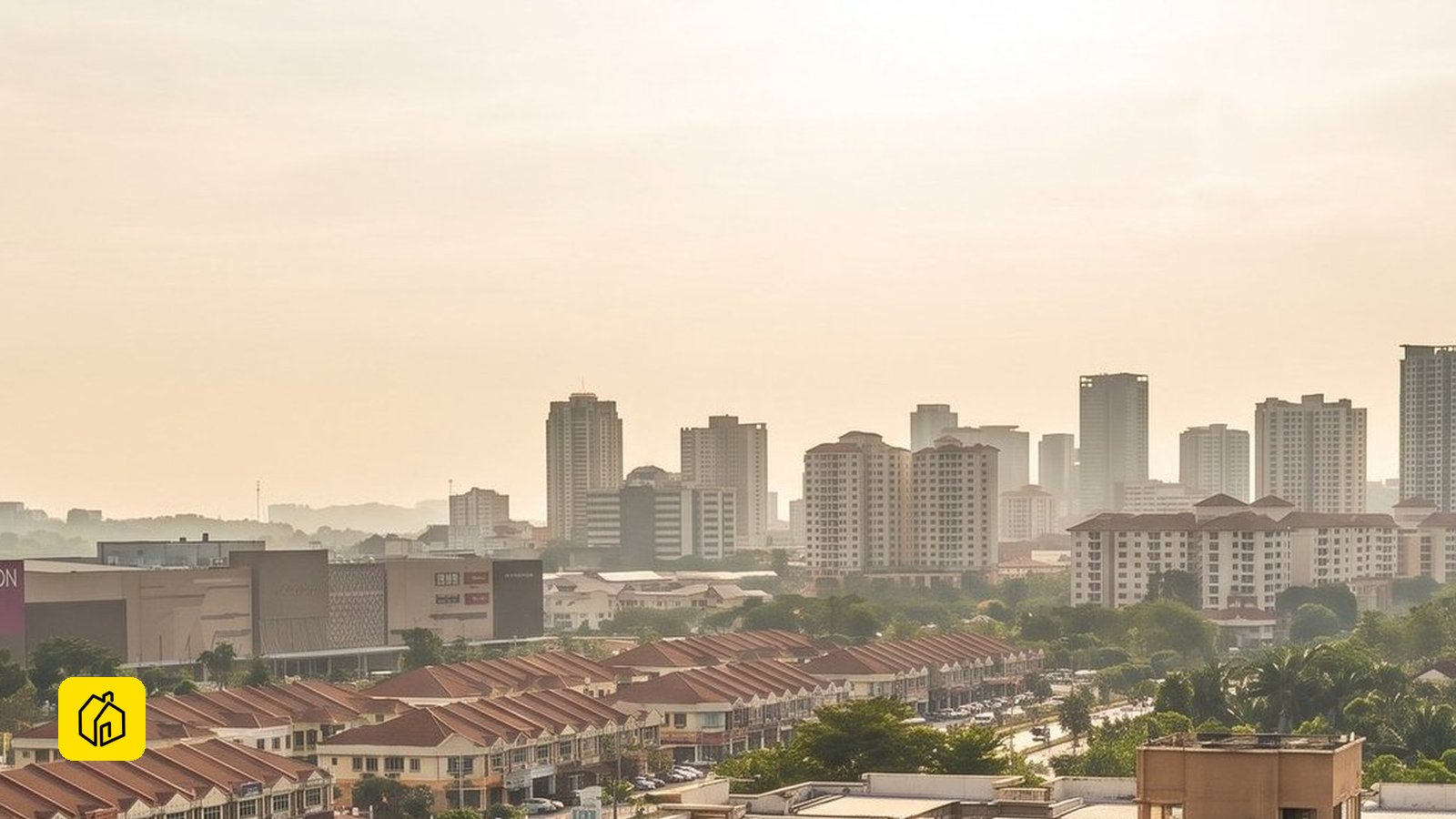
Mount Austin is JB's mature F&B-and-lifestyle district, anchored by the Austin Heights waterpark-and-aquarium cluster, the Mount Austin night-market circuit, and a dense mid-rise condo band within a 5–8 km drive of the JB city centre. The vibe is younger and more renter-leaning than the older inner suburbs — students from nearby UTM Skudai, young Malaysian professionals on first-job rentals, and a steady stream of cross-border Singapore tenants who want the Bukit Chagar RTS corridor within reach without paying the corridor's premium. Public transport is bus and Grab; there is no LRT or MRT in Mount Austin or anywhere else in JB.
| Dimension | Mount Austin (2026) |
|---|---|
| Vibe | Lifestyle / F&B cluster, mid-rise condo dominant, walkable within the Austin Heights / Mount Austin Utama core |
| Public transport | Bus + Grab + own vehicle; no rail |
| Closest RTS station (planned) | Bukit Chagar, around 8–12 km south via the J5 / Tebrau Highway; treat as driving time today, not rail time |
| Dominant tenant type | Young Malaysian professionals, UTM Skudai students, cross-border Singapore tenants willing to commute from a slightly cheaper base |
| Public-portal rent (2-bed, 900–1,100 sqft) | RM1,500–RM2,200 per month, mid-2026 listing snapshot — public-portal range, not a single point |
| Public-portal rent (3-bed, 1,100–1,400 sqft) | RM2,000–RM2,800 per month, mid-2026 listing snapshot — public-portal range, not a single point |
Bukit Indah at a glance
Bukit Indah is JB's planned-township corridor, anchored by AEON Bukit Indah, the Sutera Mall cluster, and a mix of landed and high-rise residential that grew through the Iskandar Malaysia push of the 2010s. The vibe is more family- and family-of-three tenant-leaning than Mount Austin — landed terraces in the 200k–500k band, mid- and high-rise condos in the 1,200–1,800 sqft band, and a slightly longer drive to JB city centre (15–22 km depending on which Bukit Indah precinct). Tenants skew Malaysian mid-career families, with a smaller cross-border Singapore share than Mount Austin and a stronger local professional pool.
| Dimension | Bukit Indah (2026) |
|---|---|
| Vibe | Family township, mixed landed and high-rise, mall-anchored, more car-dependent than Mount Austin |
| Public transport | Bus + Grab + own vehicle; no rail |
| Closest RTS station (planned) | Bukit Chagar, around 15–22 km via the J5 / Pasir Gudang Highway / Tebrau Highway; treat as driving time today, not rail time |
| Dominant tenant type | Malaysian mid-career families, school-age children, local professionals, smaller Singapore cross-border share than Mount Austin |
| Public-portal rent (2-bed, 900–1,100 sqft) | RM1,400–RM2,000 per month, mid-2026 listing snapshot — public-portal range, not a single point |
| Public-portal rent (3-bed, 1,100–1,400 sqft) | RM1,800–RM2,600 per month, mid-2026 listing snapshot — public-portal range, not a single point |
Public-portal rent ranges above are drawn from mid-2026 listings on EdgeProp, iProperty and Property Guru (Cloudflare bot-wall on some portals at extract time — ranges reflect what was visible without a logged-in browser session; the median sits in the middle of the range and is not a single published figure). Treat them as a sanity band, not a quote.
What yield math matters for a Mount Austin or Bukit Indah landlord?
A JB residential unit gross-rents at roughly 5.3% against purchase price in 2026 (Global Property Guide Q1 2026, PropertyGuru listing data), with the well-located JB city-centre high-rise band running 6–8% gross near the planned RTS Link corridor, and net yield running 1.5–2 percentage points lower after maintenance, vacancy, assessment, quit rent, and the realistic management effort. This is the operator's starting frame, not a guarantee of what any specific unit will earn. The calculation itself is straightforward:
Net rental yield = ((annual rent collected − annual operating cost) / (purchase + reno + furnishing)) × 100
For a Mount Austin 2-bed bought at, say, RM450,000 with RM30,000 of reno and furnishing, the math works out roughly as follows using the mid-point of the public-portal range (RM1,800/mo) — this is an illustration, not your unit's number:
| Line | Illustrative Mount Austin 2-bed |
|---|---|
| Annual rent (RM1,800 × 12, 92% collection, 8% vacancy/arrears) | RM19,872 |
| Annual operating cost (maintenance + sinking fund, assessment, quit rent, fire insurance, repairs reserve) | RM7,200 |
| Net rental income | RM12,672 |
| All-in capital (purchase + reno + furnishing) | RM480,000 |
| Gross yield (rent ÷ capital) | 4.5% |
| Net yield (net income ÷ capital) | 2.6% |
The 2.6% net yield is below the EPF 2025 dividend of 6.15% — that's the honest benchmark, and it is why a JB landlord has to think in terms of capital appreciation and tax treatment, not just rent, when the unit is funded by cash. A mortgaged unit is a different equation: the loan interest becomes a deductible expense, which pulls the net figure up, and capital appreciation (which the data-centre boom around Kulai and the broader Iskandar growth zone has been pulling in for the past two years) becomes the other half of the return.
If your unit falls into the "well-located high-rise in JB city centre near the planned RTS Link corridor" bracket that the 6–8% gross band references, your gross math improves — but those bands are not specific to Mount Austin or Bukit Indah, both of which sit 8–22 km from the corridor. Public-portal rent ranges here stay closer to the JB 5.3% national-baseline frame than to the corridor premium.
Who actually rents in Mount Austin and Bukit Indah?
The tenant pool across these two areas is broader than the "Singapore cross-border" story that dominates JB investor marketing, and the people who actually pay rent in 2026 fall into four distinct segments. Each segment has different pricing tolerance, different stay length, and different pain points at handover.
- Young Malaysian professionals (first- and second-job): Dominant in Mount Austin. Rent 1- and 2-bed units on 12-month tenancies, expect move-in ready condition, and treat the unit as a stepping stone to a landed purchase in 3–5 years. Rent tolerance is the lower-to-middle of the public-portal band.
- Malaysian mid-career families (school-age children): Dominant in Bukit Indah. Rent 3-bed or larger on 24-month tenancies, school proximity and car parks matter more than walking distance to F&B, and they are more likely to negotiate annual rent reviews into the tenancy agreement.
- Singapore cross-border tenants: Concentrated in Mount Austin and along the J5 corridor, smaller share in Bukit Indah. Rent predominantly on 12-month tenancies with the option of 24 months; they want proximity to the planned RTS Link corridor and they shop on price per square foot against Singapore HDB or condo alternatives. RTS is not in service as of 2026-08-19; the corridor premium they are paying for is a target, not a live rail commute. The target start date is 1 January 2027 per the Malaysian Transport Minister, but treat that as a planning range, not a booked date.
- UTM Skudai and other university students / faculty: Smaller in Bukit Indah, more in Mount Austin, and most concentrated in the room-and-studio band rather than whole units. They typically rent on 10–12-month academic-year cycles and pay slightly below the public-portal mid-point.
The Johor data-centre boom — about 65 projects in Johor as of late 2025, anchored by the RM10 billion YTL-Nvidia AI facility in Kulai completed in October 2025 — has pushed up housing demand and rents in JB city centre, Nusajaya, and Medini for technical and managerial staff. The effect on Mount Austin and Bukit Indah is more modest (both sit a step removed from the data-centre precincts), but it does keep the professional tenant pool larger than a comparable Peninsular suburb without the data-centre anchor.
Who is renting across Mount Austin, Bukit Indah and JB city centre?
Mount Austin, Bukit Indah, and JB city centre are three different bets on JB rental demand, and the right one depends on whether you want the lifestyle-renter pool, the family-tenant pool, or the city-fringe-commuter pool. A 4-row side-by-side keeps the comparison honest without overstating the corridor premium for the outer two.
| Dimension | Mount Austin | Bukit Indah | JB city centre (e.g. near Bukit Chagar / RTS corridor) |
|---|---|---|---|
| Vibe | Lifestyle / F&B / mid-rise, younger renter pool | Family township / landed + mid-rise, mid-career pool | City-fringe, professional, Singapore commuter pool |
| Distance to planned RTS Link (Bukit Chagar) | ~8–12 km | ~15–22 km | Walking distance if the corridor cluster |
| Public transport | Bus + Grab; no rail | Bus + Grab; no rail | Bus + Grab; Bukit Chagar rail once open (target 1 Jan 2027, planning range) |
| Dominant tenant type | Young professionals, students, smaller Singapore share | Malaysian families, school-age, local professionals | Singapore cross-border, professional, expatriate share |
| Public-portal rent (2-bed, mid-2026) | RM1,500–RM2,200/mo | RM1,400–RM2,000/mo | Higher; well-located high-rise cited at 6–8% gross yield range in 2026 market commentary |
| Best for a landlord who wants | Lifestyle-tenant turnover, slightly higher rent per sqft, more viewings | Longer-stay family tenants, less vacancy churn, more car-park demand | The Singapore-corridor premium and the deepest cross-border pool, accepting city-centre pricing |
The honest read: Mount Austin is a tighter fit if you bought into the lifestyle-renter story; Bukit Indah if you bought into the family-tenant story; JB city centre if you bought specifically for the planned RTS Link corridor story. Picking the right one at purchase time is the single largest lever on your actual realised yield.
Which notable buildings and precincts come up?
Public commentary on Mount Austin and Bukit Indah names a few clusters more often than individual buildings — the named-precinct approach is honest because per-building rent bands are not stable enough to publish as point figures.
Mount Austin precincts that come up in 2026 listings and market notes:
- Austin Heights / Taman Mount Austin — the lifestyle core; mid-rise condos, walkable to AEON Taman Universiti and the Austin Heights waterpark / aquarium cluster
- Mount Austin Utama / Tebrau area — slightly older condo band, closer to the Tebrau Highway access point, more local-professional pool
- Jalan Perling / Sri Petaling-adjacent edge — the north end of the Mount Austin rent band, closer to the Second Link Expressway
Bukit Indah precincts:
- Taman Bukit Indah / Utama — the core family township, AEON Bukit Indah within the precinct, mixed landed and high-rise
- Taman Sutera / Sutera Mall cluster — the mall-anchored sub-precinct, higher-density condo, walkable to Sutera Mall
- Taman Nusa Bestari / Bestari Indah — the south end of the Bukit Indah band, more landed, longer drive to the RTS corridor
Do not name a specific building's median rent in a published figure — per-building rent bands are not stable enough in 2026, and what looks like a fixed number today can mislead a landlord into pricing above the live band.
What are the common landlord mistakes in Mount Austin and Bukit Indah?
The mistakes that quietly cost a JB landlord the most are the ones that look like optimisation at the time and only show up in arrears, vacancy, or tax assessments a year later. Five to actively avoid:
- Pricing above the live band to "leave room to negotiate." The JB rental market clears quickly when priced right, and a unit stuck for 30+ days at 10–15% above the public-portal mid-point typically pays for that hold in the form of one full month's lost rent, plus the management time.
- Treating the Singapore cross-border tenant as guaranteed stable because they earn SGD. A cross-border tenant who has moved back to Singapore is harder to chase than a local one, and an unstamped tenancy agreement or one without proper handover evidence loses you the recovery angle you actually need.
- Skipping the move-in photo record because the unit is "new." Even a brand-new unit benefits from a date-stamped photo set, because the end-of-tenancy dispute is not about whether the building was new — it is about the specific state of the unit on move-in.
- Betting the rent on RTS being open by the time the tenancy starts. RTS is not in service as of 2026-08-19. The target start is 1 January 2027 per MOT, but it is a planning range, not a booked date. A landlord who prices a 12-month tenancy as if RTS is already running will either over-ask (and carry the vacancy) or over-deliver on a corridor-rent promise that the unit cannot yet support.
- Forgetting the tax position. A non-resident individual landlord is taxed at a flat 30% on net Malaysian rental income (effective from Year of Assessment 2020); the 30% applies to income after allowable deductions, not to your gross rent collected. A Malaysian-resident landlord is on the graduated 0–30% resident bands. Confirm the position with LHDN or a Malaysian tax agent before relying on a number.
FAQ
Is Mount Austin or Bukit Indah a better area to rent out in 2026?
On SPEEDHOME: It depends on the tenant pool you want. Mount Austin skews lifestyle-renter, Bukit Indah skews family-tenant. Both clear at similar public-portal rent ranges, but the Mount Austin side typically sees faster turnover and the Bukit Indah side sees longer tenancies. Pick the one that matches the unit you have, not the one that matches a marketing story.
What rent can I realistically ask for a Mount Austin or Bukit Indah unit?
On SPEEDHOME: Use the public-portal range as your sanity band: 2-bed units in Mount Austin have been listed in the RM1,500–RM2,200/mo band, 3-bed units RM2,000–RM2,800/mo; 2-bed units in Bukit Indah RM1,400–RM2,000/mo, 3-bed units RM1,800–RM2,600/mo (mid-2026 listing snapshot on EdgeProp, iProperty, and Property Guru, with portal data subject to extraction limits). Do not invent a median that is not visible in the live data.
Will the RTS Link make my Mount Austin or Bukit Indah unit more valuable?
The RTS Link, when it eventually opens, is a corridor premium for units near Bukit Chagar and the JB city centre — not a uniform boost across the JB peninsula. Mount Austin is around 8–12 km from the planned Bukit Chagar station, Bukit Indah is around 15–22 km. The capital appreciation thesis is real for the corridor, weaker for these two outer areas. As of 2026-08-19, RTS is not in service; the target start is 1 January 2027 per the Malaysian Transport Minister, and that is a planning range, not a booked date.
How much yield can I expect on a Mount Austin or Bukit Indah unit?
JB residential gross-rents at roughly 5.3% in 2026 (Global Property Guide Q1 2026, PropertyGuru listing data); net yield typically runs 1.5–2 percentage points lower after maintenance, vacancy, assessment, quit rent, fire insurance, and the realistic management effort. For a unit bought at cash and held empty for a month between tenancies, expect net in the 2.5–3.5% range on the public-portal mid-point, which is below the EPF 2025 dividend of 6.15% — capital appreciation is the other half of the return, and it depends on the unit, the corridor, and the broader JB market at exit.
Is there LRT or MRT in Mount Austin or Bukit Indah?
No. There is no LRT or MRT in JB, Mount Austin, or Bukit Indah. Public transport is bus + Grab + own vehicle. The only planned rail in the area is the RTS Link between Woodlands North and Bukit Chagar in JB city centre, which is not in service as of 2026-08-19; the target start is 1 January 2027 per the Transport Minister, treated as a planning range.
What tax do I owe as a non-resident landlord renting out a Mount Austin or Bukit Indah unit?
A non-resident individual landlord is taxed at a flat 30% on net Malaysian rental income (effective from Year of Assessment 2020). Allowable rental expenses (assessment, quit rent, loan interest, fire insurance, repairs) are still deductible, so the 30% applies to income after deductions, not to your gross rent collected. A Malaysian-resident landlord is on the graduated 0–30% resident bands. Confirm your specific position with LHDN or a Malaysian tax agent before filing.
What is the single most important check before renting out a Mount Austin or Bukit Indah unit?
Confirm in writing which of the five jobs — sourcing, agreement, rent collection, repairs, recovery — you or your manager will actually do, and which you will not. Match that to the unit, the tenant pool, and the management setup, and price accordingly. The honest answer for a single-unit landlord who does not live in JB is that the local-pair-of-hands part (viewings, handover, repairs) is the part you cannot do from afar, and that is the part most worth paying a manager to handle.