
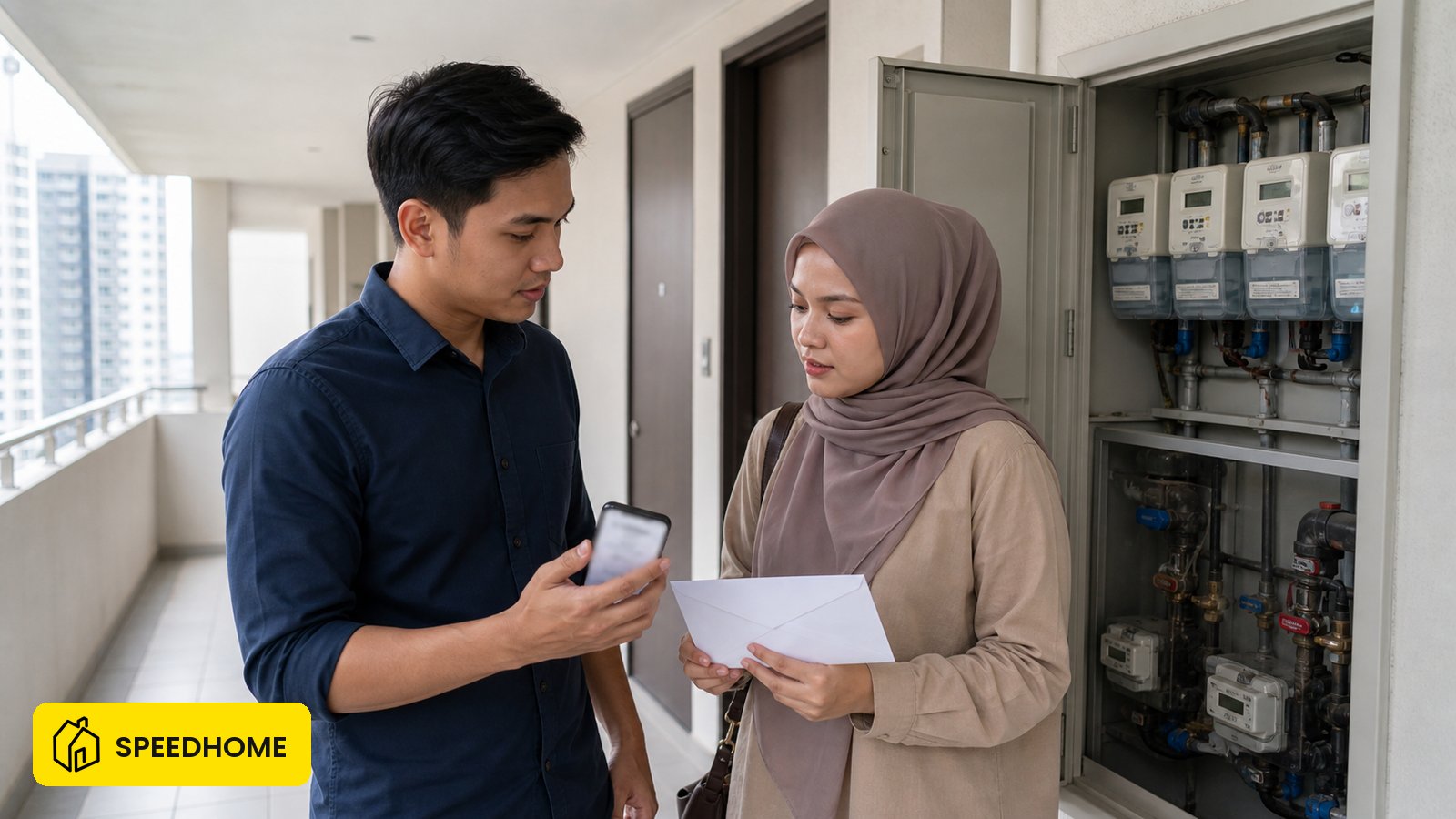
Can a landlord disconnect electricity or water if the tenant hasn't paid rent?
No. A landlord in Malaysia cannot disconnect electricity or water — or prevent a tenant from entering the unit — to force payment or a move-out. Only a court can lawfully remove a tenant. Doing it yourself, even when the utility account is in your name, is treated as an unlawful attempt to evict, and it hands the tenant a counter-position you cannot afford.
When a tenant stops paying, two separate problems run in parallel: the money owed and the question of getting the unit back. Trying to solve both by disconnecting services conflates them in the worst way. The law — specifically the Specific Relief Act 1950 s.7(2) — treats a tenant as being in lawful possession until a court says otherwise, even months after rent stops. Utilities are tied to that possession. The moment you interfere with the supply to pressure them out, the story shifts from "my tenant owes me rent" to "my landlord broke the law," and you lose your strongest position.
The lawful first move is administrative: keep the electricity and water running, send a written demand listing every baht owed and a clear deadline, and save every message and receipt. If the amount is RM5,000 or less, the Magistrates' Court small-claims procedure handles the claim without a lawyer.
Why every "quick fix" makes things worse
Each shortcut that feels decisive — disconnecting utilities, locking the tenant out, dumping their belongings, or publishing their identity card details online — puts you on the wrong side of the law and converts a clean debt claim into one where you are the wrongdoer.
Here is what happens with each common piece of folk advice:
| What landlords try | Why it seems logical | What actually happens | Lawful alternative |
|---|---|---|---|
| Disconnect water or electricity | "No one can live without it — they'll pay or leave" | Treated as an unlawful attempt to force the tenant out; gives them a complaint against you | Keep services on; add unpaid utility costs to your written money claim |
| Lock the tenant out / block access card | "It's my property, I'll secure it" | Only a court can order possession; you become the wrongdoer and the tenant gains leverage | Apply to court for a possession order |
| Dump or seize the tenant's belongings | "Make them leave faster" | Unlawful; invites a counter-claim against you | Preserve their property; pursue money and possession through court |
| Post the tenant's IC details online | "Name and shame them" | Publishing identity-card numbers can breach the Personal Data Protection Act 2010 (as amended by Act A1727) and expose you to a separate legal problem | Pursue the debt quietly through the Magistrates' Court |
Notice the pattern: every shortcut takes a situation where the tenant is in the wrong and creates a path for them to make you the wrongdoer. That is the worst trade a landlord can make.
Does it matter whose name is on the electricity account?
No. Whether the account is in the tenant's name or the landlord's name, disconnecting the supply to pressure a tenant in lawful possession is treated the same way — an unlawful attempt to force them out. The account name decides who pays the provider; it is not a private eviction tool.
Two common setups, same conclusion:
- Account in the tenant's name: plainly not yours to touch. Interfering with a service they pay for and control is clearly improper.
- Account in the landlord's name: you pay the bill, but the tenant is lawfully relying on that supply to live in the unit. Disconnecting it specifically to apply pressure is still treated as an unlawful attempt to force them out, regardless of who holds the account.
If unpaid utility bills are part of what the tenant owes, add that amount to your money claim and recover it through the courts. Do not recover it by leaving the unit dark.
The lawful process: get the money, get the unit back
Keep the electricity and water on, build your paper trail, then choose the right lawful route based on the amount owed and whether you need possession back.
Step 1 — Document and send a written demand. Save every message, every failed transfer, every promise to pay later. Send a written notice stating the exact amount owed, the original due dates, any unpaid utility charges, and a firm deadline. Keep a copy. Weak evidence — not weak law — is the most common reason landlords lose these disputes.
Step 2 — Magistrates' Court small-claims for debts up to RM5,000. File the claim yourself, no lawyer required. Bring your tenancy agreement, payment records, and the written demand. This is the fastest and cheapest route if you mainly want the money and the total is within the limit.
Step 3 — Court action for possession or debts above RM5,000. If you need the unit back, or the debt exceeds RM5,000, apply to the civil courts for a possession order alongside a money judgment. It is slower and normally requires a lawyer, but it is the only route that ends with a court-backed order to remove the tenant if they refuse to leave.
Landlords who act on the first missed payment and maintain a clean paper trail recover what they are owed considerably faster than those who wait or reach for a shortcut.
How SPEEDHOME changes the situation before it reaches this point
Almost every case where a landlord is tempted to disconnect utilities comes from two failures: renting to the wrong tenant and having no income while chasing them. SPEEDHOME's screening and Protect cover are built to remove both, so the desperation that drives landlords toward illegal shortcuts does not build up in the first place.
Our screening filters applicants before signing, and a meaningful share of applicants do not pass. For tenants who do pass, Protect cover means you keep receiving rent even if a tenant defaults. When income continues, you have no reason to reach for the power switch.
SPEEDHOME's Zero Deposit option is a managed rental-risk system, not a financial guarantee product, and not every unit qualifies — but for landlords who list on the platform, the combination of screening, Protect, and documented records means you start from a stronger position if a dispute ever does arise. See SPEEDHOME landlord plans to compare options.
Frequently asked questions
Can I disconnect the electricity if the utility account is in my name and my tenant has not paid? No. Even with the account in your name, disconnecting the supply to pressure a tenant who is lawfully in the unit is treated as an unlawful attempt to force them out. The account name only decides who pays the provider. Keep the supply on and recover any unpaid utility amounts as part of your money claim.
Can I block my tenant's access card or lock the tenant out? No. Only a court can order a tenant removed from a unit. Blocking the access card or locking the tenant out are unlawful shortcuts that turn you into the wrongdoer and give the tenant leverage in any dispute.
What happens if I disconnect the water or electricity anyway? You risk flipping the dispute against yourself. A tenant who was clearly in the wrong for not paying can become the wronged party, weakening your rent claim and exposing you to a separate complaint. Weak or compromised evidence is the most common reason landlords lose these cases.
The utility bills are piling up under my name. How do I recover them? Add the unpaid amounts to your written demand and include them in any court claim you file. If the total is RM5,000 or less, the Magistrates' Court small-claims procedure handles it without a lawyer.
Can I post the tenant's IC or personal details online to pressure them? Be very careful. An IC is the Malaysian identity card. Publishing someone's personal details — such as their identity-card number — can put you on the wrong side of the Personal Data Protection Act 2010 (as amended by Act A1727) and create a separate legal problem for you. Pursue the debt through lawful channels.
How long does the lawful process take? It varies, but landlords who act on the first missed payment and keep complete records recover far faster than those who wait. Shortcuts and delays routinely stretch disputes into months with no resolution.