
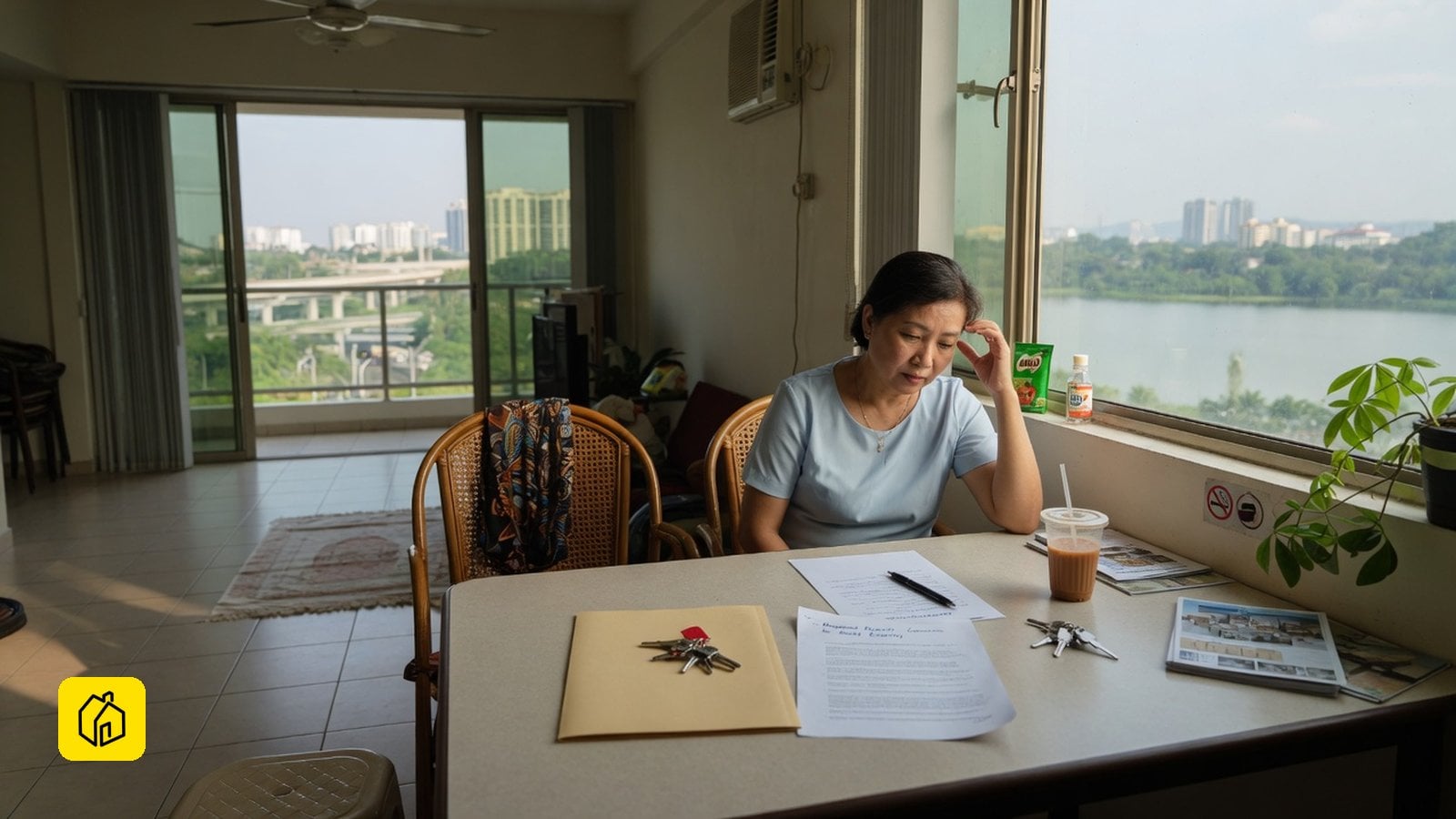
The Henge Residence in Kepong is a 1,472-unit leasehold development located near the 220-acre Kepong Metropolitan Lake and MRT Metro Prima. With 41-to-45-storey towers and high-density transport links, landlords should verify the management's written position on multi-tenancy before assuming a room rental model is permitted.
How do you make the unit eligible for the scarce segments?
Before the building record, decide what demand you are fitting this unit for. Pet-friendly whole-unit tenancies and properly managed co-living sit on the thin-supply side of Malaysian rental demand, while generic one-year lets compete against every identical listing in the postcode. That scarcity is a reason to convert deliberately: you run your own numbers through the calculator below before committing capital.
The upstream move is fit-out, not marketing. A SPEEDRENO rental fit-out is a reversible, condition-led renovation that makes the unit eligible for the segment you choose — pet-durable finishes for the pet-friendly whole-unit play, shared-space standards for co-living — and the finished unit then lists on SPEEDHOME against that demand. Keep the conversion inside what the management's written position allows; the MC letter gates the model, the fit-out only serves it.
The Henge record: what is verified, and what is not
Verified: The Henge is Aset Kayamas' four-tower lakeside scheme in Kepong — 1,472 units across two 736-unit phases on 99-year leasehold land, completed 2018-2019, beside the 220-acre Kepong Metropolitan Lake. The developer's official project page lists Sinerjuta Sdn Bhd (1013408-T) as associate and developer, describes "4 nature-inspired tower blocks" beside the Metropolitan Lake with the FRIM forest park beyond, on the fringe of the city near the Middle Ring Road 2 and the DUKE highway, and publishes two layouts: Type A and Type A1 at 1,300 sqft with 3+1 rooms and 2 baths, and Type B at 1,100 sqft with 3 rooms and 2 baths — each with two parking bays. The developer's project records and property registers carry the tenure (99-year leasehold), the 1,472-unit total and the 2018-2019 completion.
The launch history is also on the record. The Edge Malaysia reported (dateline 4 April; the Maybank financing signing it covers is dated April 2016) that the first phase's 736 units sold out within the first two days of launch, and that the second phase — a 41-storey tower of another 736 units — was launching that April weekend with 1,100 sqft units from RM530,000, about RM430 per sq ft, after more than 1,100 pre-registration applications. The same report records RM629 million in Maybank facilities for the project. Note the honest tension: the press described the phase-2 tower as 41 storeys at launch stage, while the developer's page now describes towers rising up to 45 levels — read both as attributed, and the parcel plan as decisive. For current-market context, PropertyGuru's project record carries the same 1,472-unit, four-block scale with leasehold tenure and 2019 completion, and listed secondary asking in 2026 at roughly RM430,000–RM650,000 across the two layouts, around RM420–510 psf — a dated asking band for comparables homework, not a valuation and not a rent.
| Question | Public-record answer |
|---|---|
| Developer and towers | Sinerjuta Sdn Bhd of the Aset Kayamas group; 4 tower blocks of 41-45 levels, 1,472 units in two 736-unit phases (developer page; The Edge Malaysia) |
| Published layouts | Type A/A1 — 1,300 sqft, 3+1 rooms, 2 baths, 2 parking bays; Type B — 1,100 sqft, 3 rooms, 2 baths, 2 parking bays (developer page) |
| Tenure, completion | 99-year leasehold; completed 2018-2019 (developer project records; property registers) |
| Phase history | Phase 1: 736 units, sold out within two days of launch; Phase 2: 736 units, launched April 2016 from RM530,000 (~RM430 psf) (The Edge Malaysia) |
| Title category, management position | not stated in the developer page or named press — read the individual issue document of title and obtain the management's written position |
Which model is even on the table?
Nothing beyond a conventional whole-unit letting is on the table until the management answers in writing. The operating model is set by the parcel's actual layout and the management's written position on short-stay, multi-tenancy and renovation—not by bedroom count. Get the MC letter first; the model table follows.
| Model | Status here | What decides it |
|---|---|---|
| Whole-unit, 12-month | Recommended base case | One household, Type A/A1 or Type B layout as built, dated comparable for the actual unit |
| Existing-bedroom sharing | Conditional | Written management position on multi-tenancy plus viewing proof the common areas work — the 3+1 layout and a substantial multi-room co-living tenant base around the lake keep this a live question, not a settled one |
| Co-living service | Do not assume | A workable service plan, shared-space standard and explicit management clearance — the estate's MC guidelines already run strict on short-stays and access-card control, so expect the written position to carry real conditions |
| Short stay | Do not underwrite | Current written by-law permission; nothing public settles it |
A Kepong-specific point: this is a high-density four-tower community with direct gate access to the metropolitan park, walking distance to MRT Metro Prima and AEON BiG Kepong. High-density corridors near transport attract both tenant demand and management scrutiny of non-standard letting — which is exactly why the written position, not the layout alone, decides. If the gate clears, the room rental and co-living guide is the next read — it is not evidence that this building has cleared it.
Which numbers must you run before committing any capital?
Enter current evidence for this exact unit and test whether extra capital earns a marginal return. Purchase basis, refurbishment, furnishing, annual charges, vacancy allowance and rent are editable precisely because no public source establishes them for this building today.
Loading the renovation ROI comparison…
- Enter the purchase basis and a dated whole-unit comparable for the same layout and condition — not a portal asking price.
- Add the actual strata charges, insurance, repairs and a vacancy allowance from the latest statements rather than a generic yield percentage.
- Compare condition-critical work against a higher-spend scope; if the extra spend does not lift economic NOI enough to justify itself, it is dominated.
- Add a sharing scenario only after management has answered in writing and a viewing proves the common areas work.
The self-management cost calculator separates recurring operations from a one-off fit-out. The output is a decision range. The Wangsa Maju rental guide covers the tenant side of the neighbouring corridor — context, not a comparable source.
What exact diligence should you run before an offer or renovation?
The title, the management record and the actual parcel matter more than the tower marketing. Obtain these before committing capital:
- The issue document of title and parcel plan — the tenure is on the record as 99-year leasehold, and a scheme built in two 736-unit phases can still mix parcel categories; the individual title controls.
- Current JMB/MC by-laws or house rules, and the written approval process for renovation, existing-bedroom sharing, pets, short stay and submeters — include how access cards are issued and controlled, since the estate's guidelines already treat access-card management as a live control.
- The latest maintenance and sinking-fund statement, AGM material and any special-levy notice — four 45-level towers carry heavyweight common facilities (sky bridge, pools, courts) whose upkeep shows up in the statements.
- Dated, same-format whole-unit comparables with condition recorded; ask SPEEDHOME for current listing evidence rather than reusing old asking prices.
What are the downside risks and stop rules?
The main downside is spending for an operating model the parcel, market or management will not support. If written rules do not support sharing, revert to the whole-unit case. If the actual common areas do not work for separate occupants, do not solve that with a partition — a partition needs the management's prior written approval. If the high-spend fit-out shows a weak marginal return, narrow the scope to condition-critical work.
Short stay stays a stop rule until written management evidence says otherwise; a well-connected lakeside address attracts homestay marketing, but heavy marketing around a building is not permission, and a management corporation can prohibit short-term letting by by-law. Preserve the inspection and handover record whichever tenancy is chosen.
FAQ
Is The Henge Residence a room-rental investment?
The published layouts (1,300 sqft 3+1 and 1,100 sqft 3-room in a 1,472-unit estate completed 2018-2019) and the co-living tenant base around the lake make sharing a question worth asking, but no room-count case follows from a layout alone. Whole-unit long-term is the base case until your title, the management's written position and a viewing of the actual parcel are documented.
Who developed The Henge?
The developer's official page lists Sinerjuta Sdn Bhd (1013408-T) as associate and developer, within the Aset Kayamas stable whose name The Edge Malaysia used in its launch coverage. Check the sale and purchase documents for the contracting entity that governs your parcel.
Can an owner run short stay here?
Only the current written by-law text from the management settles it. Obtain that in writing before buying guest equipment or advertising.
Did the building really sell out in two days?
That is the named-press record for the first phase — 736 units sold out within the first two days of launch, with a second 736-unit phase launched in April 2016 from about RM430 psf (The Edge Malaysia). Launch-time sales history is context for demand then, not evidence of rent or yield now.
What should be checked before a fit-out?
The parcel's title and plan, the management's written application process, annual strata costs from the latest statement, actual condition, and dated comparable evidence. Then use the calculator to test whether the proposed spend earns a return after those costs.
Who is this page for?
An owner who already holds, or is about to hold, a unit in this building and must choose an operating model. It is not a buy recommendation, and it is not a tenant listing — the Wangsa Maju rental guide covers the renting side of the neighbouring corridor.
Matched SPEEDHOME landlord close
If you would rather not run the unit yourself, this is the part where one company takes the whole journey. A contractor leaves after the handover, an agent leaves after the signing, a handyman leaves after one fix — and rent follow-up, tenant problems and repairs fall back on you. Not because anyone failed; because it was never anyone's job in between. SPEEDRENO gets the unit rent-ready for the tenant you actually want (with a clear skip list, so you don't pay for work the market won't reward), SPEEDHOME rents it out and manages the tenancy — rent collection, tenant issues, lawful eviction when needed — and SPEEDFIX handles repairs at one price.
Owners stay with SPEEDHOME because things move fast, and because there is a company with a full-time team behind the tenancy, not an individual agent. The landlord protection plans sit on top of that service — Protect at one month's rent, Protect+ at one and a half, or the flat Standard plan at RM799 + SST a year with no protection cover.
For a Henge unit, the practical first move is a fit-out quote against the actual layout: a SPEEDRENO assessment prices the reversible work that makes the unit eligible for the segment you choose, and the finished unit then lists with SPEEDHOME. Start on the landlord page, or work through the landlord investment decision guide first if the operating model itself is still open.