
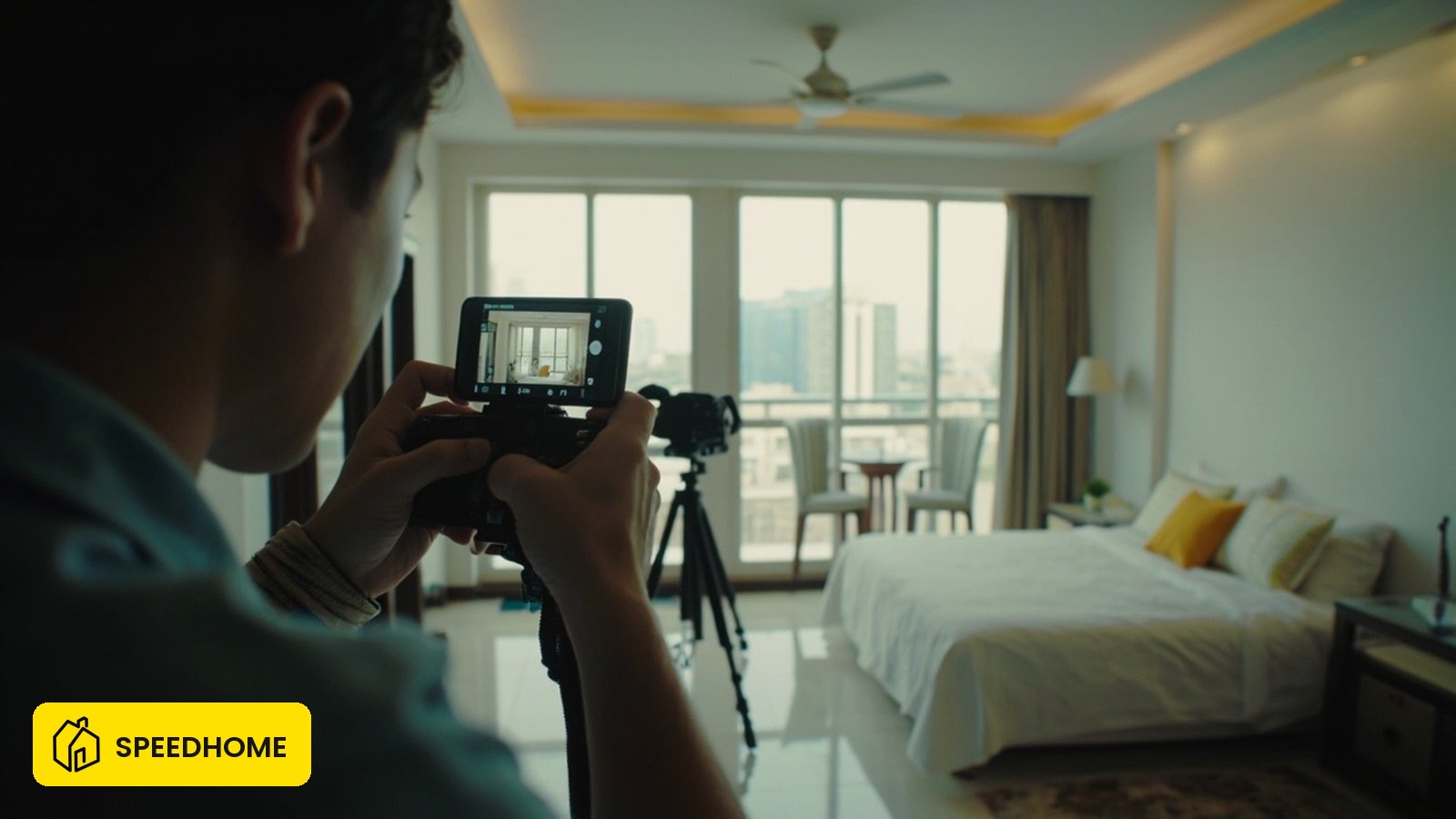
Should a SPEEDHOME landlord take their own listing photos or use a photography service?
DIY photos cost nothing but lose tenants in the first scroll. Professional listing photos take one session and typically cut the time to first serious enquiry. For a unit vacant at RM1,800/month, one lost week is RM415 in unrealised rent — the session pays back fast.
SPEEDHOME platform records show that 79% of landlords want a verified, friction-free tenant placement. Poor photos are the single most preventable reason a genuine applicant swipes past a real listing. They are also a scam signal: when tenants see blurry, dark, or reused photos, the first question is "is this unit actually available, or is someone harvesting my deposit?". Rental fraud in Malaysia rose from 184 reported cases in 2023 to 922 in 2025 — a 400% surge (PDRM CCID data). The fake-listing pattern nearly always starts with stolen or recycled photos.
SPEEDHOME app, listing photos — 2026 snapshot (figures current as of 2026-10):
| Item | 2026 figure / status |
|---|---|
| Landlord demand for verified placement | 79% of landlords want a verified, friction-free tenant placement (SPEEDHOME platform records) |
| What poor photos cost | They are the single most preventable reason a genuine applicant swipes past a real listing — and they read as a scam signal |
Verified, timestamped, unit-specific photos do two jobs at once: they attract the right tenant faster, and they signal to wary renters that the listing is real. This page walks through the practical decision: when to go DIY, when to use a service, and what the SPEEDHOME listing photo standards actually require.
DIY listing photos vs professional photos: what is the core trade-off?
DIY is free and fast to upload but routinely produces photos that depress enquiry rates: wrong light, wide-angle distortion that overpromises space, cluttered backgrounds. A one-off professional session costs money upfront but tends to recover the fee through faster placement.
| DIY phone photos | Professional / SPEEDHOME photography service | |
|---|---|---|
| Cost | RM0 | Varies by provider; confirm current pricing with SPEEDHOME |
| Time to complete | 30–60 min shoot | Booked session; typically 1–2 hours on-site |
| Equipment | Smartphone | Wide-angle lens, portable flash, colour-calibrated editing |
| Outcome risk | High — dark, distorted, cluttered shots common | Low — standardised angles, consistent brightness |
| Tenant trust signal | Weak — harder to distinguish from a fake stolen-photo listing | Strong — unit-specific detail is difficult to fake |
| Useful for scam screening | Tenants cannot verify the session was recent or unit-specific | Timestamped, geo-referenced, tied to the listing record |
| Best for | Furnished units in excellent natural light; landlord with photography experience | Unfurnished units, dark layouts, higher-rent units, first-time landlords |
| Works on SPEEDHOME listing | Yes — upload to the listing directly via the app | Yes — SPEEDHOME-coordinated sessions feed directly into the verified listing record |
The table above shows averages. A well-lit corner unit at midday with a decent smartphone can produce usable photos. A north-facing corridor unit at 7pm cannot. The test: view your draft photos on a phone screen at arm's length. If you cannot immediately see the room size, condition, and furnishing level, neither can the tenant.
When DIY listing photos win
DIY wins when the unit has excellent natural light, you have time to shoot at the right hour, the space is clean and clutter-free, and the rent level does not justify a professional session fee.
Use DIY if: - The unit has floor-to-ceiling windows or strong south- or west-facing afternoon light. - The space is unfurnished and the landlord can control the shoot timing precisely. - Rent is below RM1,200/month and the photo session cost would represent more than one week's rent. - The landlord has prior real-estate or product photography experience and can handle angles and white balance manually.
Even in the DIY scenario, the minimum standard for a verified SPEEDHOME listing remains: every room covered, at least one window-facing shot per room, no personal items or readable documents visible, consistent brightness across photos, and a minimum resolution that renders clearly on desktop and mobile. Photos that fail these minimums are returned for reshoot — which delays listing activation and costs more time than a single professional session would have.
When professional listing photos win — and the scam-prevention angle
Professional photos win whenever the unit has difficult light, a high monthly rent, an unfurnished spec that is hard to visualise, or a tenant market where photo realism directly affects trust. On the platform, they also serve as a scam-defence layer: current, unit-specific, time-stamped photos are what separate a real verified listing from a stolen-image fake.
The scam mechanism is simple: a fraudster copies photos from a legitimate portal listing, creates a fake listing at a below-market price, collects a "booking fee" or first month's deposit from multiple applicants, and disappears. The photos look plausible because they were real — just not of that fraudster's unit, and not taken recently.
A professional photo session tied to a specific listing record breaks this pattern because: 1. The photos include unit-specific features (meter box location, window view, door hardware) that are nearly impossible to replicate in a cropped copy. 2. The session metadata ties the images to a date, a real-world address, and a listing state. 3. On SPEEDHOME's verified-listing system, the photos sit inside a listing record that also contains the owner's identity and the property title — meaning the images are anchored to a verified owner, not a copy-pasted advertisement.
Tenants who have encountered rental fraud are specifically trained to look for photo evidence of a real unit. Professional photos help them say yes. DIY photos — especially ones shared outside a verified platform — make the same tenant hesitant.
For landlords listing on SPEEDHOME, professional photos also feed the pre-screening step: a credible, detailed photo set reduces speculative enquiries from tenants who would reject the unit on viewing, which shortens the time to a qualified applicant. See virtual viewing tips for SPEEDHOME landlords for how photo sets work alongside video walkthroughs. For the formal screening process that follows, see how to screen tenants in Malaysia without legal issues.
Cost and risk: what poor listing photos actually cost a landlord
The direct cost of poor photos is vacancy days. The indirect cost is the quality of applicants: a listing with weak photos attracts speculative enquiries, drives up viewing-to-offer ratios, and signals to serious tenants that the landlord is inexperienced or the listing is suspicious.
| Risk | DIY low-quality | Professional / SPEEDHOME-standard |
|---|---|---|
| Extra vacancy days | Possible — dark or misleading photos deter serious tenants | Reduced — right applicants filter in faster |
| Wasted viewings | High — tenants arrive and reject immediately on poor first impression | Lower — photos set accurate expectations |
| Scam-suspicion signal to tenant | Moderate to high (reused, low-res, or generic photos match the fake-listing pattern) | Low — unit-specific, timestamped content is hard to fake |
| Listing rejection by SPEEDHOME | Possible — photos that fail minimum standard delay activation | Unlikely — session-standard photos meet the bar |
| Deposit/damage disputes at move-out | Higher if move-in condition is not photo-documented | Lower — professional session doubles as a move-in condition record |
The vacancy-cost calculation is straightforward: for a unit renting at RM2,000/month, each additional vacant week costs approximately RM467. A professional session that saves two weeks of vacancy pays for itself multiple times over. For higher-rent units the math is more compelling, not less.
The move-in condition angle is a second benefit landlords rarely price in. Professional photos taken at listing stage, kept as the reference record, are the strongest counter-evidence in a move-out damage dispute. A verified SPEEDHOME listing record that includes condition photos from a session is better evidence than a landlord's recollection or a phone photo taken months later.
What is the SPEEDHOME listing photo path?
On the platform, listing photos sit inside a verified-listing record that links photos to a confirmed owner identity and property title. A landlord can upload DIY photos that meet the minimum standard, or arrange a coordinated session. Either way, the photos become part of the verified listing that tenants see on /rent.
The SPEEDHOME-specific advantage is not just photo quality — it is the listing record the photos belong to. A tenant browsing SPEEDHOME-verified listings is already looking at properties where the owner's identity and title have been checked. The photos are not floating advertisements; they are attached to a verified record that supports the scam-screening questions tenants are trained to ask: "Can I verify the owner? Is this unit really available? Where does my deposit go?"
On SPEEDHOME, the deposit goes to a company account — never a personal account or e-wallet. Professional photos tied to a verified listing make that structural safety visible at the moment of first enquiry.
Landlords who want a fully managed tenancy — with tenant screening, rent collection, and property condition documentation handled on their behalf — can review SPEEDHOME landlord plans to see which tier covers their unit and needs.
To browse verified listings as a tenant would see them, visit /rent.
FAQ
Does SPEEDHOME require professional photos to list a property?
SPEEDHOME requires photos that meet a minimum quality standard — all rooms covered, adequate light, no readable personal documents visible. Professional photos are not mandatory, but DIY photos that fail the minimum are returned for reshoot, which delays listing activation. A professional session typically avoids this delay.
Can I use the same photos I used on Mudah or PropertyGuru for my SPEEDHOME listing?
Yes, if the photos are current, unit-specific, and meet the minimum standard. However, reusing old photos that no longer reflect the unit's current condition creates a mismatch between the listing and the viewing, which increases tenant drop-off and can generate complaints. Photos should reflect the unit at the time it is being listed, not a previous tenancy.
How do SPEEDHOME listing photos help prevent rental scams?
Rental fraud typically relies on stolen or reused photos from legitimate listings. SPEEDHOME's verified listing system ties photos to a confirmed owner identity and property title. Tenants who suspect a scam can verify the listing on the platform and confirm the deposit goes to a company account — not a personal one. Current, unit-specific photos with identifiable details are difficult for fraudsters to repurpose convincingly.
What is the minimum photo set for a SPEEDHOME listing?
As a practical minimum: every room (living, dining, kitchen, all bedrooms, bathrooms), at least one exterior or building-entrance shot, a window-facing shot in each main room, and a clear photo of any included appliances or parking space. No readable documents, no personal items, consistent brightness. Confirm current minimum requirements directly with SPEEDHOME before activating a listing.
If a tenant reports that the listing photos do not match the actual unit, what happens?
On SPEEDHOME, the listing record acts as the reference. If photos were taken at a professional session tied to the listing, they provide a dated baseline for the unit's condition and included items. A significant mismatch between listing photos and the actual unit — especially on furnishing or condition — is grounds for a complaint and can affect the tenancy activation. Keeping photos current protects both the landlord and the tenant.