
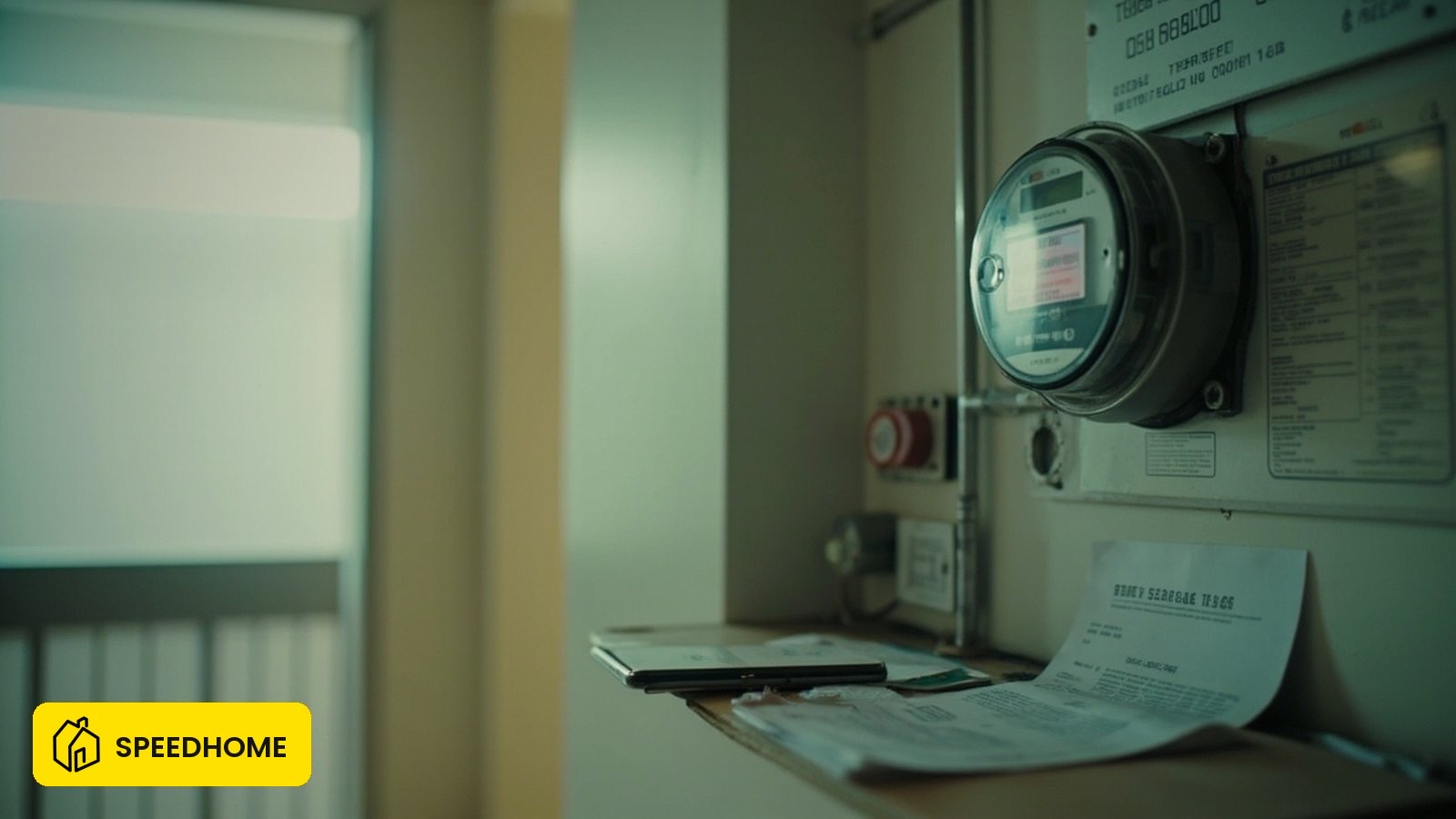
Am I liable for the TNB crypto-mining fine?
Liability follows the registered TNB account holder, not necessarily the person who ran the rigs. If the TNB account for your unit is in your name, TNB pursues you; if it is still in the landlord's name, the landlord is pursued first and then seeks recovery from you under the tenancy agreement. There is no fixed RM100,000 fine — actual bills and penalties vary by case.
The premise of the question — "am I, the tenant, automatically liable?" — is often the wrong framing. In the cases that reach the news, the account is usually still registered to the landlord, which is why landlords are the ones left to pay. Whether you face the demand depends on whose name is on the account and what the tenancy agreement says about electricity. The honest answer splits two ways, and this page walks both.
The detail: how TNB decides who to chase
TNB treats the registered account holder as the party responsible for the account, including any tampering or stolen-electricity assessment on that premise. Meter tampering and unauthorised connections are offences under the Electricity Supply Act 1990, and TNB can also pursue the account holder civilly for the value of the stolen electricity.
That sounds straightforward, but two complications decide where the bill actually lands in a rental:
-
Whose name is on the TNB account. If you did a Change of Tenancy and the account moved to your name, TNB's demand comes to you. If the account was never transferred and still shows the landlord, TNB's demand goes to the landlord — even though you were the one consuming the electricity. This is the single biggest factor, and it is why so many news stories feature a landlord, not a tenant, holding a six-figure bill.
-
Who actually caused the tampering. If you (or someone you let into the unit) installed the bypass or tampered rig, the landlord — once they pay TNB — will look to recover that amount from you under the tenancy agreement. The clauses that matter are usually "residential use only", "no illegal activity", "no electrical alteration without written consent", and the utilities-responsibility clause. A tenancy that prohibits high-load or commercial use strengthens the landlord's recovery against a mining tenant.
The practical takeaway: do not assume "TNB detected it in my unit" means "TNB will bill me." Find out whose name is on the account first, then read your tenancy agreement. Everything downstream follows from those two facts.
Who TNB pursues and what each side owes
The matrix below is the fastest way to see where liability lands. It is based on TNB's account-holder practice and standard tenancy terms; specific fine or bill amounts are not fixed and must be confirmed with TNB for your case.
| Situation | Who TNB pursues first | What you (the tenant) realistically owe | What to do right now |
|---|---|---|---|
| Account is in your name, tampering is yours | You | The stolen-electricity assessment plus any penalty TNB or the court applies; potential criminal exposure under the Electricity Supply Act 1990 | Get the demand notice in writing; do not tamper further; consider a lawyer before responding |
| Account is in your name, tampering is a subtenant or flatmate you let in | You (as account holder) | You owe TNB; you then recover from the person who caused it | Document who had access; keep the demand notice; pursue the responsible party separately |
| Account is still in the landlord's name, you caused the mining | The landlord | You likely owe the landlord under the TA's use/alteration clauses, even though TNB bills the landlord | Preserve all TA documents; respond factually to the landlord; do not destroy or hide equipment |
| Account is in the landlord's name, you did NOT mine (e.g. previous tenant, unknown third party) | The landlord | Usually nothing — but you may be asked to cooperate or vacate if TNB disconnects the supply | Get the timeline straight; gather proof of your move-in date and meter-reading photos |
No column asserts a specific ringgit amount. Real recovered sums in reported Malaysian cases have ranged from tens of thousands to figures approaching a million ringgit, but those depend on how long the bypass ran and how much power was drawn — there is no standard "RM100,000" outcome. Treat any single number floating around social media as unverified.
What not to do — and the lawful path
Do not try to pressure anyone by switching off supply, removing the tenant, or hiding the equipment. Self-help measures (lockout, utility cut-off, removing belongings) are unlawful, and tampering further or concealing the rig can turn a civil bill into a criminal matter.
The lawful path is evidence and process, not force:
- Get the TNB demand notice in writing and read whose name and premise it names.
- Preserve everything: the tenancy agreement, move-in meter-reading photos, the TNB account number, and any communication about the equipment.
- Do not retaliate or self-help. If you are the tenant being accused, respond in writing and factually; if you are asked to vacate because TNB has disconnected supply, handle it through the agreement, not a lockout.
- If the amount is large, get advice before paying or admitting anything. A criminal or near-criminal electricity-theft matter is different from an ordinary unpaid bill, and what you say early can matter later.
For the broader landlord-side view — detection warning signs, the first-24-hour checklist, and tenancy clauses that prevent this — see the dedicated crypto mining and the TNB bill page. If the real issue is that the account was never transferred in the first place, the TNB Change of Tenancy full guide covers the documents and fees, and the managing utility bills guide covers who should hold each utility account.
When should the TNB account move into the tenant's name?
Most utility disputes SPEEDHOME sees on its platform trace back to one root cause — the TNB account was never moved into the tenant's name at move-in. Fixing account responsibility before handover prevents the entire "who pays the mining bill" argument from arising.
That is why the managed tenancy process makes the TNB account transfer a documented part of handover rather than an afterthought: record the meter reading on the day keys change hands, and put utility responsibility in writing in the tenancy agreement. Zero Deposit, where a unit qualifies, replaces the upfront cash rental security deposit — it is a managed rental-risk system, not a financial guarantee product, and it does not cover a utility or electricity-theft bill, which is a separate matter entirely.
If you are renting next and want clear move-in terms so utility responsibility is never ambiguous, browse /rent.
FAQ
Am I liable for a TNB crypto-mining fine if the account is in my name?
Yes. When the TNB account is registered in your name, TNB treats you as the party responsible for the account, including any stolen-electricity assessment and penalty for tampering on that premise. The amount is not fixed — it depends on how long the bypass ran and how much power was drawn.
If the TNB account is in the landlord's name, can TNB still come after me, the tenant?
TNB pursues the registered account holder first, so the landlord receives the demand. But the landlord can then recover that amount from you under the tenancy agreement if your use or the equipment caused the mining. Your move-in date, the TA clauses, and meter-reading photos decide how much of it sticks to you.
Is there really a fixed RM100,000 fine for crypto mining in a rental?
No. There is no standard RM100,000 figure. Penalties under the Electricity Supply Act 1990 and the value TNB recovers for stolen electricity both depend on the specific case. Reported Malaysian outcomes have ranged from tens of thousands to sums approaching a million ringgit, so treat any single quoted amount as case-specific rather than a fixed tariff.
Can the landlord switch off my electricity to force me to pay the mining bill?
No. Cutting supply or locking the tenant out to pressure payment is unlawful self-help. Recovery has to go through the proper process. The landlord's remedy is to pay TNB (as account holder) and then recover from you under the tenancy agreement, or pursue the matter through the courts.
What should I do in the first 24 hours after TNB flags crypto mining?
Get the TNB notice in writing and confirm whose name is on the account. Photograph the meter and any equipment if you have lawful access, gather your tenancy agreement and move-in meter-reading photos, and respond factually in writing. Do not tamper further or conceal equipment — that can turn a civil bill into a criminal matter.
Will Zero Deposit cover a TNB crypto-mining bill?
No. Zero Deposit replaces the upfront cash rental security deposit and is a managed rental-risk system, not a financial guarantee product. A utility bill or electricity-theft assessment is a separate matter between the account holder and TNB, and is not what Zero Deposit is designed to cover.
Which electrical indicators reveal illegal crypto mining?
Illegal cryptocurrency mining poses severe fire hazards and catastrophic utility liabilities for property owners. Key physical indicators include: - Excessive Heat & Ventilation Modifications: Industrial exhaust fans, ducted window boards, or high-velocity ventilation systems fitted in residential units; - Audible ASIC Whine: Continuous, high-frequency fan drone running 24 hours a day; - Tampered Electrical Panels (DB Box): Unauthorized incoming cable bypasses before the TNB meter, unmetered jumpers, or burnt circuit breaker components; - Astronomical or Abrupt Usage Spikes: Consistent maximum-load electricity consumption exceeding thousands of kWh monthly.
What statutory liability follows under the Electricity Supply Act 1990?
- Statutory Offence & Penalties: Under the Electricity Supply Act 1990 framework, tampering with electrical installations or taking unmetered electricity is an offence that exposes the perpetrator to statutory penalties upon conviction.
- Loss of Revenue & Evidential Burden: Under the electricity supply framework, TNB is empowered to claim retrospective loss of revenue resulting from meter tampering, subject to legal limits and evidential standards proving the actual period of unauthorized consumption.
- Registered User vs Actual Perpetrator: TNB initially initiates recovery proceedings against the Registered User of the account. If the account remained in the landlord's name, the landlord faces primary exposure to civil suits from TNB, necessitating subsequent third-party indemnity claims against the tenant.
What are the 5-point evidence checklist and the first 48-hour protocol?
If you suspect illegal crypto mining on your leased property: 1. Obtain Official Billing History: Download historical monthly consumption data from the myTNB portal demonstrating the sudden spike. 2. Conduct Lawful Inspection: Issue formal 24-to-48-hour written notice of inspection citing structural/electrical safety concerns under the tenancy agreement. 3. Document Physical Evidence: Photograph external exhaust fittings, sound decibel readings, and meter seals without tampering with electrical equipment yourself. 4. Lodge an Immediate Police Report: File a comprehensive police report detailing the suspected illegal operations, identifying the tenant, and attaching the stamped tenancy agreement. 5. Notify TNB & Suruhanjaya Tenaga: Formally submit written notice with the police report to TNB and the Energy Commission to establish record that the landlord has actively reported suspected illicit activities.
SPEEDHOME is one option worth comparing alongside the routes above.