
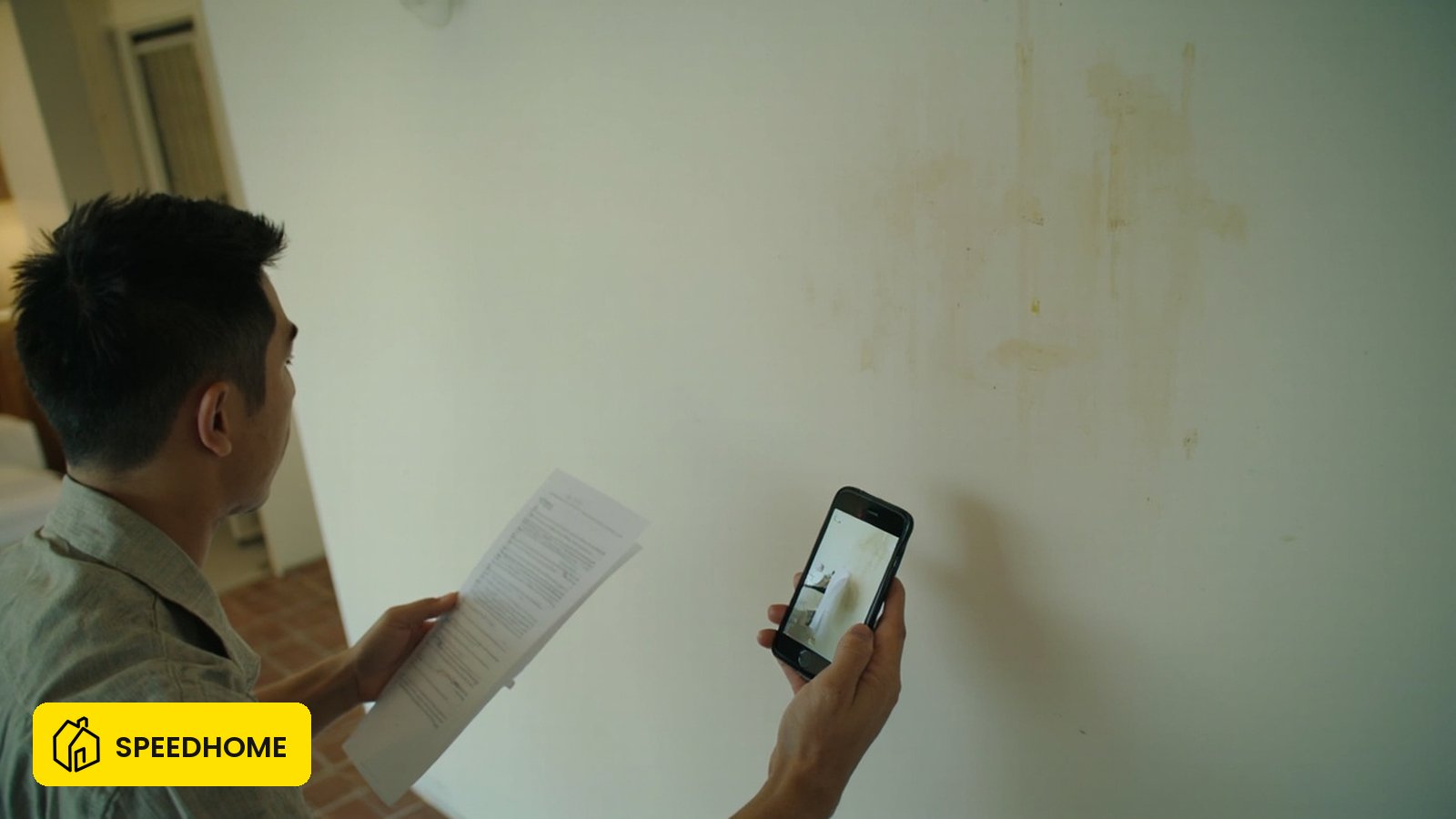
Who pays for wall crack repair in a Malaysia rental?
If a wall crack is caused by natural building settling, aging plaster, or thermal movement, the landlord is responsible for repairing it. If caused by tenant impact, heavy drilling, or unauthorized wall fixtures, the tenant pays. Painting and wall touch-ups rank as SPEEDHOME's #3 most common flagged repair category (roughly 1 in 7 flagged repair items). Because Malaysia has no Residential Tenancy Act in force, liability is governed by the tenancy agreement and diagnostic evidence.
Note on scope: this guide focuses strictly on localized crack patching, skimming, and touch-up repairs. For end-of-tenancy deposit disputes regarding whole-house repainting after long stays, refer to our separate guide on can a landlord charge for full repainting after 3 years.
Hairline vs. structural cracks: how to diagnose the damage
Not every crack requires the same repair approach. Before assigning costs, landlords and tenants must determine whether a crack is cosmetic or structural:
- Hairline Cracks (Under ~1–2mm): Thin surface fissures caused naturally by concrete curing, drying plaster, or building settling over time. Tropical humidity and thermal shifts in Malaysia also cause harmless minor expansion. These are classified as normal wear and tear or building settlement.
- Structural Cracks (Over 5mm, Horizontal, or Stair-Step): Cracks wider than 5mm, horizontal cracks across load-bearing walls, stair-step cracks across brickwork, or cracks accompanied by sticking doors and windows indicate potential foundation or structural movement. These require an immediate professional structural inspection arranged by the landlord or building management.
Realistic Repair Benchmarks (SPEEDHOME/SPEEDFIX Pricing)
- Touch up wall (2–3 small points): RM250 – RM402.50
- Wall cracks skimming and repainting: RM20 per sqft
- Repair plaster ceiling and painting: RM250
Cause-of-failure & who-pays breakdown
The cause of the fracture determines financial liability. Landlords maintain building integrity, while tenants pay for damage caused by impact, drilling, or unauthorized modifications.
| Crack Type & Scenario | Who Pays | Primary Cause & Rationale | Required Evidence |
|---|---|---|---|
| Minor hairline crack (< 1–2mm) | Landlord | Building settlement, plaster drying, and thermal shifts. | Move-in photos vs current photos; technician note. |
| Wall cracks needing skimming & repainting | Landlord | Plaster degradation or age-related masonry movement. | SPEEDFIX / contractor report confirming aging plaster. |
| Plaster ceiling crack / patch repair | Landlord | Upper-floor movement, moisture expansion, or aged framing. | Inspection report showing internal moisture or settling. |
| Impact crack (furniture knock, blunt force) | Tenant | Physical impact caused by tenant actions or move-in mishaps. | Point-of-impact damage; move-in photo showing pristine wall. |
| Excessive drilling / heavy wall plugs | Tenant | Wall damage exceeding reasonable wear without approval. | Move-in photos proving wall was intact prior to tenancy. |
| Major structural crack (> 5mm / sticking doors) | Landlord | Foundation settling or structural defect. | Structural engineer or building management report. |
| Disputed / ambiguous crack origin | Neutral assessment | Undetermined without technical diagnostic inspection. | Written causation report from an independent contractor. |
What the tenancy agreement governs (and fallback when silent)
In Malaysia, residential leases are governed by contract law because there is no statutory Residential Tenancy Act in effect.
- Standard Repair Obligations: Standard tenancy agreements (TA) require the landlord to maintain the main structure, roof, and exterior walls. Tenants are responsible for keeping the interior clean and tenantable, fair wear and tear excepted.
- Minor Repair Clauses: Minor repair clauses (e.g., tenant bears repairs under RM100–RM150) apply to routine consumables like light bulbs or washer seals. They do not obligate tenants to fix building settling or structural cracks unless expressly agreed.
- Fallback When Silent: If the TA is silent on wall cracks, general contract principles apply: the landlord maintains the structural fabric, while the tenant is only liable for tenant-inflicted damage.
Practical step-by-step sequence when a crack appears
- Immediate Written Notice: The tenant takes timestamped photos (using a coin or ruler for scale) and alerts the landlord in writing via WhatsApp or email.
- Arrange a Neutral Inspection: The landlord schedules a qualified handyman or SPEEDFIX technician to evaluate the crack's depth and origin.
- Obtain Written Quotation & Cause Note: The contractor provides an itemized quote (e.g., RM250–RM402.50 for 2–3 touch-up points or RM20/sqft for skimming) with a clear causation note.
- Confirm Cost Allocation in Writing: Both parties confirm in writing who pays before repair work begins.
- Archive Receipts and Records: File official receipts and after-repair photos in the tenancy record to prevent move-out deposit disputes.
Note: Tenants must never unilaterally withhold rent or deduct repair costs without written agreement. Withholding rent constitutes a contract breach under Malaysian tenancy law.
Dispute resolution & small claims court
Malaysia has no specialized residential tenancy tribunal, and the Tribunal for Consumer Claims (TTPM) does not hear residential tenancy repair disputes. Unresolved matters proceed through civil courts.
Small Claims Procedure Overview
| Claim Amount | Legal Forum | Lawyer Required? | Filing Fee | Resolution Time |
|---|---|---|---|---|
| Up to RM5,000 | Magistrates' Court (Small Claims) | No (self-representation) | ~RM30 | 4–8 weeks |
| Above RM5,000 | Magistrates' / Sessions Court | Optional (recommended) | Scale fees | 3–6 months |
The Rule Against Betterment
Under Section 74 of the Contracts Act 1950, landlords cannot claim new-for-old improvements. If a tenant causes a localized impact crack, the landlord can only recover the cost of a spot patch (e.g., RM250–RM402.50), not full-room replastering.
Landlord tax angle: are wall crack repairs deductible?
For landlords declaring rental income under Section 4(d) of the Income Tax Act 1967, routine maintenance is deductible:
- Allowable Revenue Deductions: Under Inland Revenue Board of Malaysia (LHDN) Public Ruling 12/2018, routine repairs to maintain the property in its tenantable state—such as patching wall cracks, skimming, and touch-up repainting—are fully deductible against gross rental income.
- Capital Improvements Excluded: Structural overhauls or substantial redesigns are capital expenses and cannot be deducted as routine repairs.
- Itemized invoices from SPEEDFIX provide complete audit proof for LHDN filing.
FAQ
Who pays if a hairline crack appears on the wall during my tenancy?
The landlord pays. Hairline cracks under ~1–2mm stem from normal building settling and thermal expansion, which fall under structural maintenance. The tenant must report it in writing promptly.
How much does wall crack repair typically cost in Malaysia?
According to SPEEDHOME/SPEEDFIX pricing, touching up 2–3 small wall points costs RM250–RM402.50, wall crack skimming and repainting costs RM20/sqft, and plaster ceiling repairs start at RM250.
Is localized crack repair the same as repainting the entire house at checkout?
No. Crack repair addresses localized plaster fractures requiring filler and spot touch-ups. Full-house repainting disputes involve widespread paint fading or scuffing across multi-year tenancies.
Can a landlord deduct wall crack repairs from the security deposit?
Only if the landlord proves through inspection evidence that the crack was caused by tenant impact, heavy drilling, or neglect rather than normal settling.
Can a tenant deduct wall repair costs directly from monthly rent?
No. Unilateral rent deduction is a breach of contract in Malaysia. Written agreement from the landlord is required prior to any deduction.
What if a crack is wider than 5mm or doors begin to stick?
Notify the landlord and building management immediately. Cracks exceeding 5mm, horizontal fissures, or sticking doors suggest structural movement requiring a professional engineering inspection.